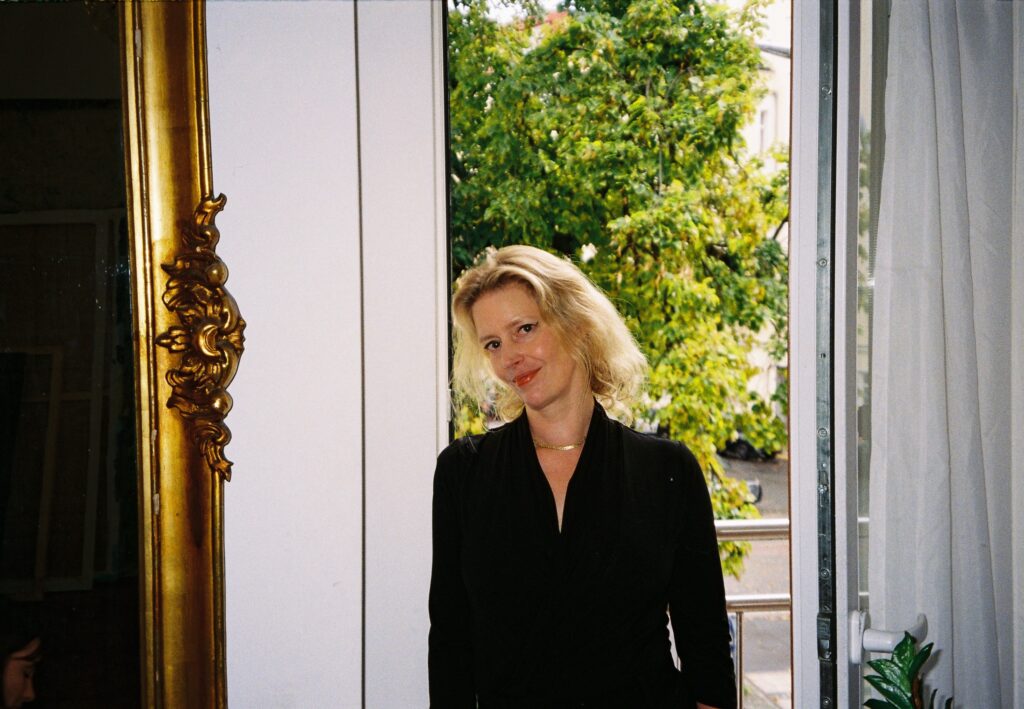
Painting did not begin as a career for artist Sophia Frese. It arrived instead as a kind of return, a recalibration, a way of coming back to herself after years spent inside disciplines that lived almost entirely in the mind. She had painted since childhood, but the moment she allowed it to become central came much later. “Painting is something that in many ways really saved my life,” she says. Only after completing a long academic road that included a BA, an MA, and a PhD in literary scholarship did she finally grant herself permission to make painting her primary language.
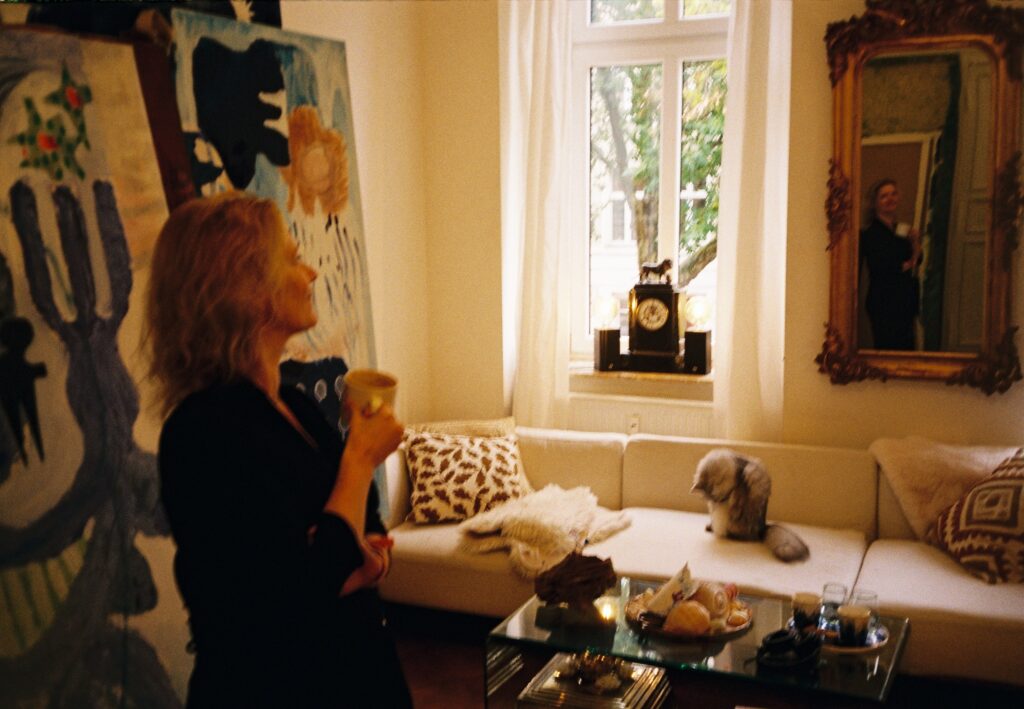
Sophia grew up in Münster, a small university town in Germany. Later she lived in Washington, D.C., New York, and Detroit during her academic career. “After living in the US for a while, I became homesick,” she says. “I am more of an old world person.” The distance provided clarity and perspective. It also provided space to see how disconnected she had become from the physicality and immediacy she longed for. While working as a postdoctoral scholar in the United States, she finally allowed painting to take precedence. “I had the freedom to turn to something I had always been doing all my life but never full time,” she says. It became a turning point that redirected the course of her life.
At the same time, she faced one of the most painful periods she had ever experienced. During those years, she went through multiple miscarriages. “It was a really dark time,” she says, and painting became the place where she anchored herself. It became something she could bring into the world when the things she wished to bring into the world were not arriving. “Painting saved me,” she says. It is also the place where she feels most aligned with who she is. “It helps me be in a place where I feel most true to myself and to my emotional life.”
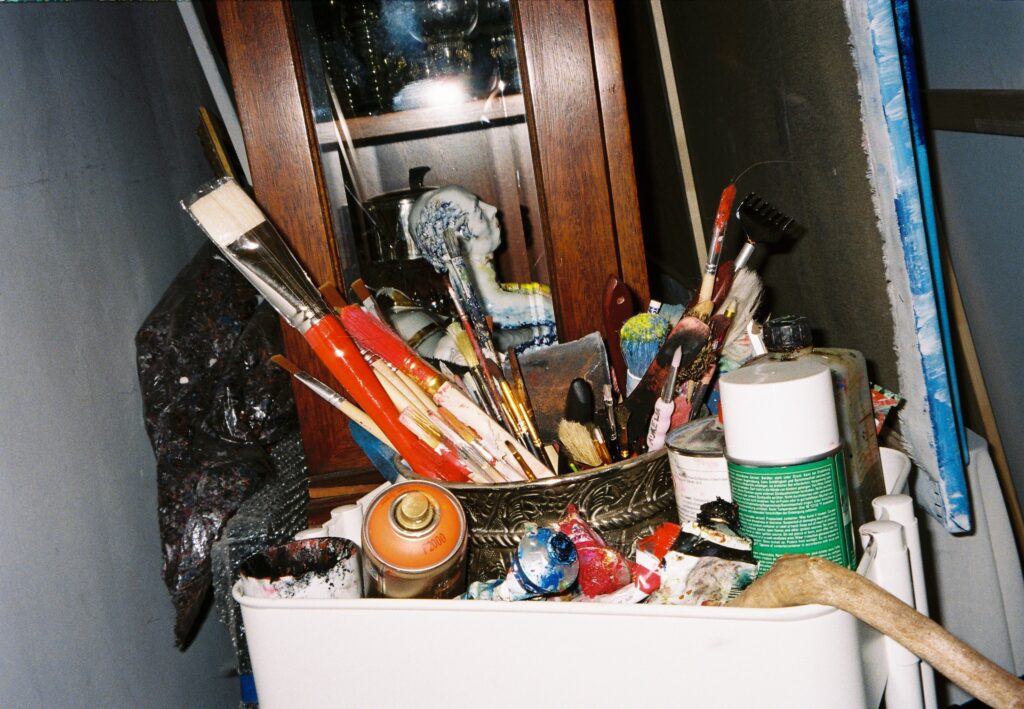
Sophia’s practice today is defined by experimentation, openness, and an almost musical sense of improvisation. She does not begin with strict concepts or predetermined outcomes. Instead, she enters each painting through a process of listening to her materials. “The materials have a will of their own,” she says. “There is an inertia, a co-agency. I open myself to these other co-creators.” She often paints on the floor, moving around the canvas with her whole body. Her gestures are expansive and physical and leave visible traces across the surface. Fingerprints, smears, stains, and fragments of plants often become part of the final work.
Her way of mixing materials reflects the same openness. “I mix all the things you are not supposed to mix,” she says. She combines oil and acrylic, egg tempera she makes herself, construction materials, powdered pigments, and plant matter. She finds these raw materials to be far more alive than conventional paints. Pigments in particular hold a special fascination for her. She describes them as earthy, ancient, and full of vibration. Her use of iron oxide intensified during a residency in Mexico City. “I felt this earthy vibration everywhere, this deep sense of time,” she says. The pigment allowed her to tap into a material history that extended far beyond the limits of the studio.
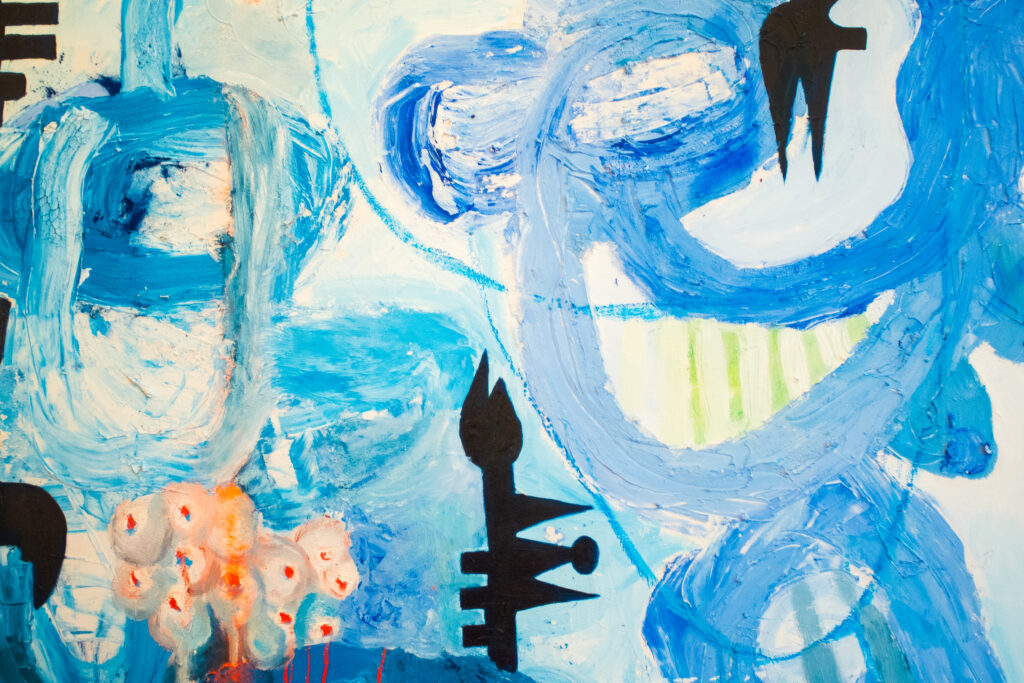
Sophia often describes her paintings as terrains, both external and internal. They are not illustrations of landscapes but rather fields where psychological life and physical matter merge. She calls many of them psychographies. They grow through layering, eroding, and rebuilding. Images emerge and disappear. Surfaces accumulate and shed themselves. “You cannot get attached to the status quo,” she says. “You always have to be ready to destroy what you have made. It is a practice in letting go.” This process-oriented approach has become her way of thinking about life more broadly, in which destruction and creation remain inseparable.
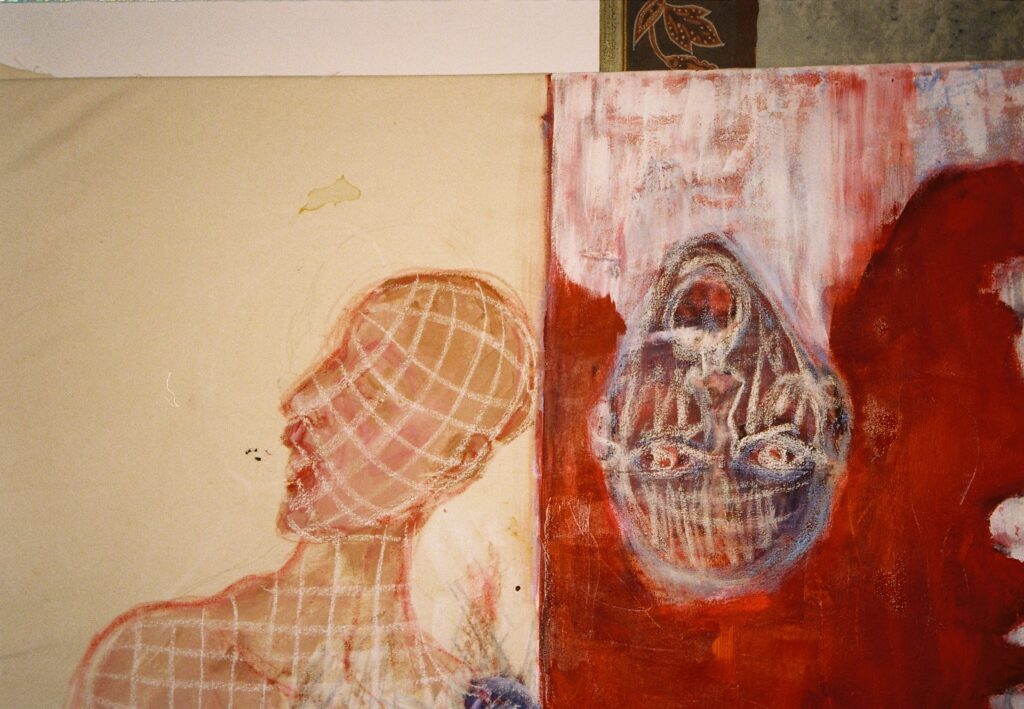
Coming from literary scholarship, Sophia finds abstraction to be a liberating space, one that refuses to be pinned down by language. She draws inspiration from quantum physics, particularly its idea that reality exists as potentiality until observed. “Abstraction is a hint toward another world,” she says. She sees the viewer as a participant who completes the work through the act of looking. “When someone looks at a painting, they actualize it. It becomes real in a different way for each person. Reality is participatory.” This belief drives her toward works that remain open ended, porous, and available to multiple interpretations.
One of her series, which she calls The Thin Realm, is rooted in a Celtic idea suggesting that another world always exists beside this one, brushing up against it. A painting titled Black Dog belongs to this series. No dog appears in the work, and the painting does not explain the title. She finds this tension between language and image generative. “I like the asymmetry between language and painting,” she says. “One cannot contain the other.” For her, this asymmetry activates the imagination. It allows the viewer to step into a realm where meanings unfold rather than remain fixed.
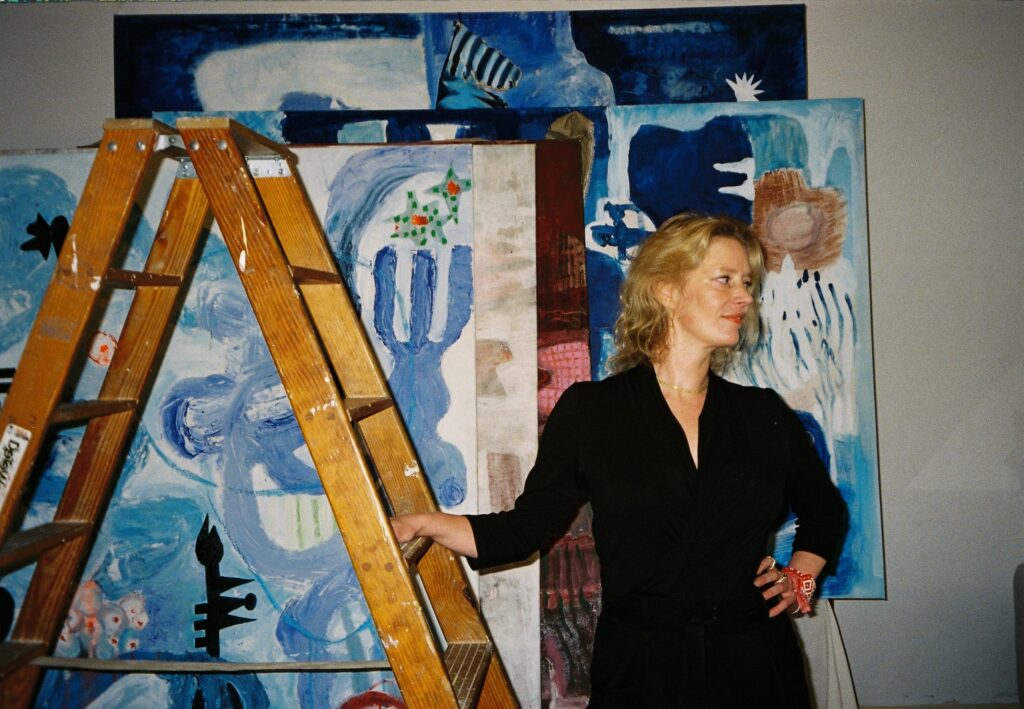
Scale plays a significant role in Sophia’s practice. Large unstretched canvases allow her to involve her entire body and to work with a kind of choreography. “The canvas becomes a dance floor,” she says. Smaller works feel more condensed, like visual poems. The larger ones, however, give her the sense of entering a landscape. She dreams of working in far larger spaces. “I want an airplane hangar,” she says with amusement. “So I can paint huge works and move in them like a workout.”
Sophia’s reflections on the world around her surface in a new series where she explores resistance in abstract form. She sees echoes of the Baroque period in our current moment, with its extremes of spectacle and authority. She is interested in how people respond to rising power structures, and this energy works its way into the movements and tensions of her compositions. “It is strange,” she says, “because these are abstract paintings, but they carry the energy of confrontation and uprising.” The result is not a literal depiction of protest but rather an atmosphere of collective force.
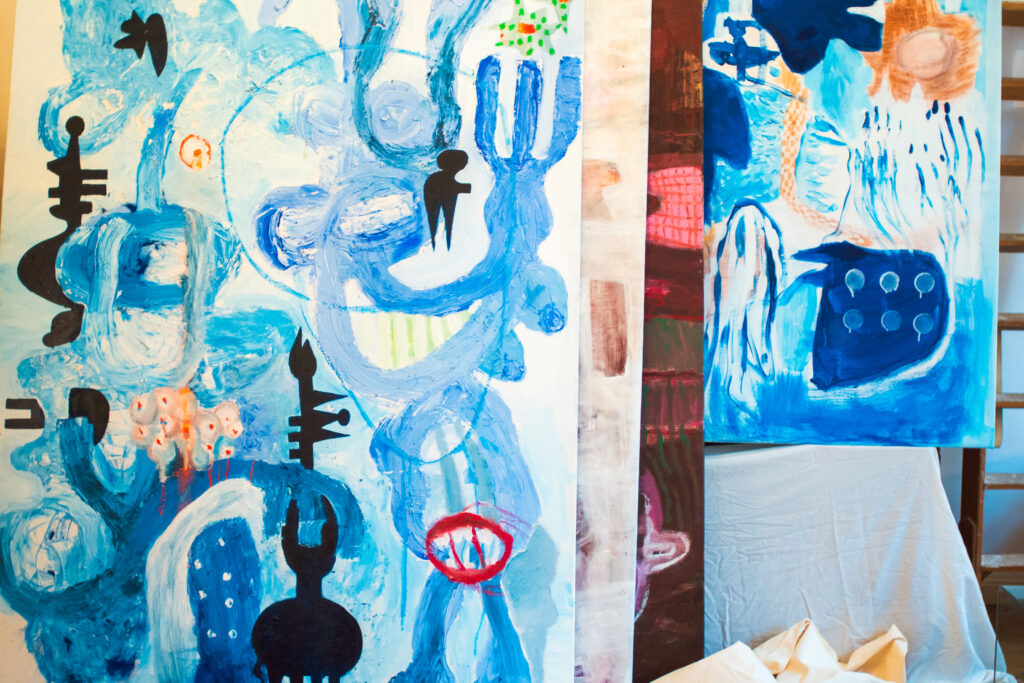
Until recently, much of Sophia’s work lived privately in her studio. In 2024, she began showing her paintings more publicly, and the experience changed something in her. “It gave me such a thrill,” she says. Seeing viewers respond to her work with their own interpretations reaffirmed her commitment to openness and multiplicity. It also strengthened her desire to claim visibility as a woman in the art world, where she notes that only a small portion of museum collections represent women. “I want to be seen,” she says. For her, visibility is not an act of self promotion but an act of self affirmation.
Sophia has strong feelings about what it means to be an artist. She believes the title should not be reserved for those with institutional validation. “Being an artist is a motor inside you. It animates you,” she says. She encourages younger artists not to trap themselves in stylistic or professional expectations. “We want to put ourselves into boxes,” she says. “Toss those boxes out. You can be multiple things at once, and you can own that.”
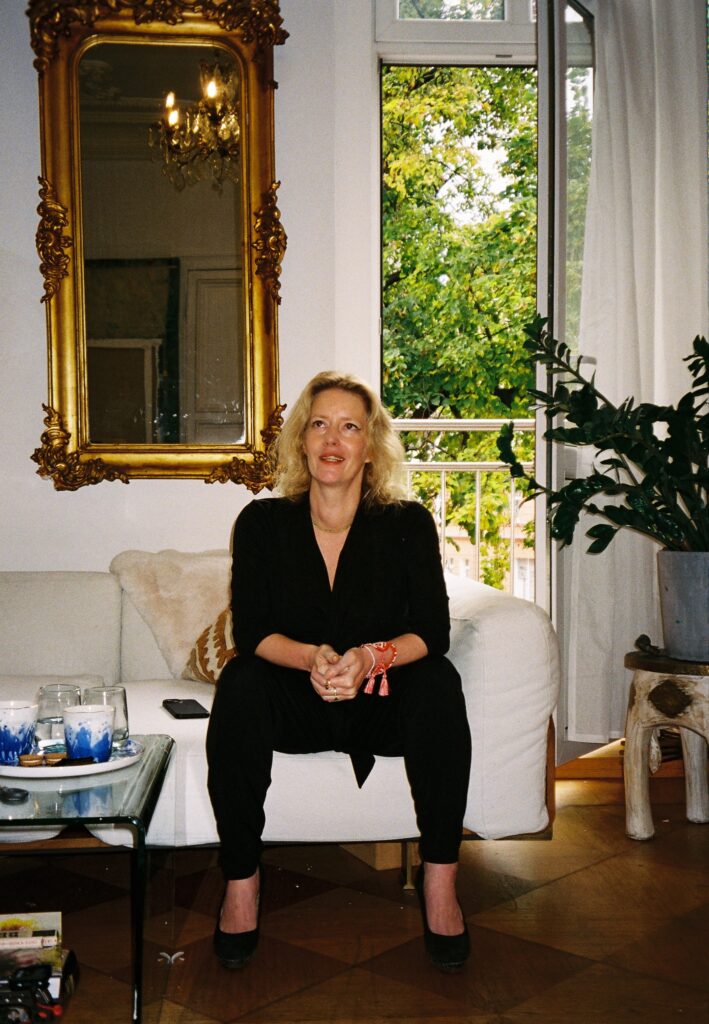
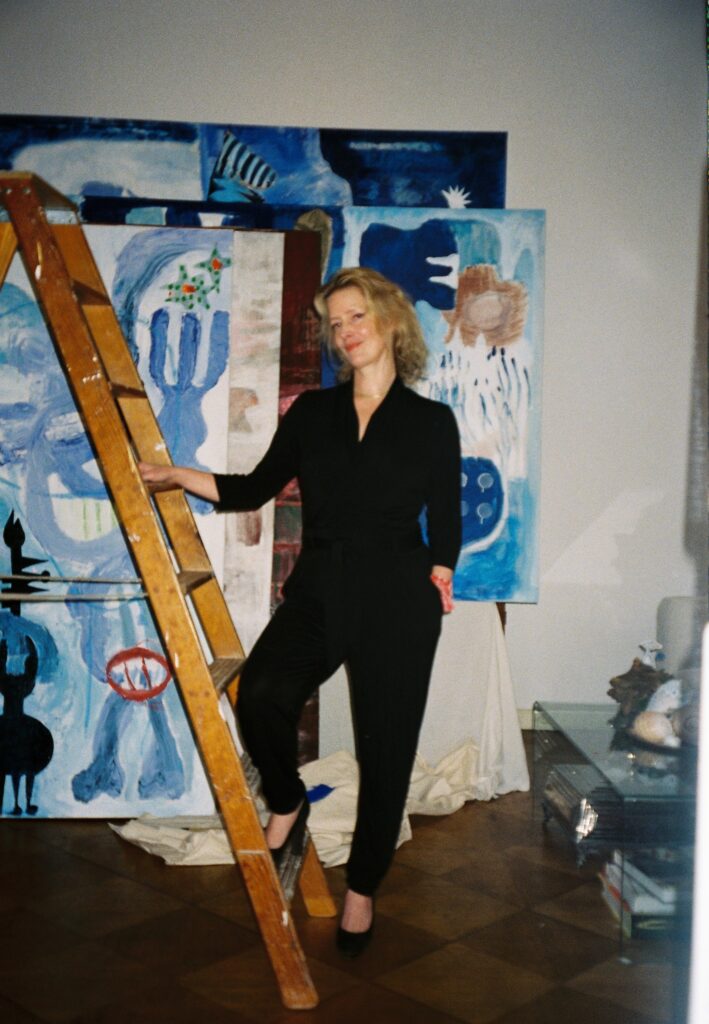
Her work today spans terrains of pigment, memory, geography, and psychological depth. Each painting is a small world with its own climate and its own gravitational pull. They do not offer answers. They offer entry points. They give viewers a place to land and a place to wander. They hold the unknown gently and allow it to remain unknown. Her paintings are spaces where the mind can rest and the body can think.
For Sophia Frese, painting is a form of world making. It is a conversation with materials, with time, with the viewer, and with the hidden terrains of the self. It is a way of staying open to possibility and of living with an awareness that everything exists in a state of becoming. Her paintings are fields of potential, waiting for someone to step inside and encounter them.
Help support Timestamp (we’re an Amazon Associate) when you buy art supplies with our affiliate links (we earn a small commission at no extra cost to you):
Shop for Acrylic Paint: https://amzn.to/43UkZLA
Shop for Canvas: https://amzn.to/4nG9q1I
Shop for Brushes: https://amzn.to/4nJQJdQ
Sam Branden
There is a moment early on where Sam Brandon admits something that feels both fragile…
Amy Bravo
Amy Bravo’s work unfolds as a raw, layered exploration of emotion, memory, and identity. An…

Björn Heyn
Björn Heyn does not describe his studio as a workplace. He calls it a playground….
Hugo Winder-Lind
Hugo Winder-Lind does not talk about art as if it is something that can be…

What Curators Are Looking For in 2026: Insights From Across the Art World
In 2026, curators aren’t just responding to aesthetic trends – they’re shaping how art is…
Ranny Macdonald
Ranny Macdonald describes painting as a threshold experience, a place where something begins to take…