
Hugo Winder-Lind does not talk about art as if it is something that can be solved. In fact, he begins from the opposite position. The expectation that someone else might hold the answers, or that there might be a place to go where everything becomes clear, is something he has long since abandoned. The reality, he explains, is much simpler and much more demanding at the same time. “Expecting people to have the answers doesn’t ever work out,” he says. “It would be great if you could go somewhere and get all the answers, but you got to figure it out. And there’s no shortcuts and you got to do it your own way.”
That realization sits at the center of his practice. For Winder-Lind, making art is not about arriving at certainty but about learning how to live with the process of discovery. The act of working becomes a way of navigation, and the value lies in figuring things out for yourself.
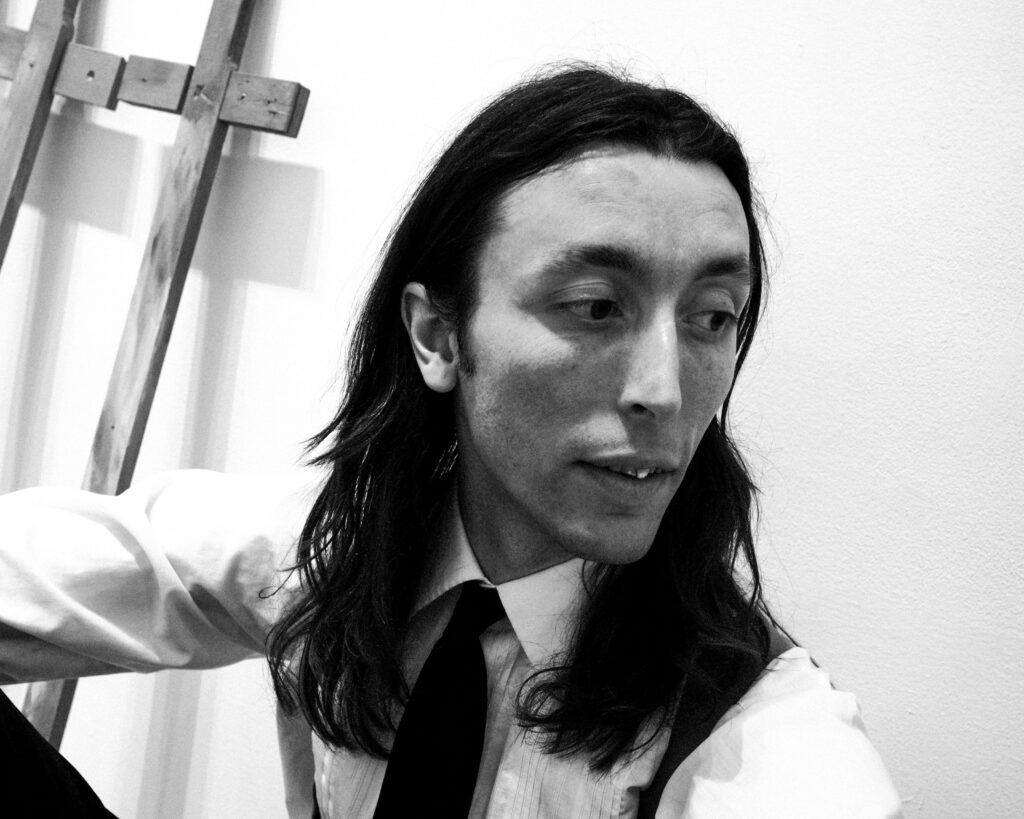
Winder-Lind introduces himself simply. “I make paintings,” he says, before quickly expanding the description. He makes images, performs on social media, and experiments with forms of expression that move beyond traditional categories. “I’m expanding like a fog or a mist,” he says. Even after a decade working with images, he describes himself as beginning again.
The impulse to create began early. As a child he spent much of his time daydreaming, building stories and imaginary scenarios. That tendency toward storytelling shaped the way he related to the world around him. One of his earliest memories illustrates the moment he became aware of the boundary between imagination and reality.
Growing up, his family kept chickens in a neighbor’s garden across the road. The garden was large and overgrown, with wooded areas that led into a churchyard. At night he and his father would go across the road to lock the chickens away. One evening a deer moved through the trees nearby. Winder-Lind remembers the sound of it moving through the brush. In that moment he told his father that he had seen the deer. His father corrected him immediately.
“You didn’t see it. Why did you say that?”
The comment stayed with him. At the time he had not thought of it as lying. For him it had been part of playing, part of inventing a story in response to the fear of something hidden in the darkness. But the conversation revealed a distinction that would remain important to him: the difference between the world in your head and the world outside it.
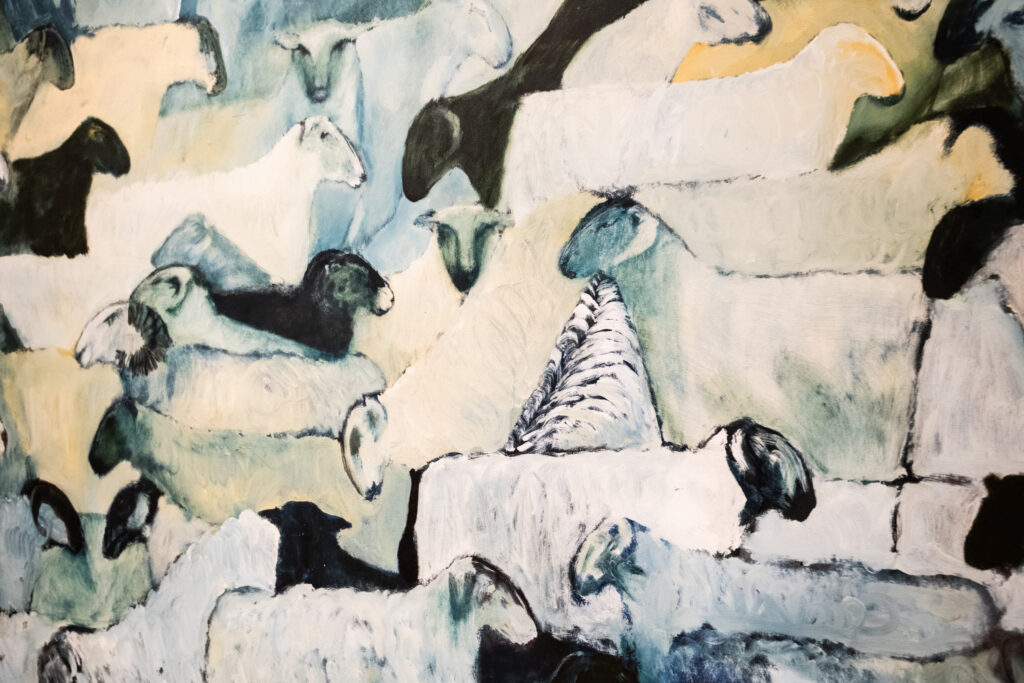
Looking back, he recognizes that the moment introduced an idea that continues to guide his work. There is the physical world that everyone shares, and there is the imaginative space that grows from it. The role of art, in his view, is not to escape reality but to translate the way it feels.
“Respecting the natural world, the physical world that we all share,” he says, “but then also being led by that into a way of articulating how it feels.”
That impulse to translate experience into expression is one reason he continues to make work. Another is the ongoing encounter with other people. Winder-Lind describes art as a conversation, one that develops through meeting individuals and exchanging ideas. The process is fueled by curiosity about human life and the strange fact of existence itself.
“It is a miracle that we’re here,” he says. “And it’s a really important thing to focus on.”
The development of an artistic practice, he believes, is less about talent than about time and persistence. Progress happens gradually, through repeated effort. He describes it through a simple image. A plant grows to the size of its pot. A fish grows to the size of its pond. The same is true for creative work.
“You put the hours in,” he says. “You just show up. Give yourself the time and space to do something and it will come.”
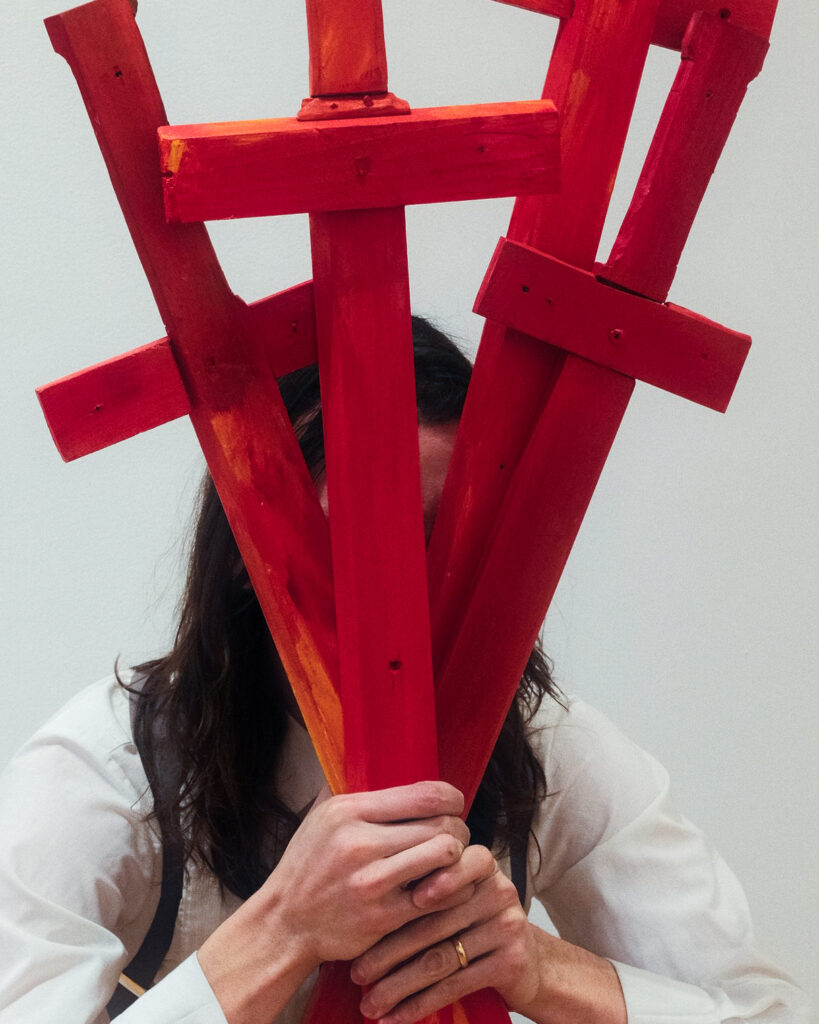
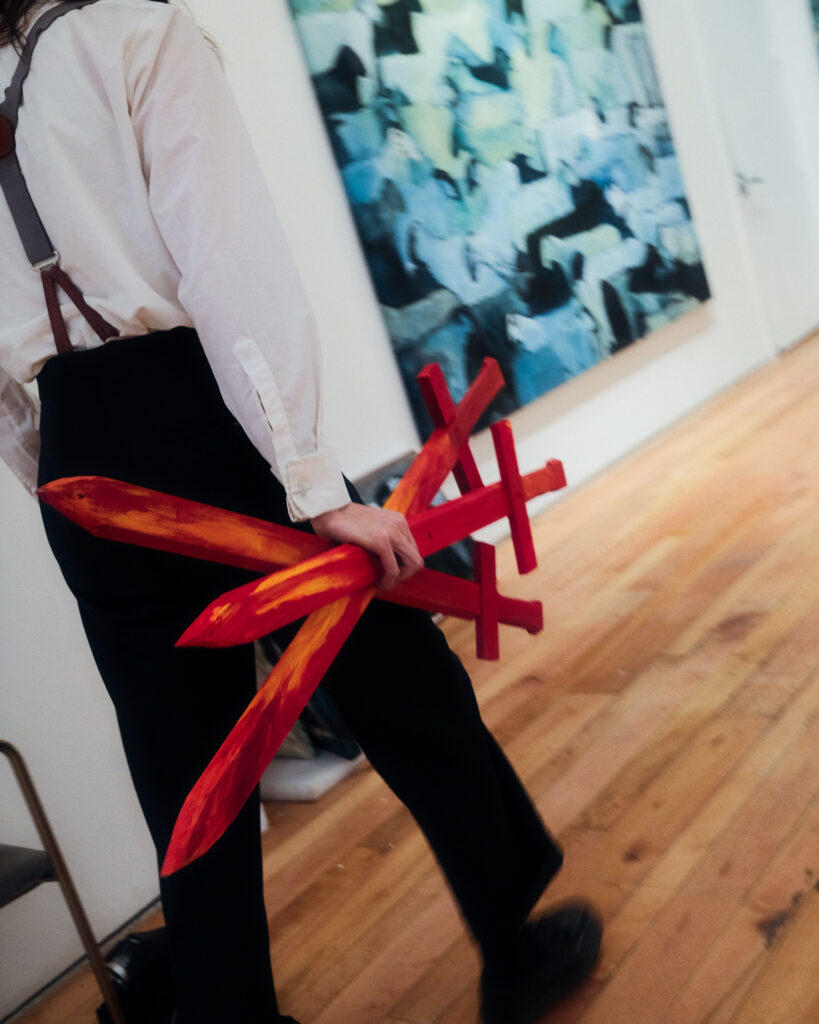
That belief in following instinct runs through many of the stories he tells about his life. As a child he was fascinated by swords. According to his mother, the word “sword” may have even been his first word. The fascination was never entirely rational. It was simply something he felt drawn to. That sense of attraction toward an object or idea, he suggests, is worth following.
“It’s that innocent kind of following that gut feeling of ‘I want this thing to exist,’” he says. “And then you make it.”
School, however, was rarely a comfortable place for him. As a child he struggled with the structure of formal education and often felt like an outsider. It seemed as if everyone else understood a system that he could not see. The experience created a lingering fear that there might always be knowledge circulating somewhere beyond his reach. For a long time he believed that success depended on gaining access to those hidden rules. Eventually he realized that the rules were largely imaginary.
That realization took time. During his education he moved between different schools, noticing how differently institutions treated students. At one school he felt recognized as an individual. At another he felt ignored entirely. The contrast pushed him to develop a sense of independence and to trust his own instincts rather than waiting for validation.
The same shift in perspective eventually shaped the way he understood the art world. As a younger artist he imagined it as a structured hierarchy with clear expectations and hidden codes. He assumed there would be a group of insiders who understood the rules and enforced them.
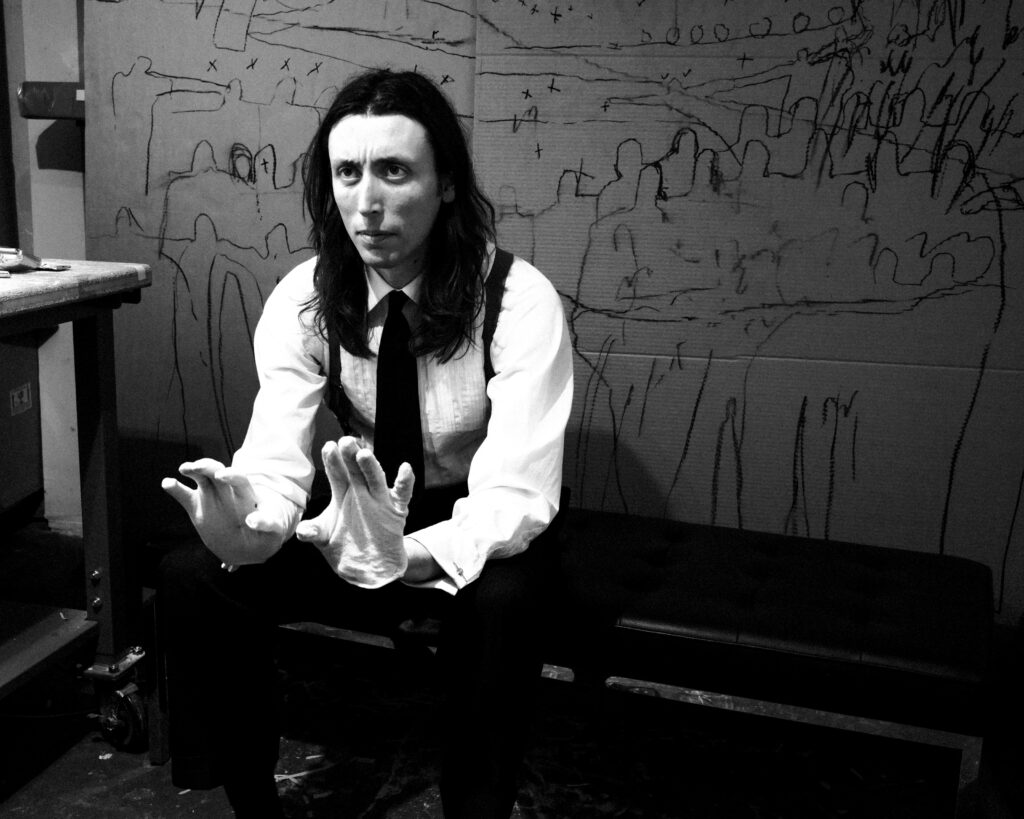
Experience showed him something else entirely. Instead of a single system, the art world looked more like a collection of overlapping ecosystems. Artists, galleries, and communities formed networks that were connected but distinct.
The most important element within that network, he believes, is genuine expression. Structures and institutions may exist around the work, but the foundation of everything remains the energy that comes from artists responding honestly to what they find meaningful.
Winder-Lind’s path into professional practice was not straightforward. He briefly attended Anglia Ruskin University’s Cambridge School of Art, partly drawn by the knowledge that Pink Floyd had once played a concert there. The experience did not match his expectations, and he eventually left.
Before that he had completed a foundation course at Oaklands College in Hertfordshire. That period left a stronger impression. Students were given the freedom to experiment, and the environment encouraged exploration. The final exhibition filled the entire building and felt like a genuine celebration of creativity.
“That felt really good,” he says. “It felt like we were honored as artists.”
University did not carry the same energy for him, and he began to question whether institutional education was necessary for developing a creative practice. Many students arrive expecting to encounter the mystery of artistic expression, he suggests, only to find that the structure of higher education rarely addresses that directly.
Instead of continuing along that path, Winder-Lind began finding his own way through practice, collaboration, and independent projects. Over time his work expanded across multiple forms of expression, including painting, photography, performance, and video.
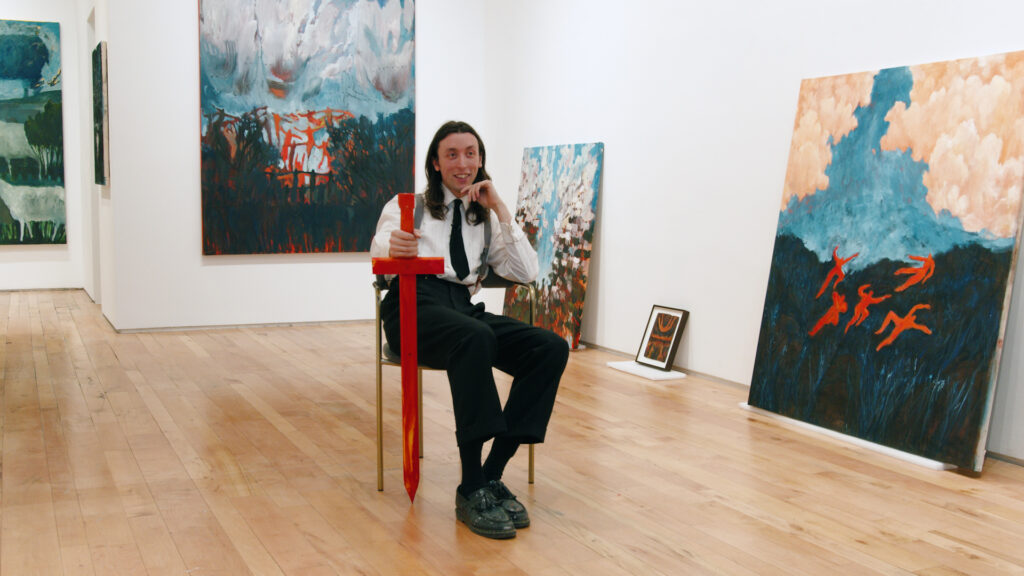
One important milestone arrived recently with an exhibition at Isabel Sullivan Gallery. The show, titled ‘Clouds of Limitless and Expanding Joy‘, marked a significant moment in his career and his first solo show in the United States. Working with the gallery over several months allowed him to shape the exhibition collaboratively rather than treating it as a fixed presentation.
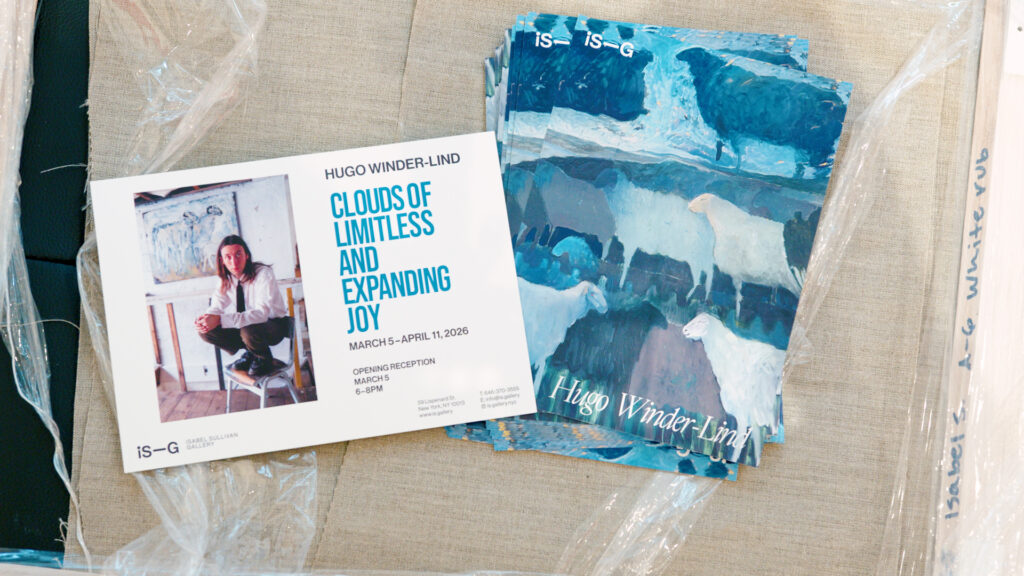
Even with careful planning, he believes the meaning of an exhibition only emerges once the work is installed and the paintings begin to interact with each other. The arrangement of objects within a space creates a narrative that cannot exist anywhere else.
“The body of work isn’t fully articulated until all the screws are in the wall,” he says.
Once the exhibition ends, the works disperse again. The larger story dissolves into individual pieces, each carrying traces of that temporary moment, a relic.
The ideas that drive his work are difficult to define. He often borrows language from religion, science, and philosophy, searching for words that might describe the experience of making art. None of them feel entirely adequate.
“There’s an essence that’s fundamentally nameless,” he says.
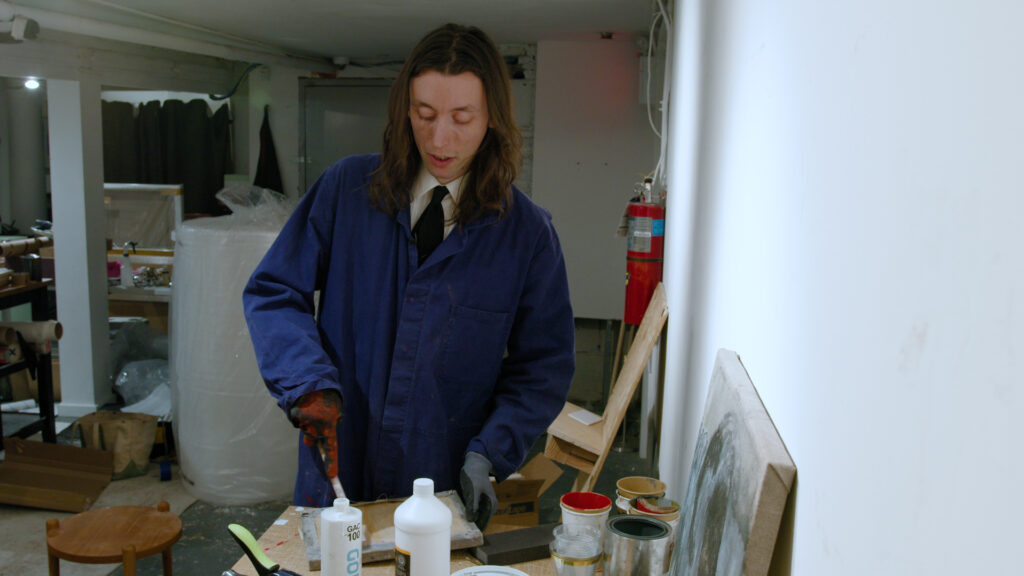
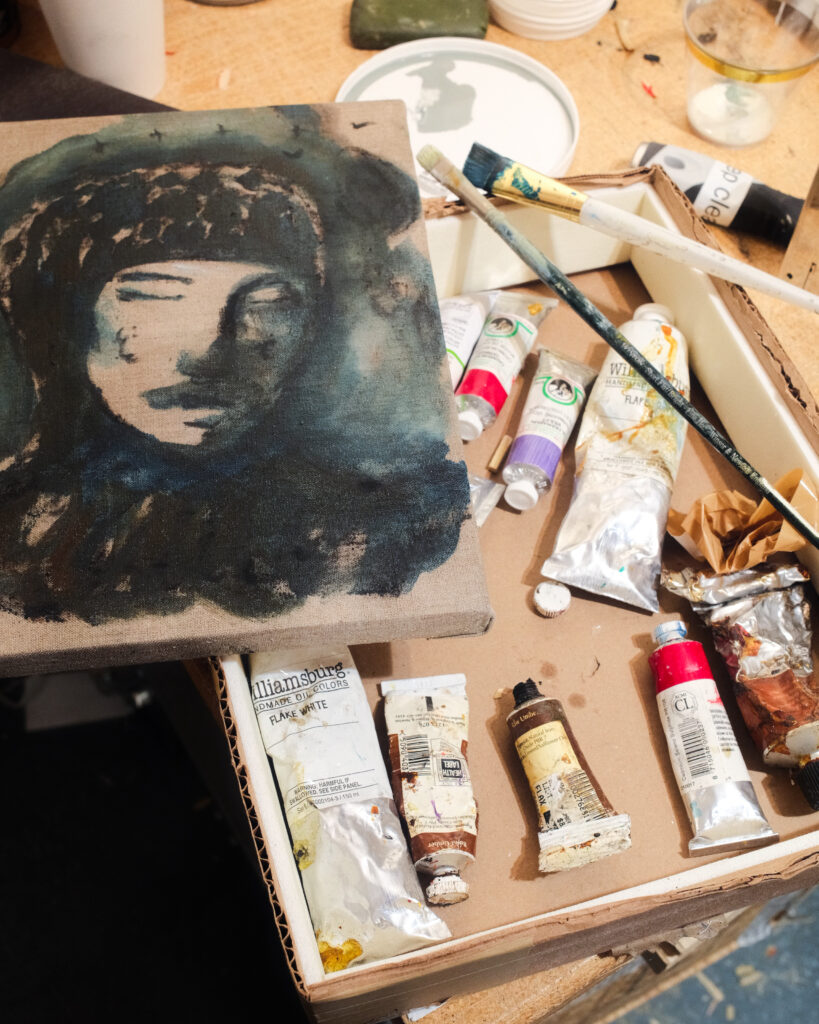
Within the studio, materials become an important guide. Winder-Lind works with oils, acrylics, and raw pigments, often mixing colors directly from powdered pigment to maintain their intensity. Opening a container of pigment, he says, can feel like discovering pure color in its most direct form.
The physical process of painting also carries a sense of risk and respect. Oil paints involve chemicals and substances that demand careful handling. He sometimes thinks about the relationship between danger and creation, comparing it to the moment a child first receives a knife and learns that it must be treated with care. “You enter into this pact with the thing that’s dangerous,” he says. Materials themselves can carry histories. Winder-Lind is often drawn to objects that already have a life before entering the studio. Working with secondhand surfaces or found materials adds another layer to the process, connecting the artwork to the physical world from which it emerges.
The studio environment shapes the rhythm of his practice. In recent months he has worked in a large space that allows him to build objects, paint on larger surfaces, and experiment freely. The studio becomes a tool for thinking, a place where ideas can develop through physical action.
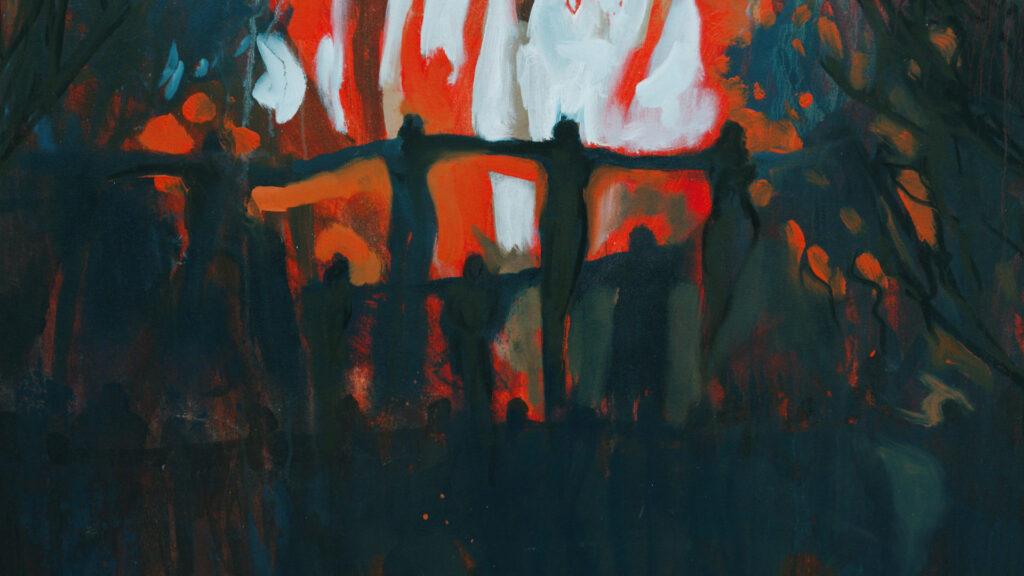
Still, he insists that a studio is not a solution in itself. Many artists believe obtaining a dedicated workspace will automatically transform their practice, but he sees it differently. What matters most is the alignment between your life and the work you want to make.
Throughout his career, Winder-Lind has drawn inspiration from mentors and peers. One particularly important figure is the painter Tom Rickman, whose approach to landscape painting left a lasting impression. Rickman’s advice was simple.
“Just do the work,” he told him.
The message has stayed with Winder-Lind ever since. The paintings themselves carry the answers, even if those answers are not immediately visible. Each work contains traces of the questions that were present during its creation.
“You’re following the work,” he says. “And the work is made of the land, the materials, the physical world.”
At times the process can be exhausting. The romantic image of artistic life often ignores the reality of long hours, self doubt, and financial uncertainty. Painting can involve isolation, physical strain, and the constant risk that months of effort may lead nowhere.
“It doesn’t feel good all the time,” he says. “Sometimes it’s really horrible.”
But the reward comes in moments of connection. When someone encounters a work and recognizes something of their own experience within it, the effort suddenly feels worthwhile.
“When people say they’ve seen your work and it made them feel like this,” he says, “that’s really good.”
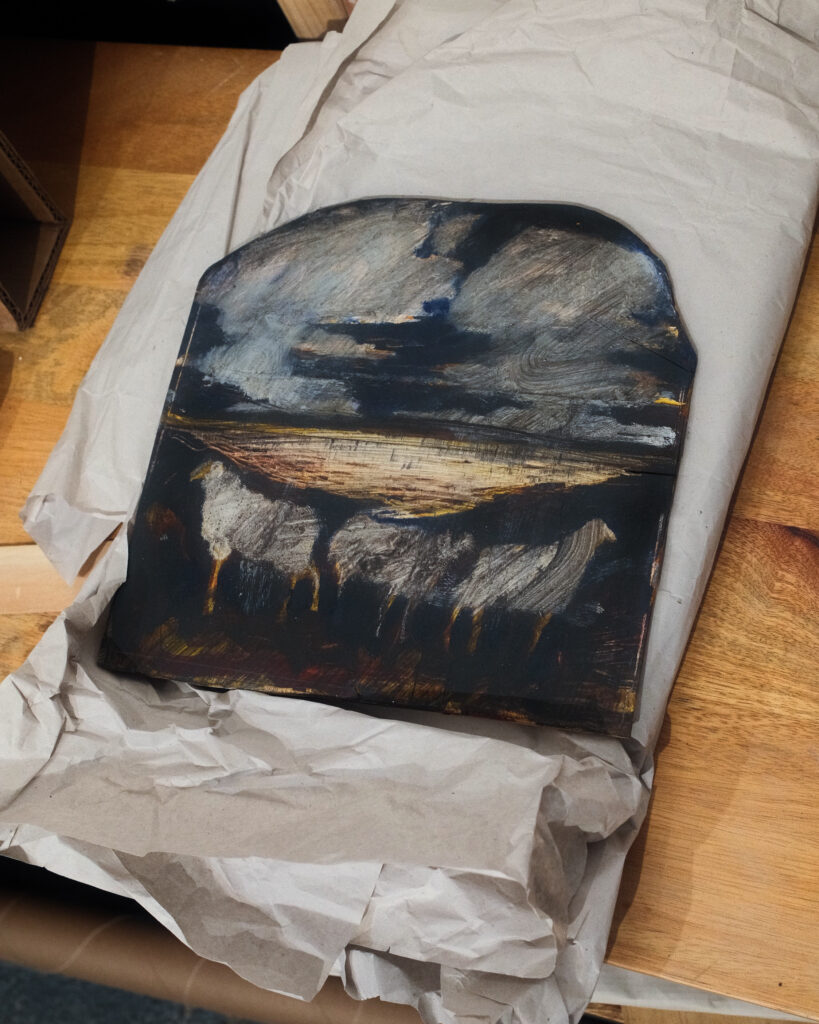
Scale has recently become another important element in his practice. For many years Winder-Lind worked primarily on small surfaces. More recently he has begun producing larger paintings, exploring how physical size can influence the emotional impact of an image.
Being able to expand the scale of the work allows him to express ideas that previously felt constrained.
“You’re trying to express these really big feelings,” he says.
The title of his recent exhibition, Clouds of Limitless and Expanding Joy, emerged from a dream. In the middle of the night he heard the phrase in his mind. The words captured a sensation he had been thinking about for some time.
For Winder-Lind, thoughts and images often behave like the particles described in modern physics. They appear in multiple places at once, existing as possibilities rather than fixed objects. Painting becomes a way of exploring that field of potential.
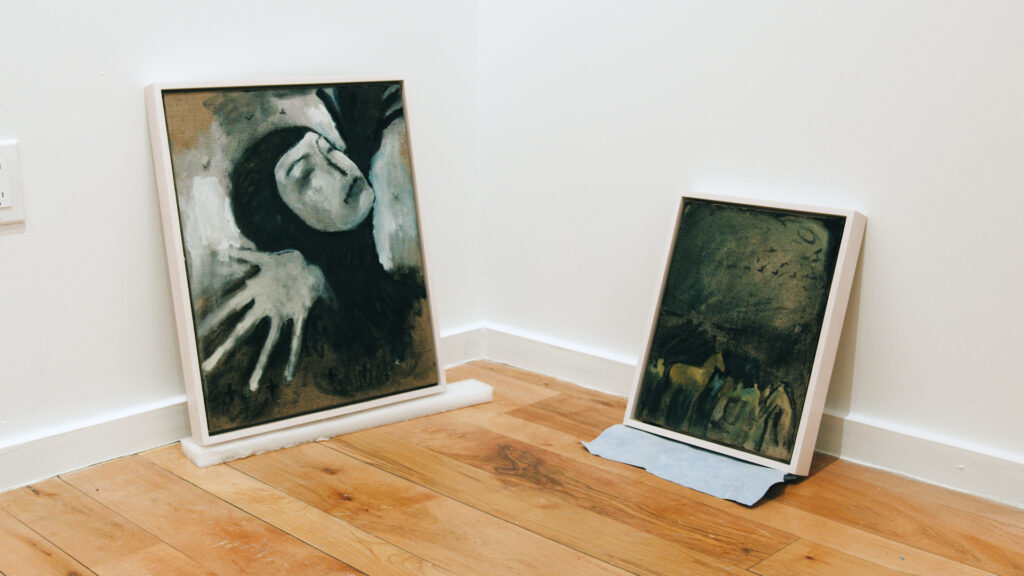
“Subatomic particles are made of probability,” he says. “That’s what they’re made of.”
The same sense of floating possibility appears in the creative process. Ideas shift and evolve, moving between imagination and physical reality.
“It kind of feels how thoughts are,” he says.
The realization can be unsettling. If everything is made from unstable energy, the material world begins to feel less solid than it appears. Yet he returns to the same conclusion again and again.
“Yes, it’s floating potential energy,” he says.
“But it’s also made out of joy.”
And within that space of possibility, the work continues.
About the Author
Sam Burke is an American artist and writer based in New York City. Working across film, performance, and writing exploring storytelling, identity, and place. As co-founder of Timestamp, Burke interviews artists, shares insights, and highlights conversations shaping art world today.
Hugo Winder-Lind
Hugo Winder-Lind does not talk about art as if it is something that can be…

What Curators Are Looking For in 2026: Insights From Across the Art World
In 2026, curators aren’t just responding to aesthetic trends – they’re shaping how art is…
Ranny Macdonald
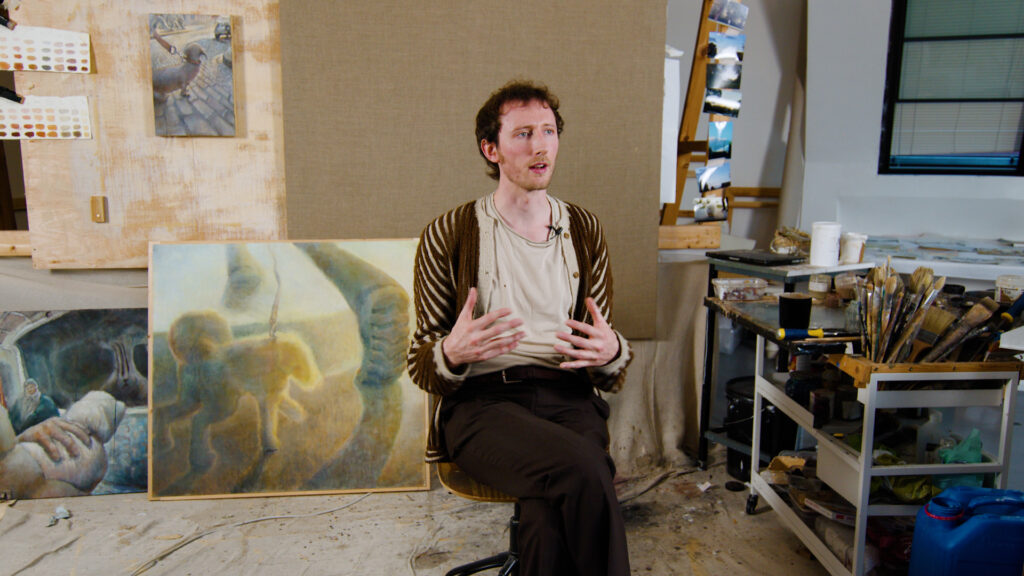
Ranny Macdonald describes painting as a threshold experience, a place where something begins to take…
Cathleen Clarke
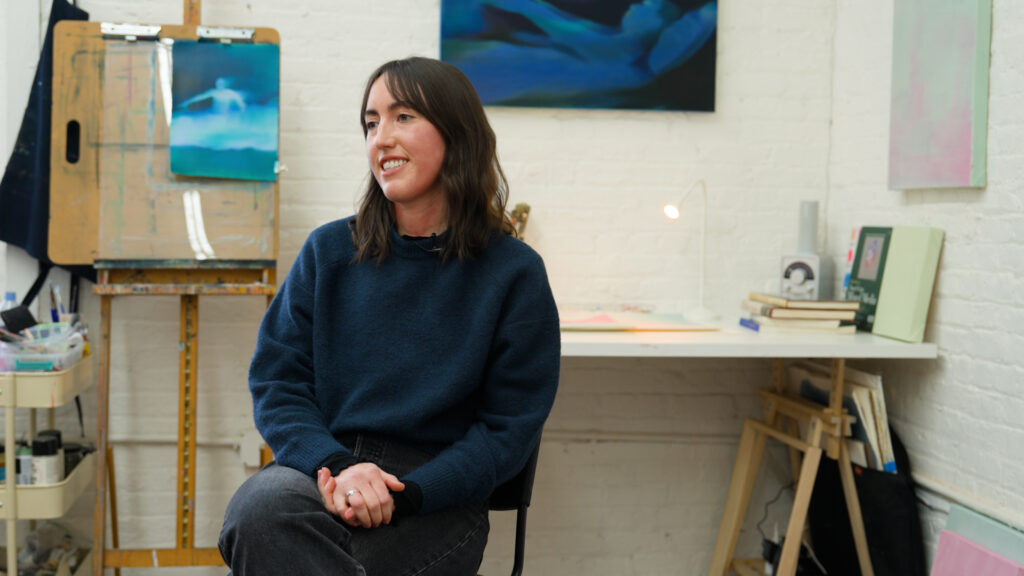
Cathleen Clarke has always been drawn to the spaces where memory begins to thin out….
Kara Su
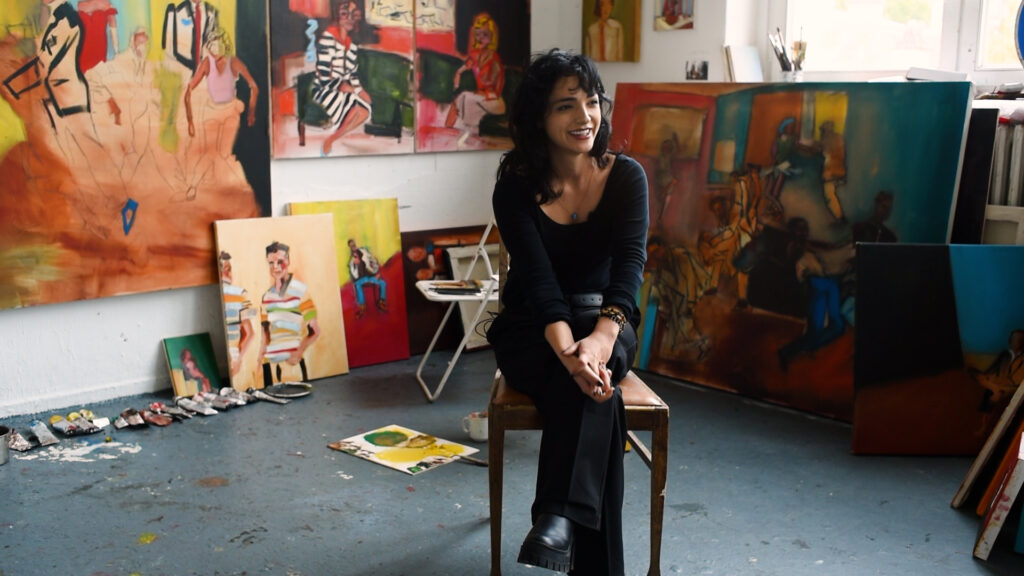
Born and raised in Berlin with Kurdish roots, Kara Su grew up far from the…
Logan Sylve
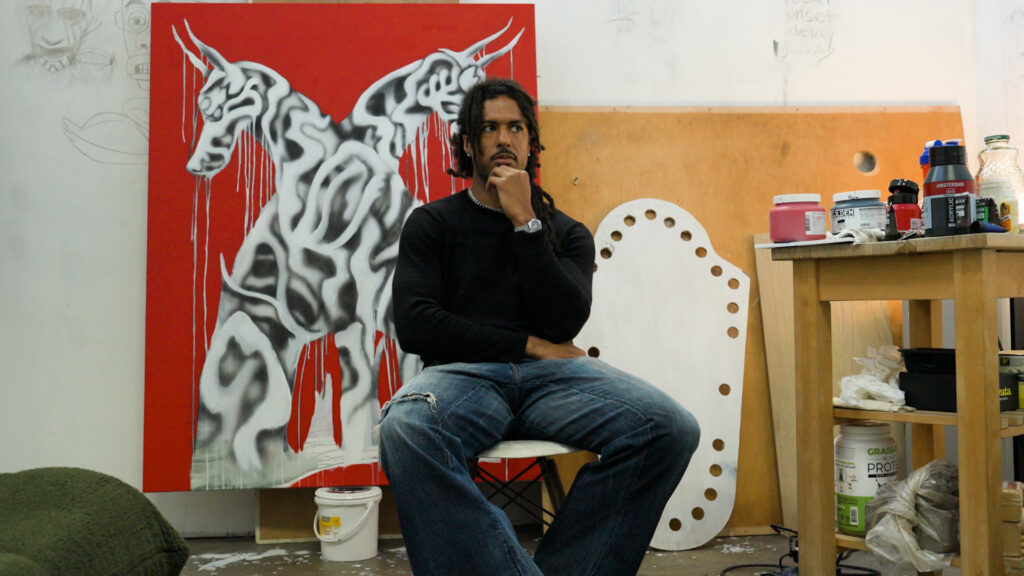
For Logan Sylve, painting is a steadfast companion. “I feel like painting is my first…