
Adrien Manso describes making art as an impulse you follow without overthinking, the same way you would eat when you are hungry or swim when you want to swim. This intuitive rhythm defines his entire practice, moving fluidly between drawing, painting, design, and craft without hierarchy.
Born and raised in the southwest of France, Manso’s early creative language was shaped by a mix of childhood drawing, skate culture, and graffiti. Like many artists of his generation, he began by copying imagery, from anime to skateboard graphics, gradually developing his own visual vocabulary through repetition and experimentation. Graffiti became a foundational education, not just in form but in culture. Working with a small crew and guided by an older mentor, he absorbed both the techniques of lettering and the history of hip hop, embedding a sense of movement, rhythm, and immediacy into his work.
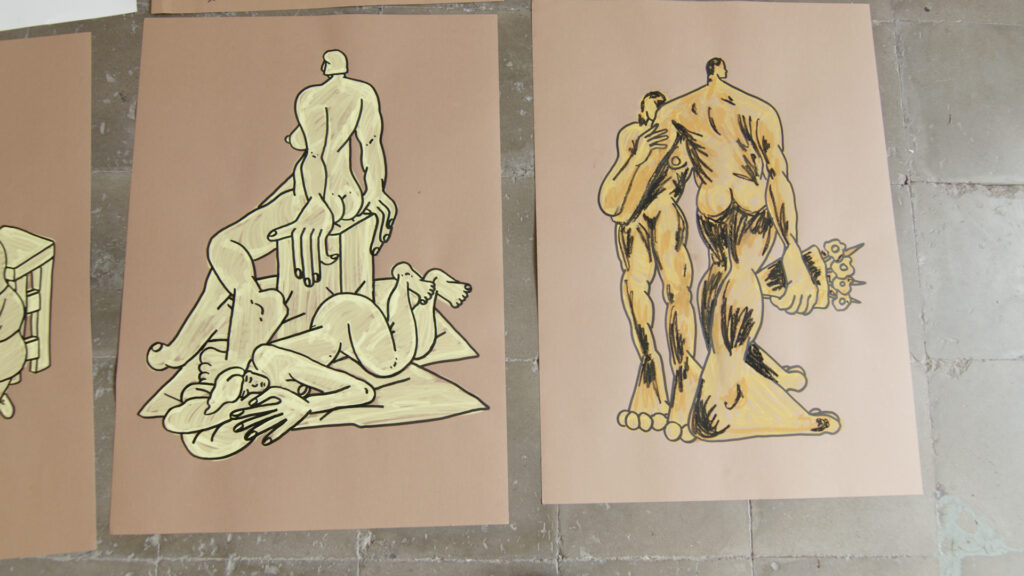
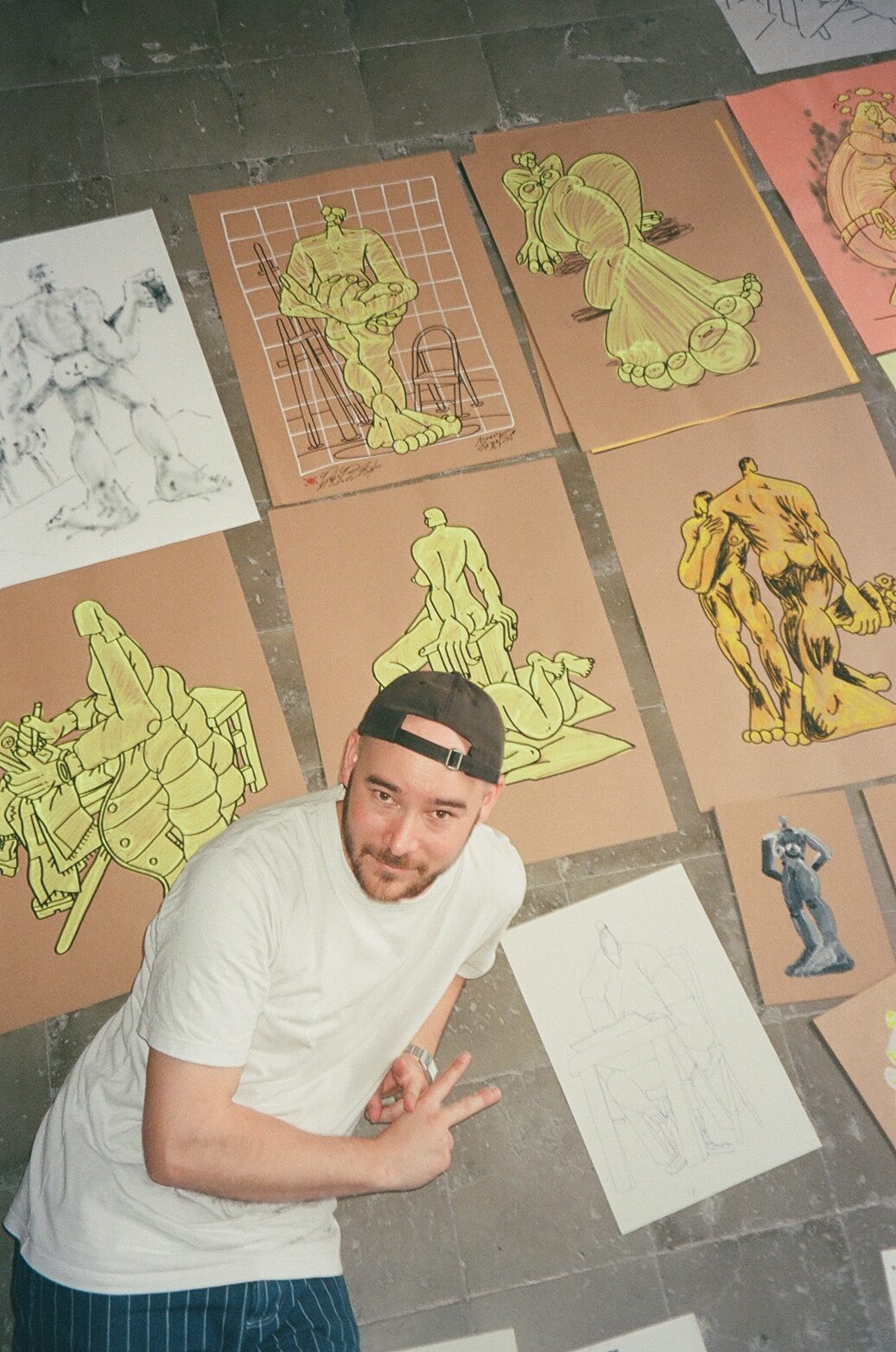
That energy still carries through today, especially in his live drawing sessions. These sessions, often limited to five or fifteen minutes per pose, operate with the same urgency as a graffiti tag. There is no undo, no time for correction, only the direct translation of instinct onto surface. The result is raw and revealing. Each drawing captures a specific moment of presence, where gesture and emotion become inseparable. For Manso, this is where authenticity lives, in the speed, the risk, and the inability to overcontrol the outcome.
His path through formal education was less linear. After leaving a more rigid academic environment, he found a better fit in a smaller, design focused school where he could explore creative direction more freely. This shift opened up his practice beyond graffiti, allowing him to merge influences rather than remain confined to one visual language. His work today reflects that hybridity, blending references from different eras, cultures, and mediums into layered compositions that feel both playful and complex.
His work operates as a synthesis of lived experience. He gravitates toward rounded forms, vibrant energy, and a sense of joy, often favoring curiosity over intention. His pieces feel like accumulations rather than statements, where personal history, visual memory, and experimentation coexist. Medieval imagery might sit alongside graffiti inspired characters, or contemporary references might be filtered through older aesthetic frameworks. Time collapses, creating a visual space where everything can exist at once.
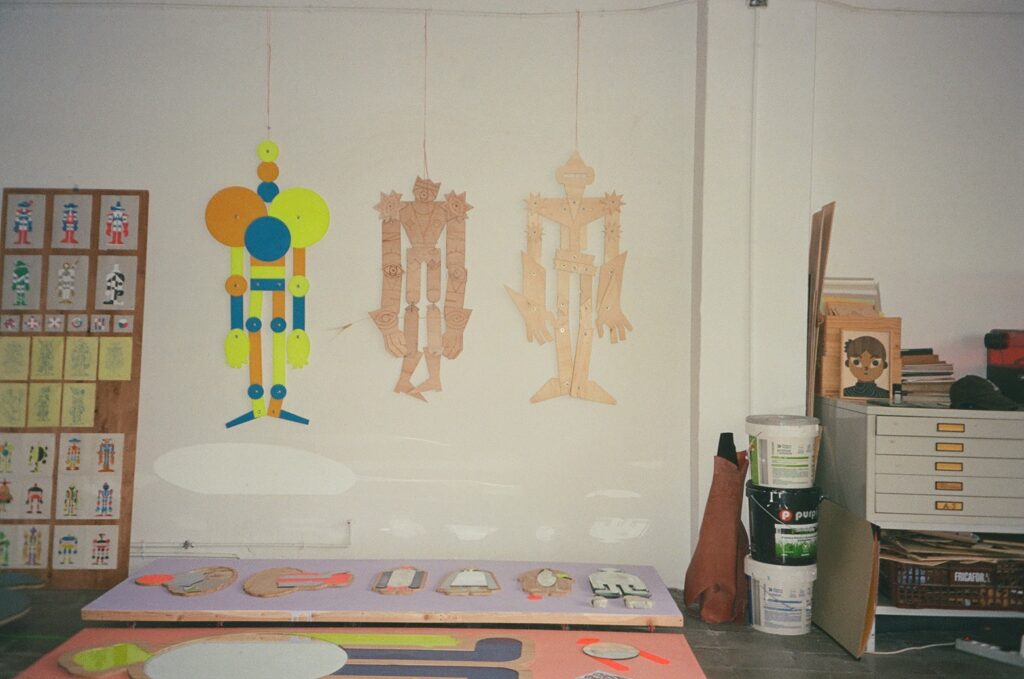
In recent years, his practice has expanded further into object making and design. Mirrors, furniture, and sculptural pieces have become an extension of his drawing, translating his graphic language into physical, functional forms. These works blur the boundary between art and utility, offering something that can exist both as a visual object and as part of everyday life. This shift also reflects a different relationship to authorship and ownership. While drawings and paintings can feel personal and difficult to let go of, objects can be reproduced, shared, and integrated into broader contexts.
Experimentation remains central to everything he does. Whether working with unconventional materials, testing tools, or using fabrication machines, he approaches making as an ongoing process of trial and error. Mistakes are not setbacks but necessary steps, part of a larger system of learning through doing. This mindset extends beyond the studio into a broader philosophy. Fearlessness, in his view, comes from accepting error as inevitable and continuing anyway.
Barcelona, where he is now based, has played an important role in shaping his current rhythm. Moving there allowed him to find both community and space, balancing the solitude of studio work with the energy of shared environments. This duality between isolation and interaction mirrors the contrast in his practice, between controlled making and spontaneous creation, between crafted objects and immediate drawings.
Across all these forms, what remains constant is movement. Manso resists being defined by a single medium or direction, choosing instead to follow whatever feels necessary in the moment. His work is not about arriving at a fixed identity but about staying open, responsive, and in motion.
About the Author
Sam Burke is an American artist and writer based in New York City. Working across film, performance, and writing exploring storytelling, identity, and place. As co-founder of Timestamp, Burke interviews artists, shares insights, and highlights conversations shaping art world today.
Stéphane Koyama-Meyer
French visual artist and designer based near Basel, Stéphane Koyama-Meyer grew up surrounded by art,…
Yuval Bezalel
For Yuval Bezalel, painting begins with the hands, before there is a narrative, before there…
Adèle Aproh
For Adèle Aproh, drawing began long before she knew it could become a career. Her…
Félix Deschamps Mak
Félix Deschamps Mak is a French painter based in Paris, working in large scale figurative…
Katya Quel
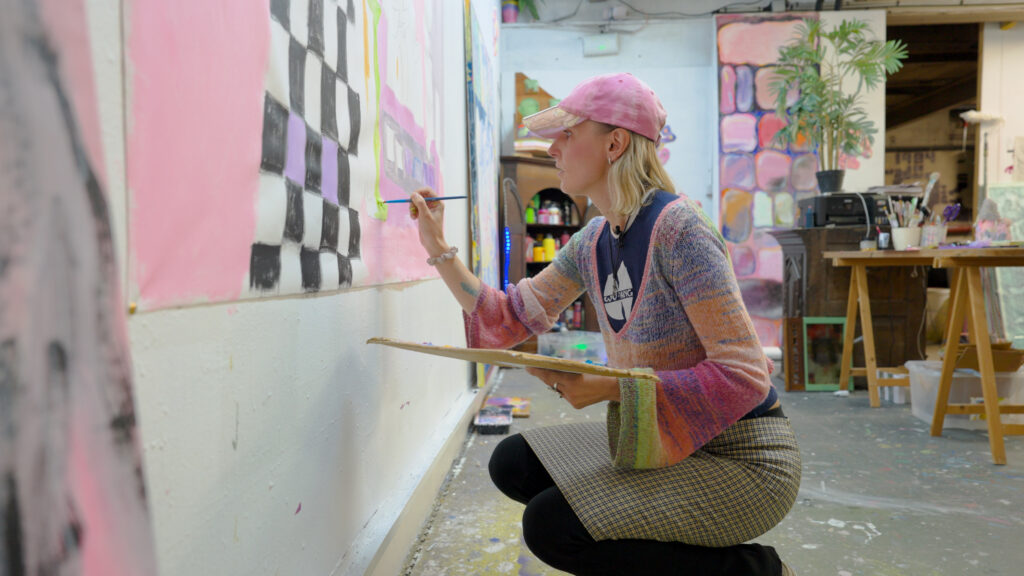
Katya Quel is an artist and multidisciplinary creator, born and raised in Moscow, who now…
Why Dia Beacon Deserves a Full Day of Your Attention
There are museums you visit to check a box. And there are museums that quietly…