
Art school teaches you technique, composition, and craft—it shows you how to make work. What it rarely teaches is how to talk about your work, build a consistent practice, or keep creating once the structure disappears.
For many artists, graduation marks the beginning of a quieter, more difficult phase of their practice — one without deadlines, critiques, studios full of peers, or institutional validation. The question shifts from “What should I make for this class?” to “How do I keep going at all?”
Sustaining a studio practice over years or decades is less about talent and more about habits, psychology, and endurance. These are the things art school often overlooks — not out of neglect, but because they’re difficult to formalize, grade, or compress into a semester.
This article looks at what art school doesn’t teach you about sustaining a studio practice — and what working artists tend to learn the hard way.
A Studio Practice Is Not the Same as Making Good Work
In art school, success is often measured project by project. You’re evaluated on outcomes: the strength of a body of work, how it reads in critique, how convincingly you can articulate it. What’s less visible is how that work gets made on a daily basis.
A sustainable studio practice isn’t about always making strong work. It’s about showing up when the work is unclear, unresolved, or disappointing. It’s about continuing to work when there’s no exhibition on the horizon and no immediate feedback loop.
Many artists leave school believing that once they’ve “found their voice,” the work will come naturally. In reality, voice emerges slowly through repetition, doubt, and long periods of uncertainty. A studio practice isn’t a fixed identity — it’s a relationship you maintain over time.
Motivation Is an Unreliable Foundation
Art school environments are inherently motivating. You’re surrounded by peers, deadlines are enforced, and the stakes feel high. Outside of school, that scaffolding disappears almost overnight.
One of the hardest lessons artists learn is that motivation cannot be the foundation of a long-term practice. Motivation fluctuates. Energy fades. Confidence collapses. If your practice depends on feeling inspired, it will eventually stall.
For painter Henry Ward, painting is not driven by motivation or passion, but by necessity — a theme he returns to in his Timestamp interview.
Sustainable practices are built on routine rather than excitement. Many working artists describe their practice less as passion and more as maintenance — a way of staying in touch with materials, ideas, and attention, even when enthusiasm is low.
Art school rarely prepares students for this emotional shift, yet it’s one of the most important transitions an artist will face.
No One Is Assigning You Work Anymore
After graduation, the most destabilizing change is the absence of external structure. No syllabus. No critique dates. No professor waiting to see what you’ve made.
This freedom is often romanticized, but it can be paralyzing. Without structure, many artists struggle to begin at all. The studio becomes optional — something to return to once life “settles down.”
What art school doesn’t teach is that structure is something artists must build for themselves. This might mean setting modest daily goals, working within constraints, or establishing non-negotiable studio time. The form doesn’t matter as much as the consistency.
Artists who sustain long practices often create systems that feel almost boring — but those systems are what allow the work to continue.
In his Timestamp interview, Ruprecht von Kaufmann highlights a significant gap in formal art education: the failure to teach students how to effectively communicate about their practice. He identifies the following key insights regarding art school and the realities of being an art student:
- The Neglected Skill of Communication: Kaufmann notes that most art schools neglect to teach students how to talk about their work in a cohesive and interesting manner. He considers this a “great disadvantage,” as the ability to represent one’s work to the world is “crucially important” for a professional career.
- Art School as a “Safe Spot”: He views art school as a valuable “time window” that offers a safe environment to explore and figure out one’s artistic identity without having to immediately justify every action to the world.
- The Danger of the “Safety Zone”: While the safe environment is beneficial, he warns that some students “hide in that safety zone”. He believes that going out into the world and learning to “fend for yourself” and defend your work to the public is a “very valuable lesson” that schooling alone cannot provide.
- Graduation is Only the Beginning: Kaufmann observes that many young artists mistakenly believe they have “discovered… everything about being an artist” once they graduate and find their “style”. He emphasizes that graduating is merely the first step in a “very, very long journey of exploration”.
- The Challenge of Sustaining Interest: He asserts that the most difficult part of a long-term practice is keeping the work “alive,” “lively,” and “exciting” over time. This sustainability is impossible if an artist simply clings to the style they developed as a student, as they will eventually “get bored” with themselves.
- The Need for Self-Promotion: Kaufmann encourages students to understand the importance of promoting their work and taking that representation seriously, noting that many painters are not “natural born promoters”.
Critique Is Not the Same as Feedback in the Real World
In school, critique is constant. Your work is discussed, challenged, and contextualized. Outside of that environment, feedback becomes sporadic or disappears entirely.
This silence can feel like failure, even when it isn’t. Many artists interpret the lack of response as a sign that the work isn’t working, rather than as a natural condition of making art outside institutions.
A sustainable practice requires learning how to work without immediate validation. It means developing internal criteria for what feels necessary, interesting, or unresolved — and trusting those instincts long before anyone else responds.
Art school trains artists to respond to critique; it rarely trains them to operate without it.
Career Narratives Are Often Misleading
Art school often presents success through selective examples: artists who received early recognition, gallery representation, or institutional support. While these stories can be inspiring, they can also distort expectations.
Most artists build careers slowly, unevenly, and often invisibly. Progress is rarely linear. Periods of momentum are followed by long stretches of obscurity.
What sustains artists through these cycles isn’t strategy alone, but commitment to the work itself. Those who last tend to measure success less by milestones and more by whether they are still engaged, curious, and working.
Art school rarely emphasizes longevity — yet longevity is what allows work to deepen.
Teaching, Writing, and Other Practices Are Not Distractions
Many artists feel pressure to separate “real” studio work from teaching, writing, or other forms of engagement. In reality, these activities often support and sharpen the studio practice rather than detract from it.
Teaching can clarify values. Writing can articulate questions that haven’t yet taken visual form. Conversations with students or peers can reframe stalled ideas.
Sustaining a studio practice often means allowing it to exist alongside other forms of labor, rather than protecting it as something fragile or isolated. Art school sometimes frames these activities as secondary, when in practice they’re deeply intertwined.
In our discussion with Henry Ward, he discusses a unique approach to artist education through a correspondence course where teaching is conducted by writing letters.
“We teach by writing letters to other artists and they write letters back, which is a really lovely way of doing it. This actually slows the conversation down.”
Ward elaborates on the benefits of this “slow” educational process:
- Forced Reflection: He explains that while a traditional studio visit requires an “on the hoof” response, writing forces the mentor to spend a couple of weeks looking at the work and “really thinking about it” before responding.
- Digestibility: The recipient has roughly ten weeks to read and “digest” the letter, preventing a knee-jerk response and encouraging deeper engagement.
- The Historical Metaphor: He compares the experience to an expedition from a hundred years ago, where a letter might take months to arrive, requiring the sender and receiver to truly value and contemplate the exchange.
- Discovery through Writing: Ward notes that by the time he actually writes back to a colleague or student, he often discovers the “stuff I want to talk about” only because he was forced to slow down his own process of looking.
Daily Practice Is About Continuity, Not Productivity
Art school emphasizes productivity — making a lot of work in a short amount of time. While this can be useful, it doesn’t reflect how most artists actually work long-term.
Sustainable practices prioritize continuity over output. Some days the work is ambitious. Other days it’s small, quiet, or barely visible. What matters is maintaining contact with the work, even briefly.
Many artists describe daily practice as a form of maintenance — like keeping muscles warm or staying fluent in a language. It’s less about producing finished pieces and more about not losing touch with the process.
This kind of practice is rarely taught explicitly, yet it’s foundational.
Doubt Doesn’t Go Away — You Learn to Work With It
Art school often frames doubt as something to overcome: a lack of confidence that will resolve once skills or recognition improve. In reality, doubt persists at every stage of an artist’s life.
Sustaining a studio practice means accepting doubt as part of the process rather than as a signal to stop. Many artists continue working not because they feel certain, but because they’ve learned that doubt and clarity often coexist.
What art school doesn’t teach is that uncertainty isn’t a flaw — it’s often the engine of sustained inquiry.
The Real Lesson: Staying With the Work
The most important thing art school doesn’t teach is how to stay. How to keep showing up when the work feels pointless, when attention drifts elsewhere, or when progress is imperceptible.
A sustainable studio practice isn’t built through dramatic breakthroughs. It’s built through ordinary days, repeated gestures, and a willingness to continue without guarantees.
Artists who sustain long practices don’t necessarily believe more strongly than others. They simply keep working — adjusting, questioning, and returning again and again to the studio.
That commitment can’t be graded. It can only be lived.
About Timestamp
Timestamp is a long-form interview platform dedicated to thoughtful conversations with contemporary artists about process, practice, and the realities of creative life beyond trends and algorithms. Explore more artist interviews and essays at Timestamp.
Sign up for our email newsletter to stay up to date with the latest art news, interviews, and exhibitions!
The form you have selected does not exist.
Julie Stoppel
Julie Stoppel never planned to become an art teacher, or a gallery owner for that…
Holly Lampen
When Holly Lampen looks back on her younger self, she remembers a girl who sometimes…
Yael Dresdner
Yael Dresdner speaks with the same focus that appears in her work. When she describes…
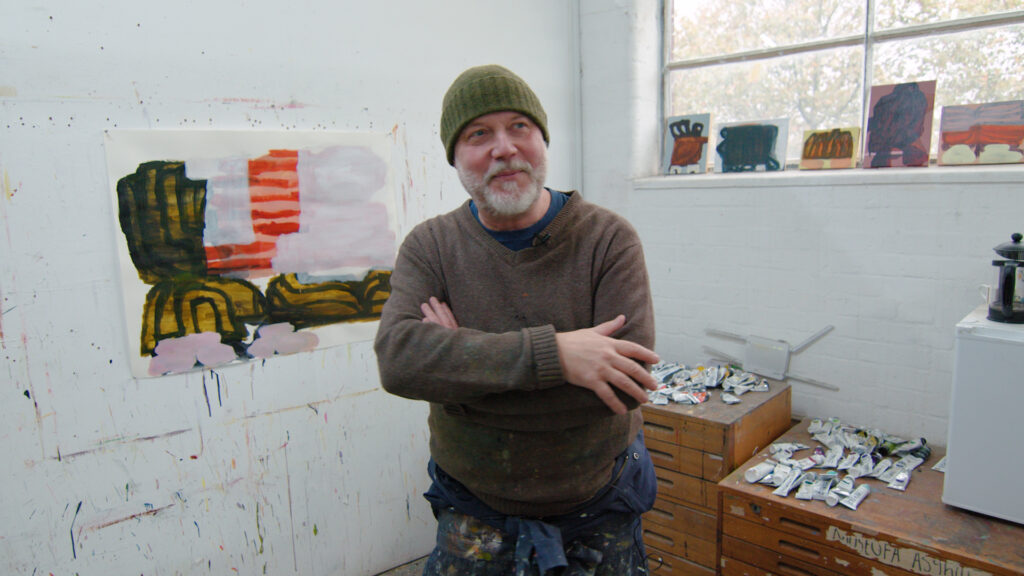
Henry Ward
In the studio, drawing and painting are the moments when Henry Ward feels most fully…

Why Long-Form Conversations Matter in an Era of Short-Form Art Content
In today’s media landscape, short-form content dominates nearly every platform. From TikTok to Instagram Reels,…
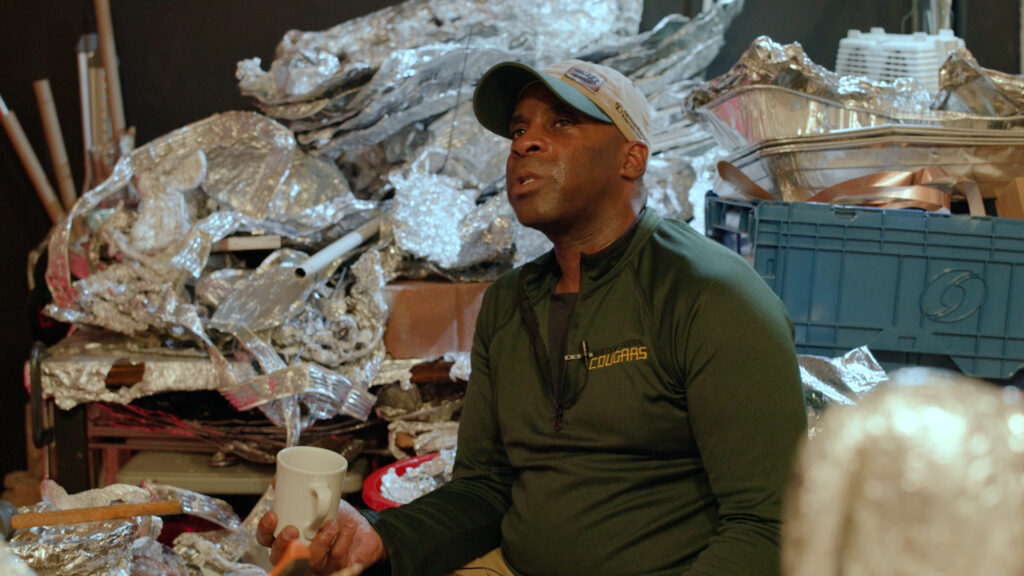
Dean Millien
Dean Millien sits with an energy that feels both grounded and electric. His hands move…