Growing up in Dallas, Texas, Henry Swanson was always drawing, making things, decorating T-shirts, and imagining different ways to spend his time. As a child, he wanted to get into graffiti, start something of his own, or simply make whatever happened to interest him. Art was not necessarily something he understood as a career. It was something he liked doing, long before he knew there was a professional world built around it.
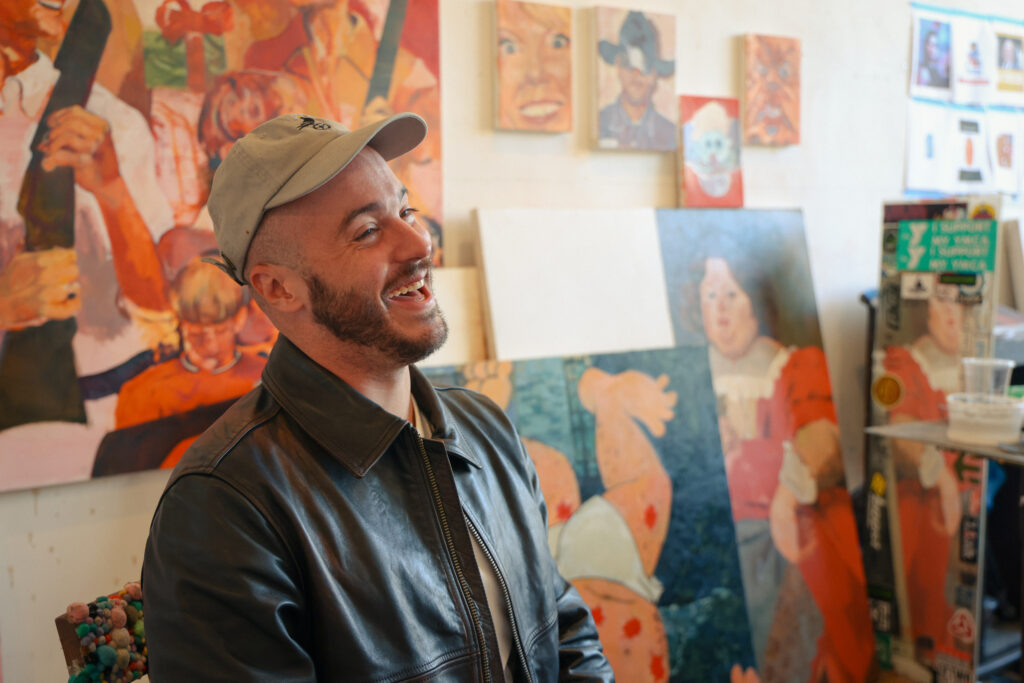
Swanson eventually found his way to the Rhode Island School of Design, where he encountered a community of artists that fundamentally changed his understanding of what making art could look like. Coming from Texas, where pursuing a career as an artist was not necessarily the most obvious path, arriving at RISD felt like entering a completely different environment. He describes it as a small pond filled with exceptionally talented people, where everyone seemed capable of painting at a level he had never encountered before. But Swanson did not arrive with the intention of competing. He came to make friends, and those relationships would become some of the most important parts of his life.
For Swanson, the friendships formed through art have remained central to the experience of being an artist. His closest friends are people who understand the peculiarities of the work, the excitement of beginning something new, and the inevitable periods of doubt that accompany it. They do not necessarily agree on one another’s paintings, and they are not obligated to. What matters is the shared experience of making something and putting it into the world. The art world can be an unpredictable and often difficult place to work, but having people around who understand that experience makes it possible to keep going.
The transition from art school to a professional career, however, was not something Swanson felt entirely prepared for. Art school teaches you how to make work, but it does not necessarily teach you how to navigate the world outside the studio. There is no definitive rubric for painting, no reliable measure of how hard someone should work, or any universal way of determining whether a painting is successful. Over time, Swanson has come to understand that the way an artist works has to be personal. Someone else’s routine, discipline, or relationship to the studio cannot simply be adopted and expected to produce the same results.
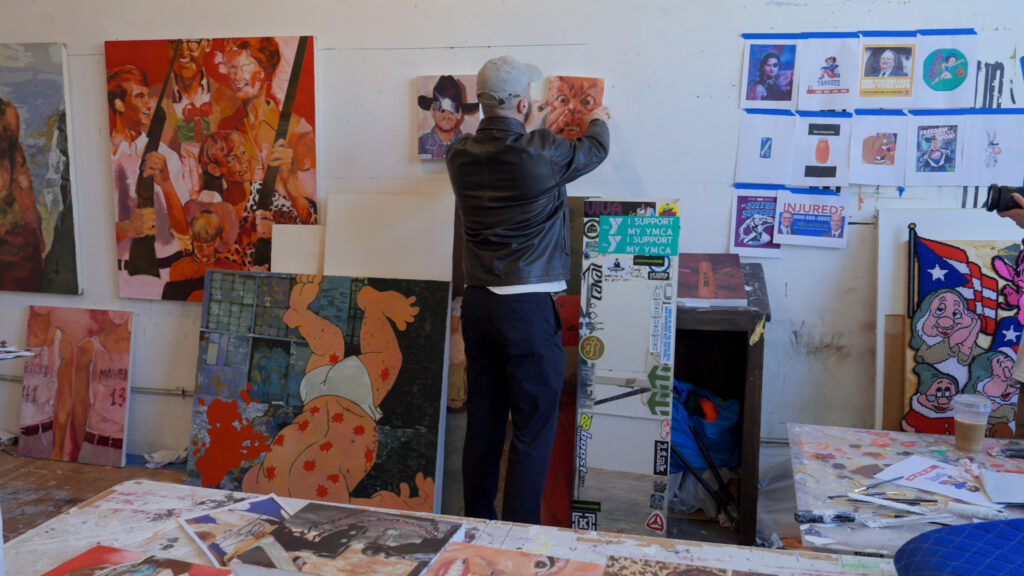
Swanson describes his own approach as something closer to pitching a baseball game than committing to endless hours in the studio. He would rather sleep well, arrive feeling rested, spend a few focused hours painting, and leave when he is finished than spend the entire night working simply to prove he has been there. His studio is an extension of himself, a place where he can be productive, distracted, frustrated, or completely absorbed. It is not always orderly, and he has no interest in pretending otherwise. The work requires a certain amount of discipline, but that discipline has to accommodate the person making it.
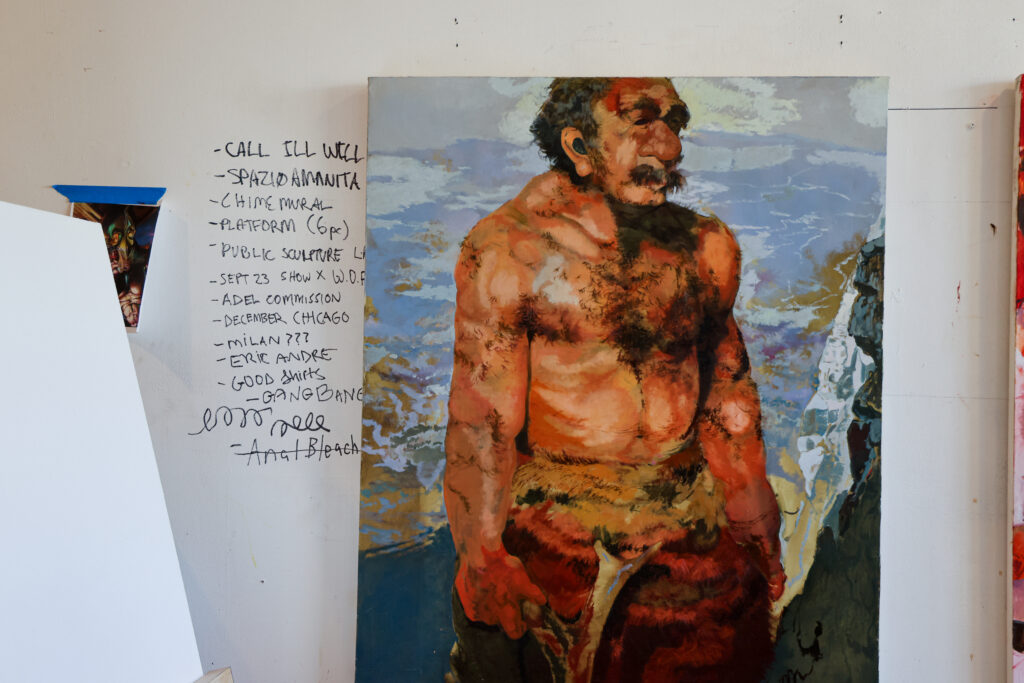
Painting, for Swanson, is also an experience of constantly changing emotional states. Beginning a new painting or preparing for an exhibition can be exhilarating. A fresh canvas holds the possibility of anything, and the first days of a new body of work are often his favorite. But somewhere in the middle of the process, that excitement frequently gives way to doubt. He will call a friend convinced that he has forgotten how to paint, that the work is terrible, or that he has somehow ruined everything. A few days later, the same painting might come together, and he will be just as enthusiastic about it as he was at the beginning.
That cycle becomes particularly intense in the months leading up to an exhibition. Swanson enjoys the beginning of a show, when the canvases are blank and everything remains possible. The final weeks, however, can become a prolonged negotiation with the work. He questions decisions, considers abandoning paintings, and wonders whether the entire exhibition should be reconsidered. It is a feeling he has experienced repeatedly, regardless of how many shows he has done. Each exhibition seems to bring him back to the beginning, with the same uncertainty about whether everything will work out.
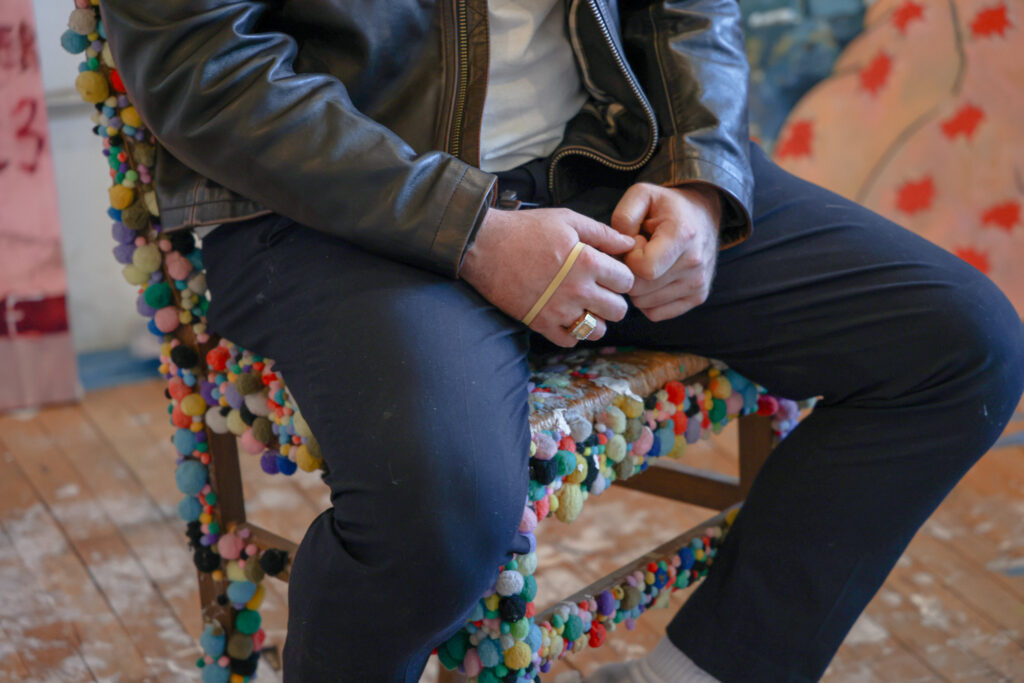
His first major opportunity arrived in a similarly unexpected way. While spending Christmas in Texas, Swanson met an artist who looked through his paintings on his phone and asked whether he would be interested in exhibiting at the Goss-Michael Foundation. The conversation quickly turned into an opportunity for a residency and an exhibition. Swanson found himself moving from painting in relative obscurity to preparing work for a major gallery, with little time to understand what was happening. It was an enormous leap, and one that made the professional art world feel suddenly real.
The experience also revealed something about the unpredictable nature of an artistic career. Swanson’s early exhibitions did not necessarily translate into sales or immediate success. He could move from a gallery environment where everything was taken care of to painting in his mother’s garage, sweeping leaves off canvases and working wherever he could. The circumstances surrounding the work could change dramatically, but the underlying experience of painting remained the same. An exhibition might introduce him to new people, provide an opportunity to learn, or simply become a meaningful experience for someone who saw it. He has learned not to measure every show exclusively by what sells.
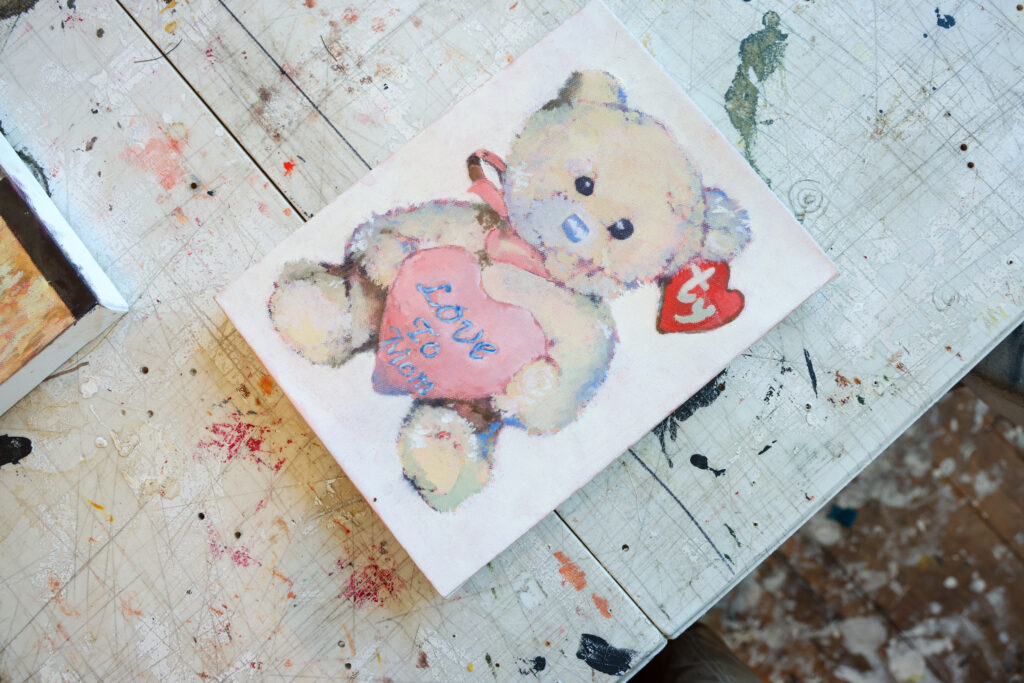
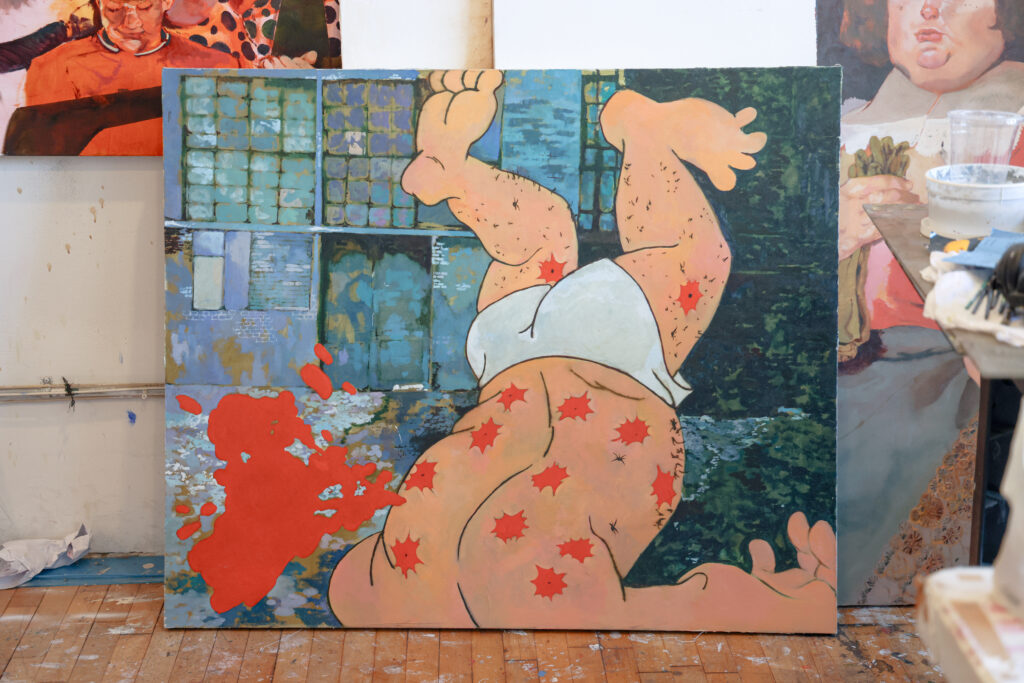
In the studio, Swanson has also become increasingly interested in working small. For a long time, he associated painting with large canvases, partly because of the expectations he had developed about what a painter’s work should look like. Over time, that preference changed. Small paintings began to occupy a much larger part of his practice, eventually becoming something he actively pursued. What initially seemed like a limitation turned into an opportunity to work differently, and a reminder that the scale of a painting does not necessarily determine its significance.
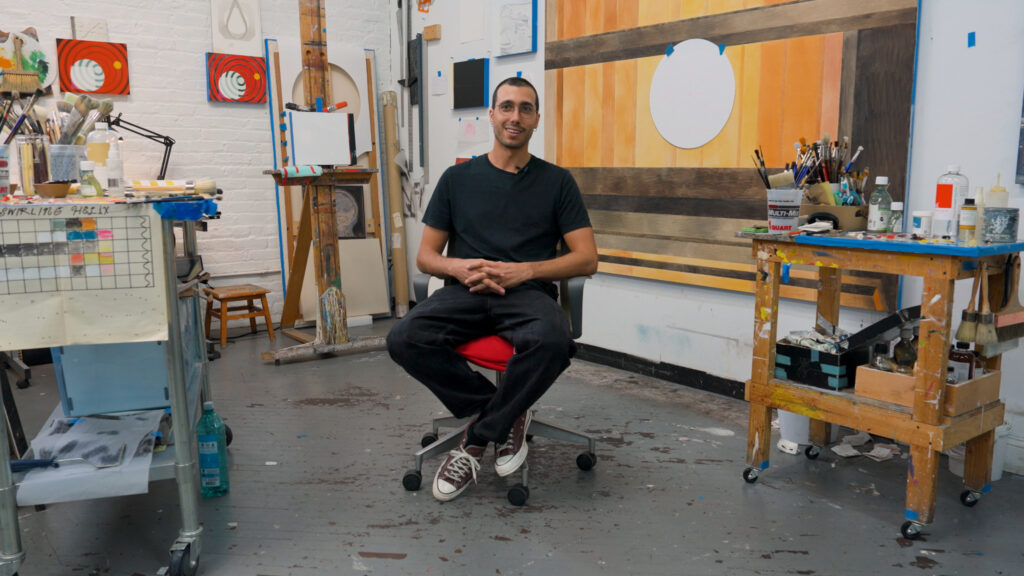
His studio reflects this evolving relationship with painting. It is filled with objects that have accumulated over years of working, including things that have little to do with the professional presentation of an artist’s space. Among them is a mirror from his childhood bedroom, covered in stickers, alongside various objects left behind by former studio mates. These things are not necessarily useful, but they have become part of the environment in which he works. The studio is less a carefully constructed image of an artist’s life than a place where that life has actually happened.
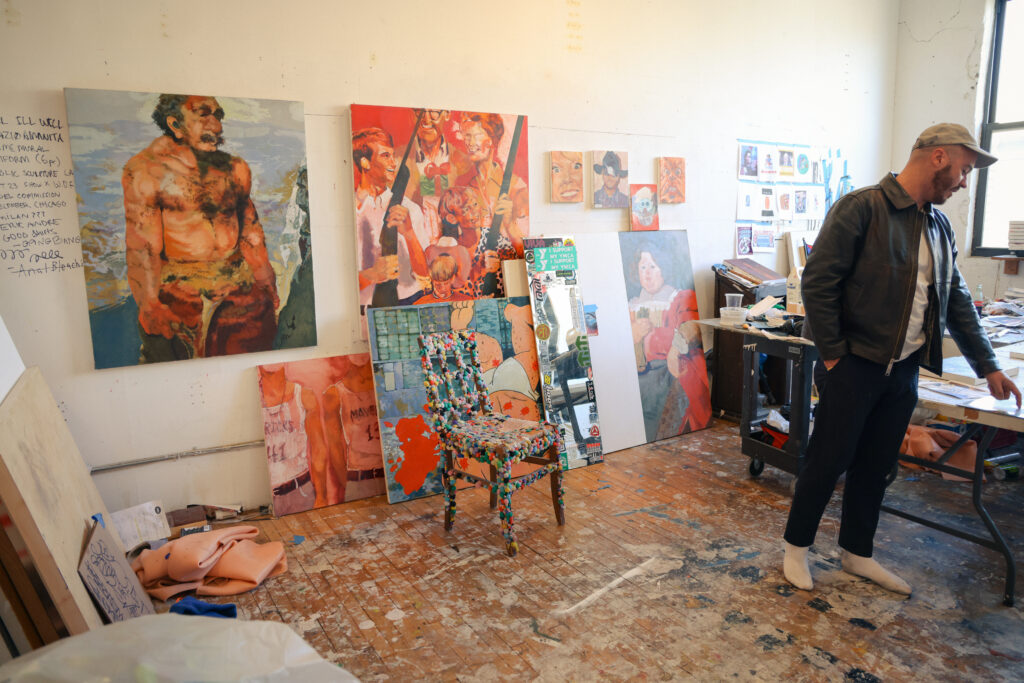
Swanson is equally clear that painting cannot be the entirety of his life. After spending a period of time doing little beyond working in the studio, he realized how important it was to have something outside of painting to look forward to. Returning to soccer gave him a way to leave the studio, reconnect with friends, and experience a different kind of satisfaction. Having something else to do made it easier to return to painting with a renewed sense of presence. The work matters enormously to him, but it is not meant to replace everything else.
Ultimately, Swanson’s relationship to painting is grounded in a simple appreciation for the opportunity to do it at all. He describes coming into the studio as a kind of privilege, something that still feels almost too good to be true. The pleasure of making a painting, of becoming absorbed in a process that does not feel like work, is difficult for him to separate from the larger experience of being an artist. Exhibitions, opportunities, and recognition may come and go, but the act of painting remains the part he returns to.
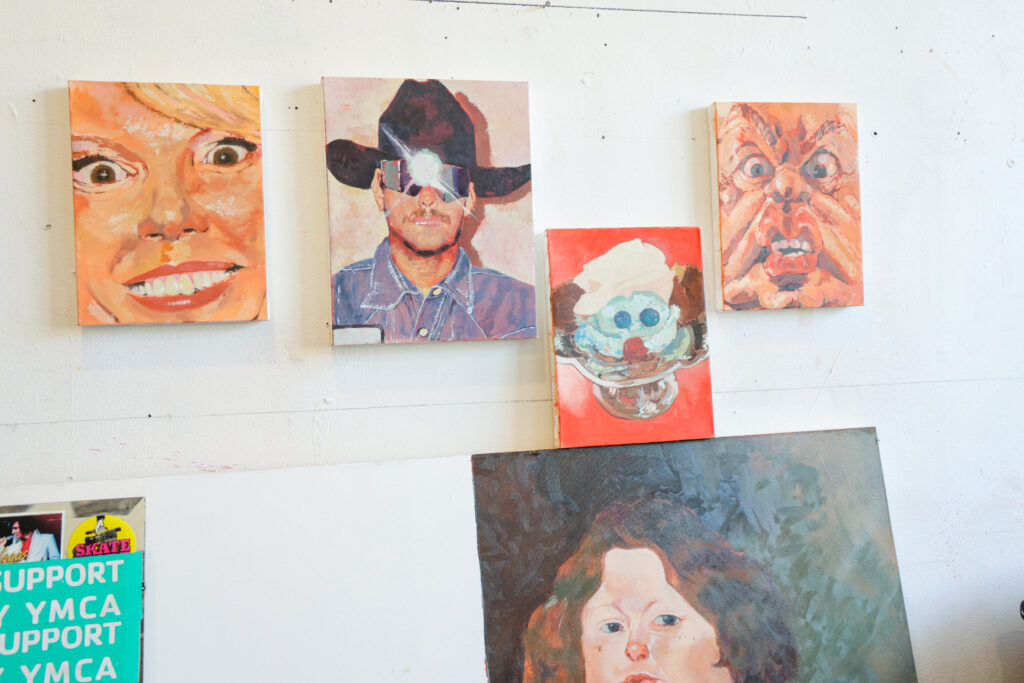
For Swanson, the uncertainty never really disappears. Every painting brings its own problems, every exhibition its own anxieties, and every new opportunity requires him to begin again. But that is also what makes the experience worthwhile. He does not need to know exactly where a painting will lead, or what his career will look like years from now. He only needs to arrive, spend time with the work, and see what happens. In the end, the game does not start until he is ready.
About the Author
Sam Burke is an American artist, filmmaker and writer based in New York City. As founder of Timestamp, Burke interviews artists, shares insights, and highlights conversations shaping art world today.
Jim Osman
For Jim Osman, a piece of wood might suggest a landscape, a corner, or a…
Henry Swanson
Growing up in Dallas, Texas, Henry Swanson was always drawing, making things, decorating T-shirts, and…
Adelisa Selimbašić
Originally from Bosnia and raised in Italy from the age of four, Adelisa Selimbašić has…
Shuling Guo
For painter Shuling Guo, making art is inseparable from the experience of living. Based in…
Gonçalo Preto
For Portuguese painter Gonçalo Preto, a painting is never simply a representation of something seen….
The Armory Show 2026: Highlights from New York’s Contemporary Art Fair
From experimental painting to immersive installations, a look at the artists, booths, and ideas that…