
Originally from Bosnia and raised in Italy from the age of four, Adelisa Selimbašić has always been drawn to making things. As a child, she invented her own cartoons and used dolls and Barbies as models for her drawings, developing an early fascination with figures and the ways they could be transformed through imagination. It was not until middle school, when her professor Fabiola Prieto told her she would become an artist, that painting began to feel like a possible future. Growing up in a family where art was not considered a practical profession, particularly in the aftermath of war, Selimbašić had not seriously considered it as a career. At twelve, however, she decided to devote herself to creativity, describing it as the thing that made her feel most alive.
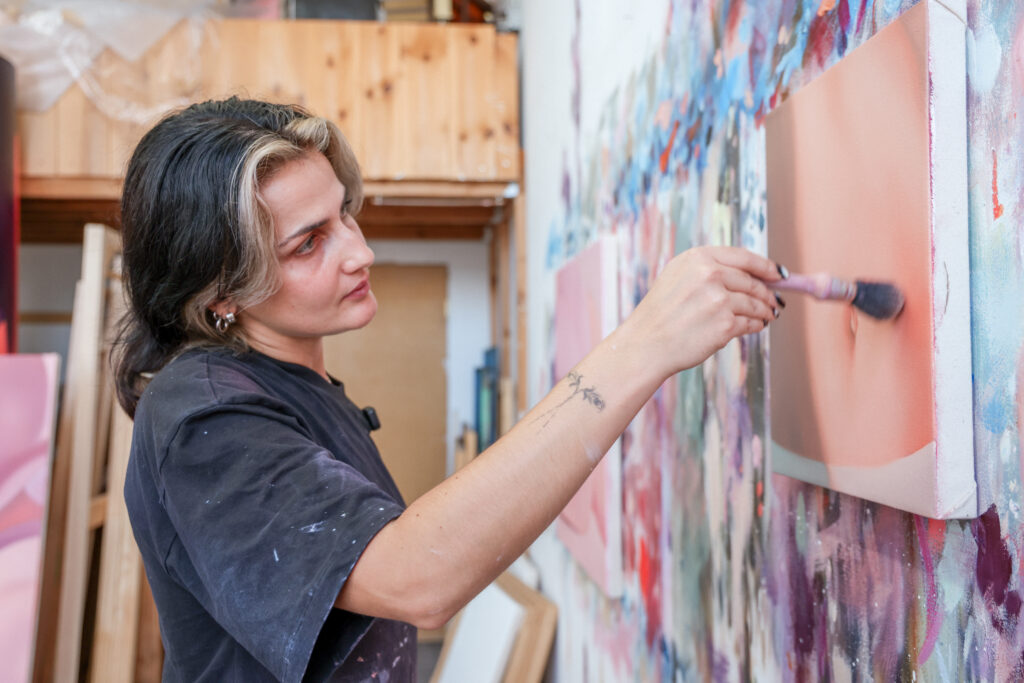
She eventually studied painting at the Academy of Fine Arts in Venice, where an atelier called the Atlas became an especially formative environment. The studio brought together students of different ages and levels of experience, from first-year painters to artists who had already completed their studies but continued working there. The students spent entire days painting alongside one another, observing each other’s work and participating in collective critiques. Rather than providing definitive answers, these conversations encouraged artists to discover their own solutions. Selimbašić remembers the experience as an education in both individuality and collectivity, an understanding that art is built through an ongoing exchange between people and generations.
The atelier also taught her to remain curious. Watching younger students approach painting for the first time reminded her not to become overly dependent on experience. Knowledge can be useful, but it can also become restrictive when it prevents an artist from experimenting. She believes that maintaining a certain openness, the willingness to question what one already knows, is essential to continuing to develop as a painter.
This understanding became particularly important during her first year at the academy, when she stepped away from painting for four months and returned to pencil and paper. Without an eraser, she began drawing freely, allowing mistakes to remain visible and using them as opportunities to reform shapes. Through this process, she discovered that her attention repeatedly returned to the body. Rather than depicting figures through recognizable gestures or narratives, she became interested in the body as a surface, a collection of lines and volumes shaped by light. After those months of drawing, she returned to painting with a renewed understanding of what she wanted to explore.
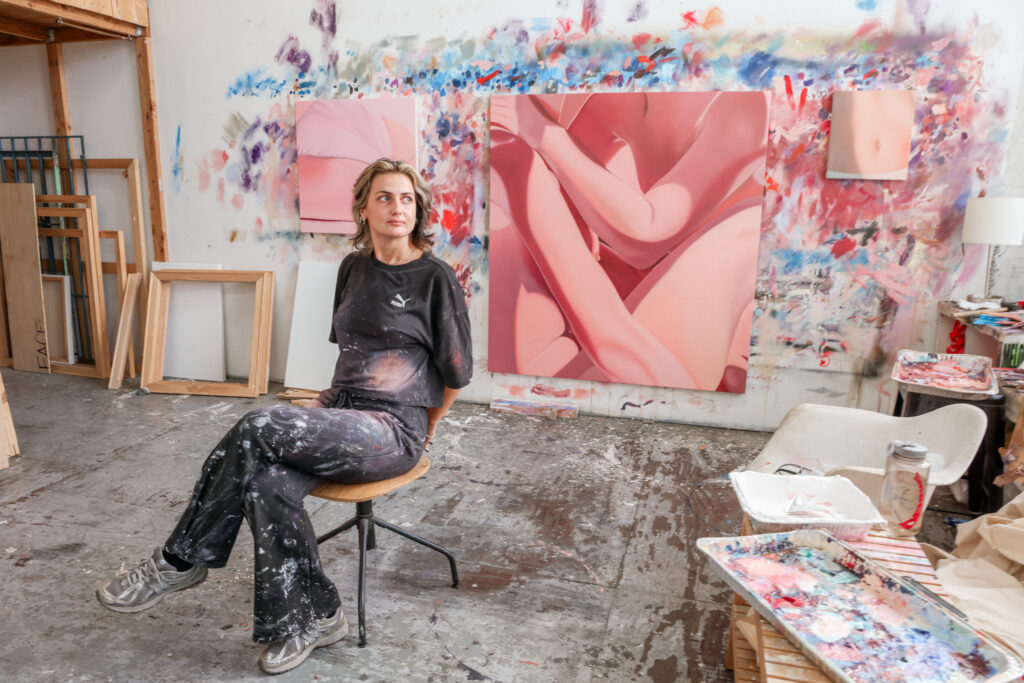
Today, Selimbašić’s paintings approach the human body through abstraction, concentrating on the details that often go unnoticed. A belly button, a fingernail, an unusual posture, or the way light transforms a particular area of skin can become the central focus of a work. She is interested in how bodies change visually through movement, shadow, and proximity, sometimes allowing two figures to merge into a single organism. In one painting, the interaction between color and shadow makes one body appear to consume the other, producing a form that feels simultaneously familiar and unfamiliar.
Her figures rarely offer a complete narrative. They might suggest an embrace, a gathering, or an intimate moment, but their identities and circumstances remain unresolved. Selimbašić is interested in creating images that provide enough information for viewers to begin imagining their own stories without dictating what those stories should be. The paintings can feel as though they exist outside a fixed moment, leaving the viewer unsure whether something is happening, has already happened, or is still about to unfold.
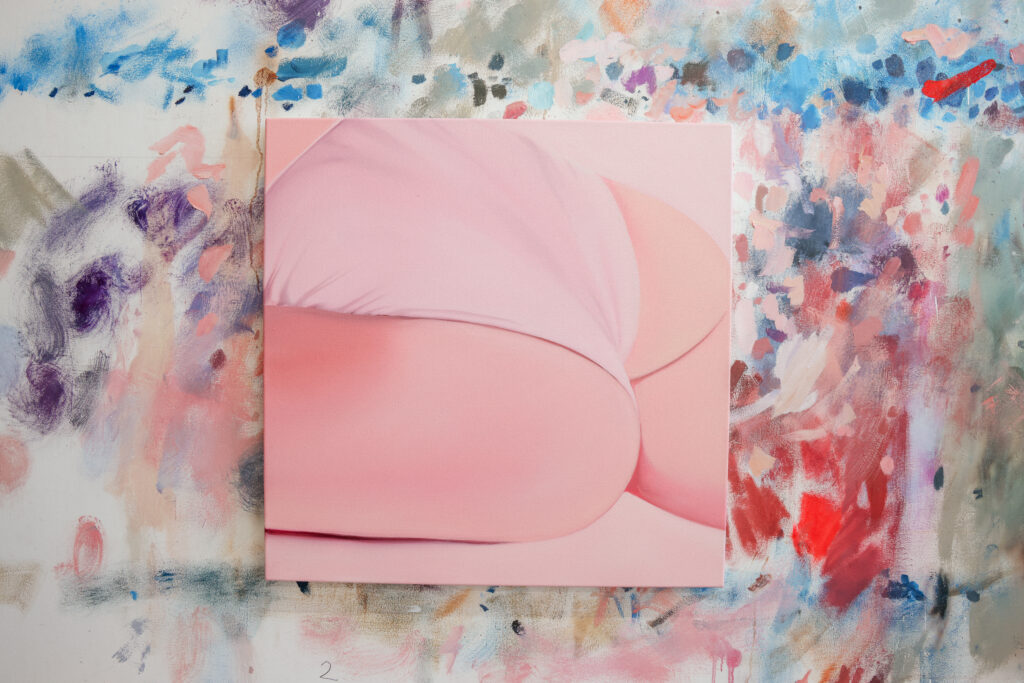
This approach extends to her interest in sexuality, nudity, and the social categories attached to bodies. Selimbašić questions why skin and nakedness are so frequently associated with particular labels or expectations, and what happens when those assumptions are removed. Her figures are often anonymous, allowing viewers to recognize themselves in a gesture or detail without needing to identify the person depicted. Someone might connect with the shape of a body, the position of a hand, or the choice of underwear, finding a point of recognition that has little to do with gender, sexuality, or appearance.
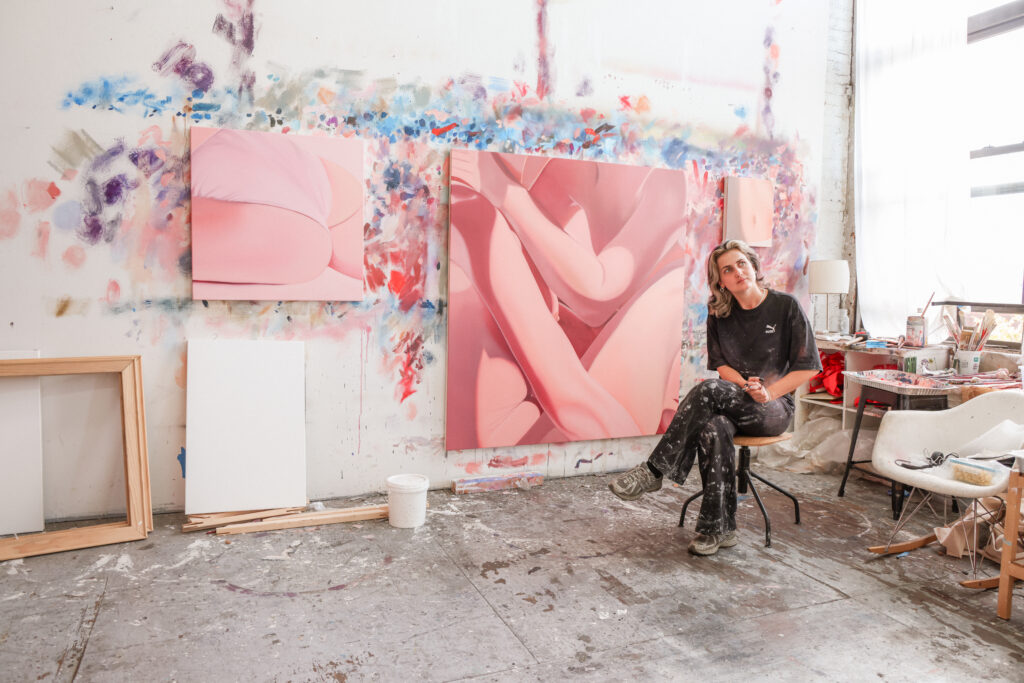
The photographs that inform her paintings often come from New York’s underground nightlife and queer dancing communities. Selimbašić enjoys going out, meeting people, talking with them, and asking them to pose for her. She is drawn to the freedom with which people express themselves in these spaces, particularly through their bodies and identities. The openness she encounters becomes an important part of her research, providing images that feel personal without being confined to a single identity or interpretation.
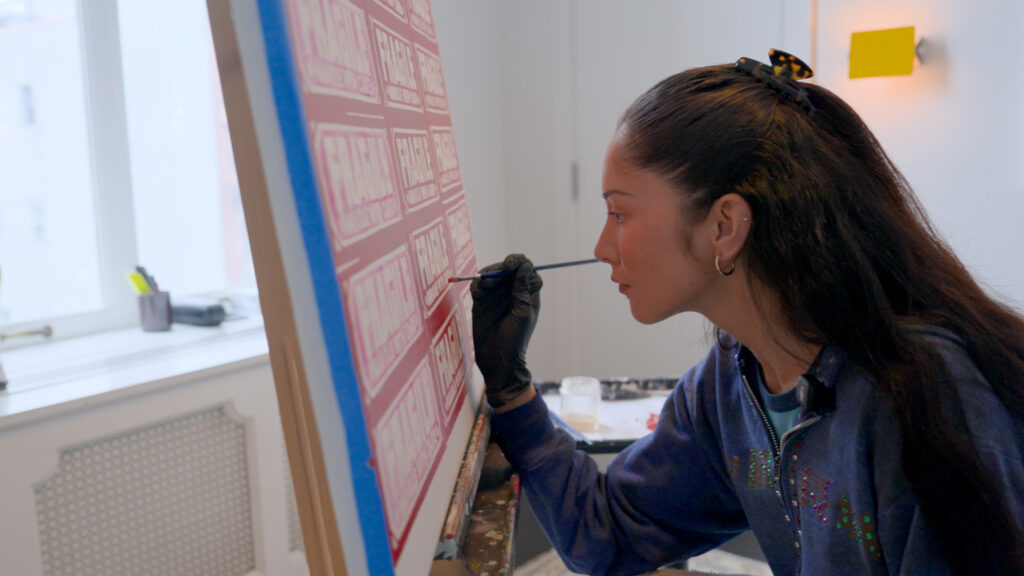
Once she finds a photograph that resonates with her, the image determines the direction of the painting. She does not approach an exhibition with a predetermined number or size of works, instead allowing each composition to establish its own scale. She builds her frames, stretches her canvases, and prepares them with gesso before beginning directly with a brush. Rather than making a detailed preliminary drawing, she works quickly, allowing proportions to shift in response to the canvas itself. On a particularly tall surface, she intentionally elongated the legs of standing figures until they became monumental, almost column-like forms. The adjustment changed the entire presence of the bodies, making them feel simultaneously powerful, sensual, and warm.
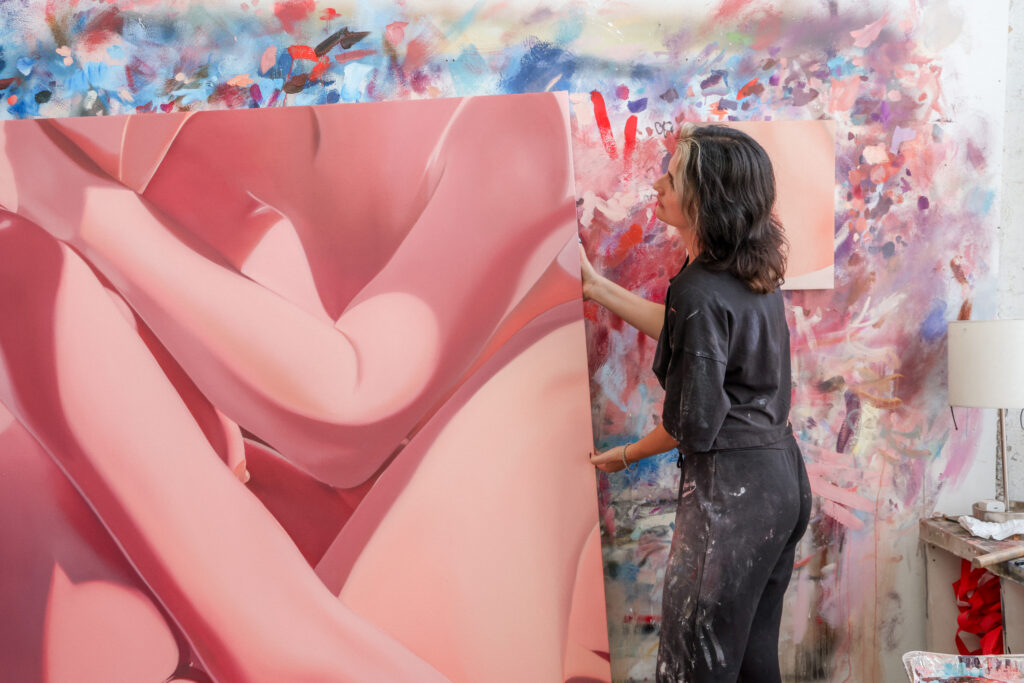
Color plays an equally important role in establishing the atmosphere of her paintings. Selimbašić frequently works with pinks and warm tones inspired by sunsets, colors she associates with a welcoming, almost embracing feeling. Because her subject matter often involves nudity and sexuality, she wants the paintings to invite viewers in rather than confront or exclude them. The warmth of the surface creates space for people to approach the figures without immediately imposing judgments on what they see.
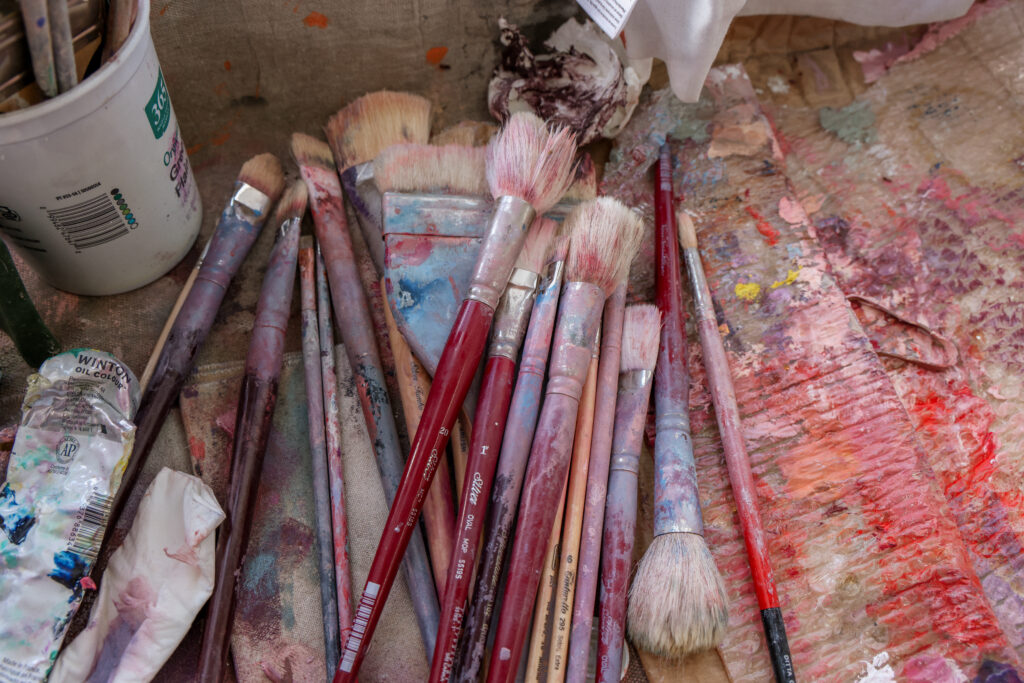
In the studio, she prefers to mix her own colors rather than purchase pigments already formulated into specific shades. Beginning with basic colors allows her to discover unexpected combinations as paint accumulates and mixes across her workspace. She embraces the disorder that comes with this process, finding that unexpected colors can emerge from moments of distraction or accidental interaction. Even within that messiness, however, she maintains a sense of discipline, learning to recognize and control what the process produces. She primarily works in oil, appreciating its richness and the full presence of its pigments, and is willing to wait longer for paintings to dry rather than compromise the intensity of the color.
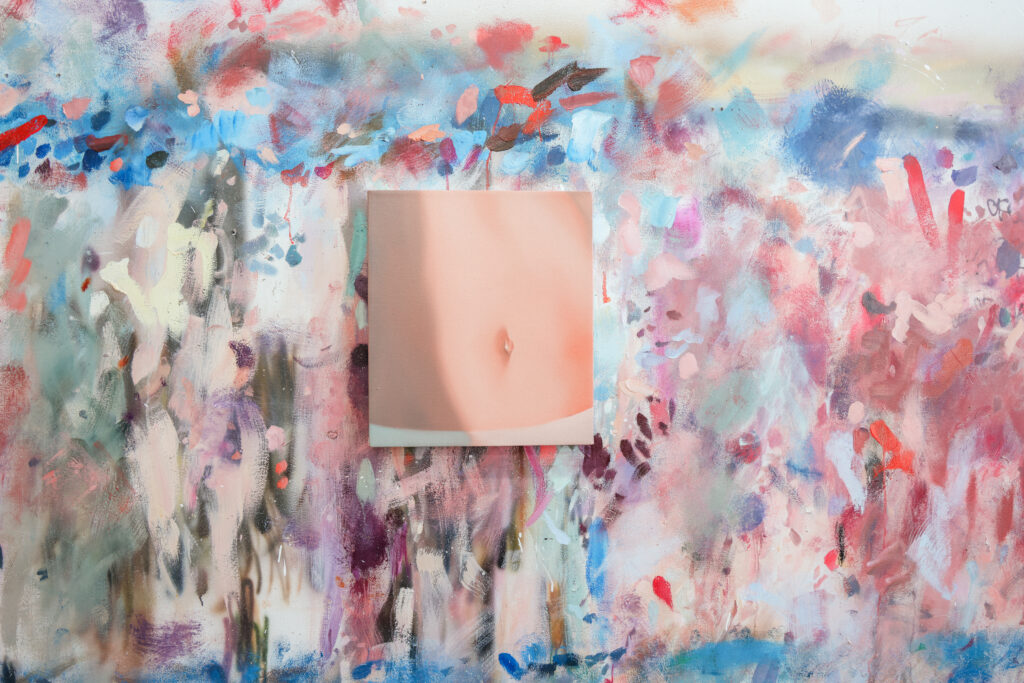
For Selimbašić, painting is ultimately less about arriving at a definitive image than about remaining attentive to what happens while making one. She describes her studio practice as a cycle of experimentation, mistakes, and invention, where each unexpected result becomes an opportunity to discover something new. That same openness carries into the way she thinks about the finished work. Once a painting leaves her studio, she no longer considers it entirely hers. Its meaning belongs just as much to the person encountering it, and she welcomes the possibility that someone might see themselves in a figure she never intended to represent them.
She has never seriously considered abandoning painting, even during moments when she questioned whether she would be able to sustain herself financially or pursue the career she imagined. Early criticism at the academy once left her wondering whether she should choose a more secure profession, but the following morning she decided to continue on her own terms. Success, for her, is not limited to exhibitions or sales. Even if those disappeared, she would continue painting because it remains the activity that makes her feel most alive.
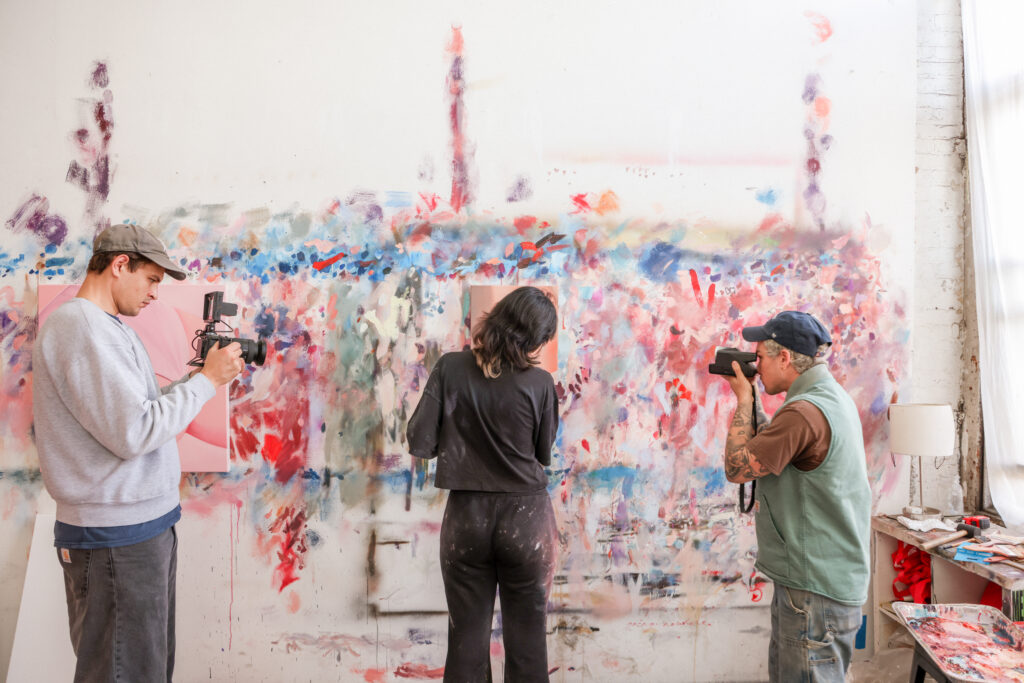
The generosity she finds in making art is also what she hopes to pass on. Selimbašić sees her work as part of a larger chain of artists who have influenced one another, each contributing something that another person might eventually carry forward. She hopes her paintings can become a point of reference for future artists, just as the work of those before her continues to shape her own. More immediately, she wants viewers to feel something, reconsider an assumption, or recognize themselves in an image they might otherwise have understood differently. In that exchange, the body becomes more than a subject to be painted. It becomes a place where people can encounter one another without needing to agree on exactly what they see.
About the Author
Sam Burke is an American artist, filmmaker and writer based in New York City. Working across film, performance, and writing exploring storytelling, identity, and place. As founder of Timestamp, Burke interviews artists, shares insights, and highlights conversations shaping art world today.
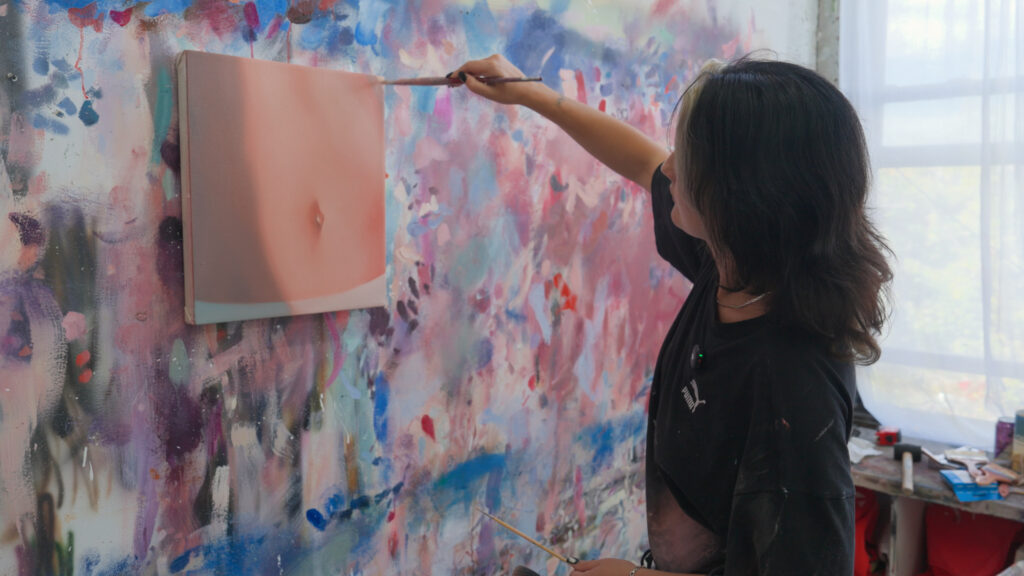
Adelisa Selimbašić
Originally from Bosnia and raised in Italy from the age of four, Adelisa Selimbašić has…
Shuling Guo
For painter Shuling Guo, making art is inseparable from the experience of living. Based in…
Gonçalo Preto
For Portuguese painter Gonçalo Preto, a painting is never simply a representation of something seen….
The Armory Show 2026: Highlights from New York’s Contemporary Art Fair
From experimental painting to immersive installations, a look at the artists, booths, and ideas that…
Mia Goldstien
Born in Los Angeles and now working in New York City, Mia Goldstein has built…
Michael Alexander Campbell
Michael Campbell once tried to give up making art. The idea, as he explains it,…