For Jim Osman, a piece of wood might suggest a landscape, a corner, or a form that has yet to reveal itself. Rather than beginning with a finished idea, Osman allows materials to lead him somewhere unexpected, working through physical relationships until something feels right. His practice is grounded in construction, but it is equally driven by curiosity, intuition, and the possibility of discovering something through his hands.
Born and raised in New York City, Osman was drawn to making things from an early age. He initially studied chemistry and electrical engineering before transferring into graphic arts, eventually finding his way through painting and into sculpture at Queens College. Even then, becoming an artist was not an immediate realization. It took more than a decade for him to comfortably claim the title. Looking back, he describes the process less as a revelation than a gradual recognition that he kept returning to the same thing: making.
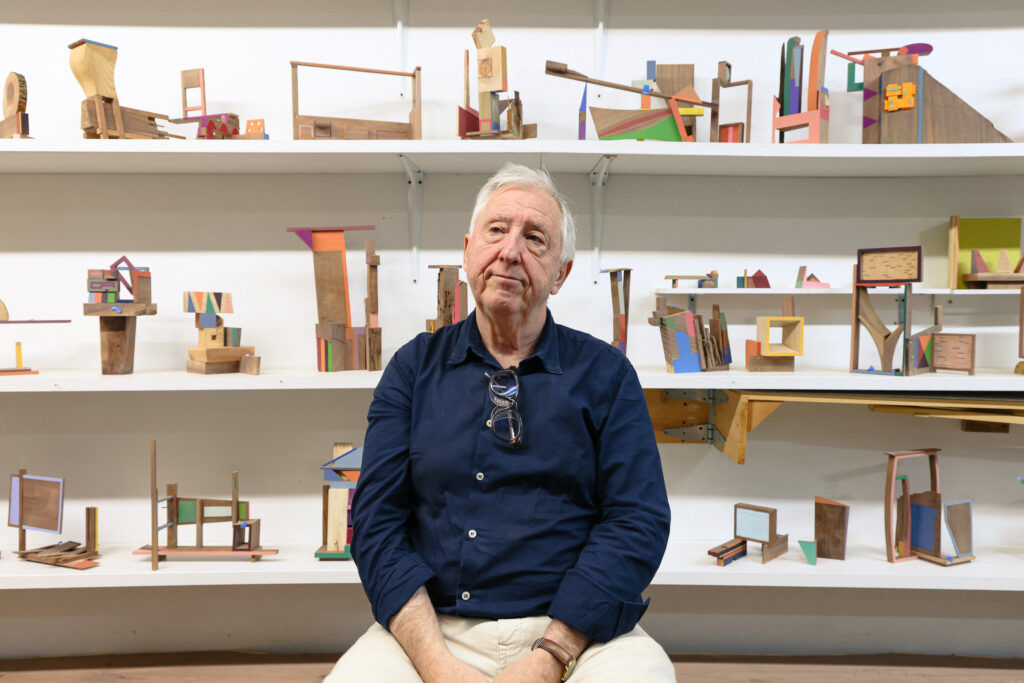
That instinct continued outside the classroom. Osman spent years working in a metal shop in the South Bronx, where he developed an understanding of craft, construction, and the practical demands of building. He later became self-employed, taking on contracting work and learning through repetition. Building a bookcase might require several attempts, but each job offered another opportunity to develop a skill. These experiences would eventually become inseparable from his approach to sculpture, where construction is not simply a means of realizing an idea but a way of thinking through it.
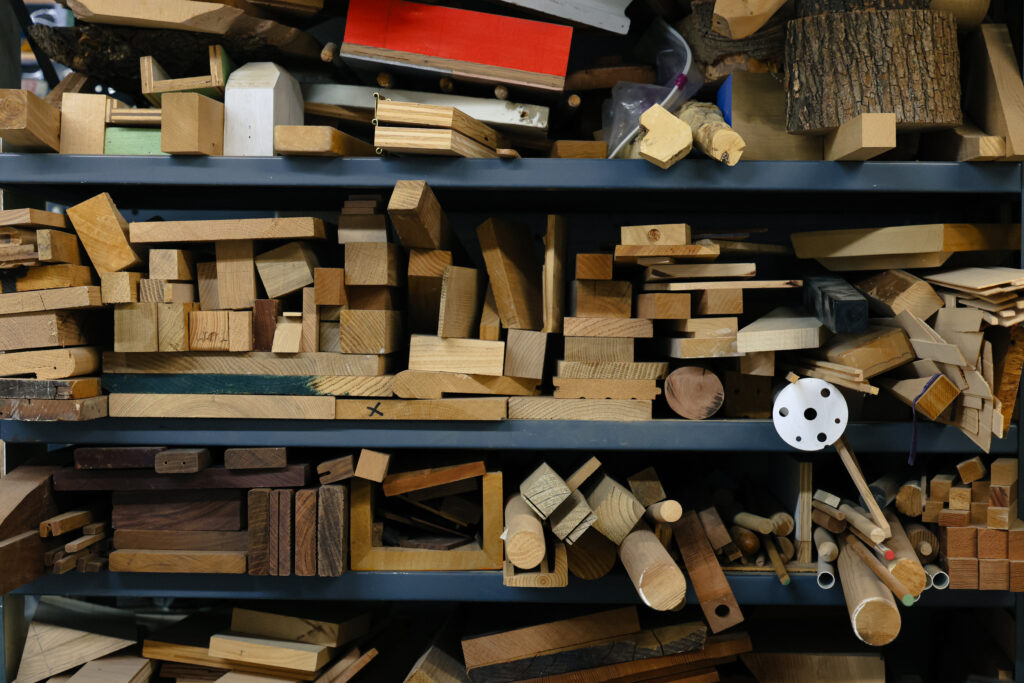
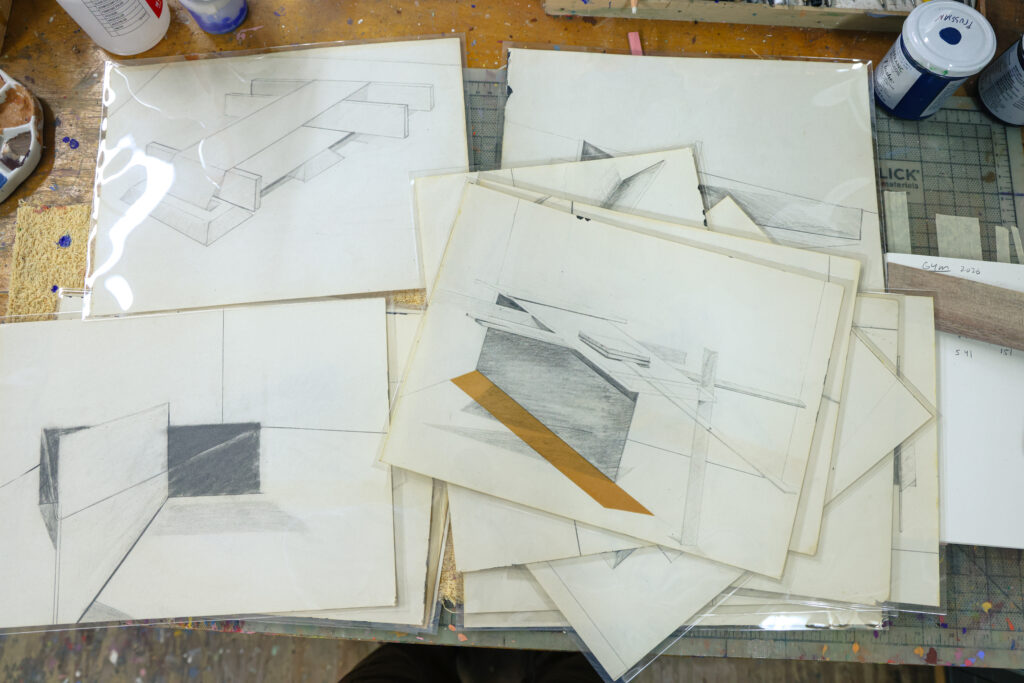
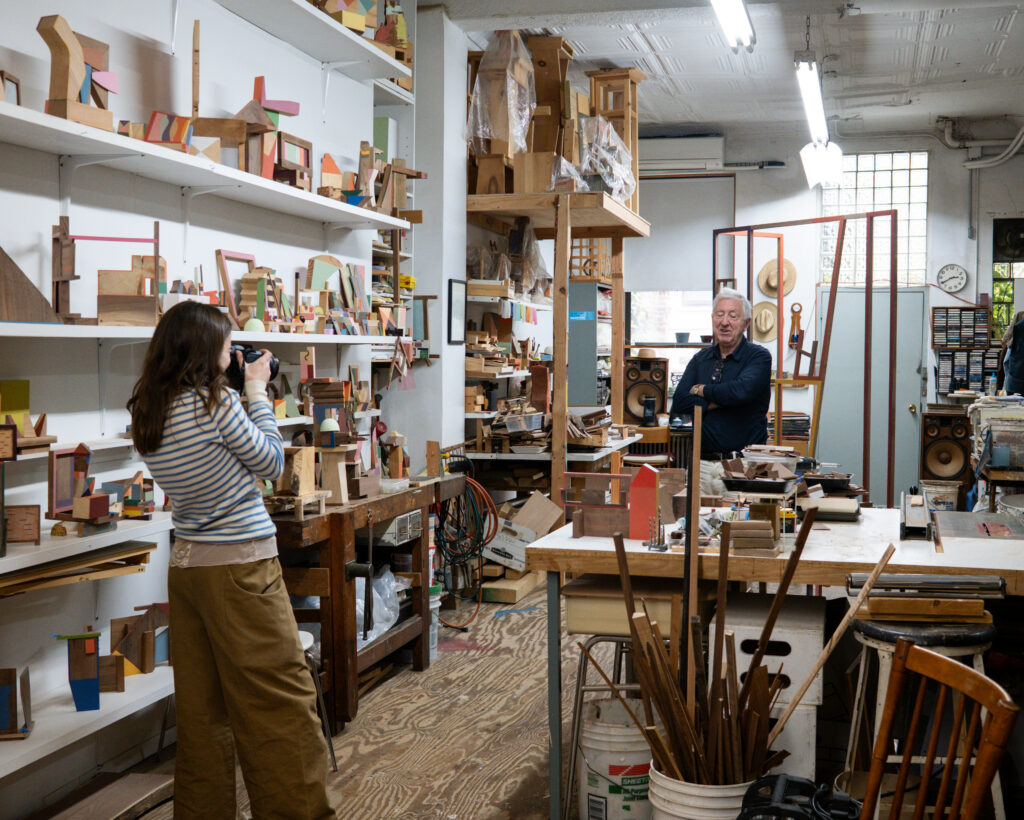
Wood became central to his practice during graduate school, when he worked with sculptor Tom Doyle. Osman had experimented with welding, clay, plaster, and casting, but found himself increasingly drawn to assembling parts. Today, his studio reflects that preference. Stacks of lumber, slabs, plywood, and scraps are organized throughout the space, each material holding the possibility of something else. He rarely sketches beforehand. Instead, he makes objects to see what they might become.
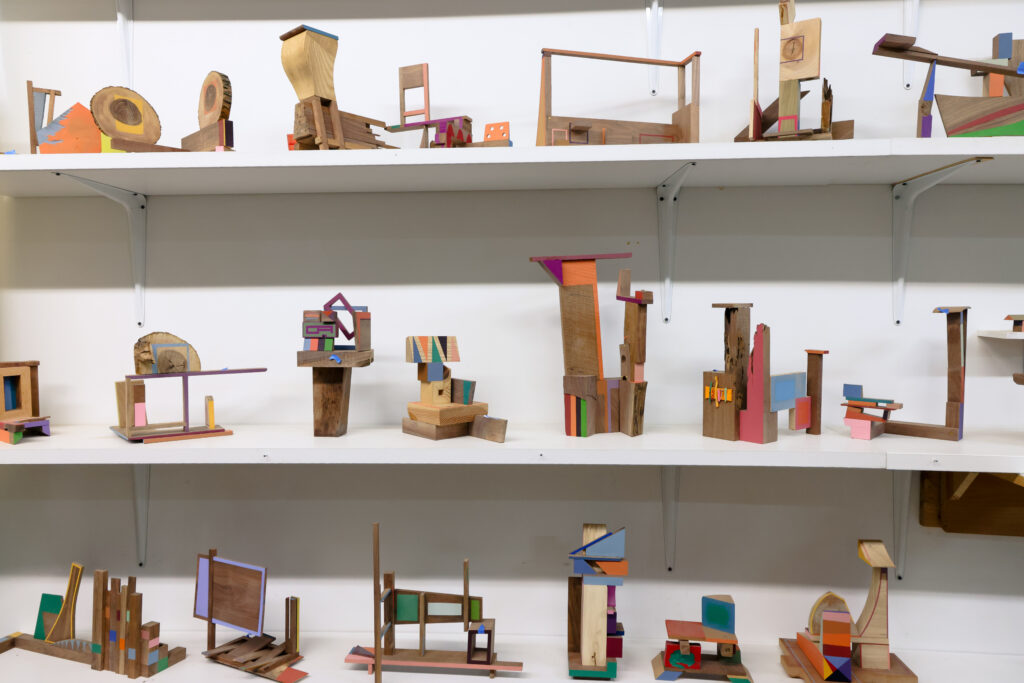
A piece might begin with a section cut from a log, its surface marked by the small grooves left behind by a bandsaw. Osman notices something in its shape, perhaps an organic profile or the suggestion of a mountain. He sands it, sharpens an edge, introduces a right angle, and begins to clarify what is already there without imposing too much of his own intention. Other pieces emerge through stacking, joining, and rearranging. One form creates a problem for another: how does this mass relate to that space, this shape to the next? The answer often requires making another piece.
This process is less about following a plan than remaining attentive to the relationships that develop. Osman keeps his scraps, returning to them when a new possibility emerges. Small cutoffs can become a relief, their accumulated edges creating a visual texture that sits somewhere between drawing and sculpture. A flat plane might function like a drawing, while the assembled object becomes a sculpture. Throughout his work, these two ways of seeing remain closely connected.
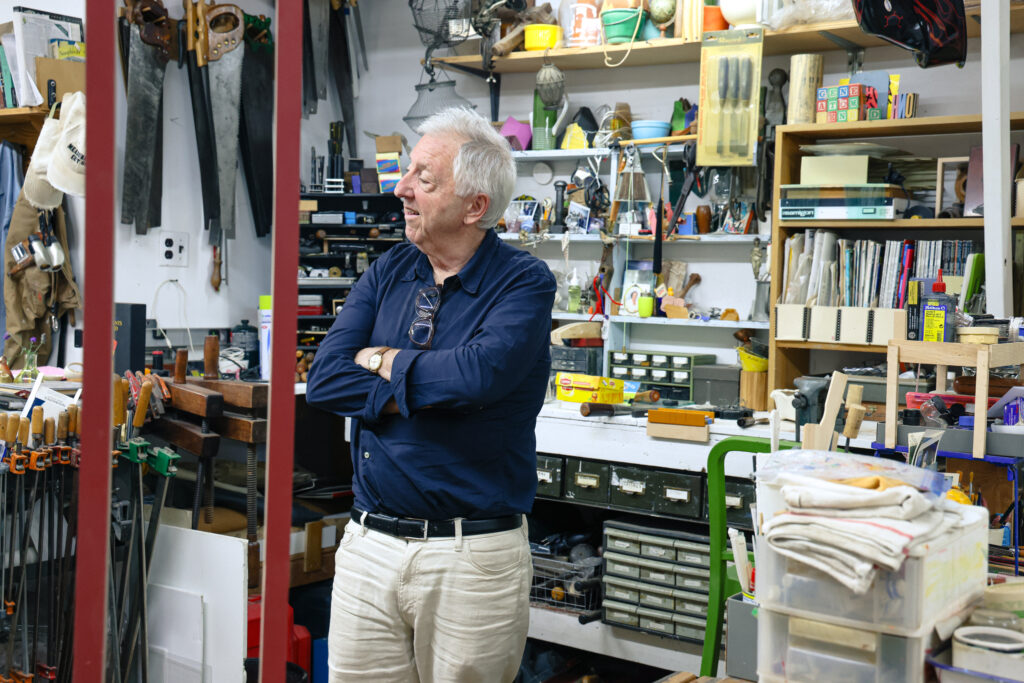
One of the ideas that has stayed with Osman is gravity. He remembers arranging pieces of wood on a table, stacking them, knocking them down, and stacking them again. When an arrangement remained standing for a day or two, he began to feel that gravity was telling him something. He describes it as a partner in the studio, a force that offers its own answers. His phrase “gravity, weight and friction” became a way of understanding the relationships that hold his work together, often without adhesives, screws, or conventional hardware.
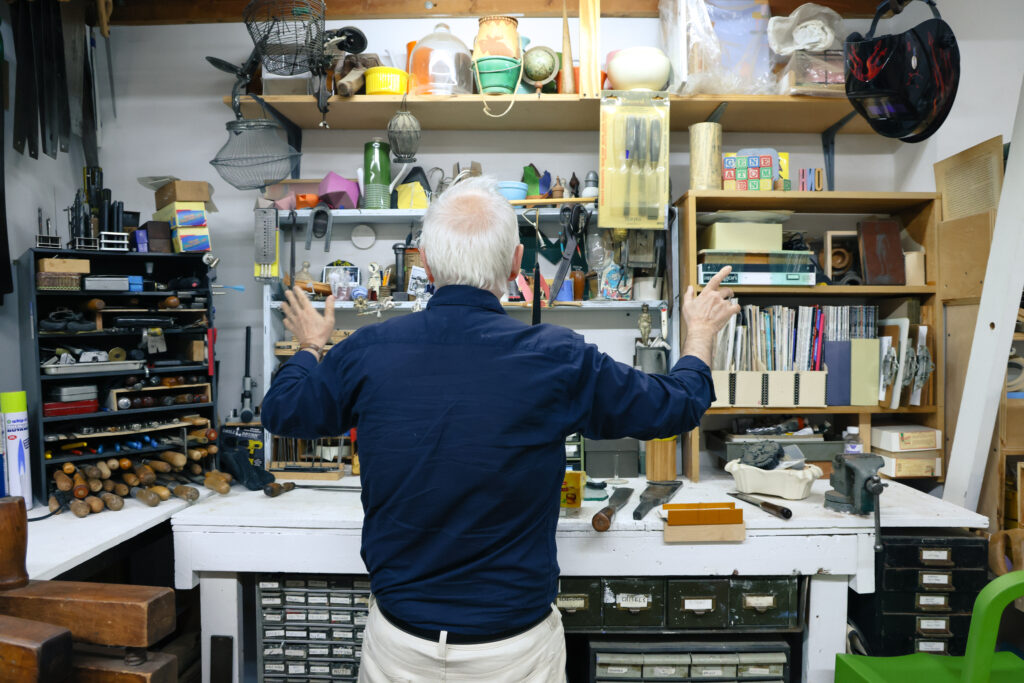
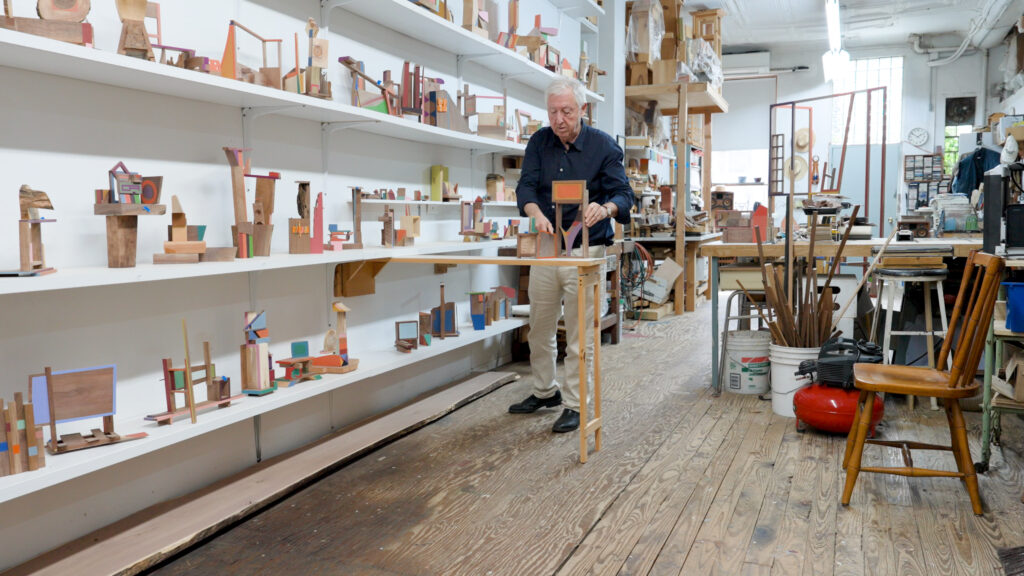
The resulting sculptures are meant to be experienced from every direction. Osman continually turns them, walks around them, and looks for the side that feels unresolved. A piece might appear complete from one angle only to reveal a dead side from another. He returns to it, makes an adjustment, and keeps moving until the sculpture holds together in the round. Corners, interiors, exteriors, plinths, and landscapes recur throughout his work, offering familiar structures that he can revisit and reconsider.
Painting has gradually become another way of extending these relationships. For years, Osman made sculpture and painted separately before beginning to think about how a painting might become three-dimensional. He sees no reason to keep the two practices apart. Color can draw attention to the grain of wood, identify different areas, or move the viewer’s eye through a form. A painted surface becomes a small painting within a larger object, while the sculpture itself begins to behave like a painting occupying space.
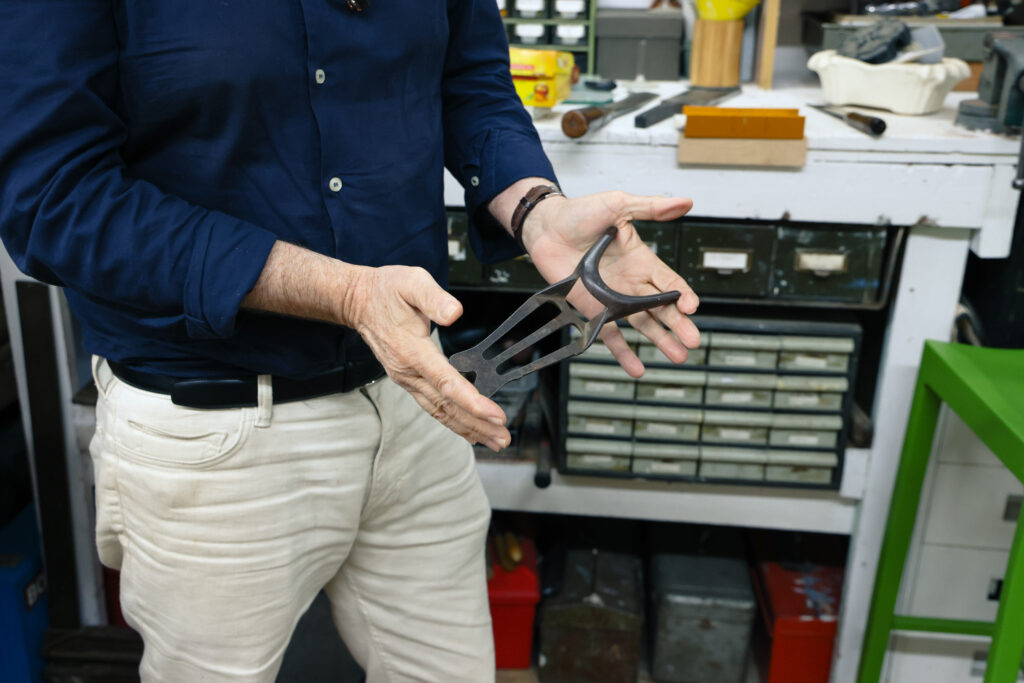
His approach to color is equally practical and inventive. After years of house painting, Osman accumulated cans of exterior paint, some of which eventually dried into solid blocks. Rather than discard them, he discovered that the material could be cut on a table saw and used in his sculptures. He also began matching colors from Italian art paper, translating flat sheets into paint that could be applied directly to wood. The materials are often ordinary, but the combinations are anything but predictable.
Outside the studio, Osman has remained deeply engaged with the art community around him. Having watched New York’s art world evolve from SoHo through the East Village and into Chelsea, he understands the city as a place where artists continually encounter one another’s work and ideas. He attends exhibitions, makes dozens of studio visits each year, and offers recommendations to younger artists. His philosophy is simple: give it away. The knowledge and encouragement accumulated over a lifetime are meant to circulate.
Teaching became another important part of that exchange. Osman began teaching sculpture in the 1980s, eventually spending more than two decades at Pratt and serving as chair of the Foundation program at Parsons. Although he initially found speaking in front of a class intimidating, he came to understand teaching as a way of clarifying his own thinking. Explaining a concept, a material, or a process to someone else often helped him understand it more fully himself. He believes the experience made him a better artist.
Still, his priority has always been the studio. Early in his teaching career, a conversation with a department chair helped him recognize that he could be a good faculty member without allowing teaching to become the entirety of his life. He had always tried to preserve a balance between working and making art, spending several days on a job and the rest in the studio. That distinction remains important to him. Art is not something that happens automatically; if he does not make the work, it does not get made.
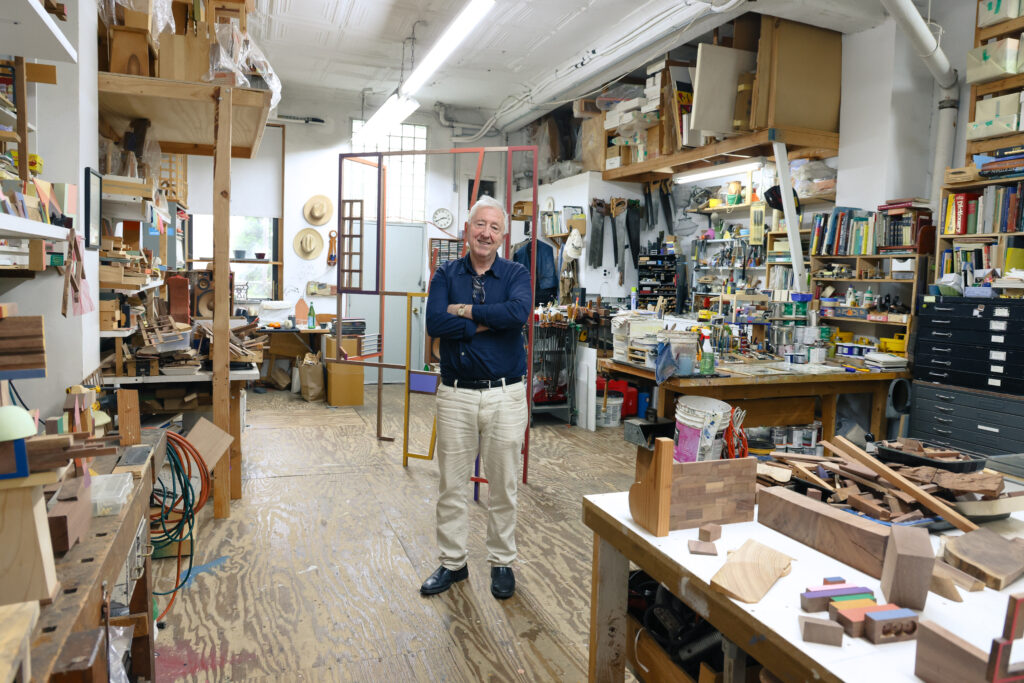
Osman is candid about the labor involved. He resists the romantic idea that making art is simply fun, describing it instead as work that he undertakes gratefully. The privilege is in having the time, health, space, and opportunity to do it. Much of the experience is solitary, built around the small discoveries that happen when two things come together and produce something neither could have become alone.
For Osman, the studio is a place where those discoveries remain possible. A piece of wood can become a landscape, a corner can open into a space, and a stack of scraps can become something entirely unexpected. The work continues through making, looking, turning, and trying again. Gravity may offer a suggestion, but the sculpture still has to be built.
About the Author
Sam Burke is an American artist, filmmaker and writer based in New York City. As founder of Timestamp, Burke interviews artists, shares insights, and highlights conversations shaping art world today.
Jim Osman
For Jim Osman, a piece of wood might suggest a landscape, a corner, or a…
Henry Swanson
Growing up in Dallas, Texas, Henry Swanson was always drawing, making things, decorating T-shirts, and…
Adelisa Selimbašić
Originally from Bosnia and raised in Italy from the age of four, Adelisa Selimbašić has…
Shuling Guo
For painter Shuling Guo, making art is inseparable from the experience of living. Based in…
Gonçalo Preto
For Portuguese painter Gonçalo Preto, a painting is never simply a representation of something seen….
The Armory Show 2026: Highlights from New York’s Contemporary Art Fair
From experimental painting to immersive installations, a look at the artists, booths, and ideas that…