There’s a moment in talking to Noel W. Anderson where everything shifts from art as object to art as something closer to confession. Not performance, not presentation, but release. For him, making work isn’t about building toward a career milestone or chasing validation. It’s about leaving something behind so it doesn’t follow you. Something you don’t carry into whatever comes next.
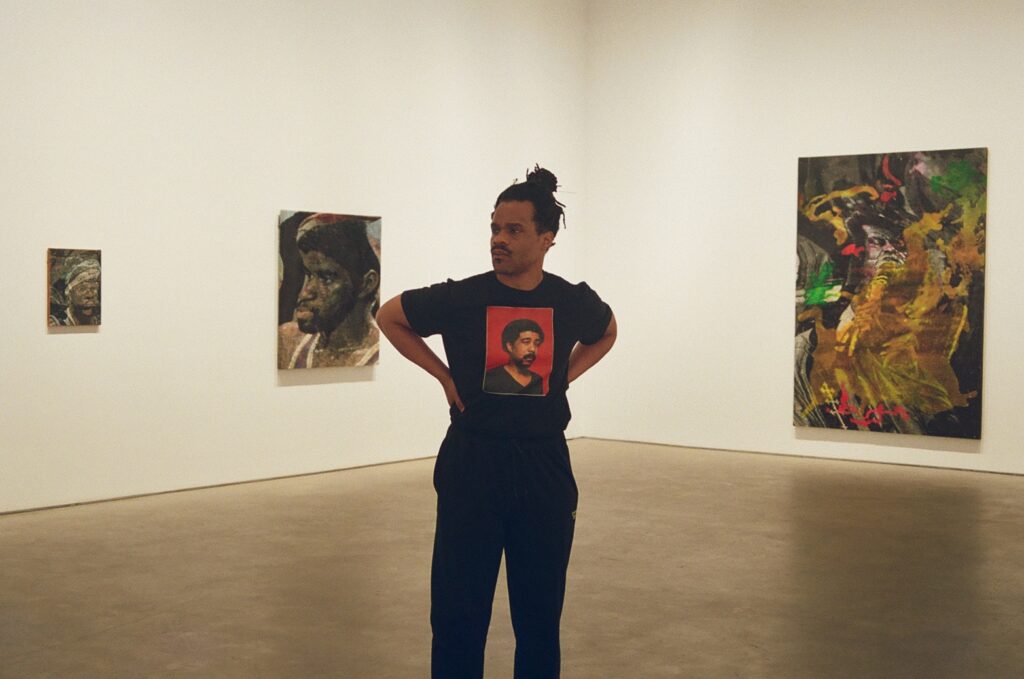
He didn’t always think that way. Like a lot of artists, he once believed the goal was simple: get into galleries, gain recognition, prove you can make something that belongs on a wall. And he still values that space. His work holds its own there. But somewhere along the way, through conversations, through teaching, through making, that idea expanded. The work became less about arrival and more about what it does to you while you’re in it.
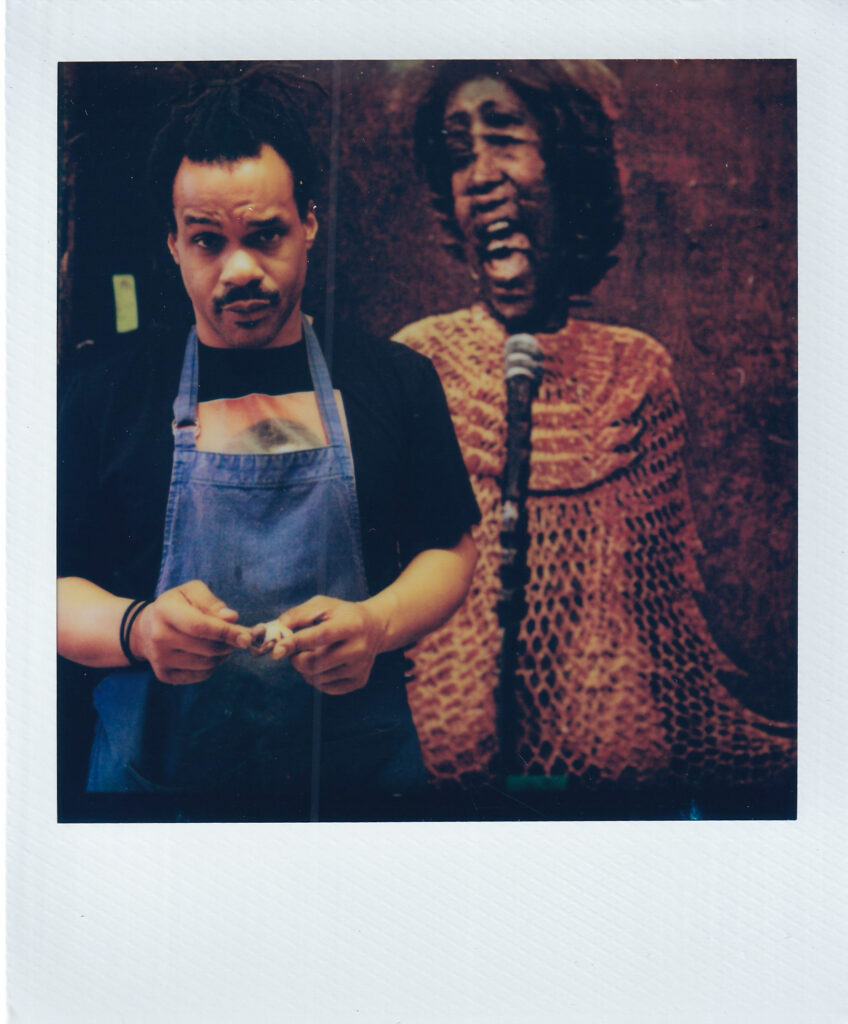
Before all of that, there was a kid in the back of a station wagon with tracing paper, copying cartoon characters while his father drove and played jazz. That early act of drawing wasn’t about originality. It was about instinctively remixing what was already there, taking one form and placing it onto another until something new appeared. That impulse never really left. It just evolved.
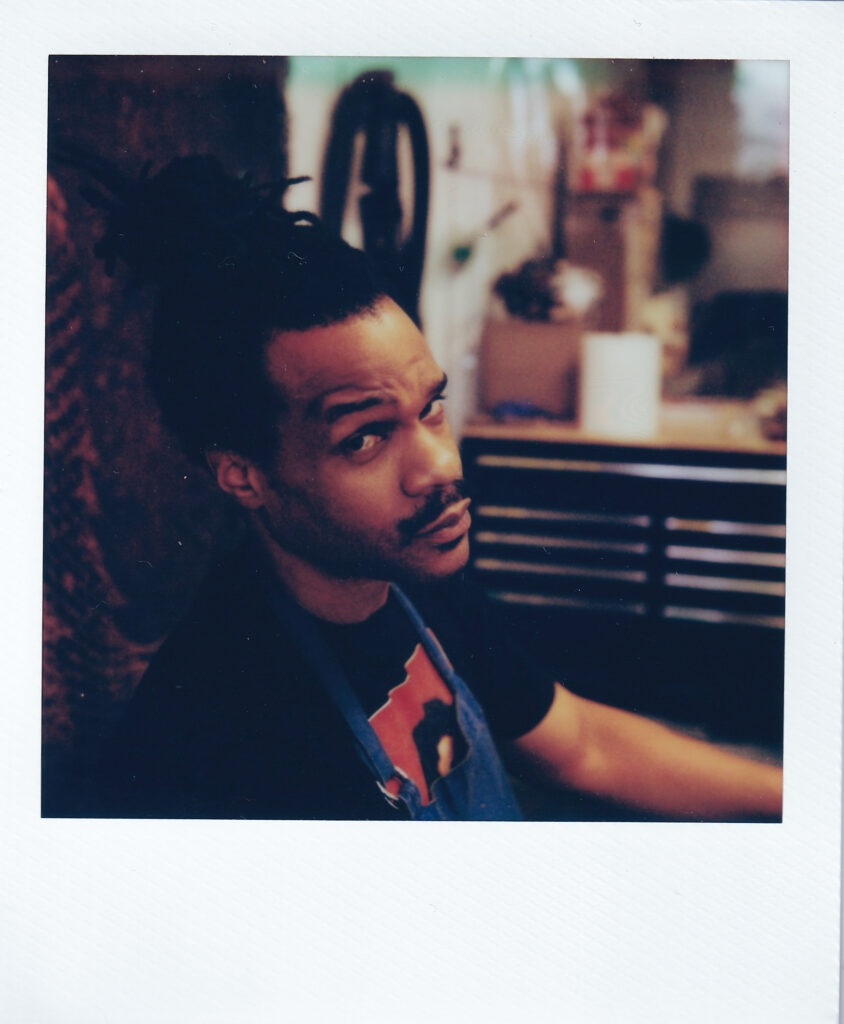
Now, the way he talks about making feels closer to cooking, comparing it to learning a dish that nourishes you so deeply you have to figure out how to recreate it. Not because you want to replicate the exact flavor, but because you understand why it mattered in the first place, to nourish a part of yourself.
His process reflects that mindset. It’s less about control and more about assembling, testing, and responding. Objects come together without certainty. Sometimes they work, most of the time they don’t. But the goal isn’t perfection. It’s to create a kind of atmosphere, something he describes as a feeling that gets inside you and stays there. Not a clear message but something that alters you slightly after you experience it.
There’s a tension in his work between attraction and suspicion. Images pull you in easily, but they’re also unreliable. That awareness comes from growing up surrounded by highly polished imagery that felt aspirational but ultimately constructed. That contradiction stuck. Now, the work sits in that space, asking you to look while also questioning what you’re seeing.
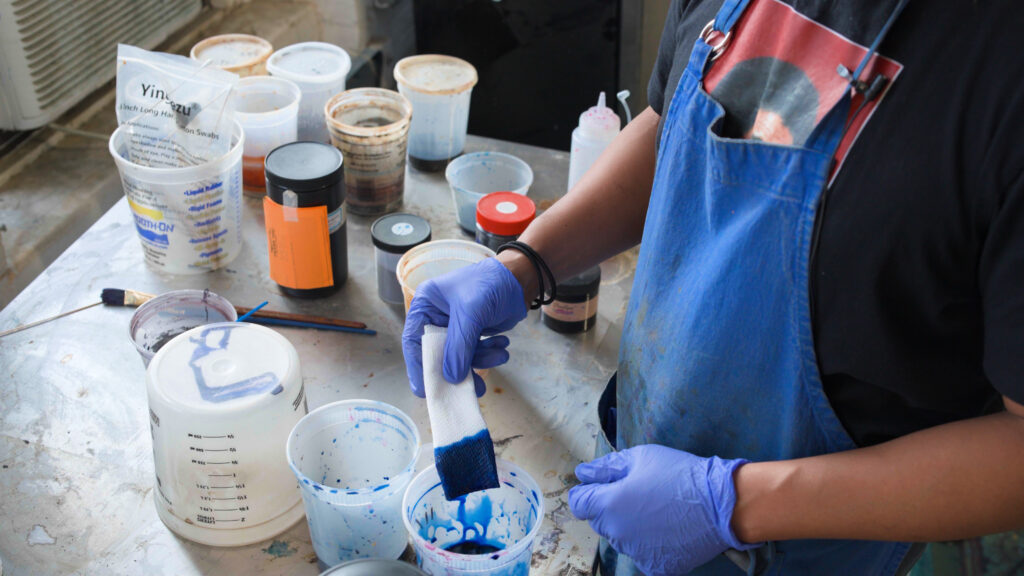
Teaching plays directly into this. The classroom becomes about movement between people, ideas passing back and forth, building something collectively, an “ensemble” as he calls it. That same energy feeds the studio. It’s less about having answers and more about staying in motion.
That idea of movement shows up again and again. Staying in motion creatively, mentally, physically. Not settling into one way of working for too long. Not getting too comfortable with a single outcome. The work has to keep shifting, the questions have to keep evolving. Because once something feels solved, it’s already time to move on.
Even the way he talks about originality pushes against the usual narrative. It’s not about being completely new. It’s about reaching toward something unknown and bringing it back in a way others can begin to understand. That takes time. And it doesn’t always land immediately. But that’s part of it.
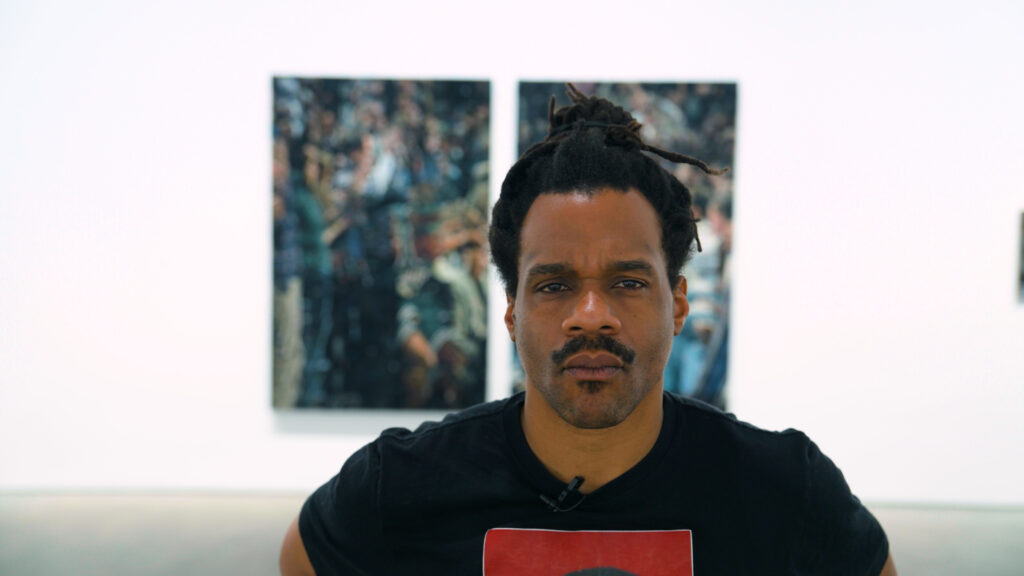
His path hasn’t been linear. There are moments of isolation, of returning to places that feel slower or more restrictive after experiencing something bigger. There are moments that feel almost unreal in their intensity, experiences that don’t leave you easily but somehow feed into the work anyway. Through all of it, the studio remains constant. Not as escape, but as a place to process.
And that’s the thing that holds everything together. This isn’t framed as work in the traditional sense. It’s something closer to study. A continuous act of learning, experimenting, and paying attention. The outcome matters, but not as much as the act of getting there.
Because at the center of it, the motivation is simple. To keep going. To keep making. To keep figuring out what something is, even if that means sitting with confusion for longer than feels comfortable. That’s where the work lives.
About the Author
Sam Burke is an American artist and writer based in New York City. Working across film, performance, and writing exploring storytelling, identity, and place. As co-founder of Timestamp, Burke interviews artists, shares insights, and highlights conversations shaping art world today.
Stéphane Koyama-Meyer
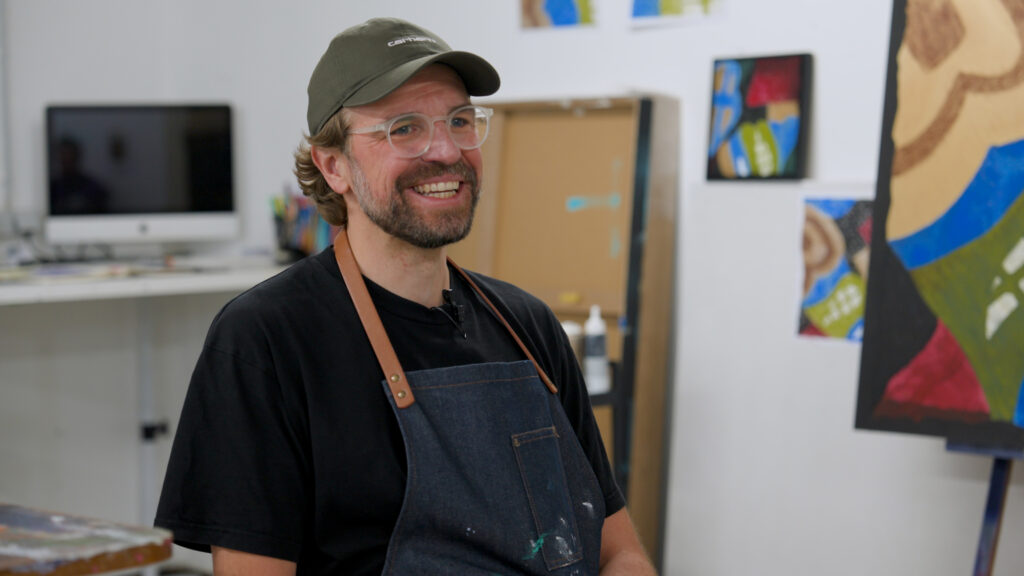
French visual artist and designer based near Basel, Stéphane Koyama-Meyer grew up surrounded by art,…
Yuval Bezalel
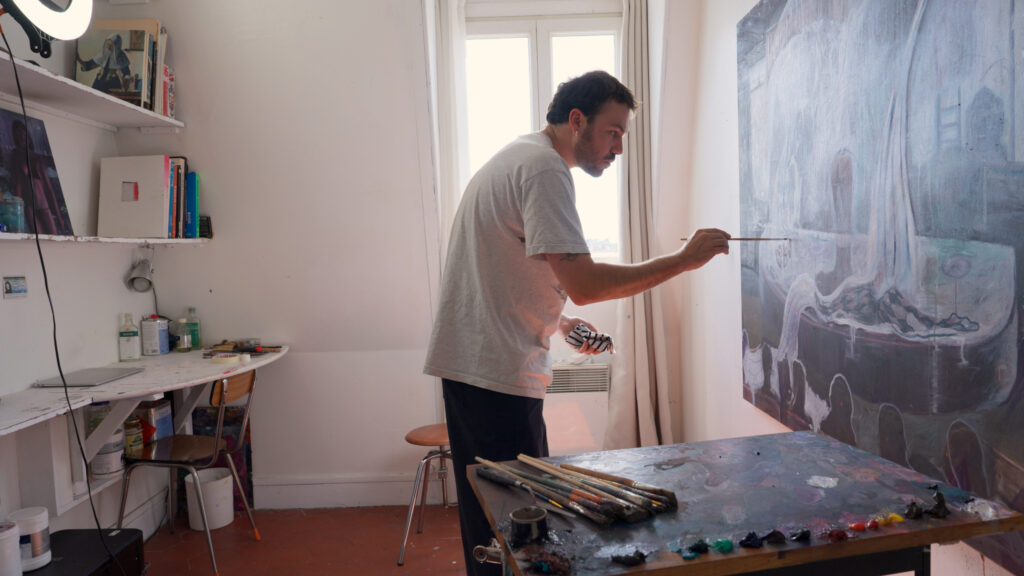
For Yuval Bezalel, painting begins with the hands, before there is a narrative, before there…
Adèle Aproh
For Adèle Aproh, drawing began long before she knew it could become a career. Her…
Félix Deschamps Mak
Félix Deschamps Mak is a French painter based in Paris, working in large scale figurative…
Katya Quel
Katya Quel is an artist and multidisciplinary creator, born and raised in Moscow, who now…
Why Dia Beacon Deserves a Full Day of Your Attention
There are museums you visit to check a box. And there are museums that quietly…