Ádám Dóra is a Hungarian visual artist working between Budapest and Barcelona, whose practice bridges sculpture, installation, drawing, and conceptual research. His work is rooted in the subtle exchanges between the body and its environment, how gestures become form, how memory settles into material, and how attention transforms the ordinary into something quietly transcendent. Through a precise yet poetic approach, he turns everyday structures into places where intimacy, architecture, and time fold into each other.
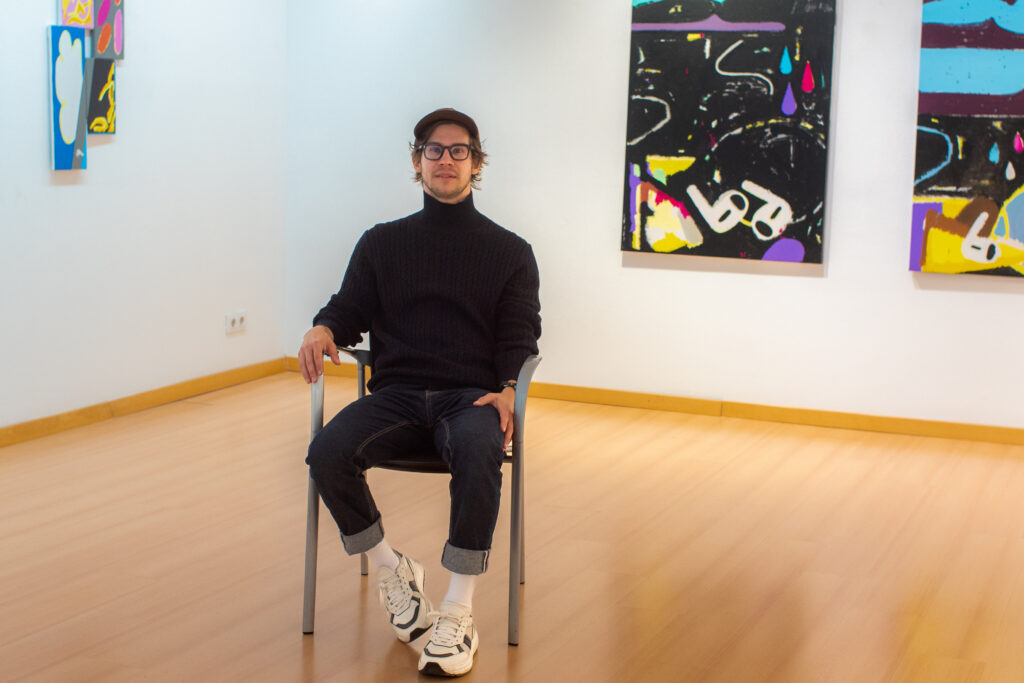
His identity as an artist was not something he discovered suddenly. It arrived quietly, and long before he had words for it. He describes images as having been present for as long as he can remember. As a child he collected pictures without understanding why they mattered to him, only that they did. The images around him held a kind of pull, and he followed that pull without questioning it. In his early teenage years the collection turned into drawing. The drawing turned into a body of work. The body of work turned into a way of thinking. What had started as something instinctive grew into something intentional. He began to understand that the pictures he made were becoming a kind of visual diary. They were a way of holding onto the surroundings that captivated him, whether those surroundings came in the form of people, objects or the cultural textures of Budapest.
That instinctive early interest eventually led him to a master in his hometown who guided him as a teenager. After high school he enrolled in the University of Fine Arts in Budapest where he eventually graduated in 2017. His education there shaped him in ways he carries into every painting he makes. It was a traditional academic program, rooted in drawing from life, studying anatomy, understanding representation and absorbing the vocabulary of images that has existed for centuries. It gave him structure, discipline and a foundation that he describes as a skeleton beneath all his work. But even while he learned the academic rules he could feel something else forming alongside them. His personal voice was beginning to take shape and little by little that voice grew strong enough to move him beyond the system he had been trained in.
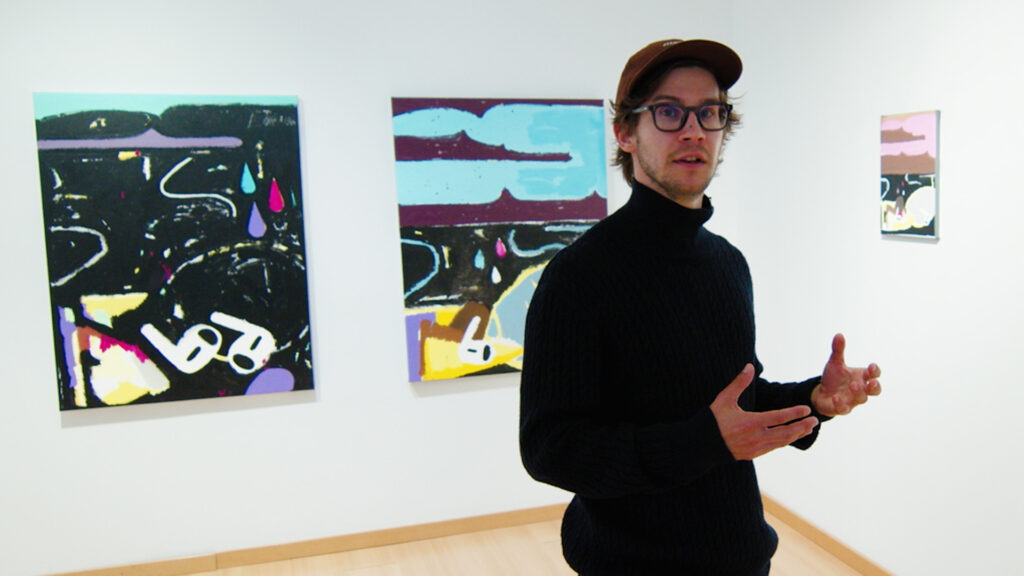
He often returns to the distinction between being an art student and being an artist. As a student he learned concepts, techniques and the formal ways an image is built. But eventually there came a point when he realized that knowledge alone was not enough. There was something more that had to be reached which did not fit inside the framework of academia. That “something more” became the starting point for his life as an artist. He describes it as the moment he stepped out of the room of academic logic and into a wider field where experimentation, intuition and honesty drove the work forward. He still carries the foundation he learned, yet he no longer follows the rules as they were given to him. Instead he uses them as a structure to push against.
His approach to painting is shaped by his understanding of the world as being saturated with images. He sees the contemporary visual environment as overflowing. Everyone holds a device that feeds constant images. Streets are lined with them. Screens illuminate them endlessly. In the midst of this flood he recognizes that many images lack the physical presence of something made by a human hand. This gap between digital abundance and tactile reality has become one of the central motivations in his work. Painting, for him, is a way of reconnecting with the material truth of images. He sees it as a way of bringing the body back into the act of seeing.
His practice involves organizing the visual fragments of his life into what he calls a painterly language. Through painting he filters daily life, personal experience and cultural surroundings into images that hold the weight and texture of being made. His work does not attempt to present a direct message because he believes the message of painting is in the seeing itself. He focuses on how an image sits on a surface and how viewers engage with it. The dialogue, as he describes it, occurs between the viewer and the painting rather than through any didactic verbal explanation.
Outside the studio he surrounds himself with experiences that feed his work in indirect yet vital ways. He cooks, experiments with food, moves his body through sports and maintains a strong connection to textiles. He describes these activities as sensual and tactile, the same qualities that matter in painting. When he prepares a dish he feels the same kind of physical engagement he feels when touching materials. This sensorial relationship becomes a bridge between daily life and art making. It is why certain objects from the kitchen or gym find their way into his compositions. They are part of his everyday reality and therefore part of his visual vocabulary.
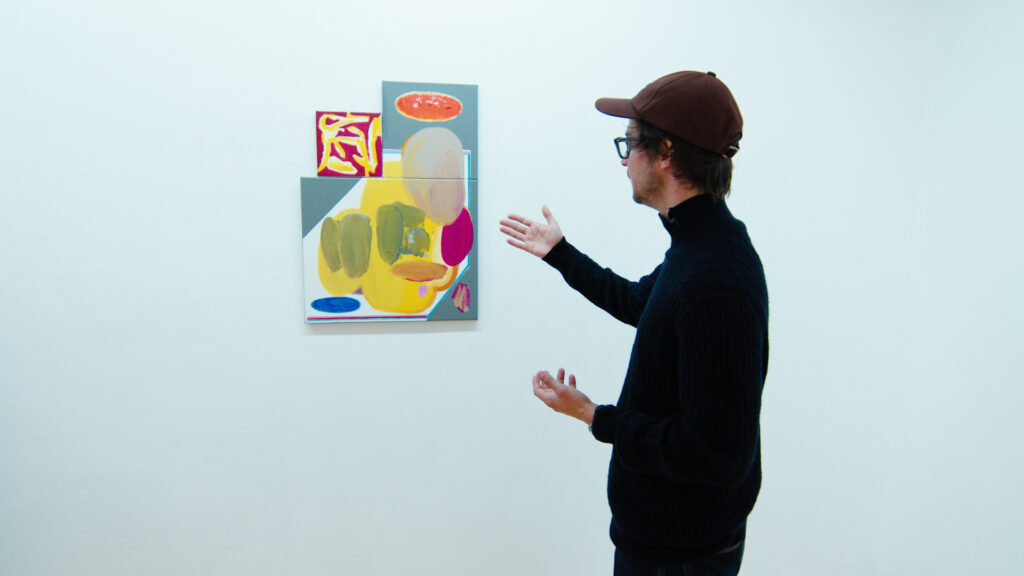
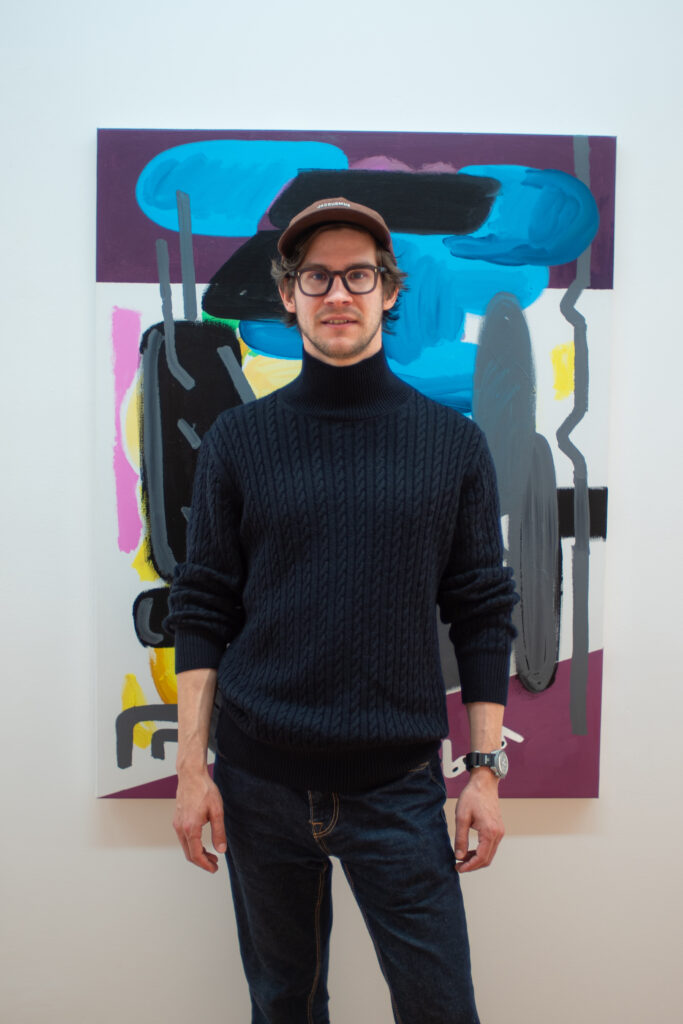
His technical evolution has been gradual and responsive. For years he worked with oil paint but eventually shifted to acrylic. The change happened because he found oil to be too sticky and heavy for the visions he was pursuing. Acrylic offered a different kind of materiality. It allowed him to build layers in varied ways, sometimes with a single transparent layer, other times with thick concentrated surfaces. He likes that acrylic is plastic and sometimes unnatural. It creates a tension between organic visual effects and artificial materials. This tension interests him. It feels like a reflection of contemporary life where natural and synthetic elements constantly collide.
He experiments widely with tools. Some passages of his paintings are rendered with precision while others are created with cheap, broad brushes from department stores that leave unpredictable marks. He appreciates that these inexpensive tools do not have a clean or controlled effect. They create rough, dirty textures that contrast with the more carefully painted sections. The contrast gives his paintings a richness that arises from varied surfaces and techniques rather than uniform execution.
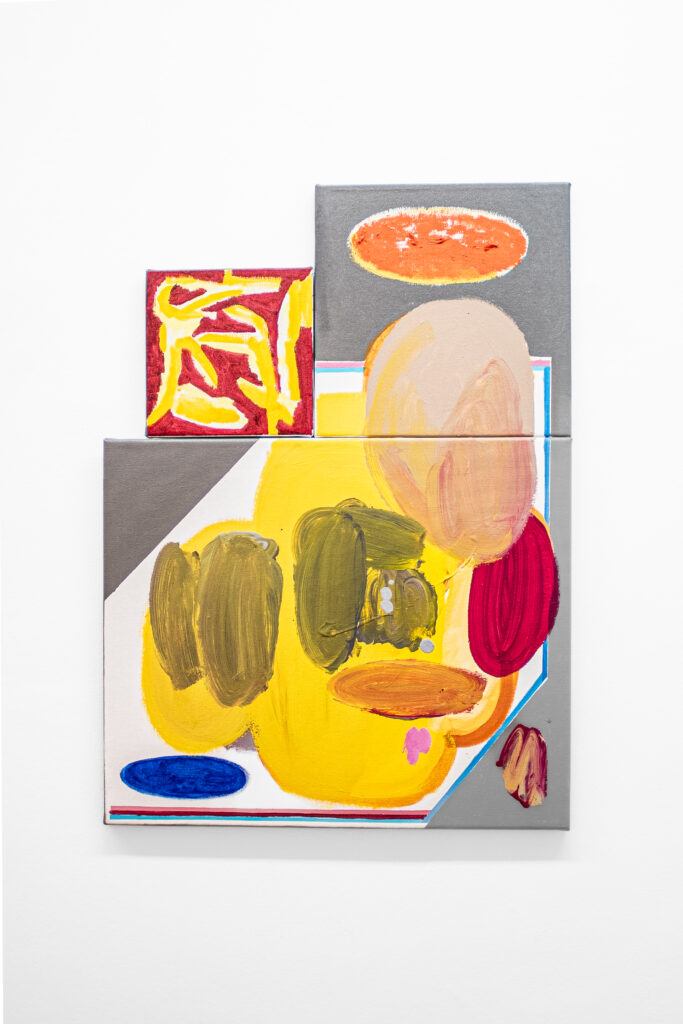
Color has also played an evolving role in his thinking. In the academic tradition he was taught in, black was discouraged. It was considered a forbidden color. With time he became drawn to using black and pairing it with the raw white of unpainted canvas. At a certain point he realized that these once prohibited elements were essential to his practice because they allowed him to break away from the naturalistic expectations of academic painting. He wanted to make vivid, colorful works but also wanted to introduce elements that disrupted that naturalism. Unpainted canvas became an active compositional choice rather than an untouched surface. Black became a dynamic force rather than a taboo.
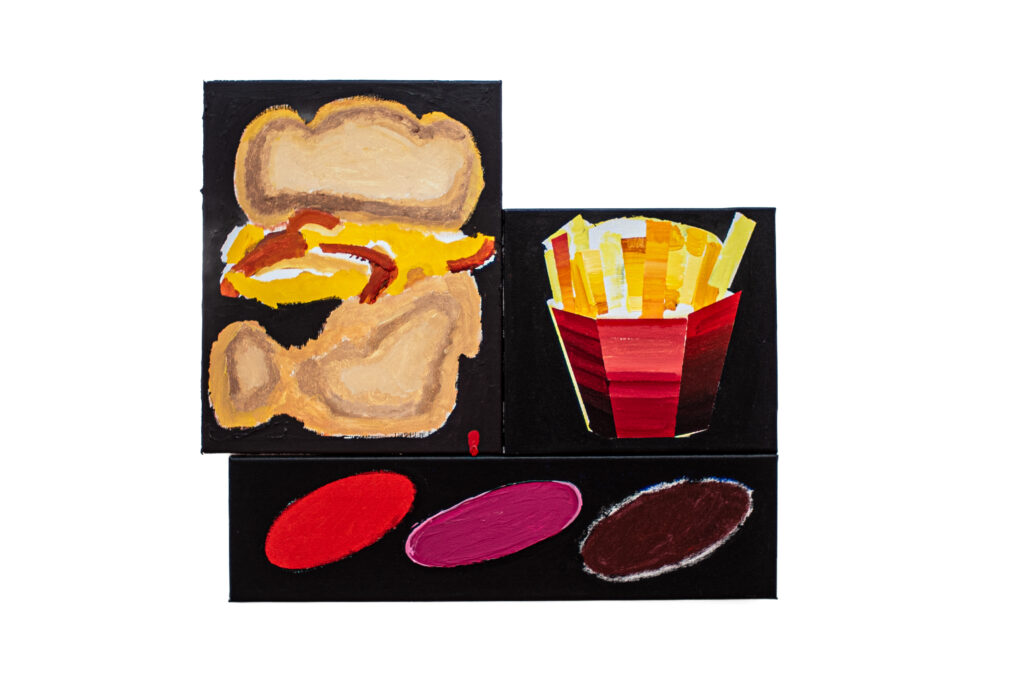
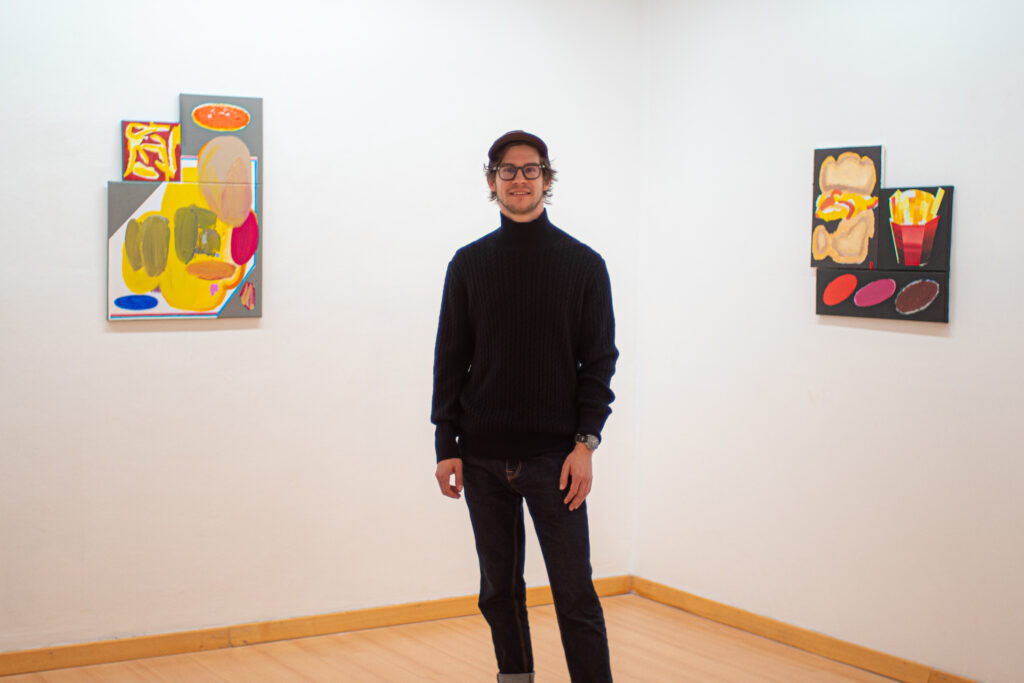
Much of his visual world comes from objects that surround him daily. He does not paint things because they are symbolic. He paints them because they are present. They belong to the contemporary environment he moves through and they often carry an energy he wants to capture. Recently he has explored oval forms that appear in many areas of his life. Small oval earbuds. Plates and dipping dishes. Elements from furniture and gym equipment. The oval shape repeats across these objects and becomes a structure for conversations within the paintings. He is drawn to how different sizes and energies of the same form can coexist in a single composition. In some works the oval becomes abstract. In others it remains tied to recognizably everyday objects. Either way it becomes a vessel that holds the shifting balance between daily life and painting.
These explorations intersect with another part of his thinking. He is interested in how painting can both honor and challenge its own historical structure. The traditional idea of a painting is a flat rectangular surface. He sees possibilities in playing with multiple canvases and composite structures. Though artists have explored this throughout art history, he approaches it as a contemporary investigation into what a painting can be. He references the triptychs of Gothic cathedrals as an example of complex image structures from the past but uses contemporary sensibilities to create playful multi canvas compositions. It is one more way he questions and expands the conventions he inherited.
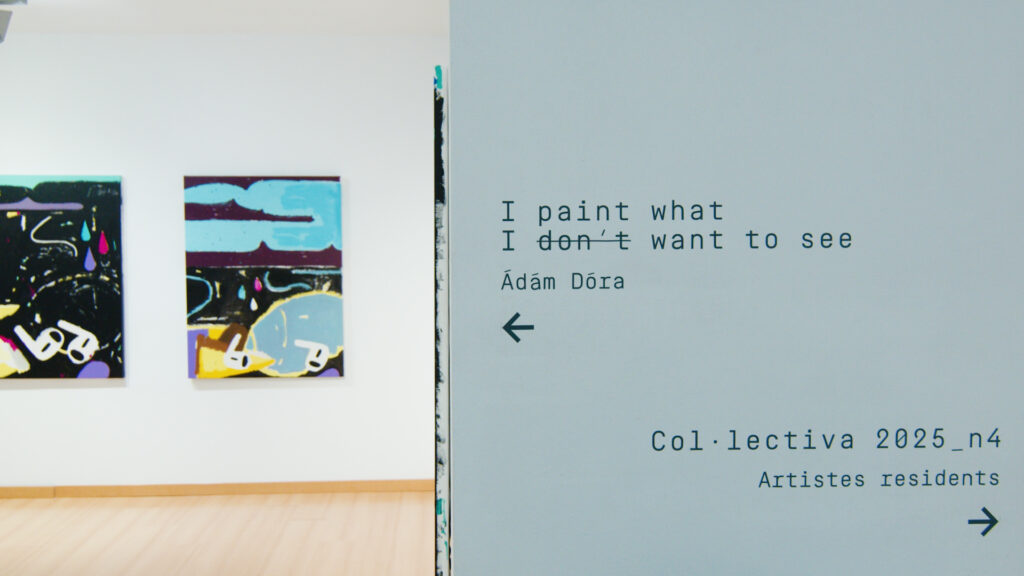
His exhibition title ‘I paint what I don’t want to see’, is inspired by a book title by Philip Guston. The phrase resonated with him because his relationship with objects often functions in a similar way. The things he paints are not necessarily things he loves. They are things that are simply there. They are part of consumer life and cosmopolitan life. They fill his environment whether he invites them or not. Painting them becomes a way of acknowledging their presence and transforming them. In this respect his work mirrors Gustons interest in the personal environment of the painter though Adam redirects that influence through his own contemporary lens.
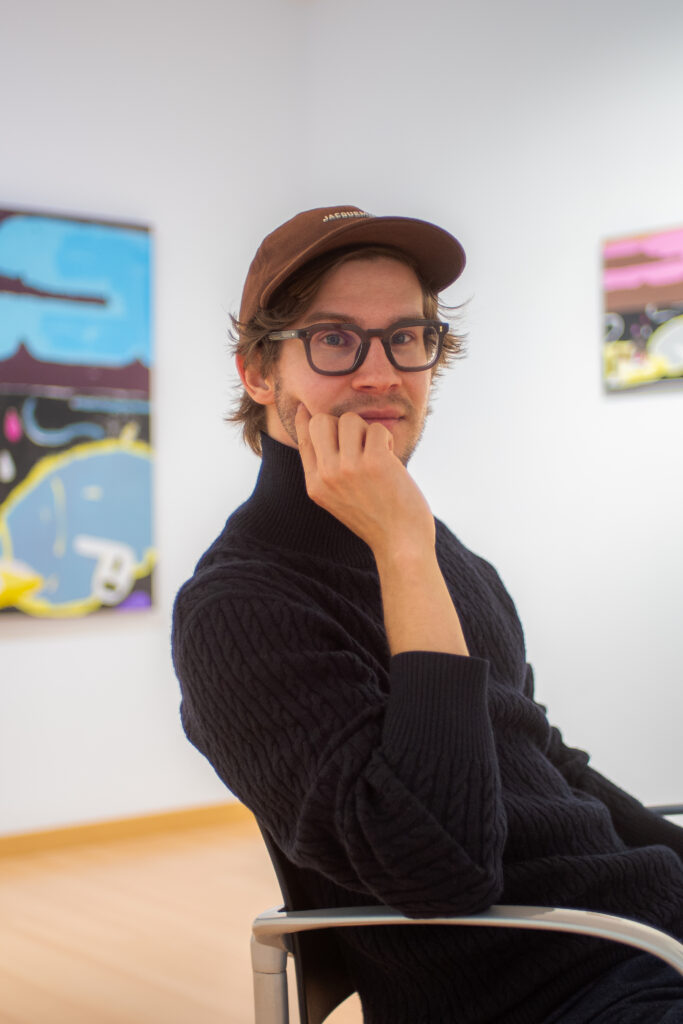
His understanding of being an artist is grounded in the long view. He does not see it as a linear career filled with predictable milestones. Instead he describes it as a journey with many different paths. Some paths move forward. Some loop back. Some take unexpected turns. He views his practice as a constant balancing act between desire, vision and the unpredictable evolution of his work. The idea of magic comes up often when he describes the moment a painting becomes an image. He sees painting as a process where materials transform into something more than their physical components. This transformation continues to fascinate him and keeps him committed to daily work in the studio.
His advice to younger artists comes from this understanding. He believes that art making is not a career one should pursue casually. It requires total necessity. He says an artist must feel that they cannot live without making art and that the drive must be absolute. To sustain a lifelong practice he insists that one must work every day and never stop after education ends. He has seen talented people leave art behind because their vision was not strong enough or because something interfered with their momentum. He believes that being an artist means continuing despite difficulty and that the work itself must be a constant. The layers behind each painting are not just visual layers but layers of labor, commitment and persistence.
For him painting is not a business plan or a short term project. It is something that evolves across a lifetime. It involves periods of searching, periods of clarity and moments of returning to previous ideas with new understanding. He embraces the fact that the journey does not have a fixed route. It is this unpredictability that keeps him engaged and ensures he never grows bored with the work. At the heart of his practice is a commitment to following the honest impulses that guide him, even when they lead him outside the systems he was trained in.
Across all these threads his story remains grounded in the same impulses that shaped him as a child. The fascination with images. The instinctive need to collect and organize visual experience. The desire to turn his surroundings into a personal language. The structure of academic training gave him a foundation but it was the slow unfolding of his own voice that made him an artist. Today his paintings continue to emerge from the daily encounters and tactile experiences that animate his life. He works with what is present and transforms it into something that invites viewers to see differently. In a world overwhelmed with images his paintings offer the weight of the handmade and the depth of a vision formed through years of observation and experimentation. His journey continues in this way, step by step, image by image, layer by layer.
Help support Timestamp (we’re an Amazon Associate) when you buy art supplies with our affiliate links (we earn a small commission at no extra cost to you):
Shop for Acrylic Paint: https://amzn.to/43UkZLA
Shop for Canvas: https://amzn.to/4nG9q1I
Shop for Brushes: https://amzn.to/4nJQJdQ
Stéphane Koyama-Meyer
French visual artist and designer based near Basel, Stéphane Koyama-Meyer grew up surrounded by art,…
Yuval Bezalel
For Yuval Bezalel, painting begins with the hands, before there is a narrative, before there…
Adèle Aproh
For Adèle Aproh, drawing began long before she knew it could become a career. Her…
Félix Deschamps Mak
Félix Deschamps Mak is a French painter based in Paris, working in large scale figurative…
Katya Quel
Katya Quel is an artist and multidisciplinary creator, born and raised in Moscow, who now…
Why Dia Beacon Deserves a Full Day of Your Attention
There are museums you visit to check a box. And there are museums that quietly…