
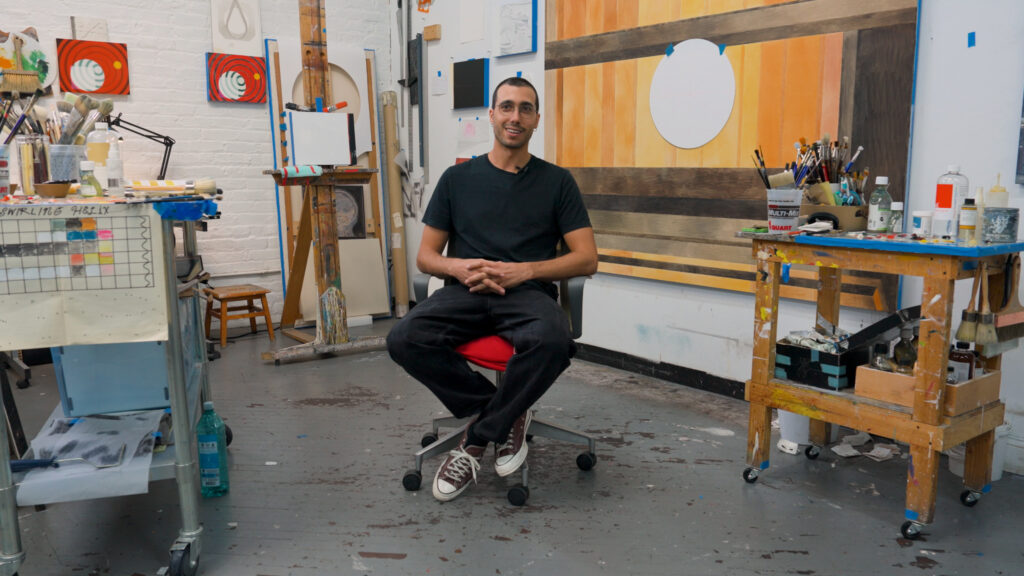
For Portuguese painter Gonçalo Preto, a painting is never simply a representation of something seen. It is an opportunity to question how we perceive the world, how light changes what we understand, and how an image can reveal something that would otherwise remain hidden. Based in Brooklyn, New York, Preto approaches painting with the precision of a designer and the curiosity of an investigator, moving between photography, anatomy, optical illusion, and the subtle effects of light. His work is methodical and carefully constructed, but the ideas behind it often begin with experiences that resist easy explanation.
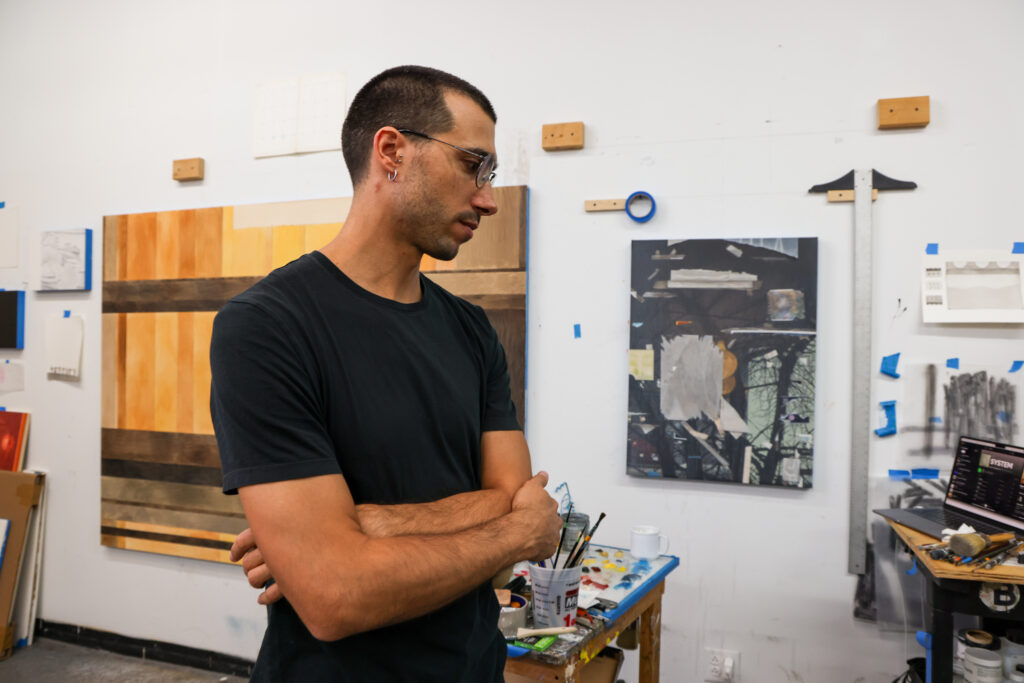
Preto’s relationship with art began early. Growing up in Portugal, he was encouraged by both parents to draw and continue making things, with his father’s work as an architect providing a particular influence. He spent time in his father’s studio and initially imagined following a similar path, eventually choosing to study product design because it offered a balance between practical thinking and creative freedom. Although he had always drawn, painting was something he came to later. His education took him from Lisbon to Germany, where he continued his studies, and eventually to the United States, where he began to explore painting more seriously. These shifts between countries and disciplines gradually changed the way he understood his own practice.
Moving away from Portugal also made him more conscious of questions surrounding identity and belonging. Preto does not necessarily see his work as an expression of Portuguese identity, but he recognizes a quality of silence and stillness that he associates with the place where he grew up. He describes a particular pace in his work, one that stands apart from the urgency and intensity he sometimes observes in contemporary American art. Rather than demanding attention through spectacle, his paintings often invite a slower kind of looking. Their quietness is not an absence of activity, but a way of allowing small shifts in light, surface, and perception to become significant.
His background in product design and architecture remains visible in the way he builds a painting. Preto describes himself as methodical, drawn to precision, clean lines, and the process of constructing an image from the ground up. A painting often begins with drawing, with lines establishing the structure before color and atmosphere begin to develop. Yet technical precision is only one part of the process. Each painting requires a different approach, and he pays close attention to how a particular method will affect the final image. Some works are built through direct applications of color, while others develop through successive transparent layers, allowing light to interact with the surface in a different way. For Preto, the choice between these approaches is essential to creating the atmosphere he wants.
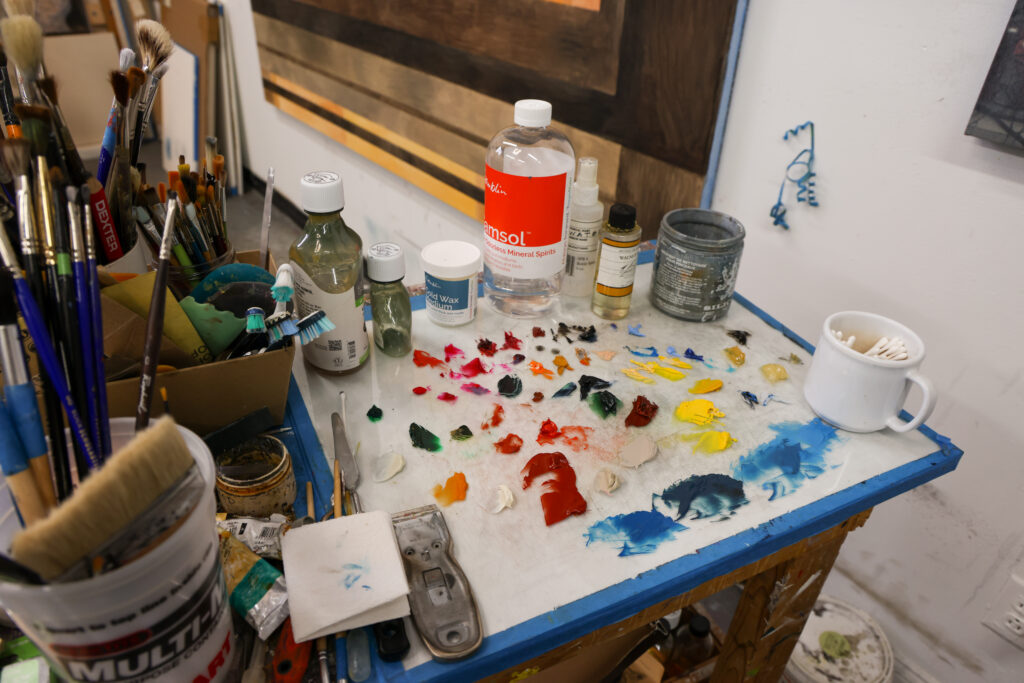
This attention to process extends throughout his studio. He organizes different workstations around individual paintings, maintaining separate palettes and references for each one. Preliminary drawings, digital compositions, collages, and small studies help him understand how an image might develop before committing to a larger surface. But planning does not eliminate uncertainty. Preto describes painting as something like a game of chess, in which each decision changes the possibilities that follow. A painting can reach a stage where it seems to be going nowhere, forcing him to step away, reconsider his approach, or allow an unexpected quality to redirect the work. He is interested in the technical challenges of painting, but also in the moments when the process begins to produce something he had not anticipated.
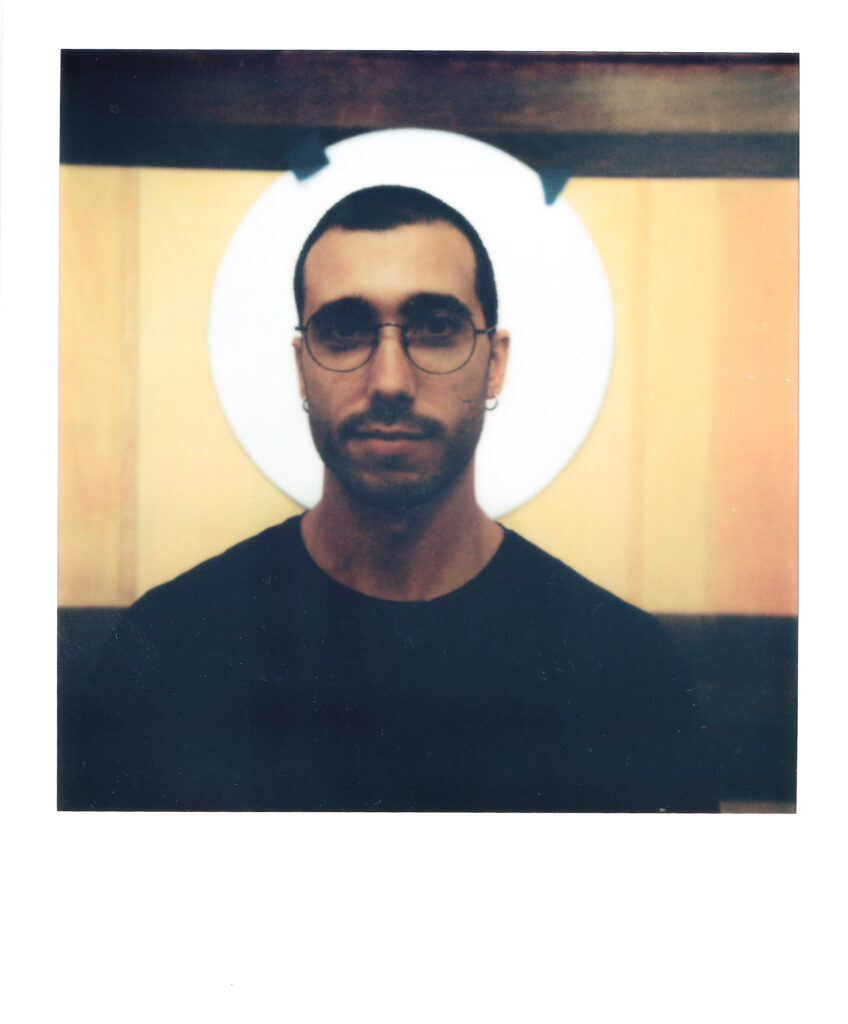
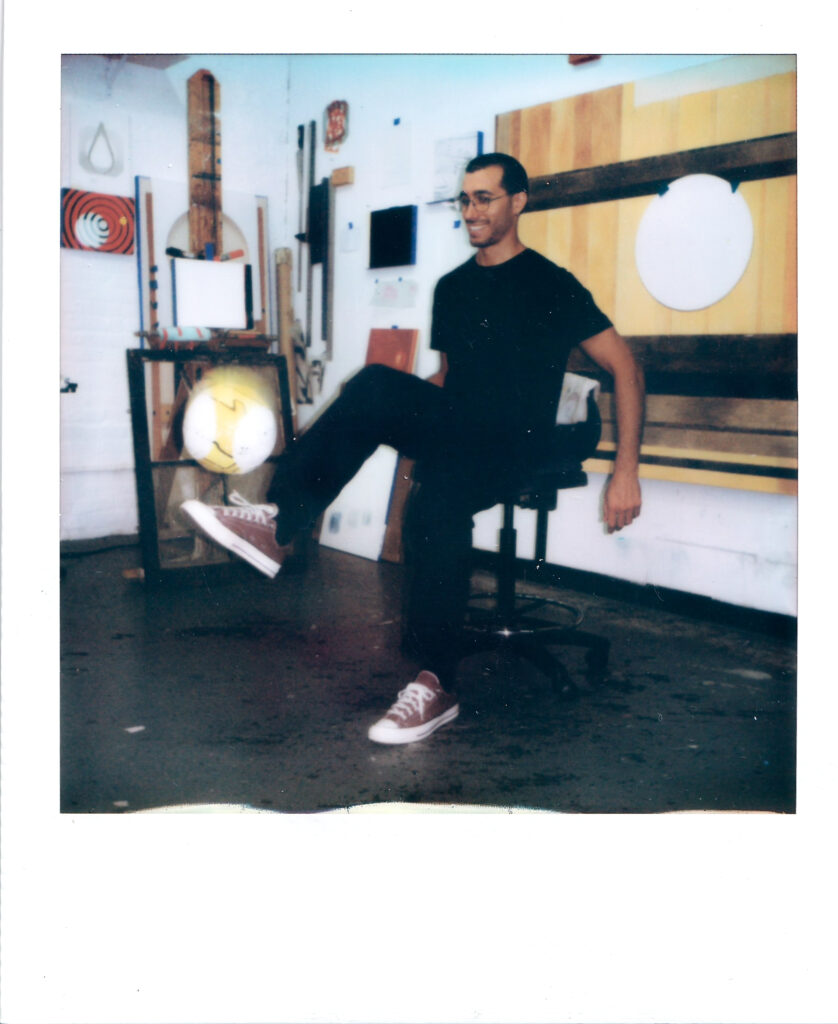
Photography has become an important source of inspiration, particularly film, alternative photographic processes, and the effects of exposure. Preto is interested not only in what a photograph represents, but in how the image itself is formed. Light, chemicals, and the mechanics of exposure can alter an intended image, introducing another layer of meaning that was never part of the original scene. He brings this interest into painting by exploring optical illusions, shifting relationships between foreground and background, and surfaces that do more than simply depict light. He wants the painted surface itself to become a vessel for light, changing how the viewer experiences the image rather than merely illustrating a visual effect.
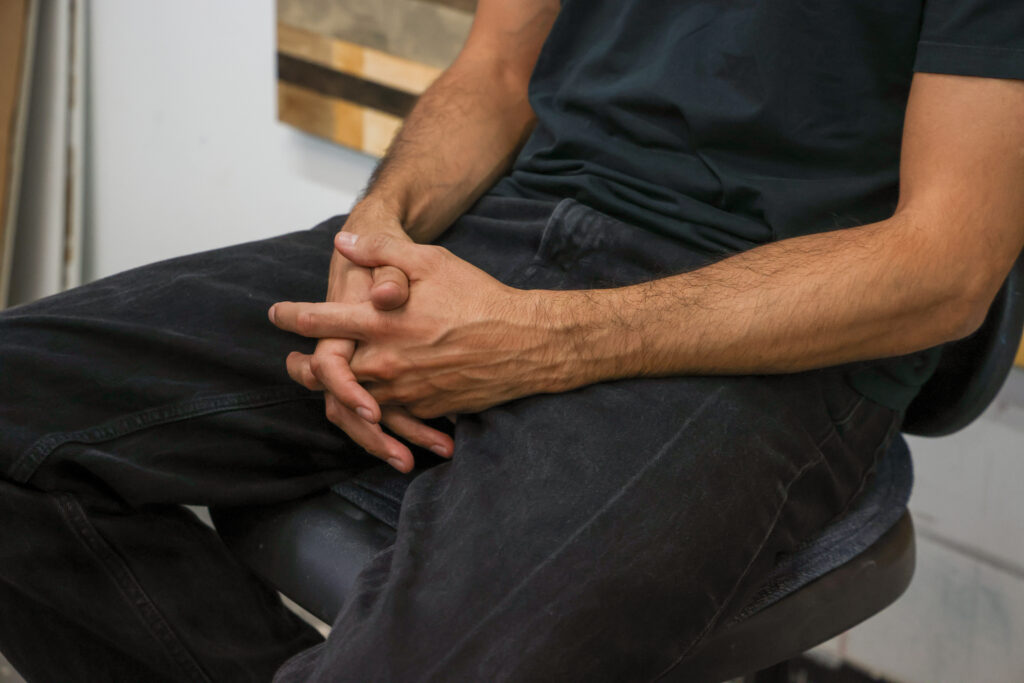
One of the more unexpected developments in his work began with an episode of extreme sleep deprivation. After staying awake for nearly forty-eight hours to complete paintings for an exhibition, Preto experienced a series of disorienting sensations involving his vision, movement, and sense of his own body. At one point, he felt as though he were experiencing his grandfather’s hands, an experience that left him questioning the relationship between physical sensation and perception. The episode eventually became a starting point for a body of paintings concerned with anatomy, the nervous system, and the possibility of examining the body from an unfamiliar perspective.
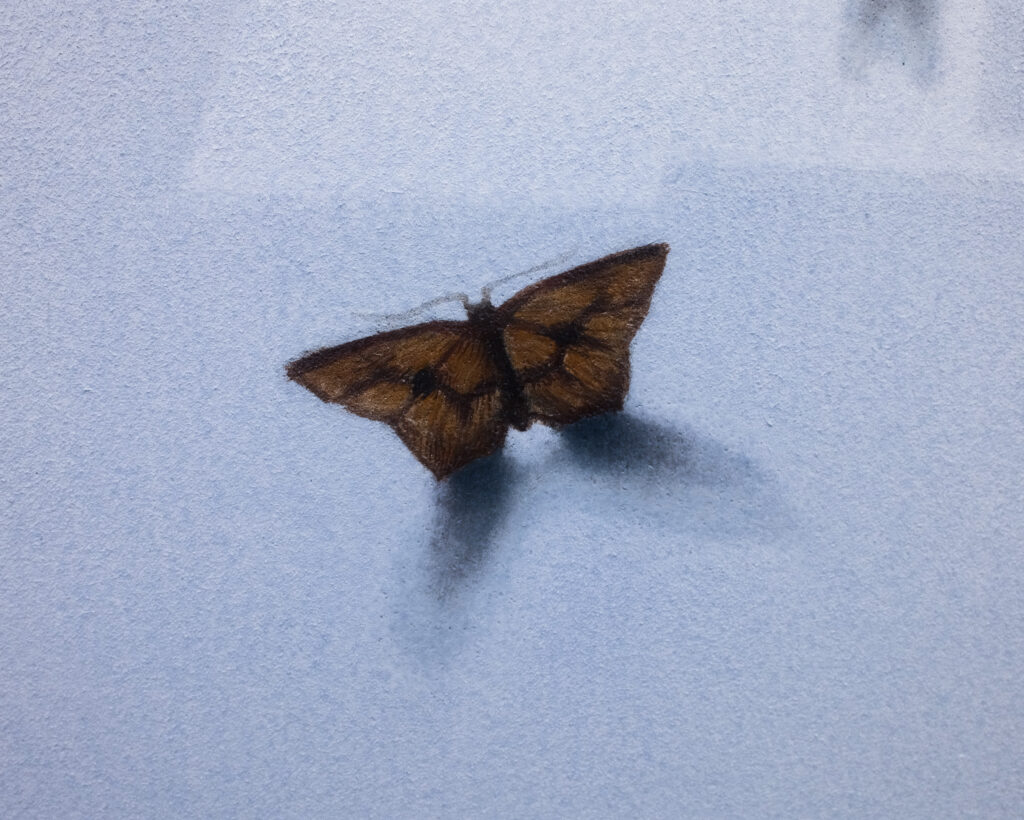
Preto began approaching these subjects almost as a forensic investigator might, studying the body and its internal structures with an analytical distance. X-rays became an important reference, both visually and conceptually. They allow the interior and exterior of the body to occupy the same plane, revealing structures that ordinary vision cannot access while transforming the body into an image shaped by light and energy. For Preto, this creates an opportunity to explore the instability of what we see and the ways an image can make something familiar appear strange. The paintings become a form of investigation, using precision to examine experiences that are difficult to explain through language alone.
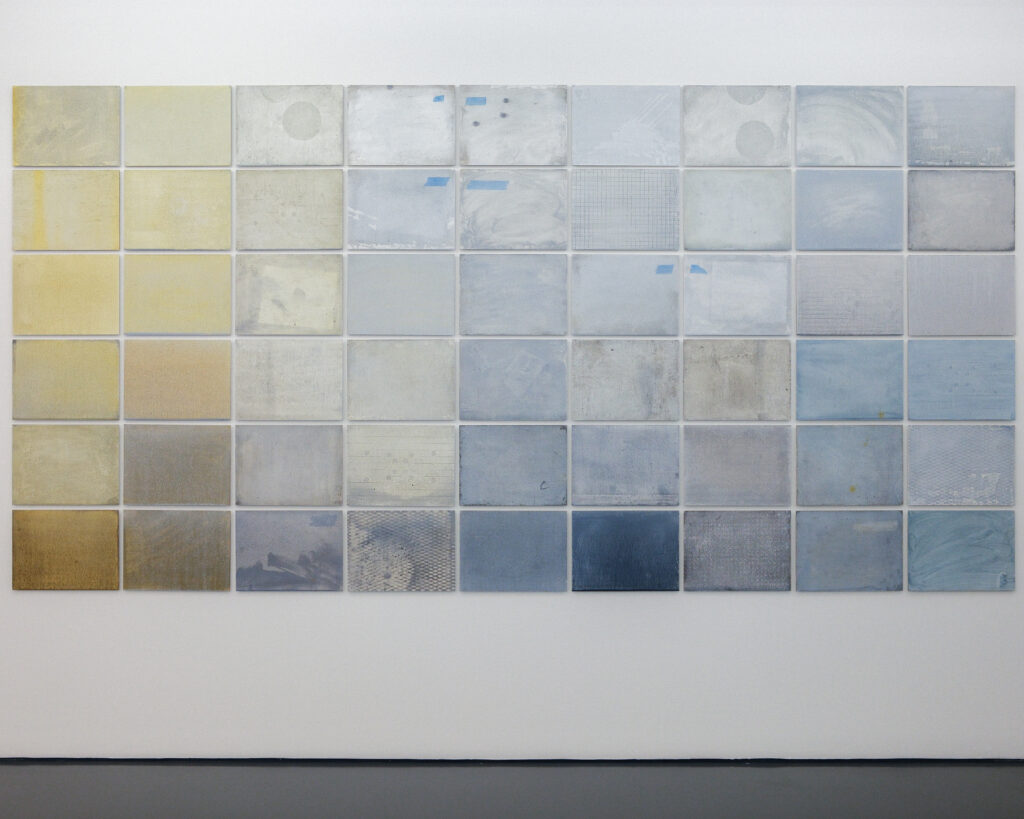
Despite the consistency of his working methods, Preto resists the idea that an artist must develop a single recognizable visual language and repeat it indefinitely. He is drawn to the possibility of making paintings that differ significantly from one another, even when their formal qualities seem unrelated. He enjoys bringing together works that initially appear disconnected and discovering whether they can create a new narrative as a group. Curiosity, rather than a predetermined style, is what allows him to continue working. A texture, a particular quality of light, or an unfamiliar visual problem can become the beginning of an entirely different direction.
That freedom is increasingly important to him as he considers the pressures surrounding the commercial side of being an artist. Preto speaks openly about the stress of painting and the expectation to produce work consistently for exhibitions and the market. Although he does not imagine giving up painting, he recognizes the difficulty of maintaining a practice that requires time, concentration, and the willingness to work through periods of uncertainty. He believes artists need to communicate their needs and preserve the conditions that allow them to work honestly, rather than changing their principles to satisfy a gallery, social media, or an external expectation of what their work should become.
This commitment to independence also informs his interest in creating opportunities for other artists. Having experienced the importance of building community firsthand, including organizing independent group exhibitions with friends in Portugal, Preto understands that artistic development does not happen in isolation. He hopes that, at some point, he might establish a residency or another kind of platform that gives artists space to work and develop their practices.
For now, painting remains his way of making sense of the world. His process is grounded in careful observation and technical control, but the questions that sustain it are open ended. Through photography, light, anatomy, and the unexpected behavior of a painted surface, Preto continues to investigate the distance between what something is and what we believe we see. His paintings ask viewers to look again, to reconsider the image in front of them, and to recognize that perception is never quite as straightforward as it seems.
About the Author
Sam Burke is an American artist, filmmaker and writer based in New York City. Working across film, performance, and writing exploring storytelling, identity, and place. As founder of Timestamp, Burke interviews artists, shares insights, and highlights conversations shaping art world today.
Gonçalo Preto
For Portuguese painter Gonçalo Preto, a painting is never simply a representation of something seen….
The Armory Show 2026: Highlights from New York’s Contemporary Art Fair
From experimental painting to immersive installations, a look at the artists, booths, and ideas that…
Mia Goldstien
Born in Los Angeles and now working in New York City, Mia Goldstein has built…
Michael Alexander Campbell
Michael Campbell once tried to give up making art. The idea, as he explains it,…
Andrew LaFarge Hamill
Andrew LaFarge Hamill describes himself as an artist and garden designer, but he is interested…
Felix Benton
Felix Benton grew up surrounded by people who made things. His grandmother was a glass…