
For painter Kyle Staver, painting is a way of understanding the world. It is a language she discovered early in life, long before she knew what being an artist meant, and one that has continued to grow richer with every passing year. Working from her Brooklyn studio, Staver makes paintings that draw on mythology, history, humor, and the complicated relationships between people. Her figures inhabit a world that feels simultaneously ancient and familiar, where stories can be rearranged, emotions made visible, and light becomes a means of communication.
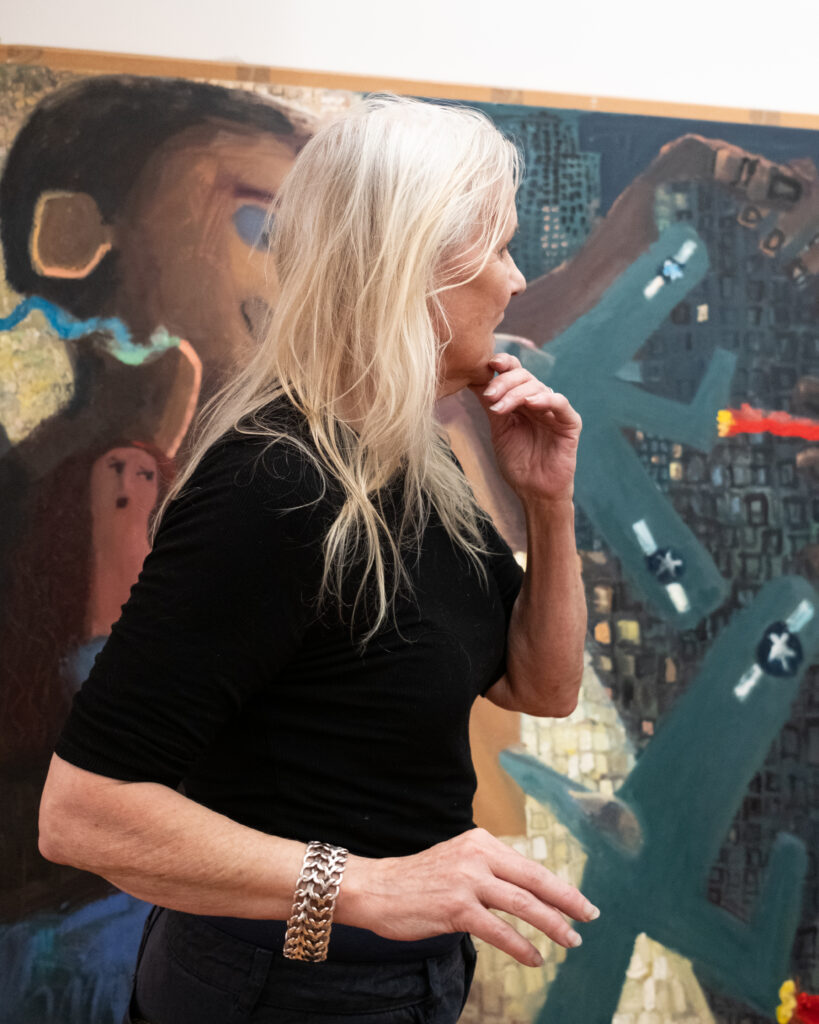
Staver grew up in northern Minnesota, where making things and drawing came naturally. It was a teacher at a girls’ boarding school who first gave her the language to understand what she was doing. Mrs. Moses approached her one day and announced that she knew what was wrong with her: she was an artist. Staver had no idea what that meant, but the recognition gave weight to something she had always done instinctively. It offered a way of identifying herself and, more importantly, the knowledge that there were other people who understood the world in the same way.
“I’m not a linear thinker,” she says. “I’m a visual thinker.” Art, she found, made room for that kind of thinking. Rather than following instructions or arriving at an answer through a predetermined sequence, she makes sense of things by doing them. The work itself becomes a way of thinking.
Her relationship with painting began with an experience she still remembers vividly: the moment she realized she could make light. She had not planned it, but something appeared on the canvas that seemed to exist beyond the decisions she had consciously made. The discovery felt almost elemental. She wanted more of it, more light, more of the possibility of making something appear.
Over time, that initial excitement became a sustained fascination with how light could carry emotion. For Staver, light is not simply a way to describe an object or establish a setting. It is the means through which a painting communicates, directing the viewer’s attention and shaping the emotional experience of a scene. She often returns to Rembrandt as an example of this ability, how light can pace a story and position someone emotionally within it without requiring them to know anything about the narrative beforehand.
That distinction is central to Staver’s understanding of painting. She believes a work should offer something to anyone standing in front of it, regardless of their familiarity with art history or the story behind its imagery. Knowledge can deepen an experience, but it should not be a prerequisite for having one. Her own mother, who had little painting culture, could respond to a painting; Staver, after years of looking and working, might find considerably more in it. Both experiences matter.
“Painting is about communicating,” she says, “making connections.” It is about making the world feel less alone.
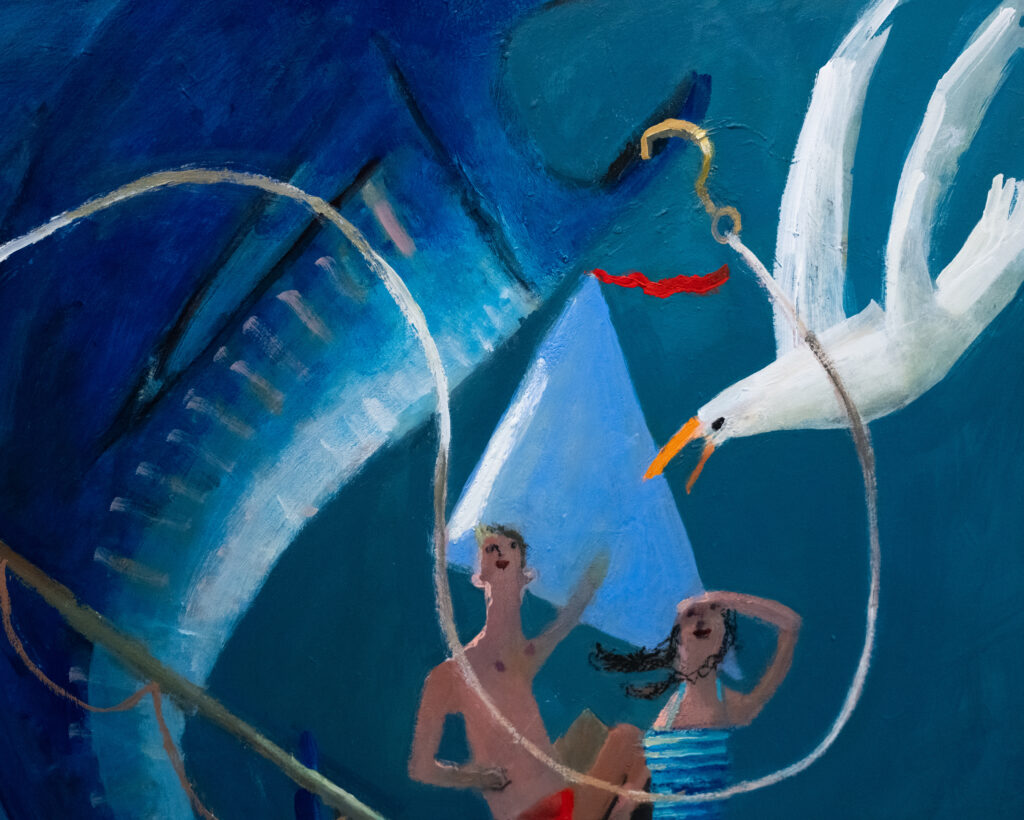
Before becoming a painter, Staver was a sculptor. She did not begin painting until she was thirty, after moving to New Haven and losing her studio. A close friend, the painter Peter Williams, suggested they spend an afternoon watercolor painting together in her backyard. Staver had never painted before and, misunderstanding the tiny tubes of watercolor, proceeded to use them as though they were samples. The experience eventually led to a realization that would change her practice entirely.
She had been making sculpture that occupied the world physically, something that required construction, materials, and a certain amount of logistical effort. Painting offered an entirely different kind of freedom. The canvas became an arena in which she could begin immediately, responding to what appeared before her without stopping to gather materials or build something first. She describes the experience as surfing: the moment she touches the canvas, she is engaged, moving with the work until she loses the wave.
Still, she does not think of painting as effortless. If anything, she describes herself as a coal miner, digging a painting out. She prefers flat brushes and works against the expressive brushstroke, mistrusting a kind of painterly gesture that can feel too easy or decorative. What interests her is the gradual emergence of something from the surface, the weight of paint, the light, and the space that begins to take shape.
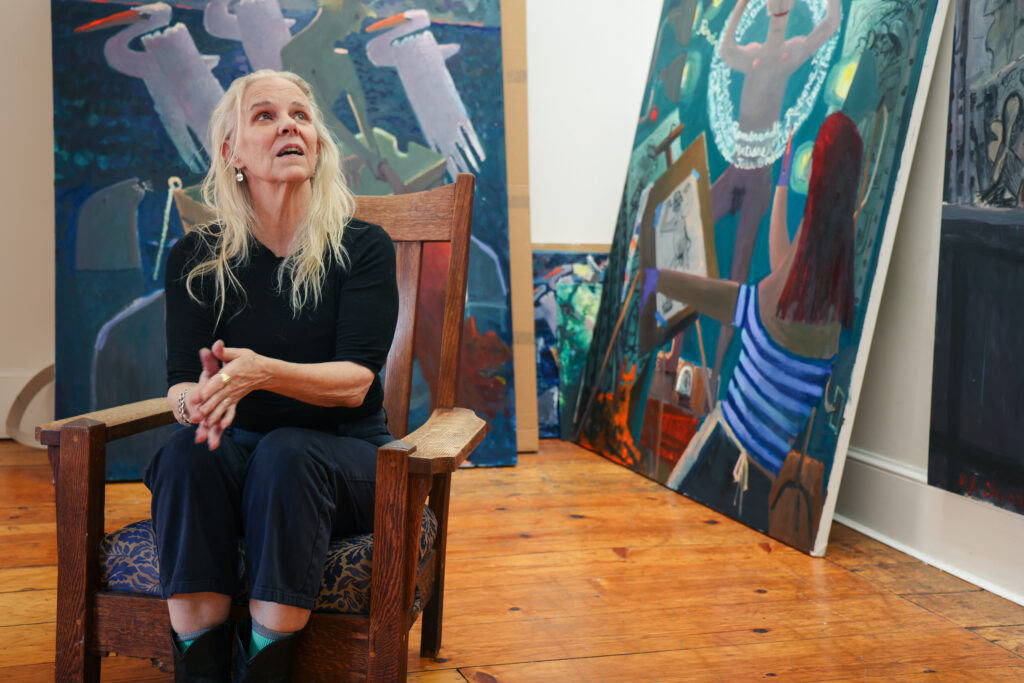
Her paintings often begin with stories. Staver is drawn to narratives that have circulated for centuries, particularly those from mythology, which she can take apart and rearrange. Familiar stories provide a shared point of entry, but they are never fixed. She can alter a narrative, change the relationships between figures, or introduce a different emotional understanding of an event. In one painting, a story traditionally understood as an act of violence becomes an intimate scene between two people after sex. The characters remain recognizable, but the meaning shifts entirely.
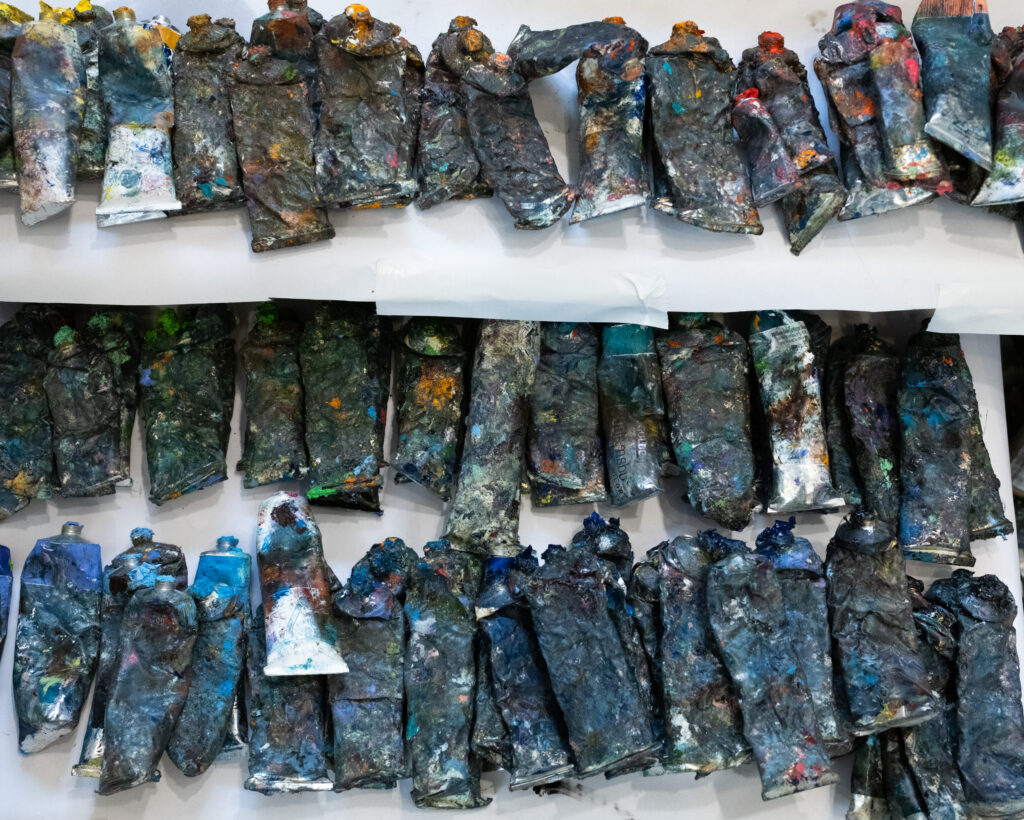
The drawings that precede and accompany her paintings are an essential part of this process. Staver draws constantly, often beginning each morning by returning to the work she made the day before. It is a way of reentering the studio, reconnecting with a painting that may feel distant after a night away. She compares the process to practicing free throws until the movement becomes familiar, allowing the body to remember what the mind might otherwise struggle to recover.
Her studio life is remarkably structured. She wakes before dawn, feeds her cats and tortoises, makes coffee, and spends time connecting paintings from different periods and cultures through a daily social media practice she has maintained for nearly eighteen years. By the morning, she is ready to paint. She works until midday, returns after a break, and usually stops in the afternoon, when she can no longer maintain the same connection to the canvas. Drawing, reading, and smaller studio tasks fill the remainder of her day.

The routine is not simply a matter of discipline. It is a way of protecting the attention painting requires. Staver has known artists who continued working every day into their nineties, and their example has made it difficult to imagine ever stopping. Painting, she says, is how the world makes sense to her.
That commitment is inseparable from the community of painters she has known. She speaks affectionately of friends who have spent their lives working, of artists whose studios remain full of unfinished projects and discoveries, and of the generosity that comes from being able to talk about painting with someone who understands. One of her favorite memories is a final conversation with painter Lennart Anderson, who was seriously ill and asked how her painting was going. Staver told him she was struggling to put camels into a picture. Anderson thought for a moment before offering a simple piece of advice: “You can’t force camels. You have to just kind of nudge them in.”
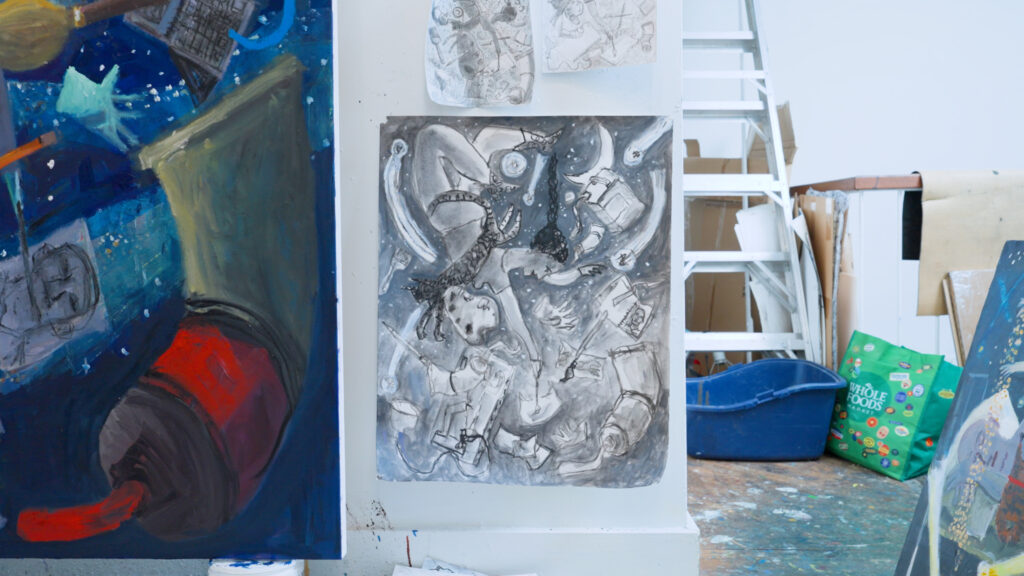
It is a lesson that seems to describe much of Staver’s own approach. Her paintings are built through attention, persistence, and a willingness to let something emerge rather than force it into place. Even when the subject is a familiar myth, the work remains open to discovery. The more she draws a figure, the more she believes in it; the more she paints, the more possibilities appear.
At the center of it all is the same excitement she felt when light first appeared on a canvas. Staver continues to return to the studio each morning with the feeling that something might happen, that the painting could reveal something she has not yet seen. It is a practice sustained not by certainty, but by the pleasure of finding out.
About the Author
Sam Burke is an American artist, filmmaker and writer based in New York City. As founder of Timestamp, Burke interviews artists, shares insights, and highlights conversations shaping art world today.
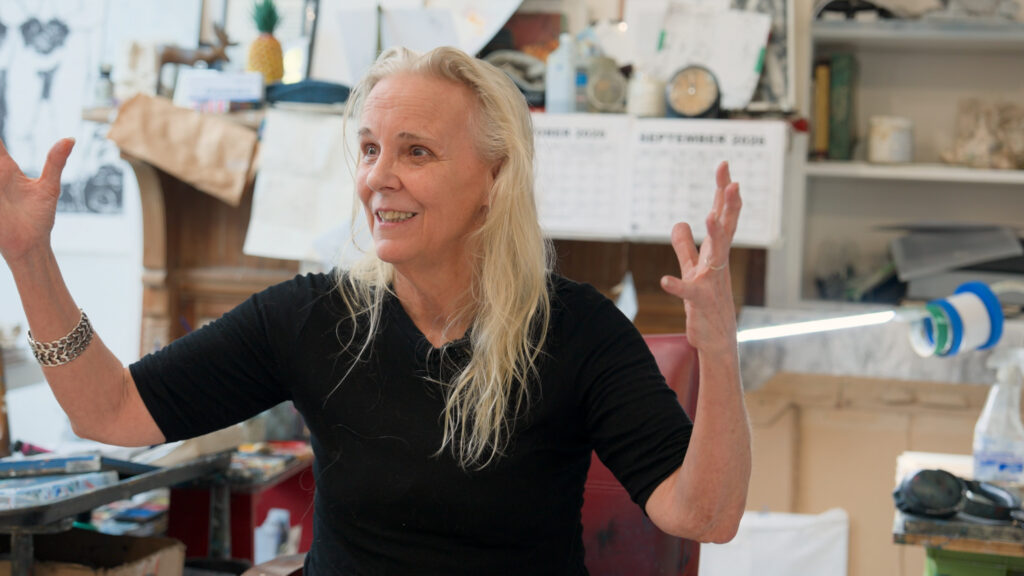
Kyle Staver
For painter Kyle Staver, painting is a way of understanding the world. It is a…
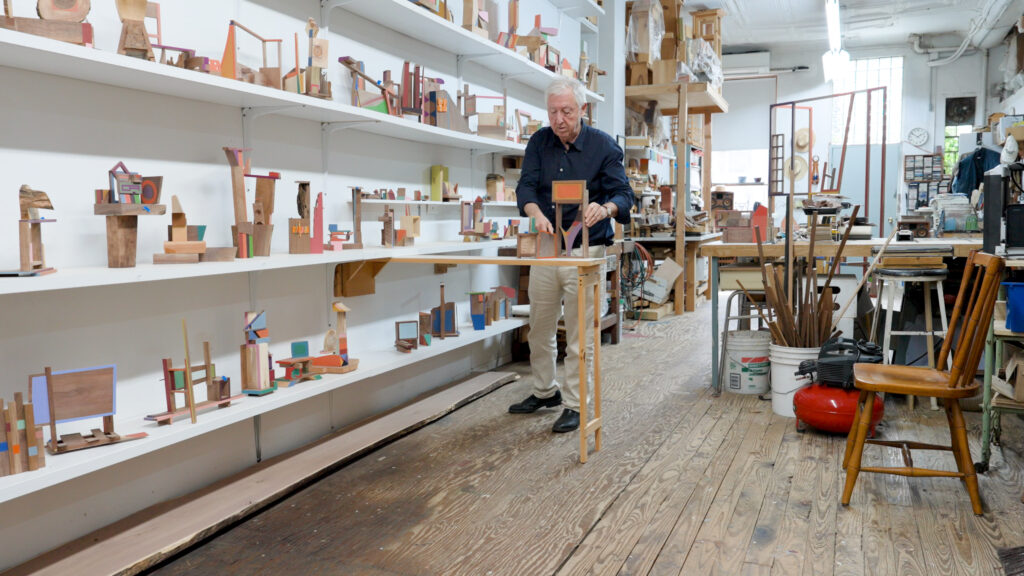
Jim Osman
For Jim Osman, a piece of wood might suggest a landscape, a corner, or a…
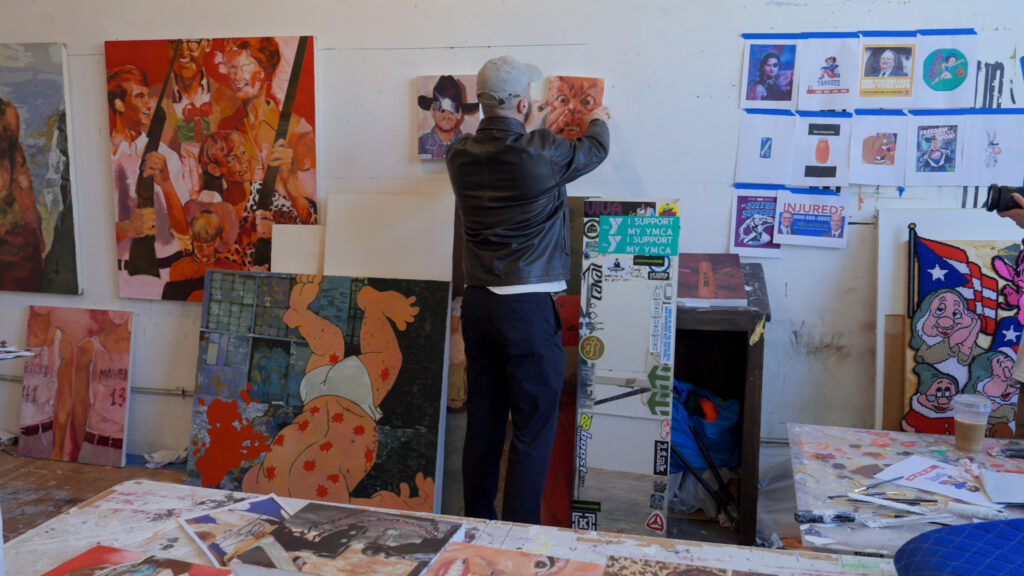
Henry Swanson
Growing up in Dallas, Texas, Henry Swanson was always drawing, making things, decorating T-shirts, and…
Adelisa Selimbašić
Originally from Bosnia and raised in Italy from the age of four, Adelisa Selimbašić has…

Shuling Guo
For painter Shuling Guo, making art is inseparable from the experience of living. Based in…
Gonçalo Preto
For Portuguese painter Gonçalo Preto, a painting is never simply a representation of something seen….