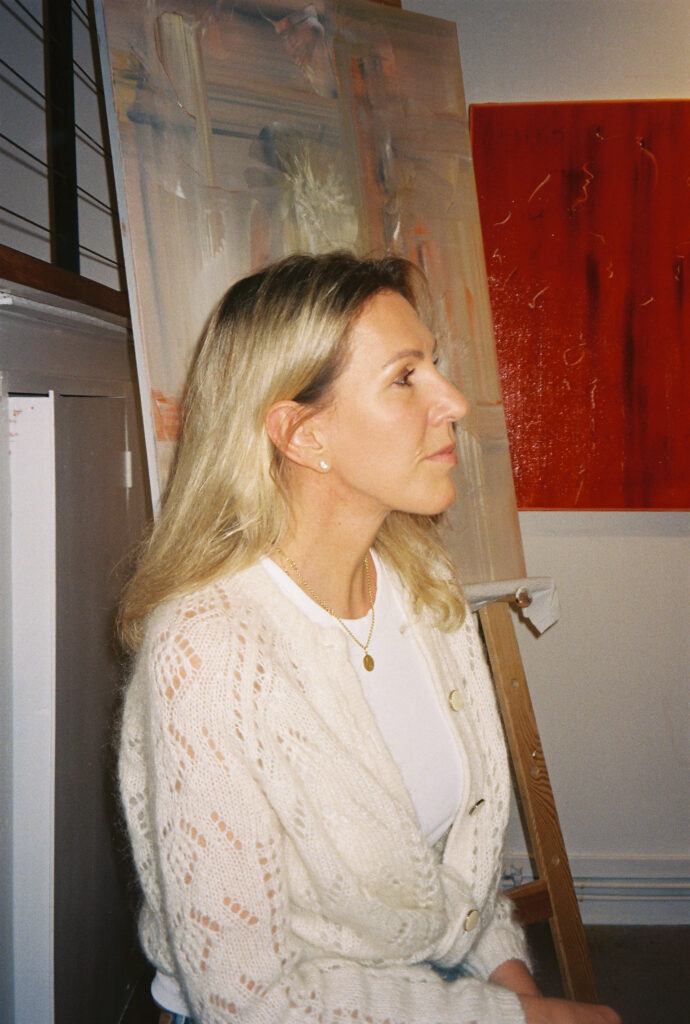
Marie Amélie Chéreau return to art came after a life that had been deliberately built away from it, shaped by discipline, expectation, and success in a world where becoming an artist was never considered a viable path. What makes her story resonate is not only the transformation itself, but the depth of time that passed before art was allowed to fully reenter her life, carrying with it everything that had been repressed, endured, learned, and ultimately integrated.
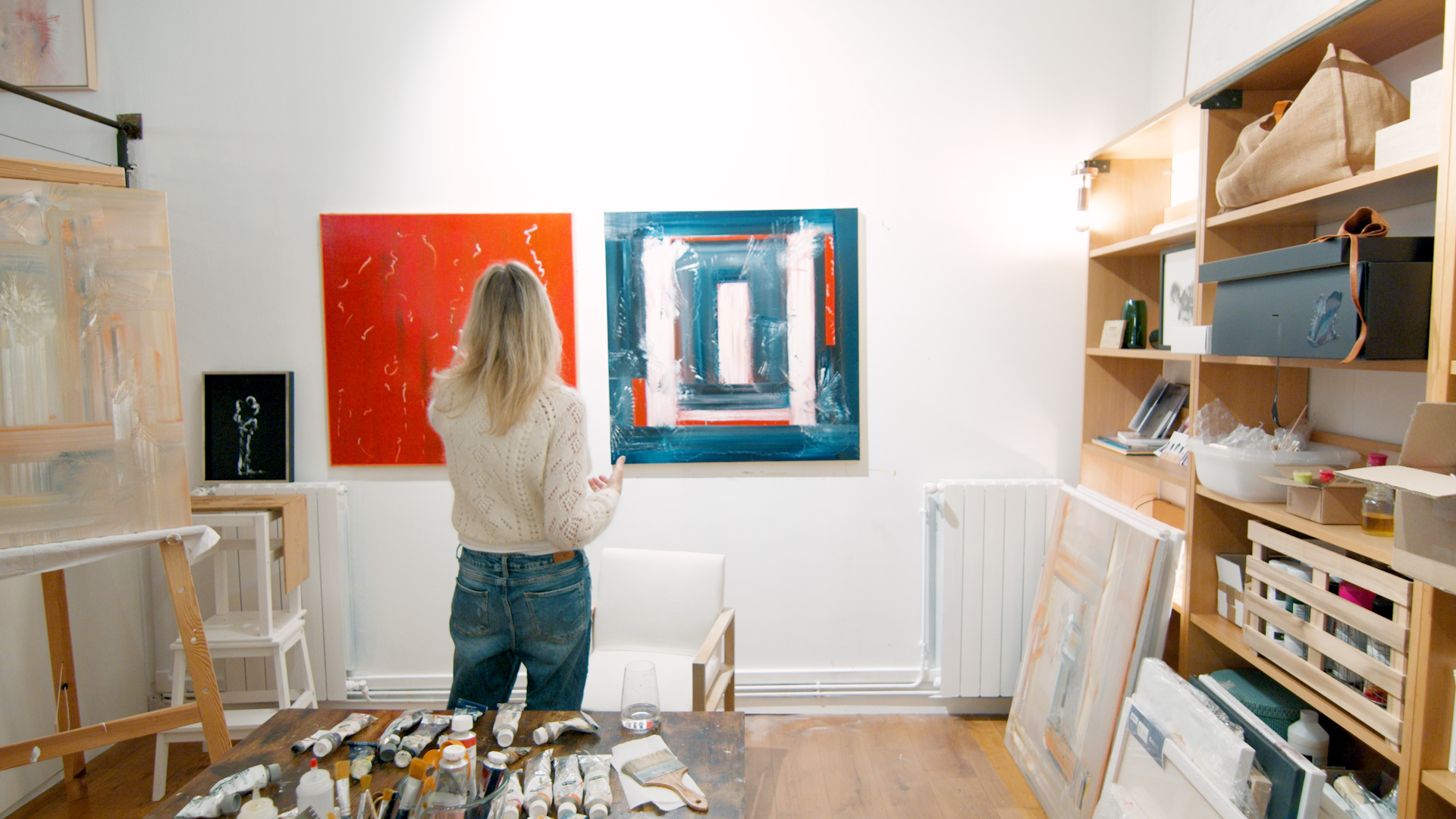
She was born in Paris and raised in an environment where art was present from the very beginning. Her maternal grandmother was an artist, and from early childhood she was painting alongside her, learning almost everything she knew about art through this intimate relationship. Drawing and painting were not extracurricular activities. They were simply part of how she existed in the world. Throughout her childhood and teenage years, she continued studying art formally at a French school in Paris called École Martenot, painting consistently until she reached university age.
Despite this early immersion, there was no space within her family structure for her to become an artist. She describes not being ready at that moment to embody that identity, and her father raised her with the clear expectation that she would become a businesswoman. Art, though present internally, was not something she was allowed to pursue outwardly. She followed the prescribed path, attending a major business school in France and entering the corporate world with seriousness and commitment.
Her corporate career was not a compromise marked by failure. It was, by her own account, highly successful. She eventually became vice president for one of the largest luxury groups in the world, based in Hong Kong, managing one of their divisions. For years she lived within this structure, leading teams, building strategies, managing projects, and operating at a high level. On the surface, her life reflected achievement and control.
Twelve years ago, on January 24th, everything collapsed. She experienced an extremely violent burnout that she describes as her life breaking into a million pieces in a single instant. This moment forced her to confront parts of her past that had long been buried, alongside self destructive behaviors she could no longer ignore. What followed was not a clean transition but a long and painful journey of uncovering, facing, and processing what had been repressed for decades.
She describes opening a Pandora’s box and dealing with what emerged inside it. Those years were difficult and destabilizing, but they marked the beginning of something essential. Four years after the burnout, she began writing. Her first book, Leotush, the Ostriches, was published in France and tells her story, though not exclusively. Much of the book is autobiographical, but the final portion follows a character named Kamya, whose dream life she wrote as a way to survive. Creating this imagined future was, for her, the only way forward at a time when she needed something to believe in.
What she finds astonishing is that over the past four years, what she wrote ten years earlier has unfolded as reality. Scenes she imagined became real experiences, with people entering her life bearing the same names as the characters she created. Alongside writing, painting returned. At first, she painted for herself, channeling what needed to be released and healed. Eventually, she met someone who introduced her to a gallery, and within a year she sold her first painting. Soon after, she had a major exhibition in Munich, where she was living at the time. From there, one thing led naturally to another.
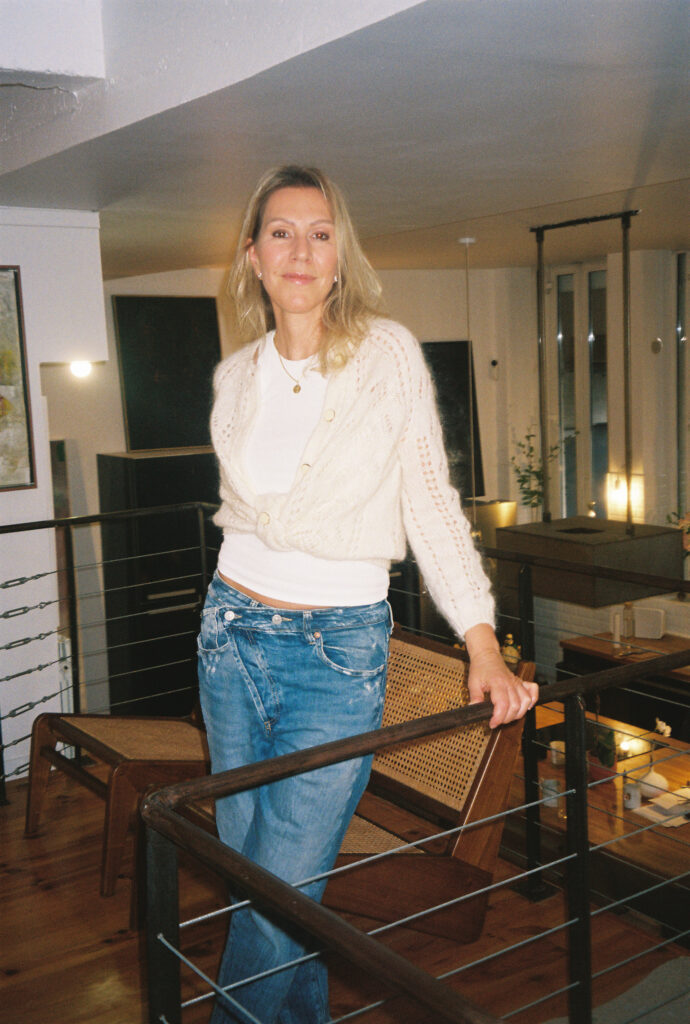
At a certain point, she realized that being an artist was not a decision but a calling. In her words, you are born an artist. You do not choose it. The burnout that dismantled her corporate life ultimately brought her back to her true past, to the part of herself that had always existed beneath structure and expectation. At the same time, she recognizes that the twenty years she spent in the corporate world gave her essential tools that now support her artistic life. Discipline, focus, motivation, and the ability to navigate complex systems all became part of how she operates in the art world, which she describes as even tougher than corporate life.
Though her professional career as an artist is relatively recent, she notes that creation happens largely in the invisible world. The years of internal gathering, unconscious processing, and mental construction were already taking place long before her work became visible. When the time came, the emergence appeared fast, but the work had already been done beneath the surface.
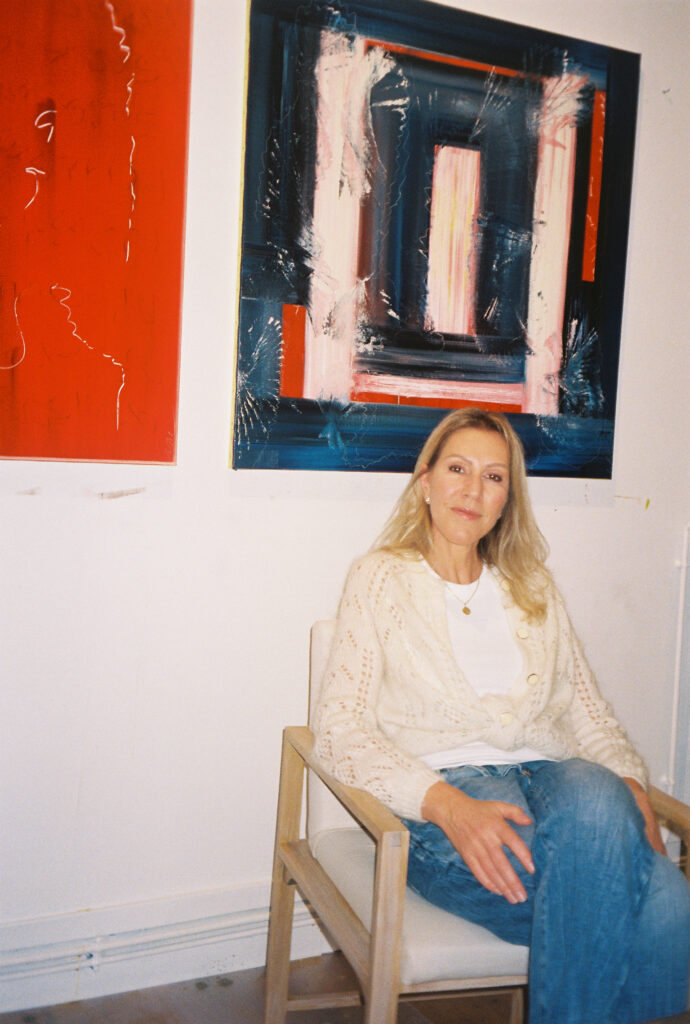
Her process reflects this belief. She describes receiving her paintings rather than actively constructing them. Much of her work happens in silence, meditation, prayer, reading, visiting museums, speaking with others, drawing, and allowing herself to simply receive. When the moment arrives, she retreats fully into her studio, sometimes painting until three in the morning. She sees herself not as the one deciding, but as someone available to what comes through. She refers to herself as the servant of the work, with a clear purpose rather than personal control.
That purpose is unity. She paints to express the idea that we are all connected, that we are all one. Year after year, she builds this path through a series based practice, creating one body of work annually. Each series reflects both personal transformation and a broader spiritual movement.
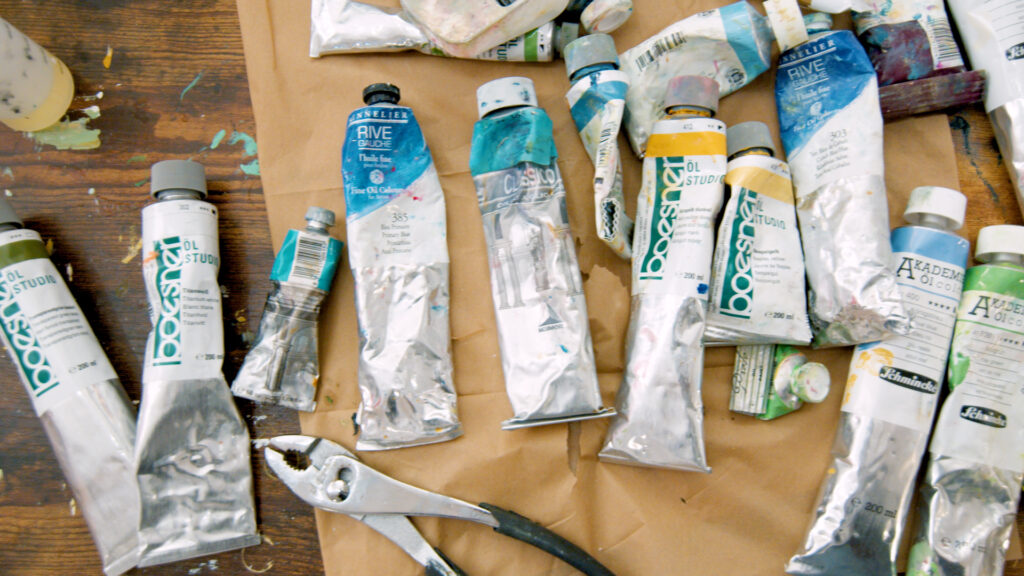
In 2021, her series titled Lunatic was deeply personal, closely tied to her own story. The following year, Le Messager emerged, works that carry strong messages. These paintings are created entirely in oil, layered repeatedly, beginning with brushes and ending with a palette knife. She starts with a figurative drawing, erases it while allowing it to remain beneath the surface, then builds lines, covers them again, and finally arrives at the last layer with the palette knife. This final moment may last only thirty seconds to one minute, but it is where everything happens. Faces, animals, and angels appear without being planned or drawn, revealing themselves unexpectedly. She named the series for their role as messengers, carrying stories she did not consciously create.
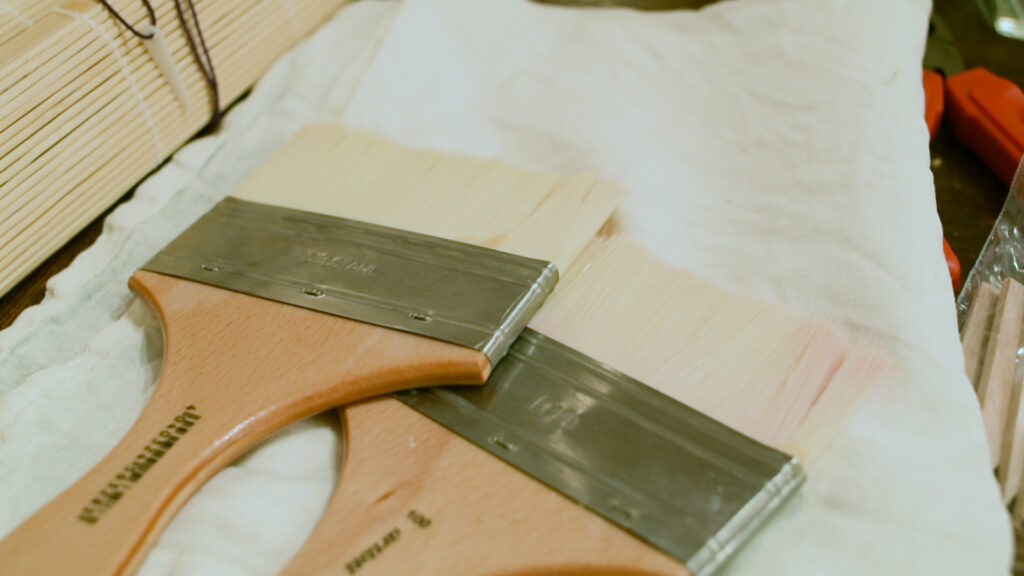
In 2023, her work shifted again with a series focused entirely on lines. Unlike the trance like palette knife paintings, these required extreme concentration and precision. The result was quieter works that function as meditative spaces rather than narrative statements. In 2024, she developed a series of white paintings centered on light, using the same process of lines and palette knife work, with white as the final layer. These works were widely embraced, particularly in the United States, where nearly all were sold through a gallery she works with.
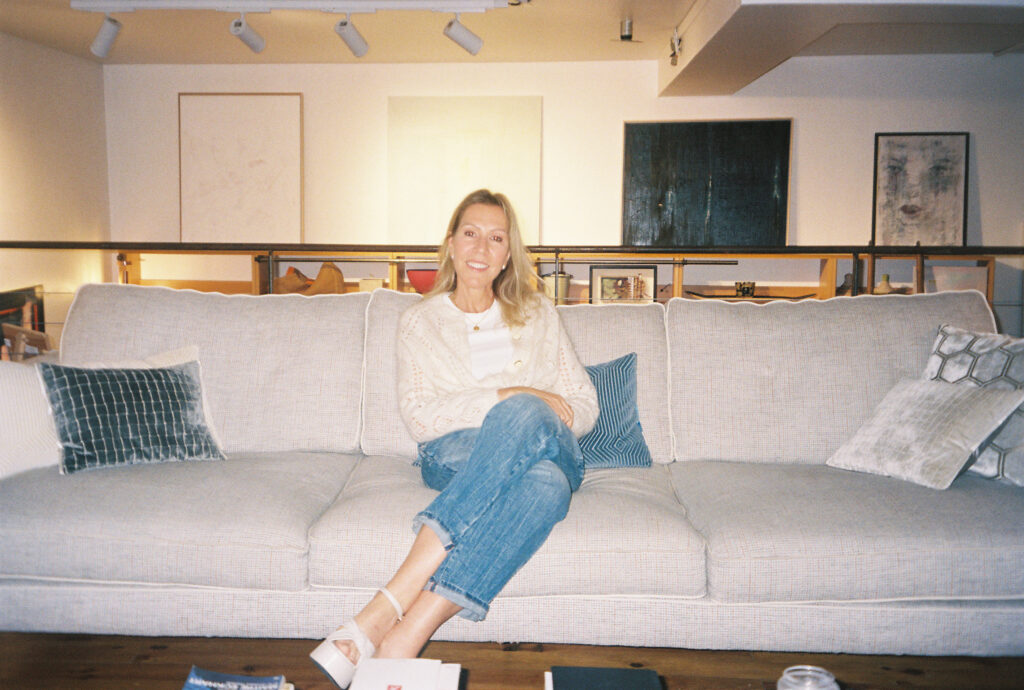
Currently, she is working on a series titled L’Incarné, meaning the incarnated. This body of work brings together everything that has come before. Writing, painting, and automatic writing converge as she moves from the invisible to the visible, from word to flesh. She incorporates vibrational writing beneath the surface of the paintings, adding another layer of transmission. At the core of this work is the desire to bring light forward, to offer viewers a space where they can recognize the beauty within themselves and connect with something greater.
She speaks about knowing the receiver of a painting before it leaves her studio, sensing the presence of the future owner as she works. Watching the journey of a painting, moving through different hands and places before reaching its destination, confirms her belief that the work has its own path.
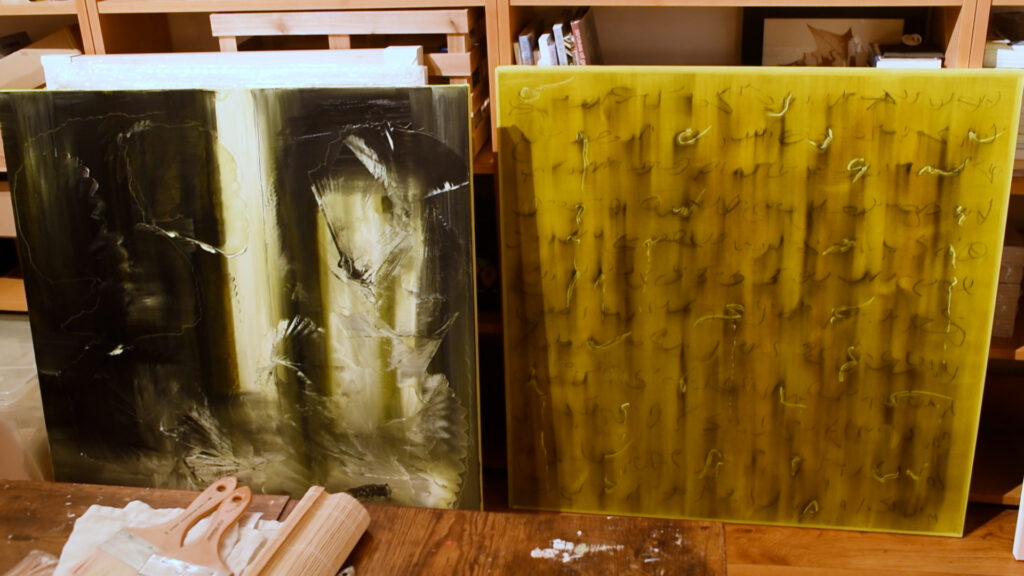
For her, painting is no longer about self expression alone. It is about transmission. She wants viewers to feel wholeness in a world she describes as often empty, violent, and lacking meaning. One message she received from a collector stands as a confirmation of her purpose. He told her that when he acquired her painting, he was at the end of his life, in a very dark place, and that living with the work helped him reclaim his life. She describes this as the most beautiful compliment she could receive, because it is why she paints.
Marie Amélie Chéreau’s journey is not a story of reinvention but of remembrance. What she does now was always there, waiting for the moment when silence, rupture, and courage made space for it to emerge. Her work stands as evidence that creation does not disappear when it is suppressed. It waits, gathers strength in the invisible, and arrives when it is ready to be received.
About the Author
Sam Burke is an American artist and writer based in New York City. Working across film, performance, and writing exploring storytelling, identity, and place. As co-founder of Timestamp, Burke interviews artists, shares insights, and highlights conversations shaping art world today.
Sam Branden
There is a moment early on where Sam Brandon admits something that feels both fragile…
Amy Bravo
Amy Bravo’s work unfolds as a raw, layered exploration of emotion, memory, and identity. An…

Björn Heyn
Björn Heyn does not describe his studio as a workplace. He calls it a playground….
Hugo Winder-Lind
Hugo Winder-Lind does not talk about art as if it is something that can be…

What Curators Are Looking For in 2026: Insights From Across the Art World
In 2026, curators aren’t just responding to aesthetic trends – they’re shaping how art is…
Ranny Macdonald
Ranny Macdonald describes painting as a threshold experience, a place where something begins to take…