Mason Dowling approaches painting like a risk. Not in theory, but in practice, where each move has the potential to undo everything that came before it. There is no fixed image he is working toward, no clean endpoint. The work is built through a series of decisions that could just as easily collapse the painting as complete it. That tension is what allows something unexpected to emerge, something that feels outside of his control.
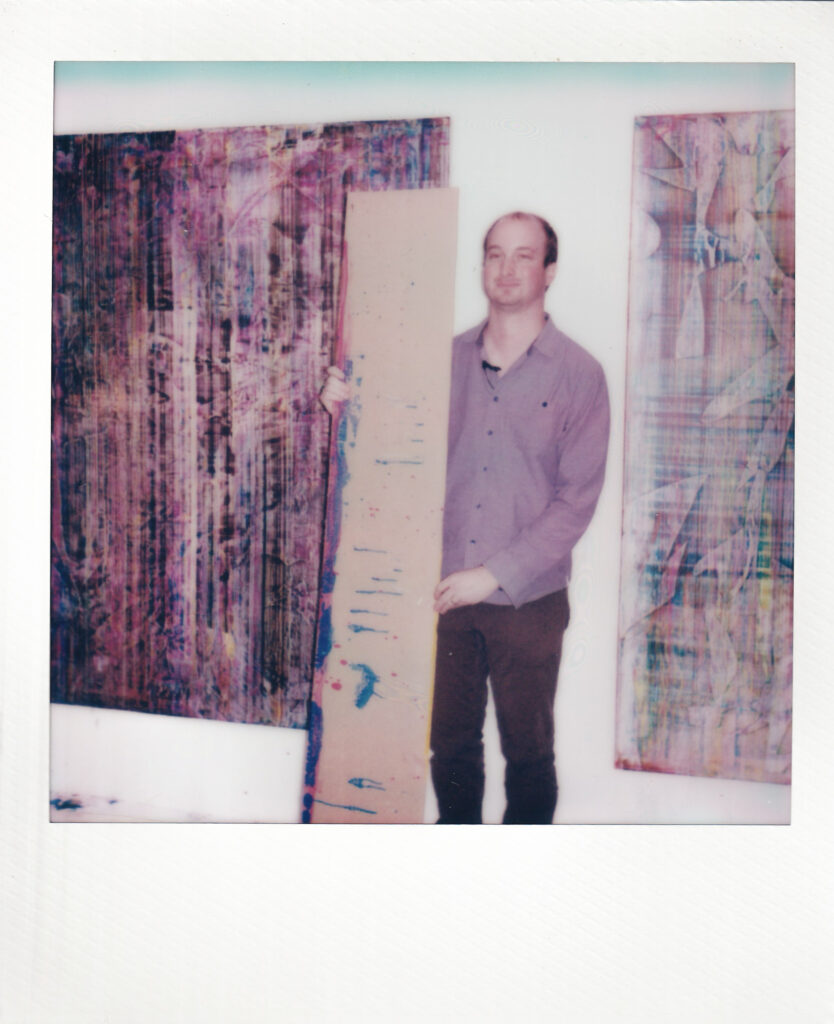
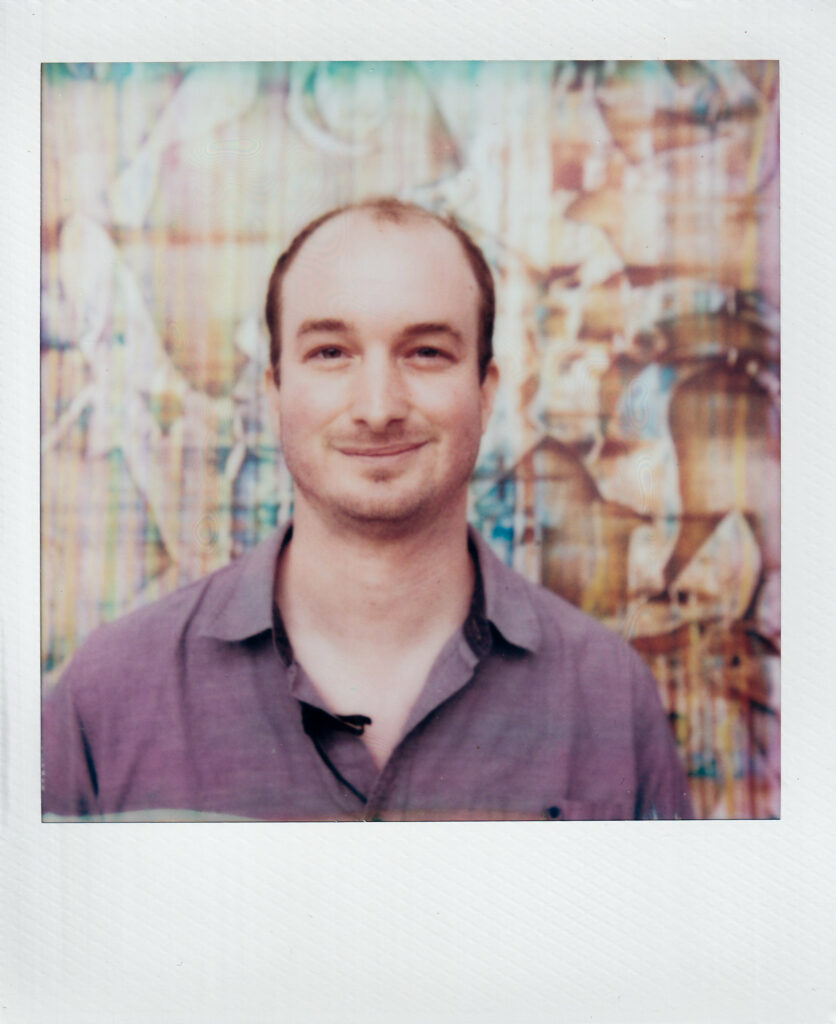
He grew up in Santa Fe, New Mexico, in a household where making things was part of daily life. Before painting, there was building. Furniture, roofs, physical labor. Making wasn’t framed as art, it was just how things got done and how people communicated. Drawing came later, once school introduced paper as a surface meant to be used. It stuck immediately, but not as a singular focus. His attention moved through different forms of making, including years spent fly fishing, learning how to replicate insects with precision. That kind of observation and imitation still carries into the work now, though less literally.
There isn’t a clear answer for why he continues to make paintings. The motivation doesn’t resolve into something simple. What he returns to instead is the idea that making can hold something together. In a world that often feels like it is breaking down or becoming more fragmented, the act of building something, even temporarily, becomes a way of preserving a sense of order or beauty. The paintings don’t start from fully formed ideas. Thoughts accumulate elsewhere and only reveal themselves later, sometimes long after the work is finished. There is a delay between intuition and understanding, where the physical process seems to move ahead of language.
That gap is built into how the work is made. His process creates distance between intention and result. Drawings are cut apart, turned into stencils, layered onto surfaces, then covered and partially removed. The image is never fully visible until later stages, sometimes not until it is nearly complete. This allows the painting to develop with its own logic. It shares something with printmaking in that way, where the final image exists outside of direct control and only becomes visible at a certain point.
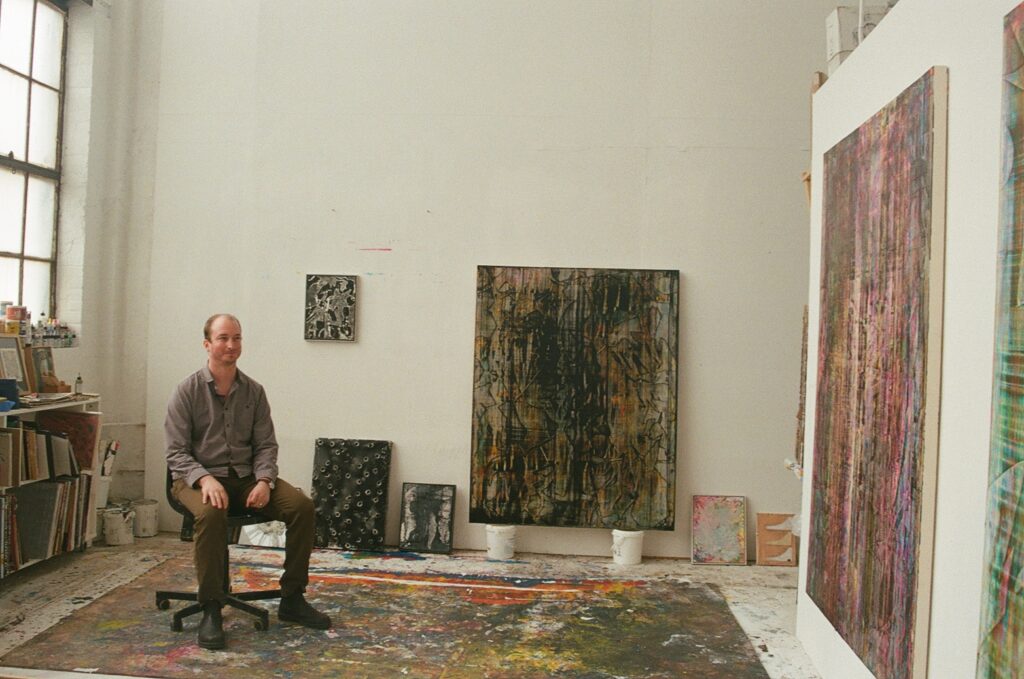
Each painting begins with a drawing, usually made from observation. Even if the final image doesn’t resemble anything recognizable, it originates from something seen. The drawing is then physically altered, cut into, and used as a stencil. Paint is applied across the surface and then pulled back using simple materials like cardboard. The process is repetitive and layered. Some paintings come together quickly, but most require many iterations, building up thin layers that hold traces of previous decisions. When those layers are disturbed or exposed, they reveal a kind of history embedded in the surface.
Over time, his approach has shifted through different materials and strategies. There were periods of working with found objects, assembling paintings from existing surfaces, and others focused entirely on manipulating paint. What has remained consistent is the search for a moment where the work feels revealed rather than constructed. The current method grew out of combining those earlier approaches, bringing together drawing, collage, and layered application into a single process that allows for both control and unpredictability.
There is a clear separation in how he thinks about making work and building a career. In the studio, the focus stays internal, centered on discovery and maintaining a sense of engagement with the process. Outside of it, relationships become more important. Working with people who challenge and support the work, building a sense of community, and participating in a larger network of artists all play a role. The two sides don’t operate the same way, but both are necessary.
That sense of community is something he returns to often. There is an awareness that the structures supporting artists can feel unstable, shaped by financial pressure and the demands of visibility. Contributing to that ecosystem doesn’t always require large gestures. Spending time with other artists, visiting studios, and showing up to exhibitions becomes a way of reinforcing it. At the same time, that external awareness has to be set aside once he is working. The studio requires a different kind of attention, one that allows for decisions that might not make sense to anyone else.
Those decisions often begin as problems. Rather than solving existing ones, he creates new constraints or limitations to work through. Unusual choices or disruptions become a way of pushing the work into unfamiliar territory. The goal isn’t refinement in a traditional sense, but the possibility of arriving somewhere that couldn’t have been predicted at the start.
The materials themselves remain flexible. Acrylic paint is a primary medium because of how quickly it dries and how easily it can be manipulated in thin layers, but that isn’t fixed. New materials are introduced when they become available, sometimes unexpectedly. Surfaces shift as well, from canvas to wood panels to thin polyester that allows light to pass through. Each surface changes how the paint behaves, how it moves and settles.
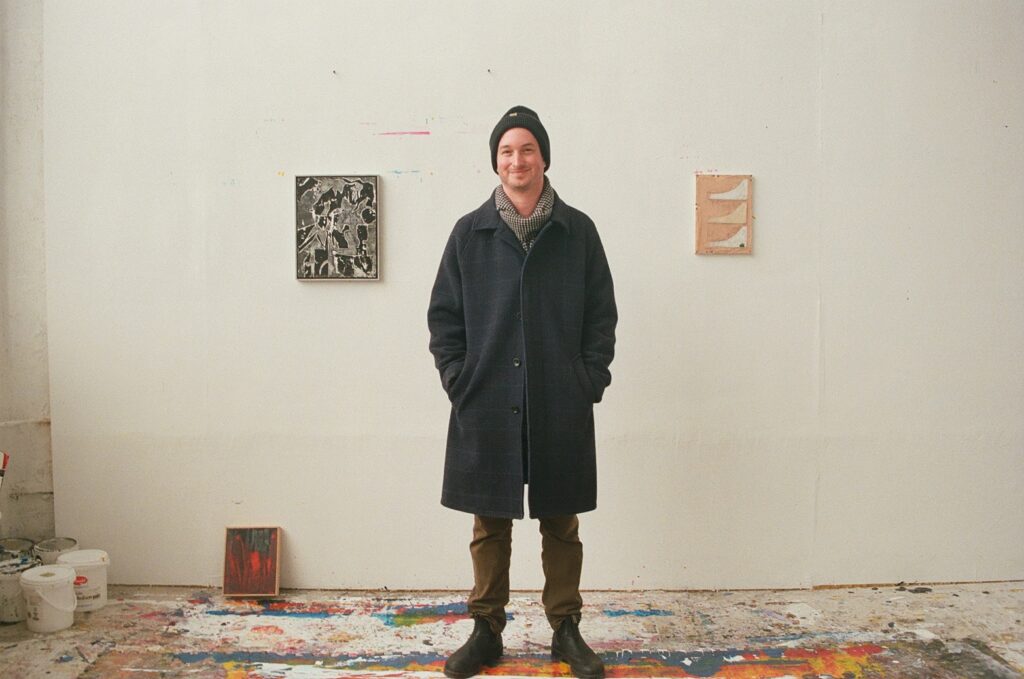
There is also an acceptance that mistakes are part of the process. Imperfections in application, gaps in coverage, or uneven surfaces often produce results that are more interesting than what was intended. Those moments are not corrected as much as they are absorbed into the work.
His path into this way of working has been shaped by a range of experiences outside of painting. Jobs that seem unrelated on the surface have influenced how he thinks and works. Lifeguarding taught him how to sit still and observe for long periods. Bartending introduced a way of thinking about balance, proportion, and variation. Manual labor reinforced a physical relationship to materials. Teaching and working in other artists’ studios added different perspectives on process and structure.
Early exposure to other artists also played a role. Spending time around a painter who worked continuously in his studio provided a model for what a life built around art could look like. It wasn’t abstract or distant, but something immediate and lived. At the same time, there have been moments of realizing how much existed outside of his own awareness, encountering artists whose work reshaped his understanding of what was possible and required a kind of recalibration.
The paintings themselves are not meant to direct the viewer toward a single reading. They function more as spaces where different associations can take place. What he finds in them is often tied to personal memory, but that isn’t something he expects others to share. Instead, the work is open enough for multiple interpretations to exist at once, allowing each viewer to arrive at something different.
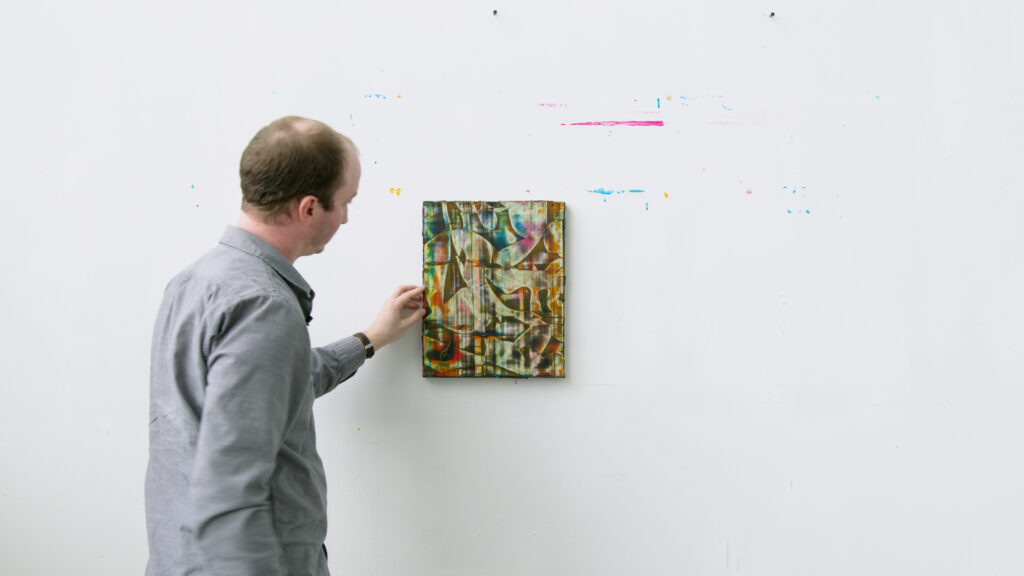
The studio environment plays an important role in making that possible. It is kept private, not as a form of isolation but as a condition for working freely. Without that privacy, the process becomes restricted. The ability to make decisions that might fail, to follow impulses without explanation, depends on that separation.
Scale, tools, and methods continue to shift depending on the work. Techniques developed in one context carry into another, sometimes in unexpected ways. A drawing method might translate into a painting process. A simple tool might open up a new approach when used differently. These shifts are not planned as much as they are discovered through use.
What remains consistent is the pursuit of something that feels new, even if it comes from familiar materials or repeated actions. Each painting is an attempt to reach a point where perception changes, where the work produces a sensation that wasn’t accessible before it existed. That sense of discovery is what sustains the process, even when the outcome is uncertain.
About the Author
Sam Burke is an American artist and writer based in New York City. Working across film, performance, and writing exploring storytelling, identity, and place. As co-founder of Timestamp, Burke interviews artists, shares insights, and highlights conversations shaping art world today.
Stéphane Koyama-Meyer
French visual artist and designer based near Basel, Stéphane Koyama-Meyer grew up surrounded by art,…
Yuval Bezalel
For Yuval Bezalel, painting begins with the hands, before there is a narrative, before there…
Adèle Aproh
For Adèle Aproh, drawing began long before she knew it could become a career. Her…
Félix Deschamps Mak
Félix Deschamps Mak is a French painter based in Paris, working in large scale figurative…
Katya Quel
Katya Quel is an artist and multidisciplinary creator, born and raised in Moscow, who now…
Why Dia Beacon Deserves a Full Day of Your Attention
There are museums you visit to check a box. And there are museums that quietly…
wish you all the best