
There is a moment early on where Sam Brandon admits something that feels both fragile and absolute. He says it feels like he has put all his eggs in one basket, pursuing art as the only thing he is interested in at this point in his life. What follows is not hesitation but a kind of quiet acceptance. He is still compelled to do it and expects that compulsion to carry on indefinitely, maybe forever. That sense of inevitability threads through everything he describes, from childhood influences to the physical act of sewing material together by hand for hours at a time.
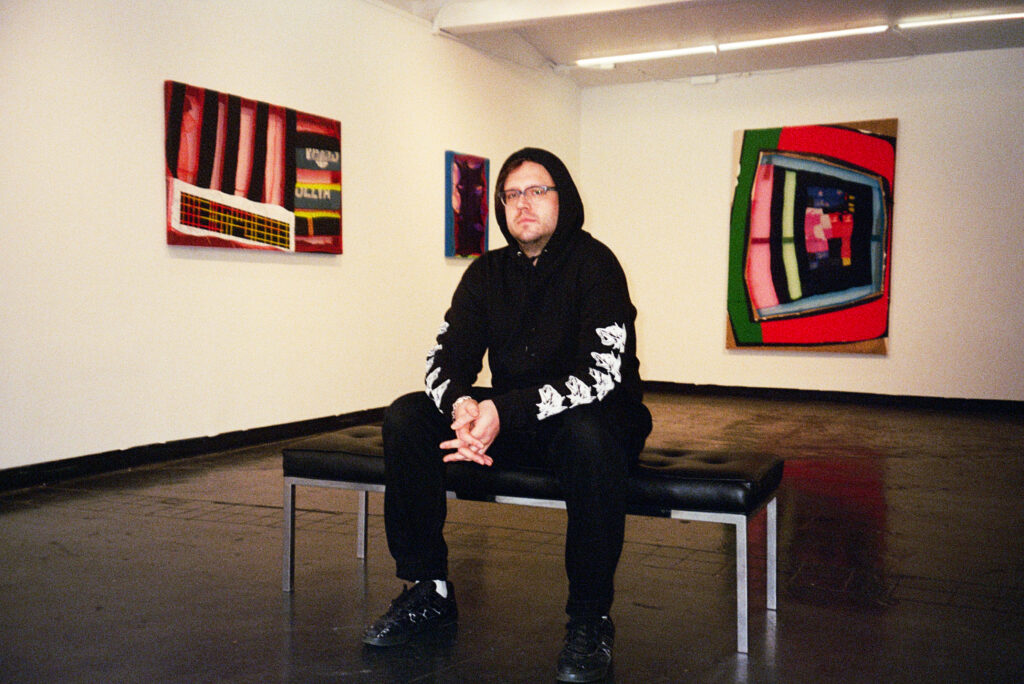
Brandon’s story begins in a suburb of Cleveland, Ohio, where creativity was not distant or abstract but embedded in his family. His mother was an artist who approached design through tactile methods like cut paper and collage, and his grandfather painted dense western landscapes while also scavenging objects from the desert to transform into art. There is something important in that image of scavenging, of collecting what already exists and giving it new life, because it echoes strongly in Brandon’s own process years later. What he witnessed was not art as spectacle or career but art as a private necessity, something done for fulfillment rather than recognition. That idea seems to have settled in early and never left.
In high school there was a turning point where art stopped being just something he did and became the thing he believed he was actually good at. The structure of an art vocational program gave him focus at a time when he describes himself as getting into trouble and feeling directionless. Instead of drifting, he spent most of his days making work, which eventually led him to art school. At the Columbus College of Art and Design, that early instinct hardened into something more intense. He describes discovering a strong sense of competitiveness and becoming obsessed with standing out. That obsession did not narrow him into one path immediately. He moved from an initial interest in graphic design to illustration before realizing he did not want to repeat imagery. The shift to fine art felt like a release, a permission to explore without constraint.
Painting was his foundation. Large oil paintings defined his early work, including a thesis centered on New York City, a place he already felt magnetically drawn to. That pull toward New York had been building for years through visits to family and exposure to graffiti and the density of the city. Moving there marked another shift, not just geographically but materially. Oil painting gave way to experimentation with cheaper and more immediate materials. Clothing became a source, especially retro garments with bold color blocking. Instead of painting representations of those designs, he began to work directly with them, teaching himself how to sew and transforming garments into artworks.
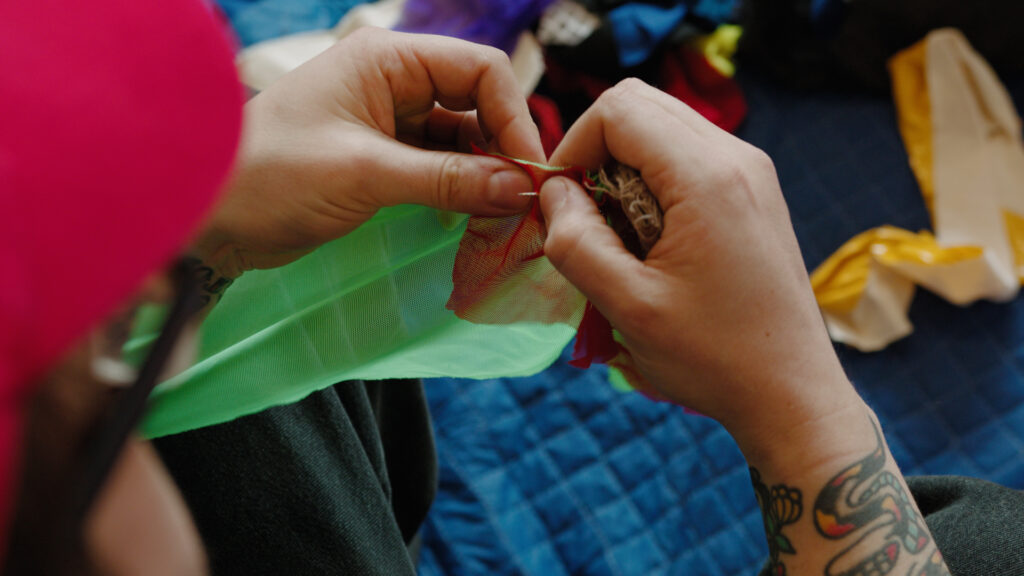
That decision in 2015 set the course for everything that followed. Sewing by hand became central, not just as a technique but as a philosophy. He still does not use a sewing machine, choosing instead to work with needle and thread in a way that keeps him physically connected to every piece of material. The process is slow and repetitive, sometimes requiring multiple passes to secure a single seam. It demands attention and endurance, and it leaves visible traces of labor. For Brandon, that visibility matters. He wants the work to carry evidence of the time and effort embedded in it, to feel touched and constructed rather than manufactured.
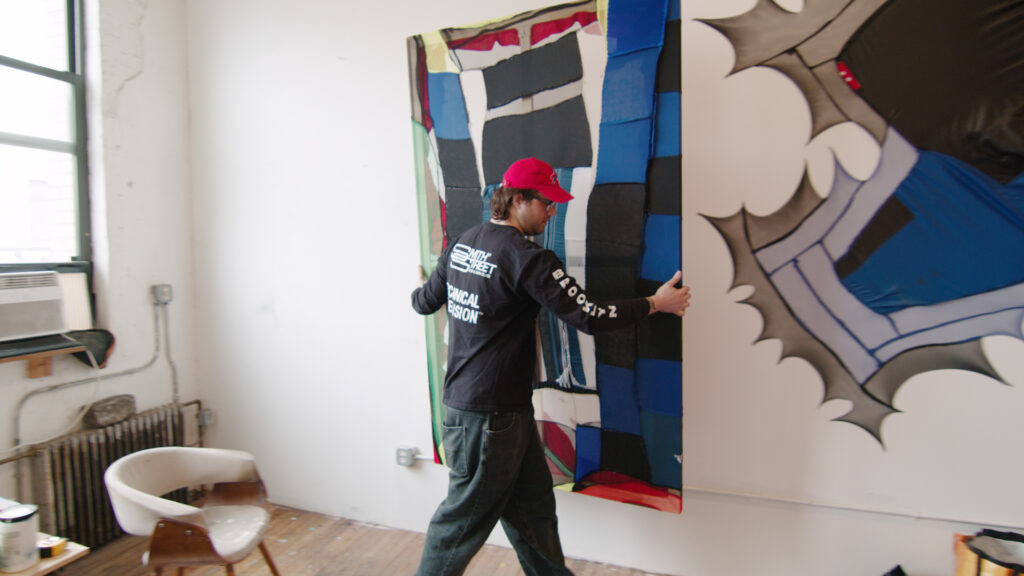
The materials themselves have evolved over time. What began with clothing expanded into a wide range of textiles including denim, canvas, burlap, mesh, and spandex. Each addition brought new possibilities and new meanings. He speaks about using materials to reference painting while also pushing beyond it, creating objects that exist somewhere between painting, sculpture, and collage. Spandex in particular has become a key element, valued for its ability to stretch and create variations in density and transparency. It introduces movement and tension into the work, allowing forms to emerge that feel both organic and defensive, like something simultaneously opening and protecting itself.
The constraints of living in New York shaped the form of his work as much as any conceptual decision. Limited space led him to create large scale pieces that could be folded and stored, resulting in tapestries that could span walls yet collapse into manageable forms. That practicality did not diminish ambition. If anything it intensified it, pushing him to find solutions that allowed for scale without permanence. Over time he moved back toward stretched works while continuing to incorporate the flexibility and layering that defined the tapestries.
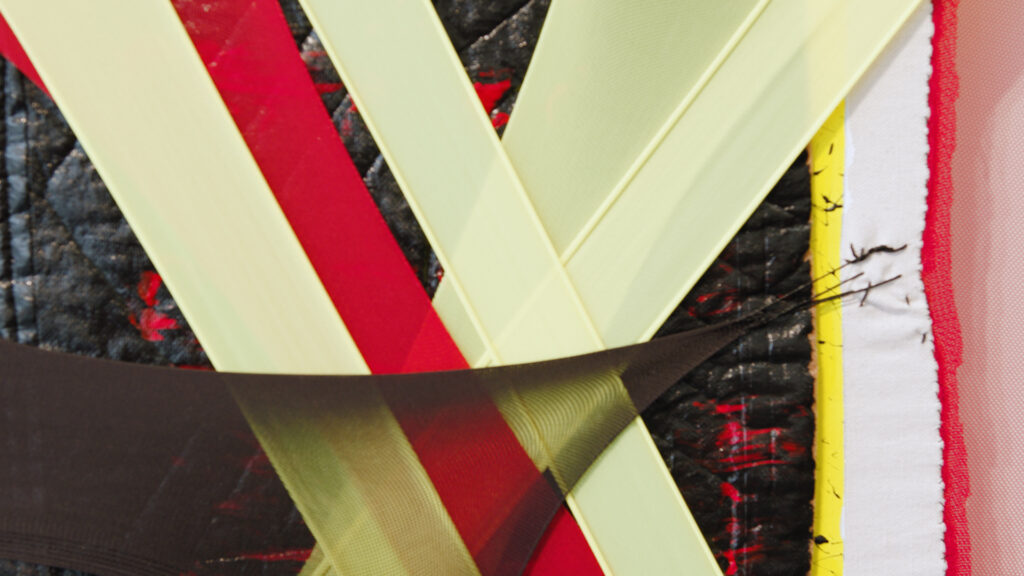
Color often begins as a simple idea, sometimes drawn from something as ordinary as a person’s outfit on the subway or a fleeting reference to nature. These starting points are not rigid plans but loose directions. Brandon does not sketch or map out his compositions in advance. Instead he follows a hunch, allowing the piece to evolve as he works. This openness means that failure is built into the process. He frequently describes cutting apart works that do not succeed, salvaging fragments and incorporating them into new pieces. Nothing is entirely wasted. The studio becomes a kind of ecosystem where materials cycle through different forms until they find a place that feels resolved.
There is also a strong sense of place running through his work. He describes it as very much a reflection of New York, shaped by the visual intensity of the city and the influence of graffiti. He is interested in boundaries, in the way the city directs movement through barriers and pathways, and in how small shifts in direction can reveal entirely new visual experiences. That awareness translates into work that feels both structured and spontaneous, with elements that suggest tension, protection, and even danger beneath their surface.
Brandon acknowledges that his practice requires long periods of isolation. The studio becomes a space where time stretches, filled with repetitive motion and internal focus. He speaks openly about the sacrifices involved, including distance from friends and family and the necessity of prioritizing art above almost everything else. There is no romanticizing of this reality. Instead there is a blunt recognition that this level of commitment is not for everyone and that it demands a kind of obsession.
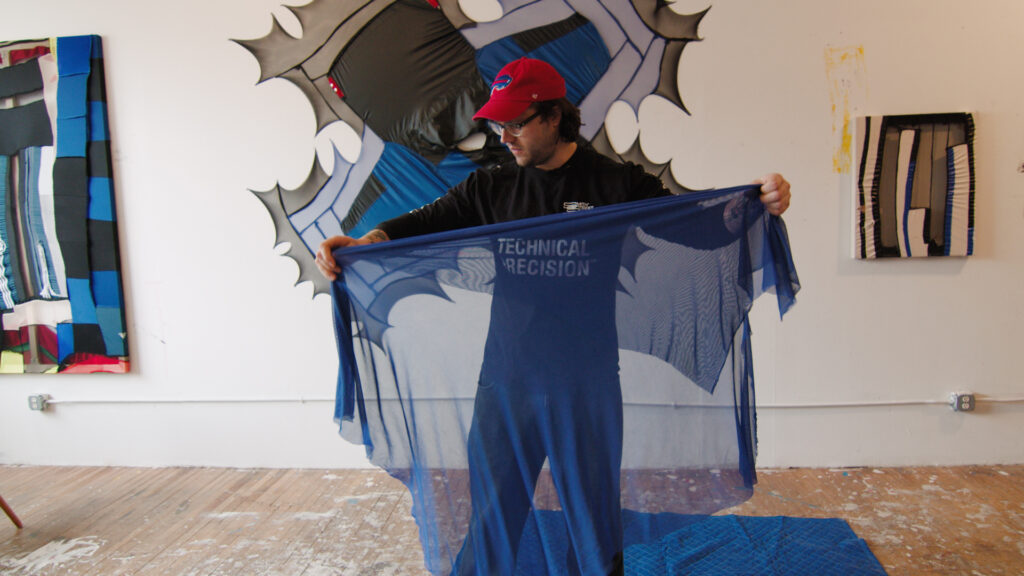
That idea is reinforced by a memory of advice he received in school, a warning that a life in art involves years of struggle, solitude, and uncertainty. Rather than discouraging him, it seems to have clarified his path. The difficulty is not something to avoid but something to accept as part of the process. It aligns with his own experience of working countless jobs while continuing to make art, aiming for a future where even part of his income comes from his practice.
Throughout everything he describes there is a consistent thread of persistence. He has taken breaks at times, acknowledging the need to live life in order to have something to make work about, but he always returns. The compulsion he mentioned at the beginning remains intact. It is not driven by external validation or even a clear endpoint. It is simply there, guiding him back to the studio, back to the materials, back to the act of making.
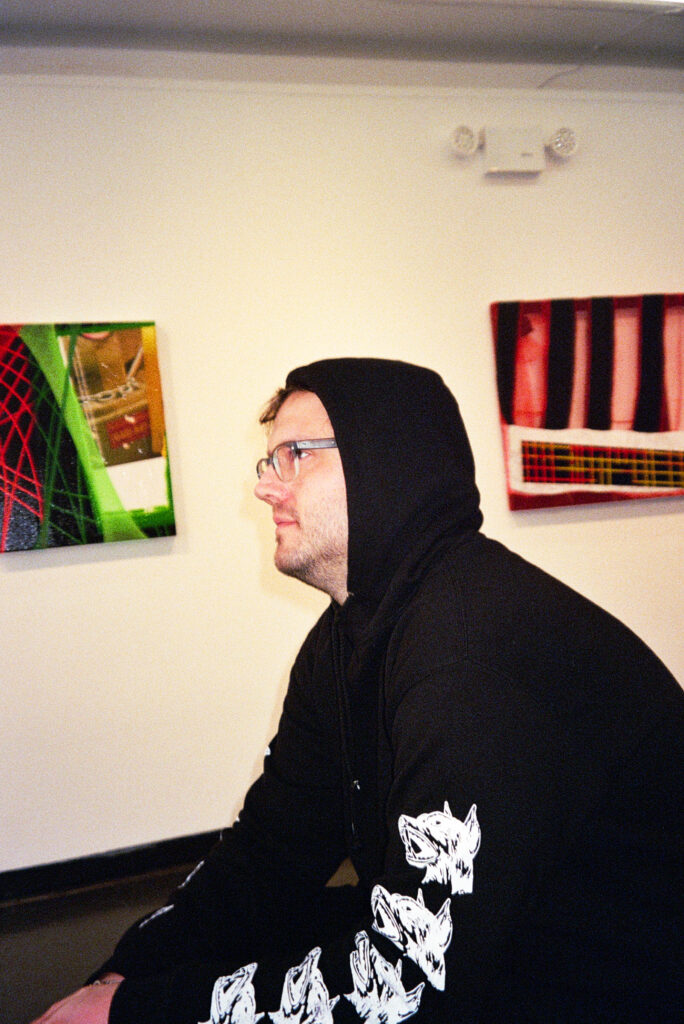
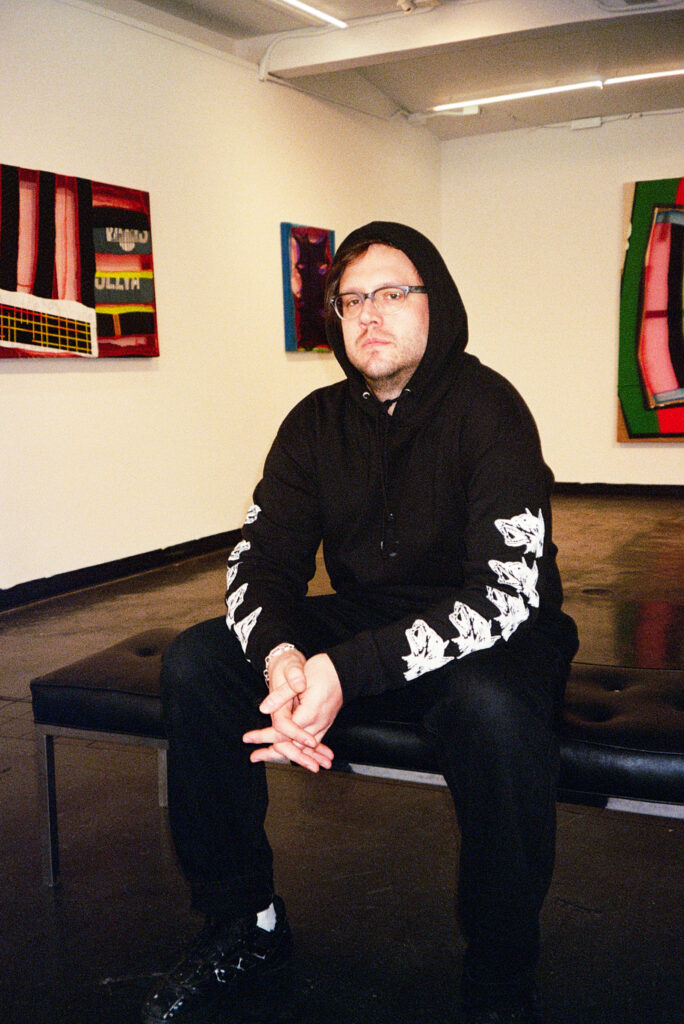
In the end, Brandon’s work feels less like a series of finished objects and more like an ongoing process of transformation. Materials are gathered, altered, combined, taken apart, and reassembled. Ideas emerge, shift, and sometimes disappear entirely. What remains constant is the act itself, the steady rhythm of stitching, layering, and building something that did not exist before. It is a practice rooted in touch, in time, and in a belief that the act of making is reason enough to continue.
About the Author
Sam Burke is an American artist and writer based in New York City. Working across film, performance, and writing exploring storytelling, identity, and place. As co-founder of Timestamp, Burke interviews artists, shares insights, and highlights conversations shaping art world today.
Felix Benton
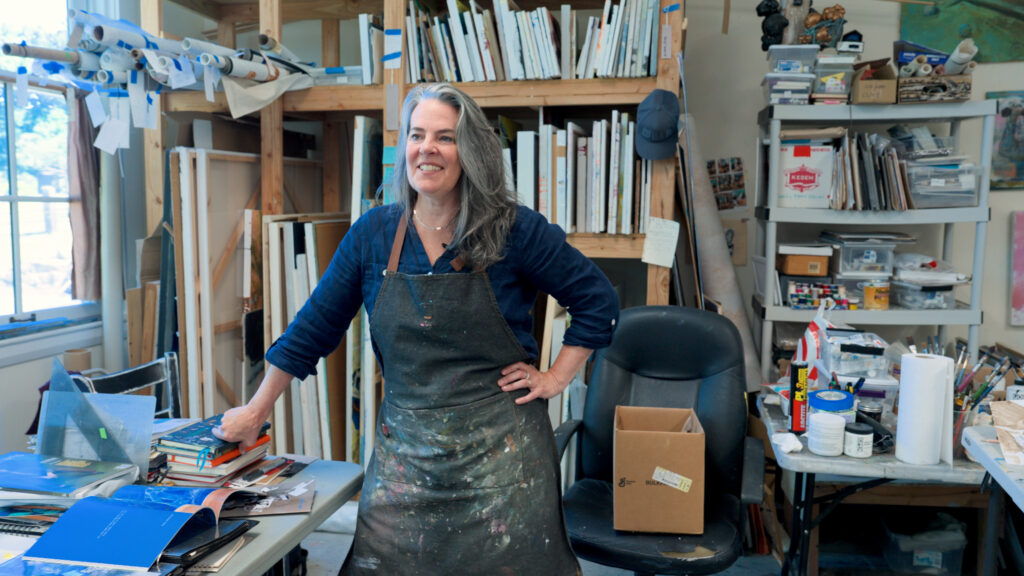
Felix Benton grew up surrounded by people who made things. His grandmother was a glass…
Jackie Reeves
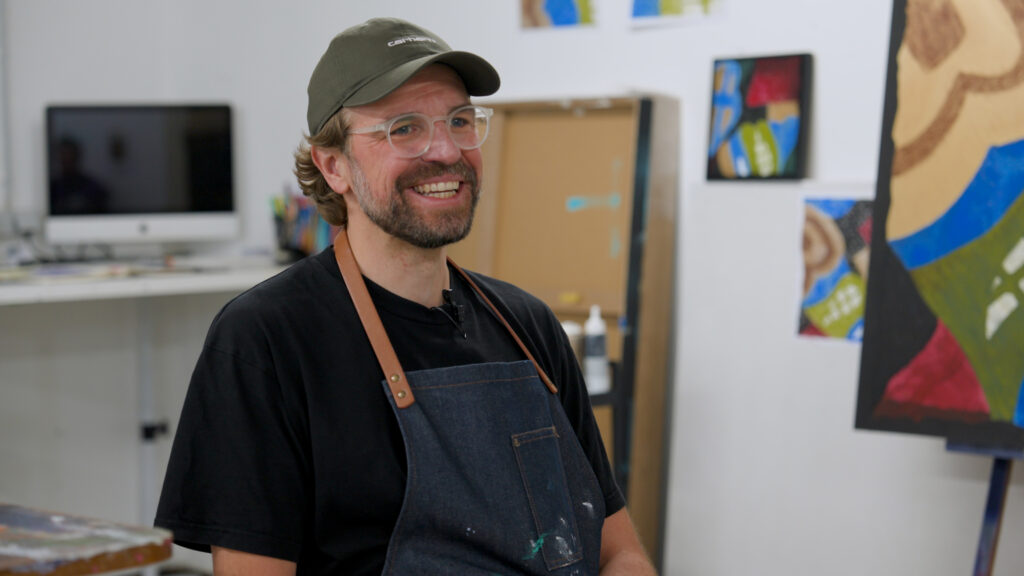
Jackie Reeves grew up in Montreal in a family where making things was part of…
Stéphane Koyama-Meyer
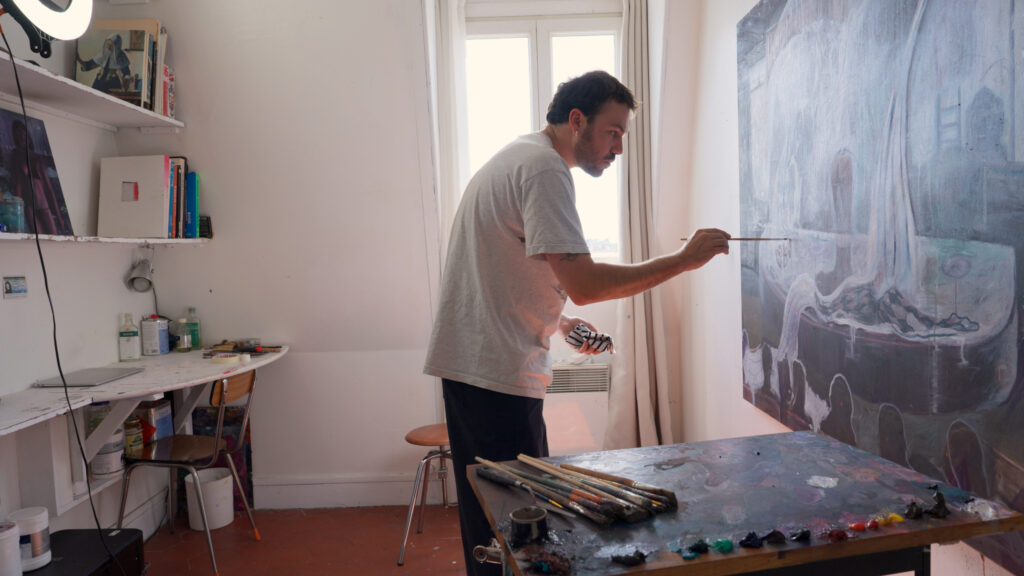
French visual artist and designer based near Basel, Stéphane Koyama-Meyer grew up surrounded by art,…
Yuval Bezalel
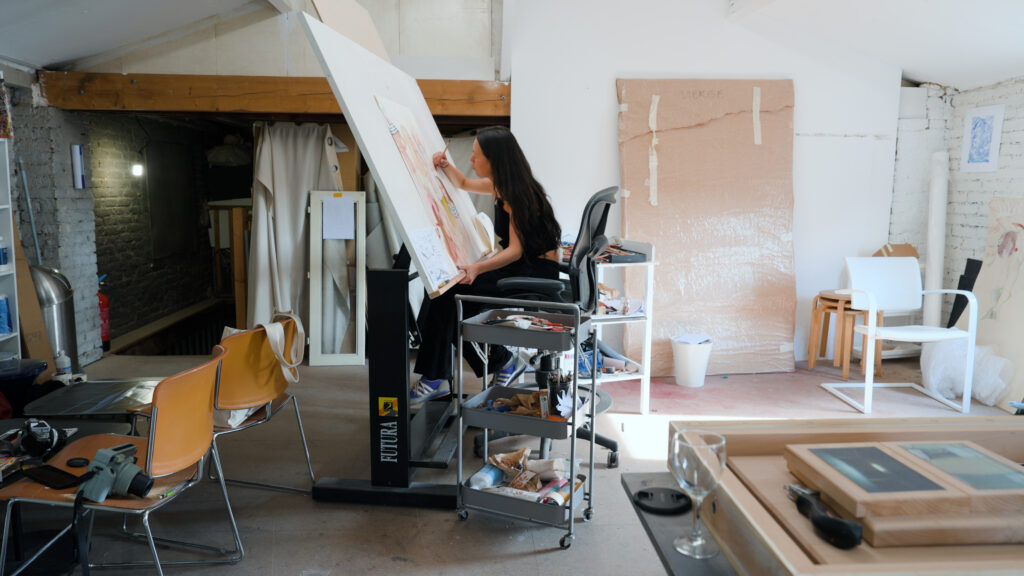
For Yuval Bezalel, painting begins with the hands, before there is a narrative, before there…
Adèle Aproh
For Adèle Aproh, drawing began long before she knew it could become a career. Her…
Félix Deschamps Mak
Félix Deschamps Mak is a French painter based in Paris, working in large scale figurative…