
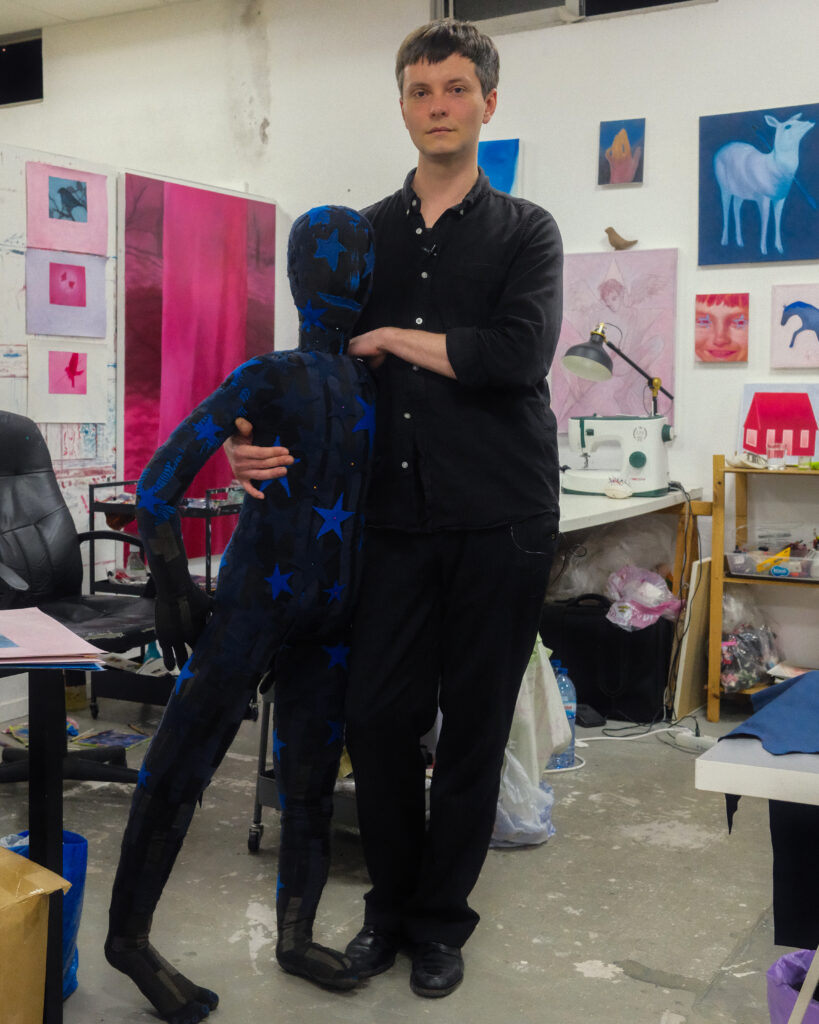
For Brazilian artist Thomas Szott, art begins with something deeply personal. His paintings, textiles, sculptures, and drawings emerge from memories, emotions, relationships, and the quiet process of understanding how those experiences shape a life. Yet while his work originates from autobiography, Szott is less interested in documenting events than transforming them into symbols, atmospheres, and dreamlike narratives.
Now based in Lisbon, Portugal, Szott has spent years developing a practice that moves fluidly between mediums. What began with painting has expanded into textile works, sculptures, and installations that together form what he describes as a growing personal universe. Each new piece becomes another fragment in an evolving visual language built from memory, desire, heartbreak, nature, and imagination.
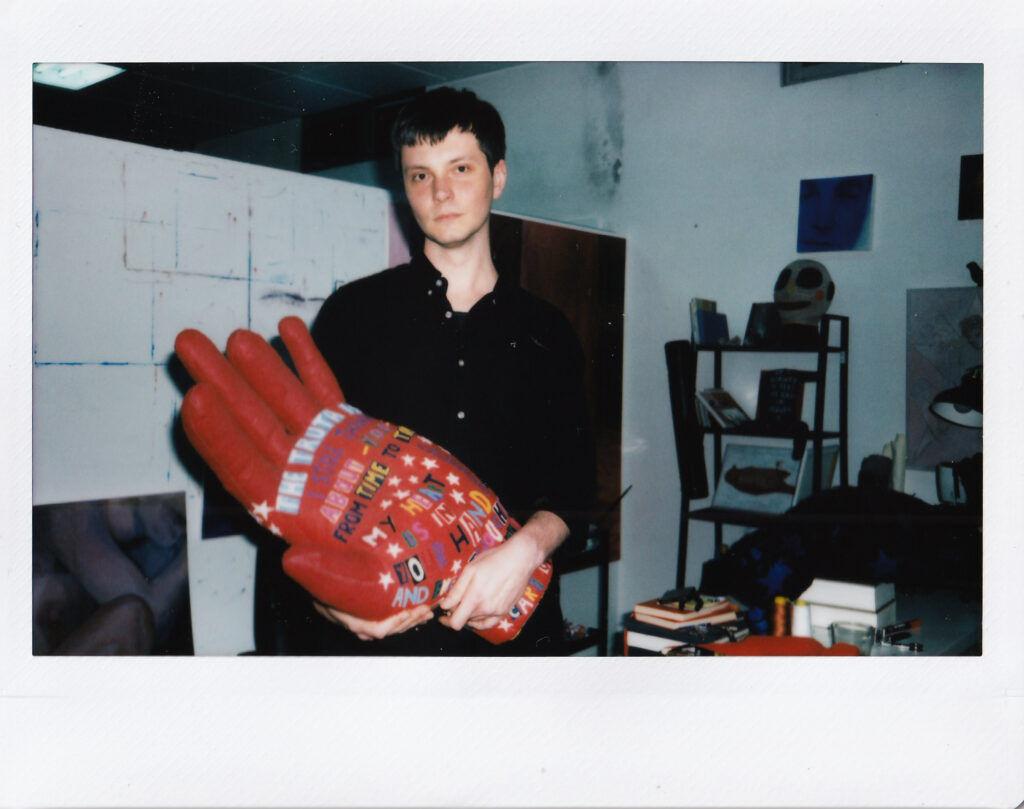
Szott’s artistic journey did not begin with painting. Early in art school, he was primarily interested in text-based work and conceptual approaches. It was only later, during his studies, that painting gradually became central to his practice.
Ironically, painting was not something he immediately enjoyed. A demanding instructor initially pushed him away from the medium. Over time, however, the challenge became part of the attraction. As he searched for a more specific direction within art, painting offered a way to explore emotions and personal experiences that felt difficult to express through words alone.
Like many artists, Szott credits formal education with providing important technical and conceptual tools. But he also believes that developing an artistic voice often requires moving beyond institutional frameworks.
Art school taught him how to think critically about subject matter and technique, but much of his growth came afterward, through the process of questioning expectations and discovering his own path.
Much of Szott’s work is autobiographical, though not in a literal sense.
Earlier paintings focused directly on relationships, desire, affection, heartbreak, and abandonment. Over time, however, his work has evolved from documenting specific experiences toward interpreting larger questions about life, memory, and identity.
Rather than illustrating events exactly as they happened, he transforms feelings into imagery. Animals, landscapes, dreamlike scenes, and symbolic forms often stand in for emotional experiences that are difficult to describe directly.
Memory plays a central role in this process.
For Szott, memories are not static records of the past. They shift, blur, and evolve over time. His paintings embrace that uncertainty. Soft edges, layered surfaces, and atmospheric compositions create spaces that feel closer to recollection than documentation.
The result is work that feels intimate without becoming explicit. Viewers are invited into emotional territory without being given a fixed narrative.
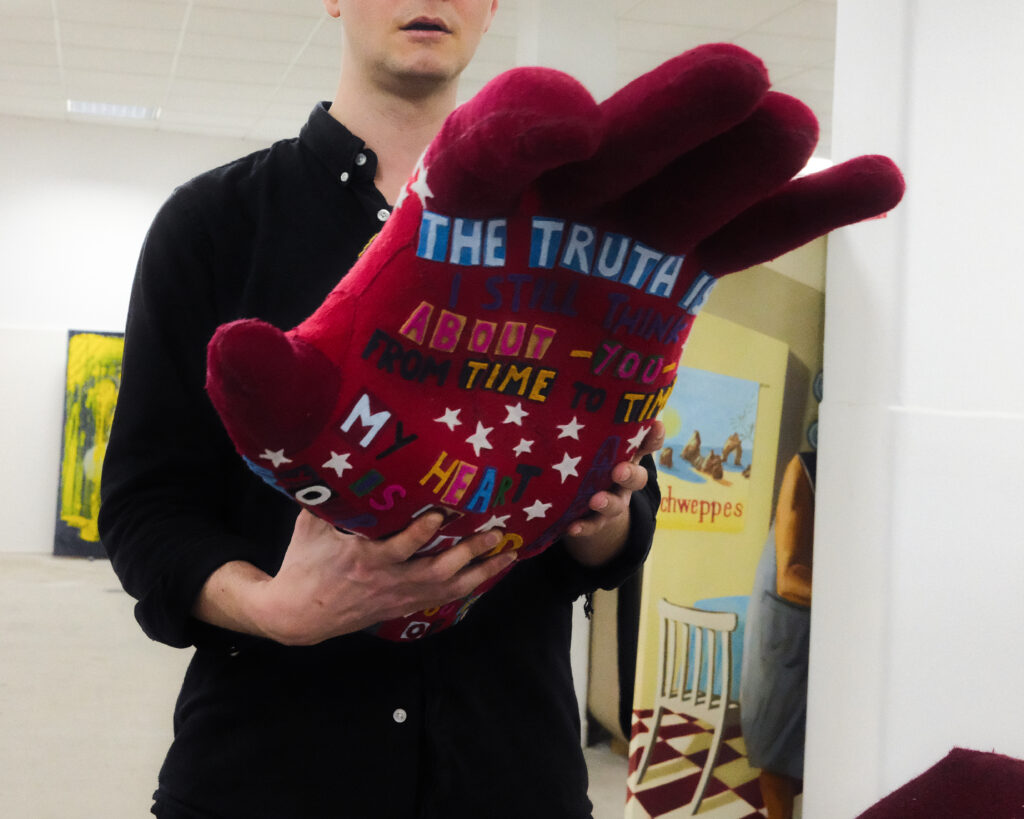
As his practice expanded beyond painting, Szott began creating textile works and sculptural pieces that allowed him to explore ideas from new perspectives.
He often works with found materials, including old blankets, fabrics, and discarded textiles. These materials bring their own histories into the work while adding physical texture and presence.
For Szott, each medium answers different questions.
Painting allows him to explore certain ideas, while sculpture and textiles offer possibilities that painting alone cannot. Together, these works form an interconnected system of symbols and references.
He describes the process as building a personal mythology.
Each artwork contributes to a larger universe populated by recurring themes, memories, and visual motifs. Rather than presenting a single story, the work creates an environment where personal experiences become archetypal and open-ended.
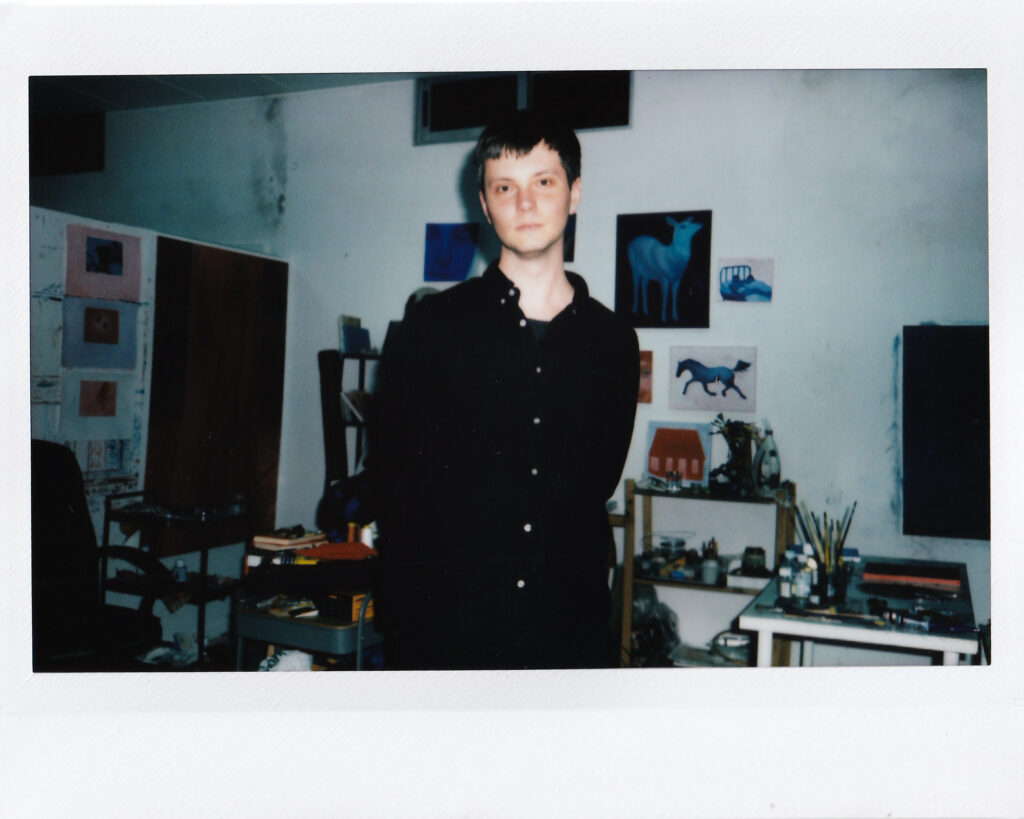
This sense of world-building is particularly important to Szott. The goal is not simply self-expression but the creation of a visual language that allows others to find their own meanings within the work.
Born in the early 1990s, Szott grew up alongside the internet and the explosion of digital image culture.
Platforms like Tumblr, Pinterest, photography websites, films, fashion imagery, and online archives all became part of his visual education. The constant flow of images shaped the way he thinks about composition, atmosphere, and storytelling.
He openly describes himself as a collector, and even a thief, of images.
Movie stills, personal photographs, fashion photography, nature imagery, and countless other visual references find their way into his creative process. Rather than reproducing images directly, he edits, crops, alters, and transforms them until they become part of his own visual language.
This process mirrors the way memory itself operates. Experiences are rarely remembered exactly as they occurred. Instead, they are reshaped, reinterpreted, and combined with other influences over time.
One of the defining characteristics of Szott’s work is its refusal to provide simple answers.
He resists assigning fixed meanings to colors, symbols, or narratives. A color associated with sadness in one painting might represent hope in another. A particular image might carry different meanings for different viewers.
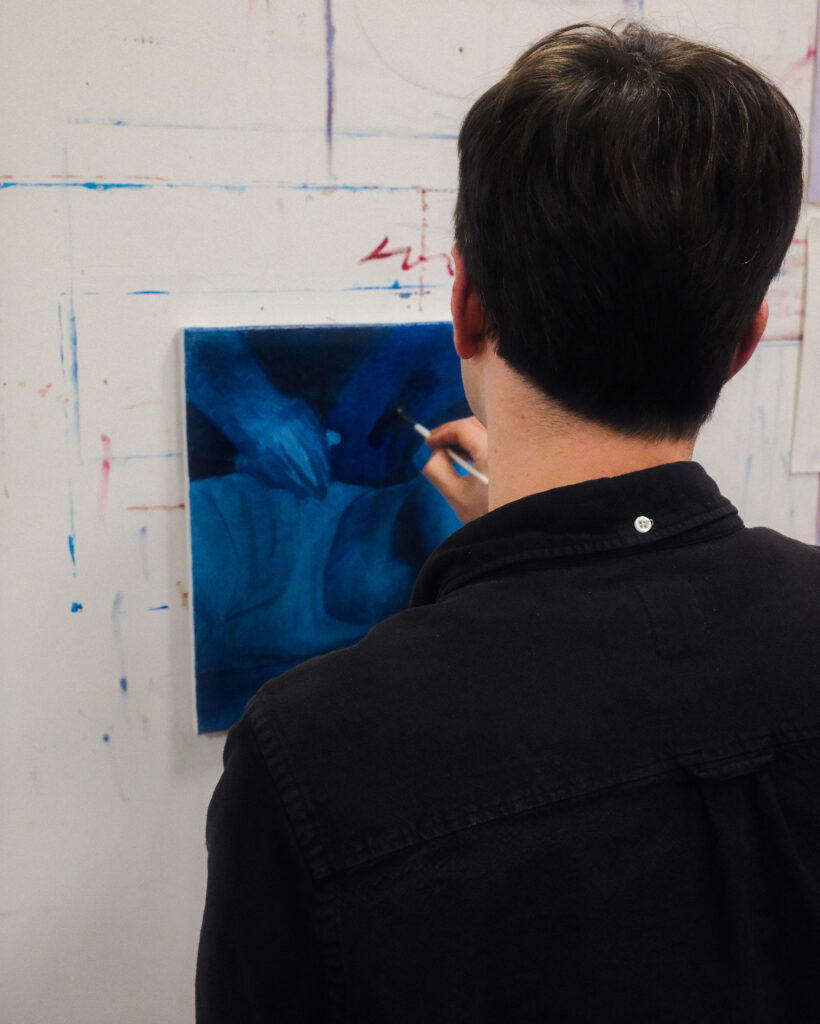
For Szott, ambiguity is not a weakness but a strength.
By leaving room for interpretation, the work remains alive. Viewers bring their own experiences, memories, and emotions into the encounter, creating meanings that extend beyond the artist’s original intentions.
This openness reflects his broader philosophy about art. Rather than placing himself or his work, inside rigid categories, he prefers to leave possibilities unresolved.
Despite the poetic nature of his work, Szott speaks candidly about the realities of building an artistic career.
Like many contemporary artists, he has worked a wide variety of jobs, from museums and bookstores to retail environments. Even as his artistic opportunities expand, he remains realistic about the challenges of sustaining a creative practice.
His goal is not fame or glamour, though he acknowledges those desires exist for most artists.
Instead, he focuses on creating a self-sustaining practice that allows him to continue making meaningful work over the long term.
That perspective comes with an understanding that artistic careers are rarely linear. Periods of success can be followed by uncertainty, requiring artists to adapt, hustle, and keep moving forward.
For Szott, persistence is less about chasing recognition and more about protecting the ability to continue creating.
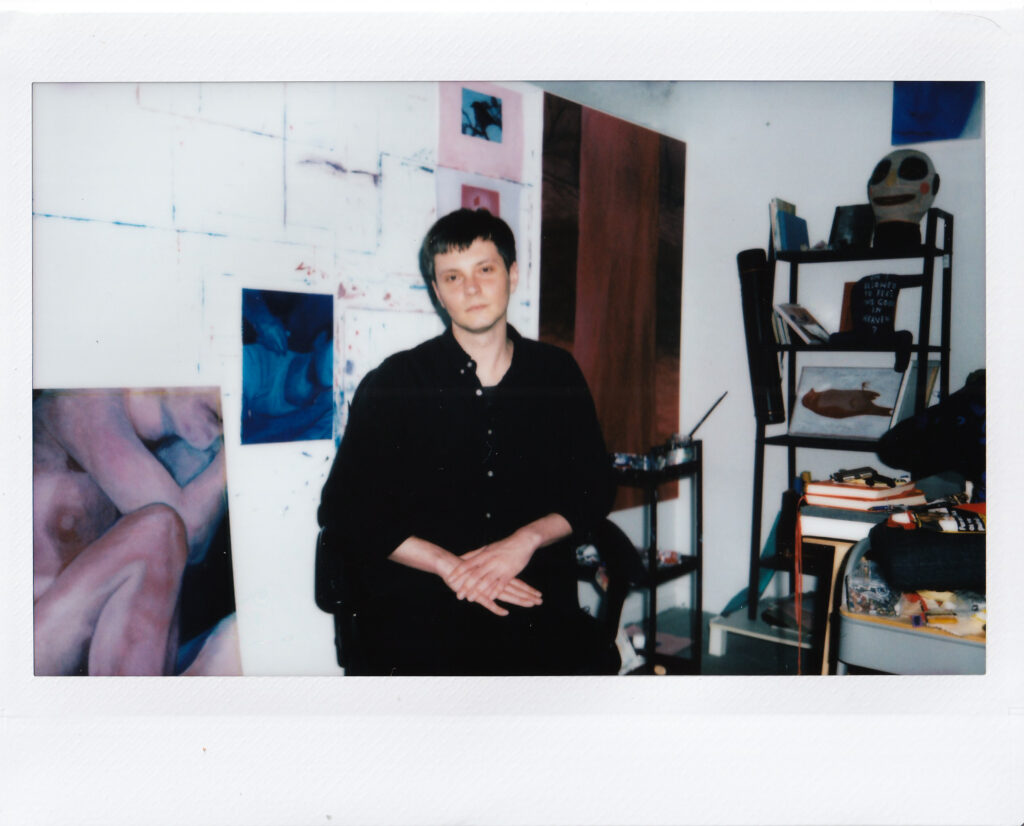
At its core, Thomas Szott’s work is about transformation.
Experiences become memories. Memories become symbols. Symbols become paintings, textiles, and sculptures. Through that process, private emotions are transformed into shared visual experiences.
His art demonstrates how personal stories can become universal without losing their specificity. By embracing ambiguity, material experimentation, and emotional honesty, Szott creates works that invite viewers into a space where memory, imagination, and reality overlap.
The universe he is building may begin with his own experiences, but it ultimately leaves room for others to find themselves within it as well.
About the Author
Sam Burke is an American artist and writer based in New York City. Working across film, performance, and writing exploring storytelling, identity, and place. As co-founder of Timestamp, Burke interviews artists, shares insights, and highlights conversations shaping art world today.
Stéphane Koyama-Meyer
French visual artist and designer based near Basel, Stéphane Koyama-Meyer grew up surrounded by art,…
Yuval Bezalel
For Yuval Bezalel, painting begins with the hands, before there is a narrative, before there…
Adèle Aproh
For Adèle Aproh, drawing began long before she knew it could become a career. Her…
Félix Deschamps Mak
Félix Deschamps Mak is a French painter based in Paris, working in large scale figurative…
Katya Quel
Katya Quel is an artist and multidisciplinary creator, born and raised in Moscow, who now…
Why Dia Beacon Deserves a Full Day of Your Attention
There are museums you visit to check a box. And there are museums that quietly…