A blank canvas can be an intimidating thing.
For some artists, it represents possibility. For others, pressure. For Vinny Olimpio, it’s an invitation to step into a conversation that has no clear beginning and no definitive end.
“I don’t think you’re ever going to stop telling stories until you stop breathing,” he says. “Creating art for me isn’t about finding the answers. It’s more about contributing to this collective ongoing question.”
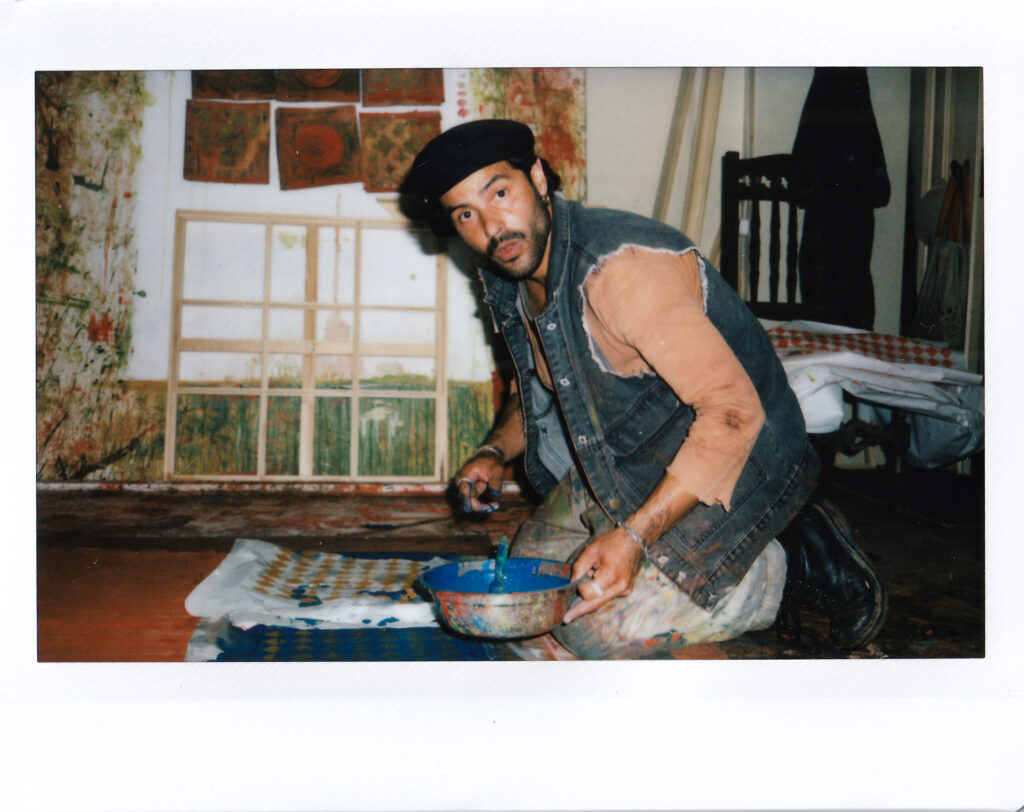
That belief sits at the center of Olimpio’s practice. His paintings, assemblages, and mixed-media works are less about delivering conclusions and more about exploring uncertainty. Each piece becomes part of a larger search, a way of navigating life through curiosity, intuition, and expression.
Originally from Brazil, Olimpio has spent more than twenty years living abroad, building a career that took him from advertising agencies in London to creative leadership roles in California. Along the way, he achieved many of the professional goals he had set for himself as a teenager. Yet despite the success, he found himself returning to the same place again and again: the act of making things with his hands.
Long before he considered himself a professional artist, creativity served a different purpose.
As a child, making art was a refuge. Later, it became a meditative practice. Eventually, it evolved into something closer to a necessity.
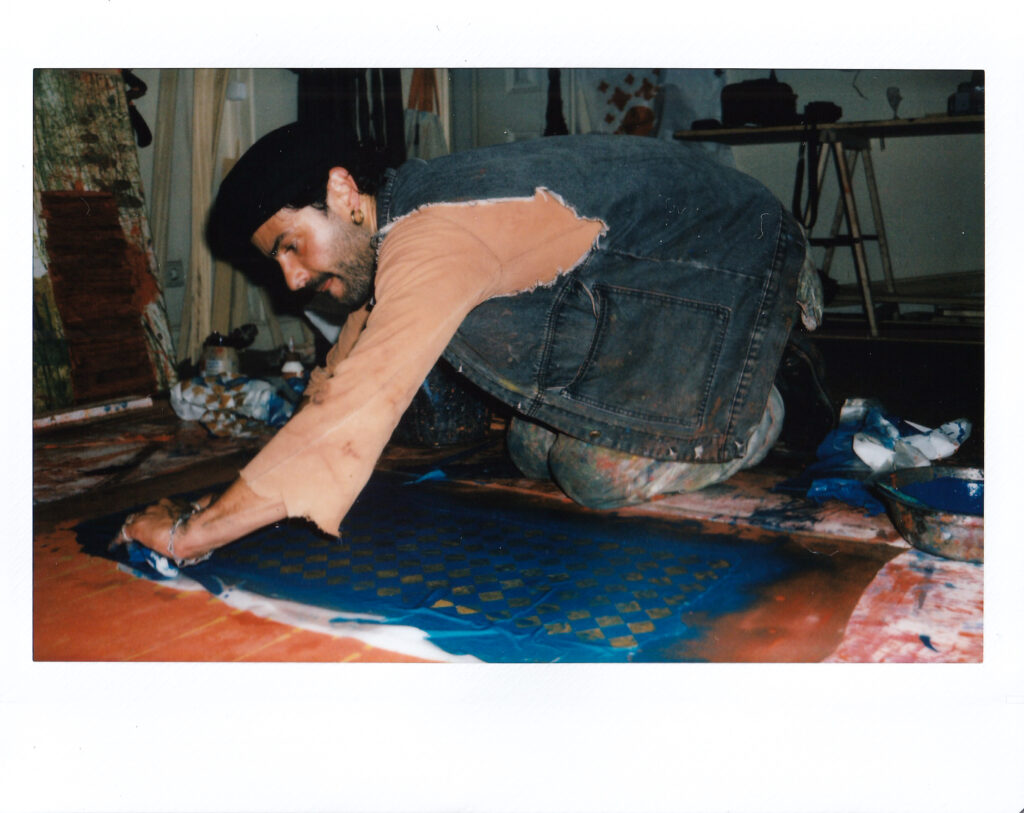
Olimpio describes creating as a way of returning to himself when life becomes overwhelming. Through painting, drawing, building, and experimentation, he enters a state of flow that allows him to let go of the illusion of control.
“Every time I’m doing scribbles and expressing that work somehow, it always gets me back into center.”
That relationship with art remained constant even while his professional life moved in other directions. For years, he worked in communication and design, building a successful career while spending weekends constructing objects, woodworking, and making art in private.
Eventually, the pull became impossible to ignore.
One day, he chose to fully commit to the creative voice that had been calling him for years.
Much of Olimpio’s artistic philosophy traces back to his upbringing in Brazil.
He speaks fondly of his grandparents, who taught him that creativity wasn’t reserved for galleries or studios. It was something woven into everyday life. They built things, repaired things, painted things, and solved problems using whatever materials were available.
That mentality still informs his work today.
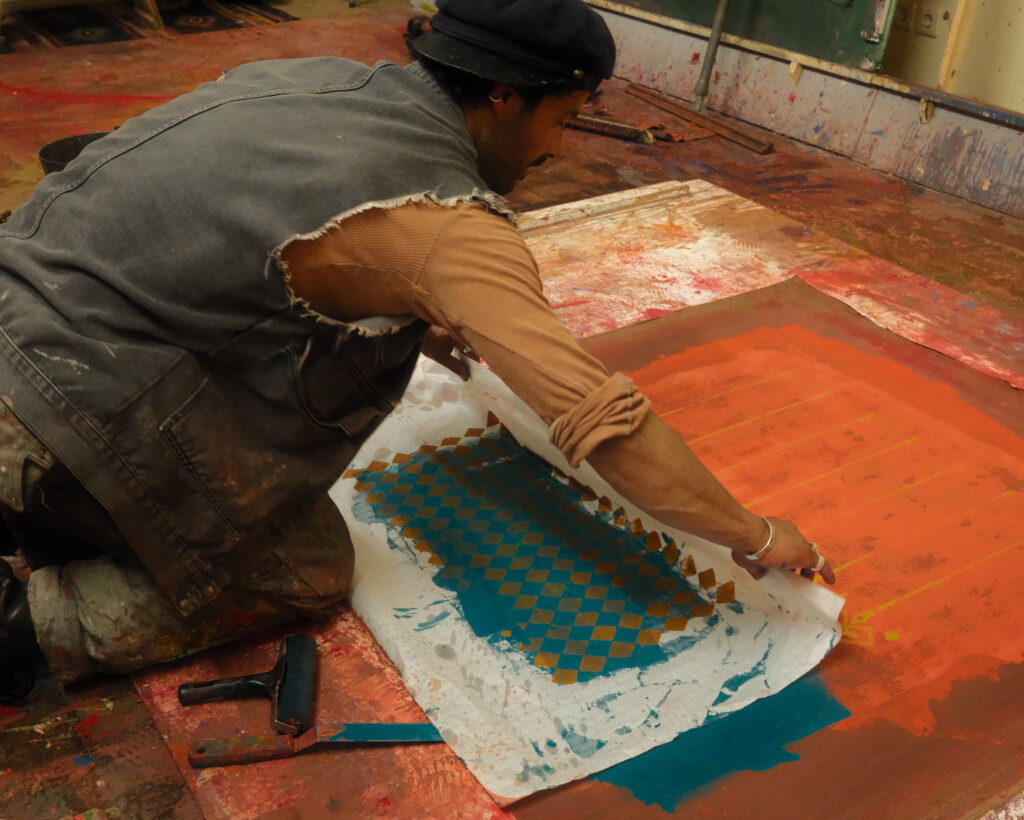
Rather than seeking perfect materials or ideal conditions, Olimpio embraces improvisation. He often incorporates found objects, construction tools, damaged surfaces, and unexpected materials into his process.
The goal isn’t perfection.
It’s possibility.
His approach reflects the Brazilian concept of gambiarra, the art of creating solutions from whatever is available.
In the studio, that means embracing experimentation and trusting that even mistakes can lead somewhere meaningful.
Watching Olimpio work reveals a constant negotiation between intention and accident.
Paint is poured, washed away, scraped back, layered, and disrupted. Paper tears. Textures emerge unexpectedly. Carefully planned moments collide with complete uncertainty.
He welcomes it.
“There is so much disaster that could happen,” he says while working on a piece. “Because it’s kind of reality.”
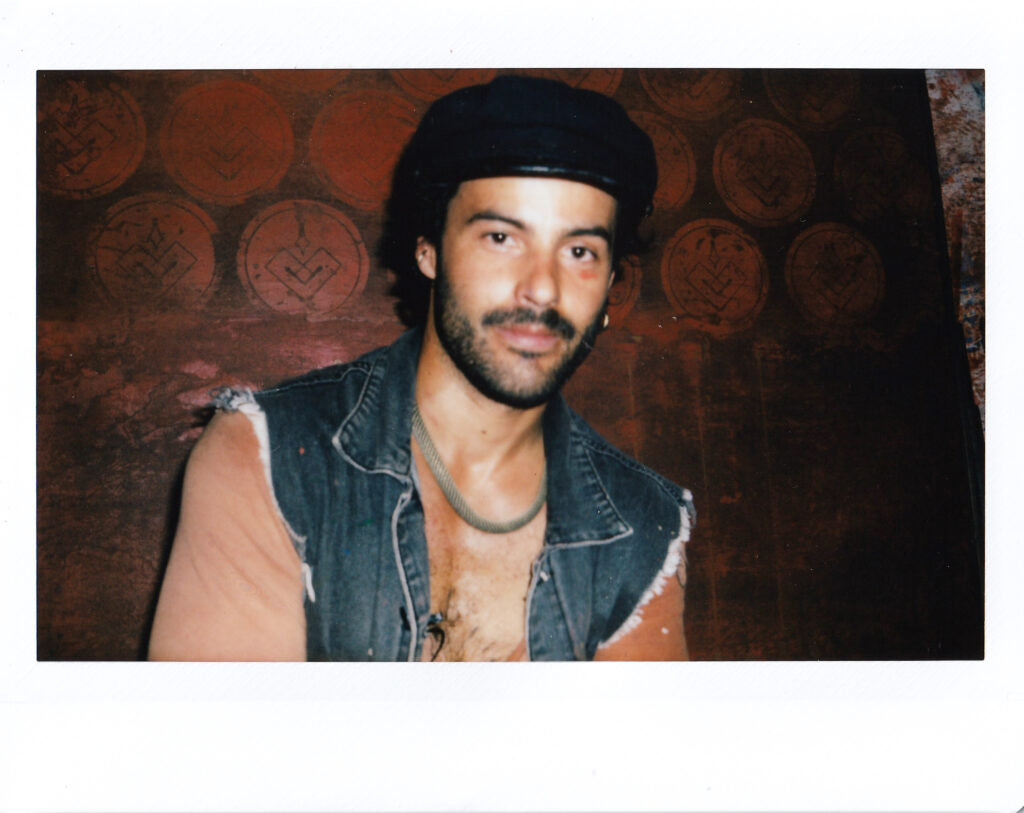
Rather than resisting chaos, Olimpio incorporates it into the work. The unpredictability of materials becomes a reflection of the unpredictability of life itself.
Some artists spend years trying to master control over every aspect of their process. Olimpio seems more interested in discovering what happens when control is surrendered.
The result is work that feels alive, filled with movement, tension, and the evidence of risk.
Throughout his conversation with Timestamp, Olimpio repeatedly questions the need for artistic labels.
Painter. Designer. Fine artist. Illustrator.
None of them feel particularly important to him.
“As long as I’m expressing art, I’m alright.”
His career has crossed multiple disciplines, from advertising and branding to woodworking and painting. Instead of viewing those experiences as separate identities, he sees them as different ways of communicating the same underlying ideas.
Art, design, storytelling, and craft all become part of a broader creative language.
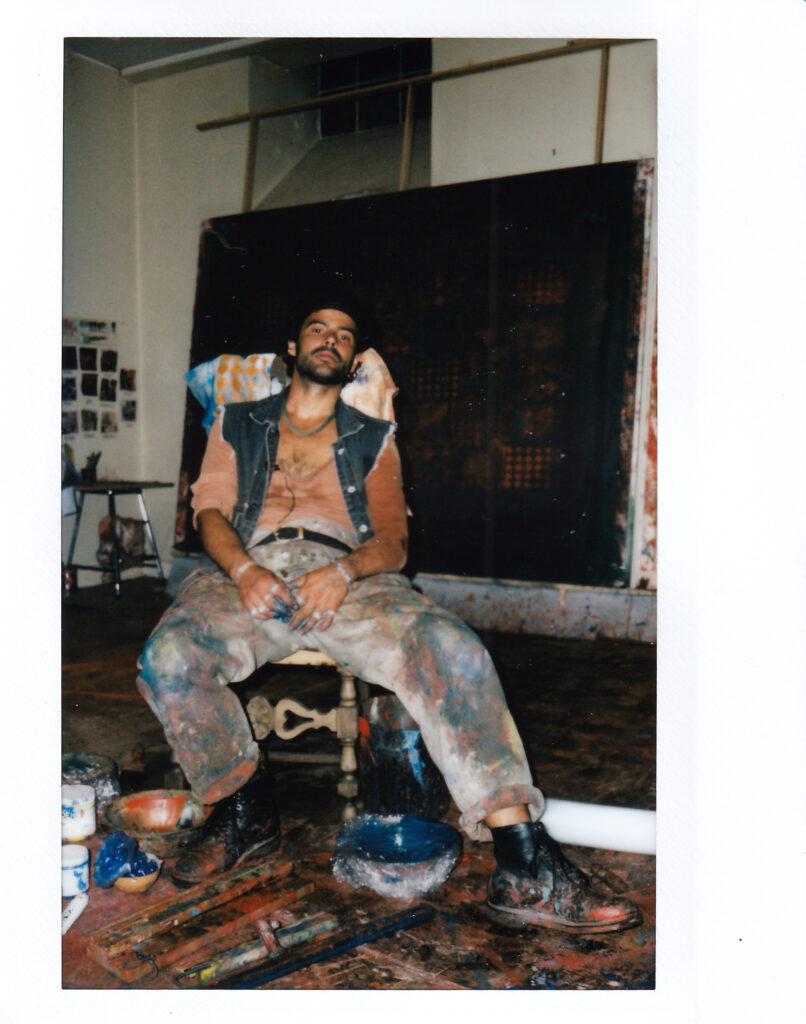
What matters isn’t fitting into a category.
What matters is remaining connected to the message.
While much of Olimpio’s work begins with personal exploration, his vision extends beyond individual expression.
One of his strongest ambitions is to create opportunities for other artists.
He speaks openly about the emotional and financial challenges of creative life, particularly for emerging artists trying to find their footing. He understands the uncertainty, self-doubt, and isolation that often accompany a creative career.
Because of that, he hopes to build platforms and communities that help artists feel supported while they develop their voices.
“I really want to take a lot of people with me.”
The statement captures something fundamental about his worldview. Success is not something to be accumulated alone. Creativity becomes more meaningful when it creates space for others to thrive as well.
When asked what advice he would give younger artists, Olimpio’s answer is refreshingly direct.
Keep doing it.
Keep showing up.
Keep making the work.
Not because every piece will succeed. Not because every effort will be rewarded. But because the act of creating is valuable in itself.
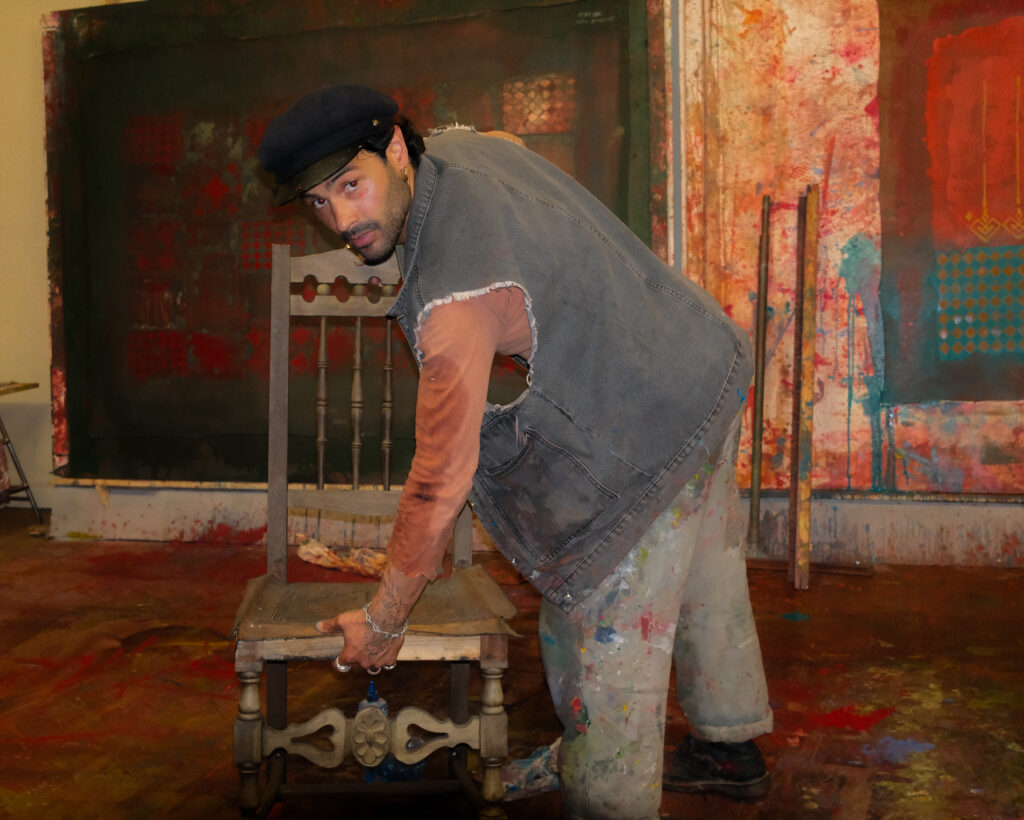
He encourages artists to focus less on becoming an artist and more on embodying the work.
The identity matters less than the practice.
The title matters less than the expression.
For Olimpio, art is not a destination waiting somewhere in the future. It is a daily act of participation, a way of engaging with uncertainty, asking better questions, and remaining open to possibility.
The answers may never come.
But as long as there are questions worth asking, there will always be another canvas waiting.
About the Author
Sam Burke is an American artist and writer based in New York City. Working across film, performance, and writing exploring storytelling, identity, and place. As co-founder of Timestamp, Burke interviews artists, shares insights, and highlights conversations shaping art world today.
Stéphane Koyama-Meyer
French visual artist and designer based near Basel, Stéphane Koyama-Meyer grew up surrounded by art,…
Yuval Bezalel
For Yuval Bezalel, painting begins with the hands, before there is a narrative, before there…
Adèle Aproh
For Adèle Aproh, drawing began long before she knew it could become a career. Her…
Félix Deschamps Mak
Félix Deschamps Mak is a French painter based in Paris, working in large scale figurative…
Katya Quel
Katya Quel is an artist and multidisciplinary creator, born and raised in Moscow, who now…
Why Dia Beacon Deserves a Full Day of Your Attention
There are museums you visit to check a box. And there are museums that quietly…