Some artists search for inspiration in distant landscapes, history books, or moments of profound personal revelation. Leo Chesneau finds it in an A4 sheet of paper, a toner cartridge, a Post-it note, or the standardized dimensions of a hollow-core door.
At first glance, these objects feel almost invisible. They belong to offices, classrooms, construction sites, and copy rooms, spaces built around efficiency rather than expression. Yet in Chesneau’s hands, these ordinary materials become the foundation for paintings that challenge how we think about originality, reproduction, and the quiet poetry hidden inside everyday life.
The Paris-based artist didn’t begin as a painter. His earliest creative interests revolved around graphic design and printmaking, where silkscreen, engraving, typography, and inkjet printers offered endless opportunities for experimentation. He became fascinated by the mechanical language of printing, the way images could be built through layers, repetition, registration, and, perhaps most importantly, error.
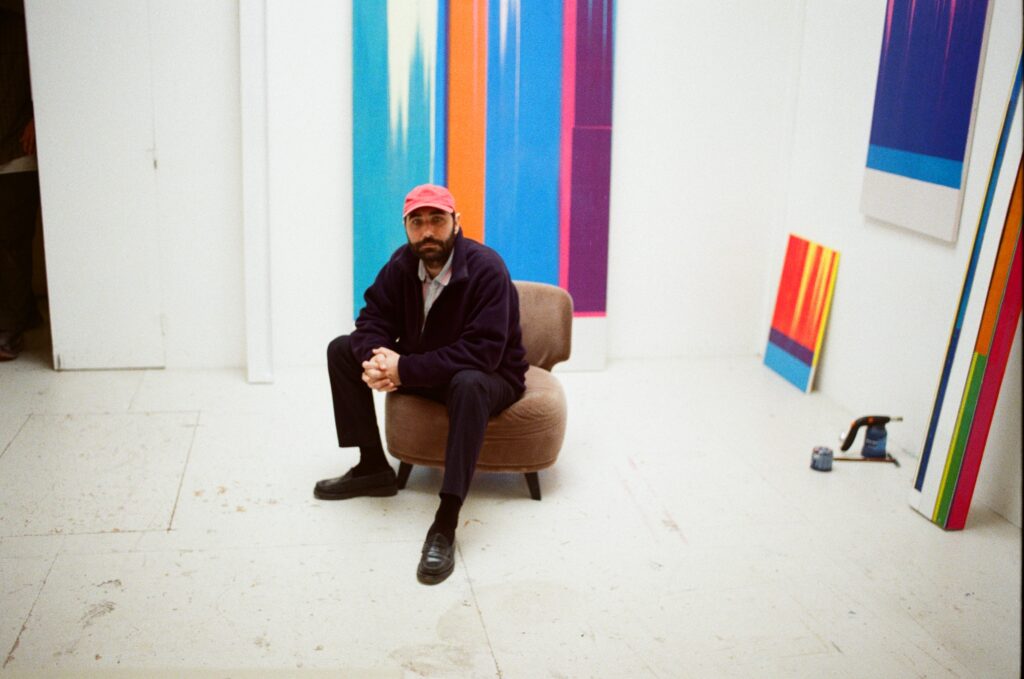
Long before he immersed himself in the history of abstraction, he was already trying to make printers misbehave. Those experiments eventually led him toward painting, though not in the traditional sense. Rather than abandoning printmaking, Chesneau began asking a different question: what if painting could perform like a printer without ever becoming one? That question continues to define his practice today. His work often resembles something machine-made. Crisp surfaces, carefully measured compositions, and layered fields of color evoke industrial printing processes so convincingly that viewers frequently assume his works are mechanically produced. The surprise comes when they discover that every mark is made by hand.
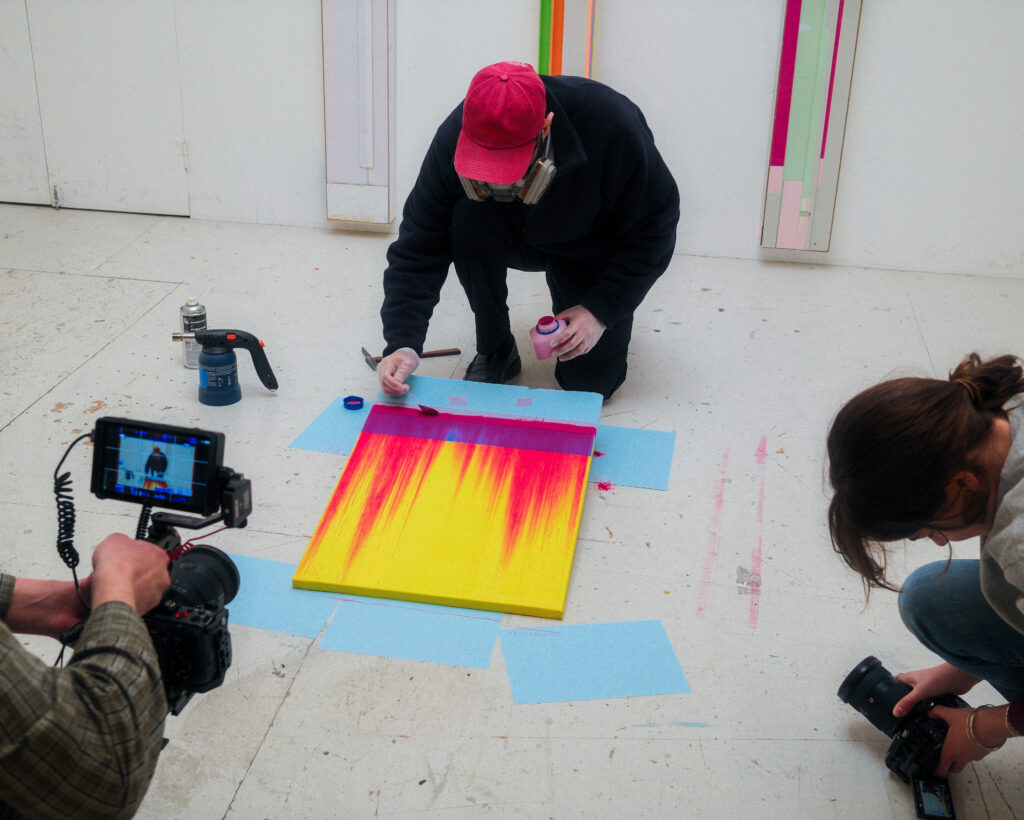
Instead of relying on presses or digital output, Chesneau recreates the logic of the printing machine through physical gestures. Brushes replace rollers. Pigments stand in for toner. Glue, cutting, layering, and careful repetition substitute for automated processes. Rather than collaborating with a machine, he becomes one. It’s an approach that reveals an intriguing contradiction. His paintings imitate systems built for mass reproduction while remaining entirely unique objects. That tension between repetition and singularity lies at the heart of his work.
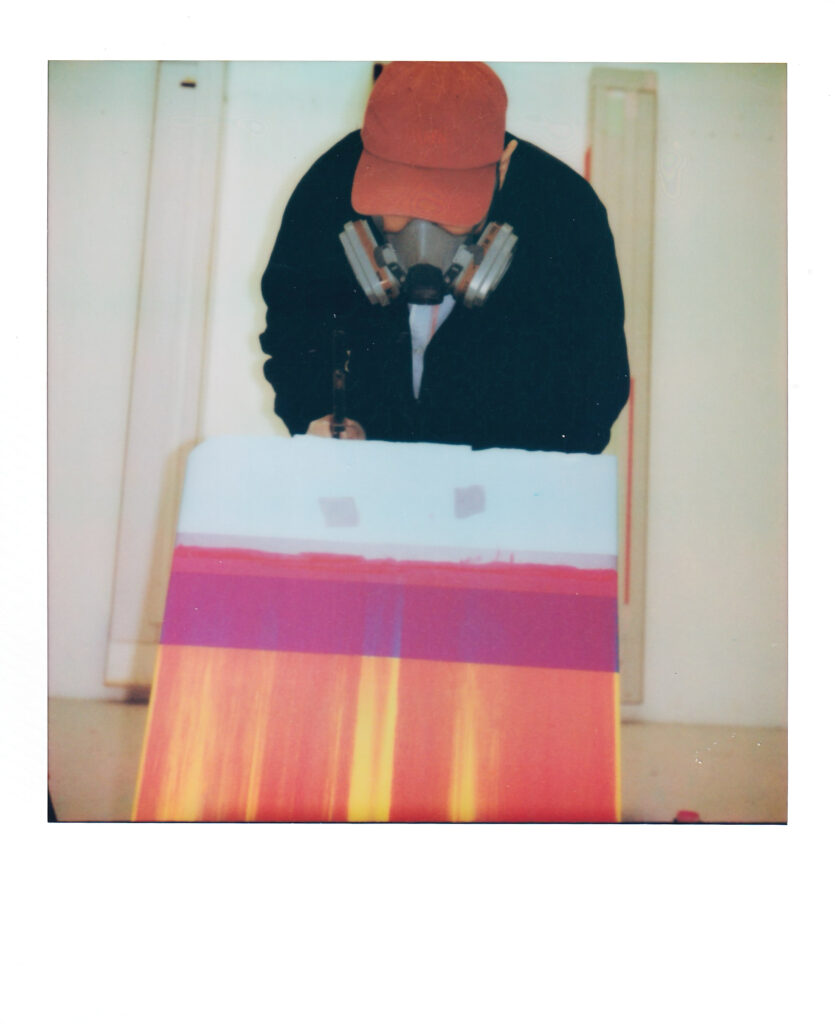
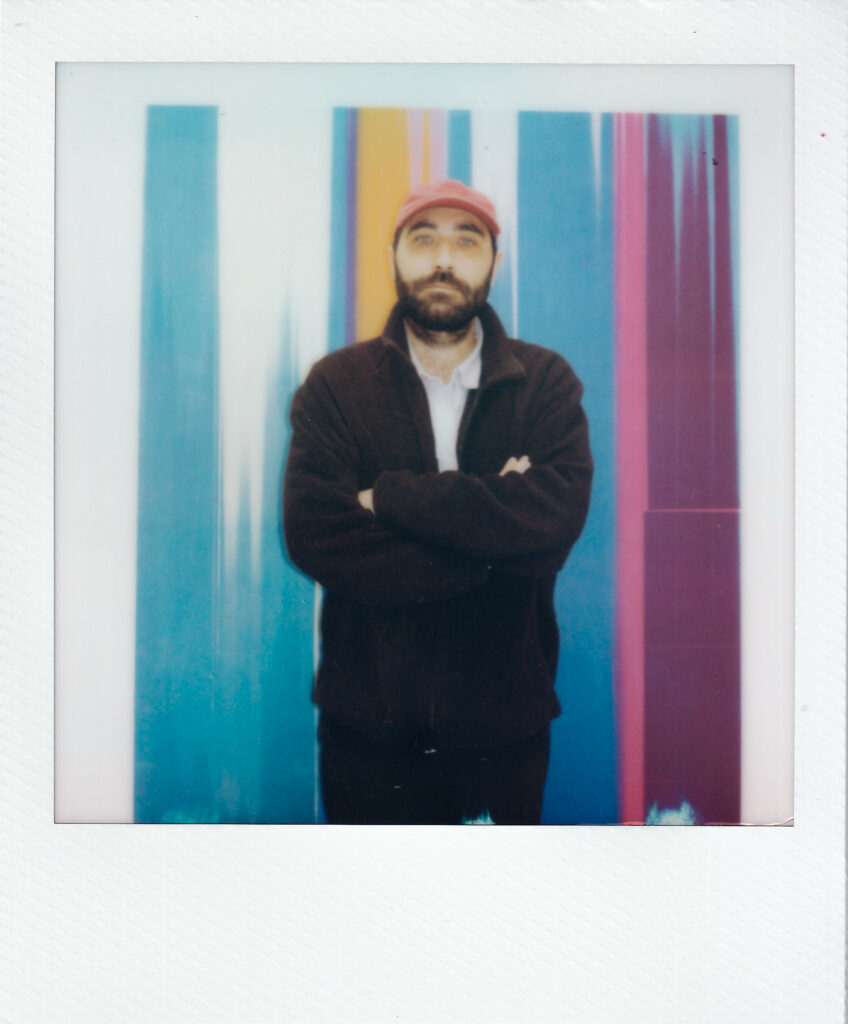
The influence of printmaking extends beyond process into material itself. Chesneau gravitates toward objects that most people overlook: office paper, standardized colors, adhesive labels, construction panels, and hardware-store supplies. These aren’t chosen for novelty but for their familiarity. They already exist as part of a visual language shared by millions of people. For Chesneau, universality is more compelling than autobiography.
While many contemporary artists mine deeply personal symbolism, his work begins with objects almost everyone recognizes. A sheet of printer paper carries no obvious emotional weight. Neither does a Post-it note. Yet these materials quietly accumulate meaning through everyday use, becoming markers of work, organization, communication, and routine. Only later does Chesneau recognize how deeply personal those objects truly are.
Looking back, he traces much of his visual language to childhood memories of visiting his mother’s office, where stacks of paper, planners, forms, and brightly colored office supplies became objects of fascination. What once felt like anonymous administrative tools now reveal themselves as emotional artifacts, connecting childhood curiosity with adult responsibility. That realization unlocked something larger. His paintings exist in the space between those two worlds.
On one side is childhood, a place of experimentation, imagination, and play. On the other is adulthood, with its schedules, taxes, deadlines, invoices, and endless systems of organization. The materials of office life become symbols of maturity, while the act of transforming them through painting preserves the freedom of childhood. “It’s about becoming the adult you want to be,” he reflects, “while keeping your imagination alive.”
That balancing act feels increasingly relevant today, particularly for artists who must navigate both creative freedom and professional reality. Chesneau speaks candidly about the less romantic side of artistic life, the administrative work, financial responsibilities, and constant organization required simply to continue making art. Rather than separating those realities from his practice, he folds them directly into it. The office isn’t merely a source of materials. It’s a metaphor. Perhaps that’s why his paintings never feel nostalgic. They aren’t attempts to escape ordinary life but to reconsider it. Every standardized object becomes an opportunity to slow down and observe what familiarity often conceals.
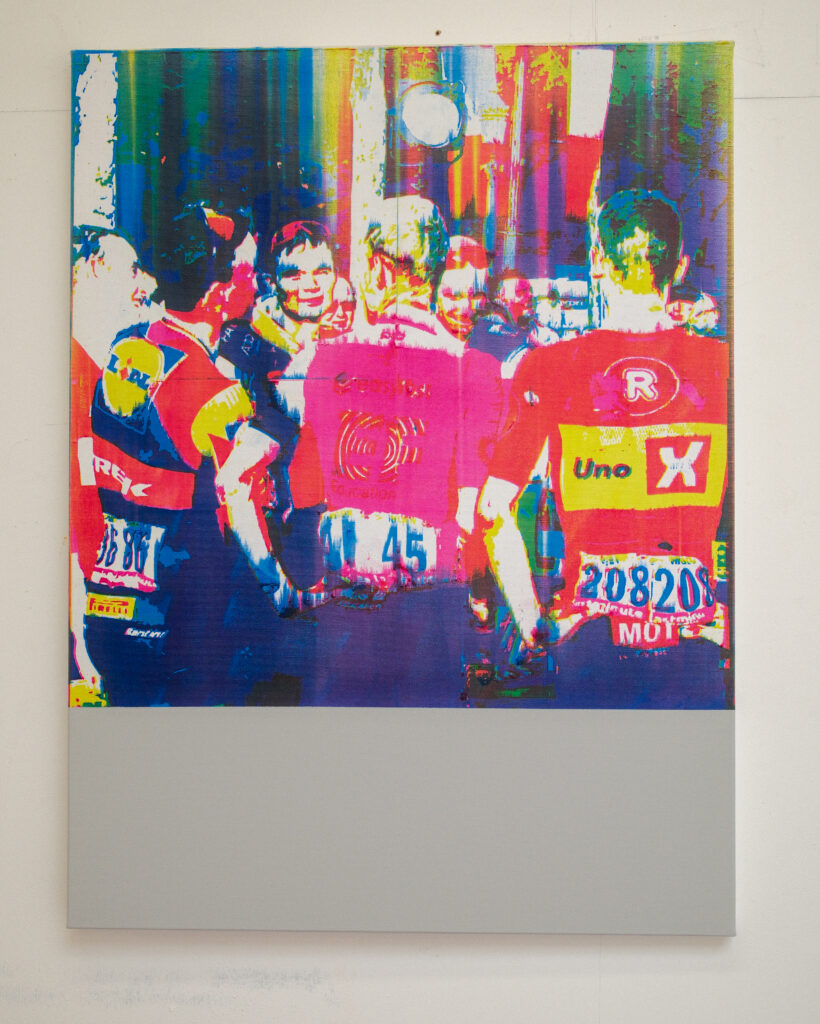
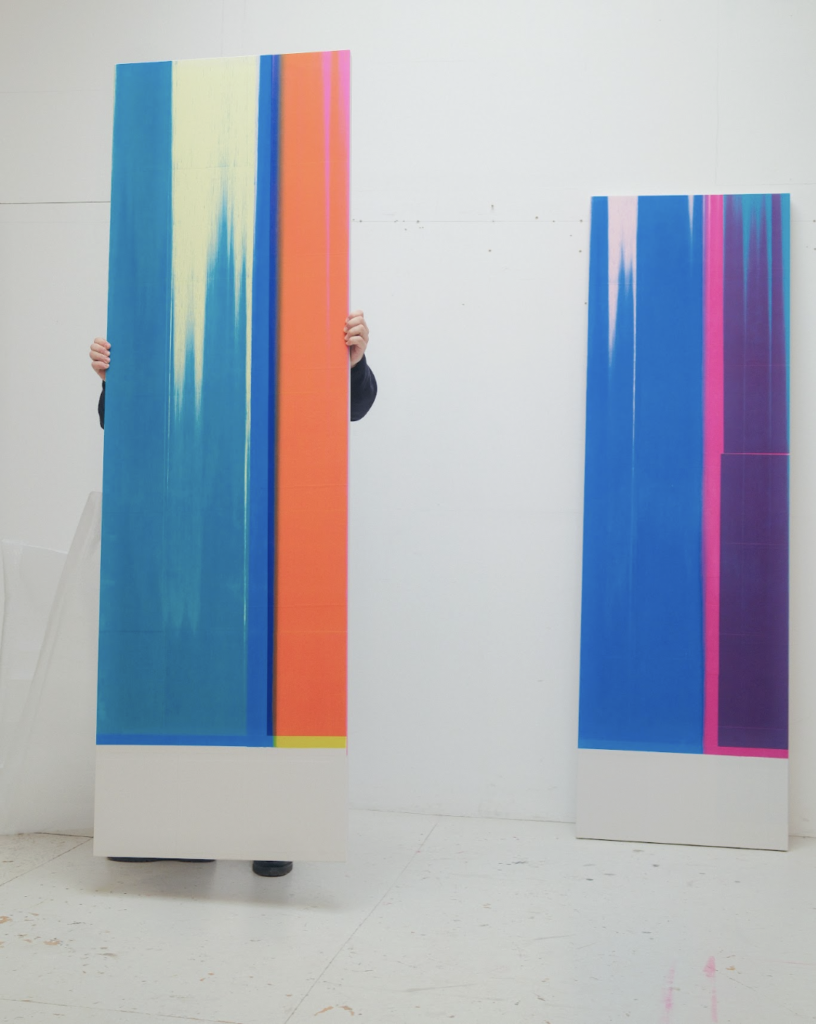
His teachers played an important role in shaping that perspective. During art school, they encouraged him to step away from specialized printmaking studios and technical equipment, challenging him instead to discover his own visual language using the simplest possible materials. If every artist working in a print shop shared the same machines, the same errors, and the same processes, where could individuality truly emerge? The answer was the studio itself.
Rather than depending on industrial techniques, Chesneau began rebuilding those systems from scratch using whatever was within reach. Hollow-core doors became painting supports because they were inexpensive, lightweight, and could be carried home on the Paris subway. Toner could be ordered online. Office paper was available everywhere. Limitation became methodology.
That philosophy extends beyond materials into the structure of his practice. Chesneau rarely speaks about inspiration in the romantic sense. Instead, he prefers protocols, self-imposed rules that narrow his choices and force unexpected discoveries. Restriction becomes a form of freedom. Working with only a handful of standardized colors, for example, doesn’t diminish possibility. It expands it. Every decision becomes more intentional because every variable has already been reduced. The result is work that feels simultaneously restrained and playful, rigorous yet deeply human.
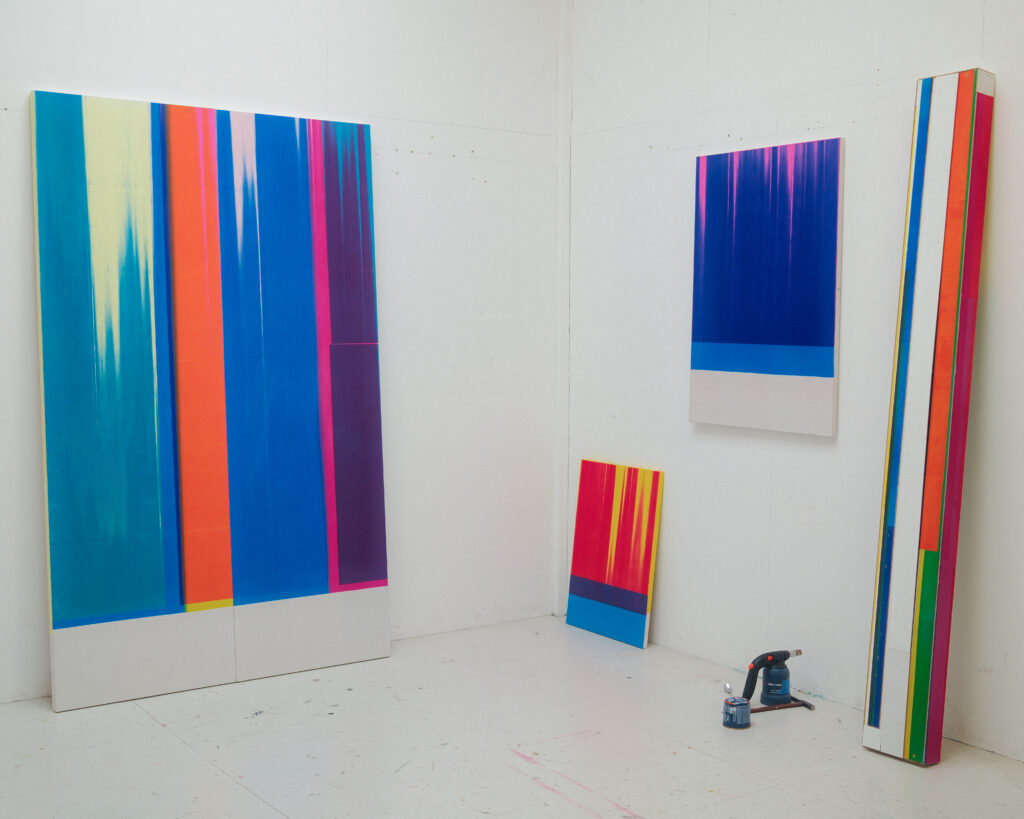
Underlying all of it is a fascination with systems, not to celebrate them, but to gently disrupt them. Printing is designed for endless reproduction. Office supplies exist to organize information. Architecture imposes order on space. Chesneau borrows these structures only to reveal the unexpected moments where individuality slips through. His paintings ask a deceptively simple question: how much humanity can exist inside a standardized world? It’s a question that resonates beyond contemporary painting.
We increasingly live among interfaces, templates, automated processes, and algorithms designed for efficiency. Our environments become more uniform even as our desire for individuality grows stronger. Chesneau’s work occupies precisely that tension. His paintings mimic systems of production while quietly resisting them, insisting that even the most ordinary materials can carry memory, emotion, and personal history.
In the end, Leo Chesneau doesn’t transform office paper into fine art because the materials themselves are extraordinary. He transforms them because they already belong to all of us. His work reminds us that beauty rarely arrives from somewhere else. More often, it’s been sitting on our desks all along, waiting for someone to look closely enough.
About the Author
Sam Burke is an American artist and writer and founder of Timestamp. Working across film, performance, and writing exploring storytelling, identity, and place. As co-founder of Timestamp, Burke interviews artists, shares insights, and highlights conversations shaping art world today.
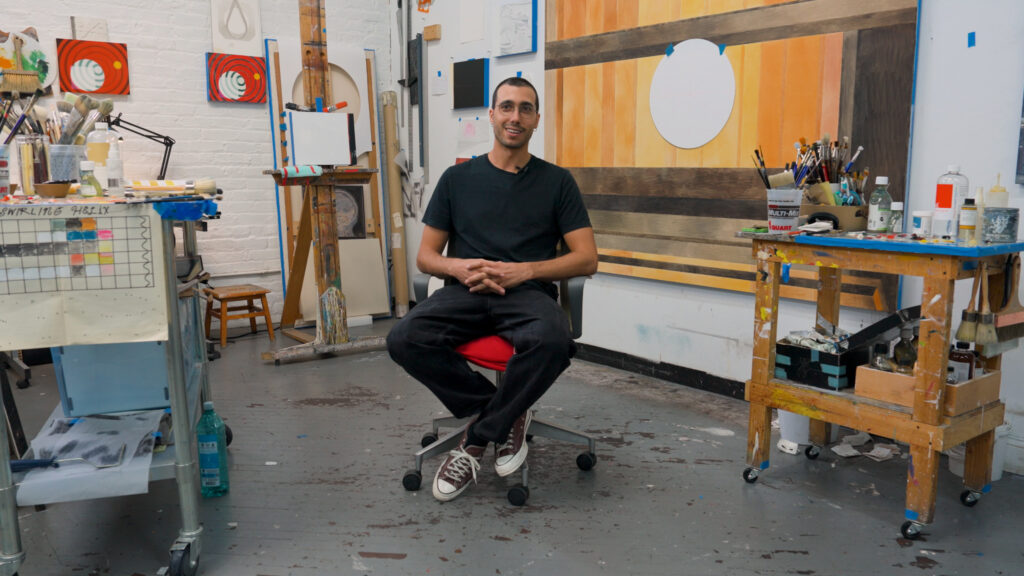
Gonçalo Preto
For Portuguese painter Gonçalo Preto, a painting is never simply a representation of something seen….
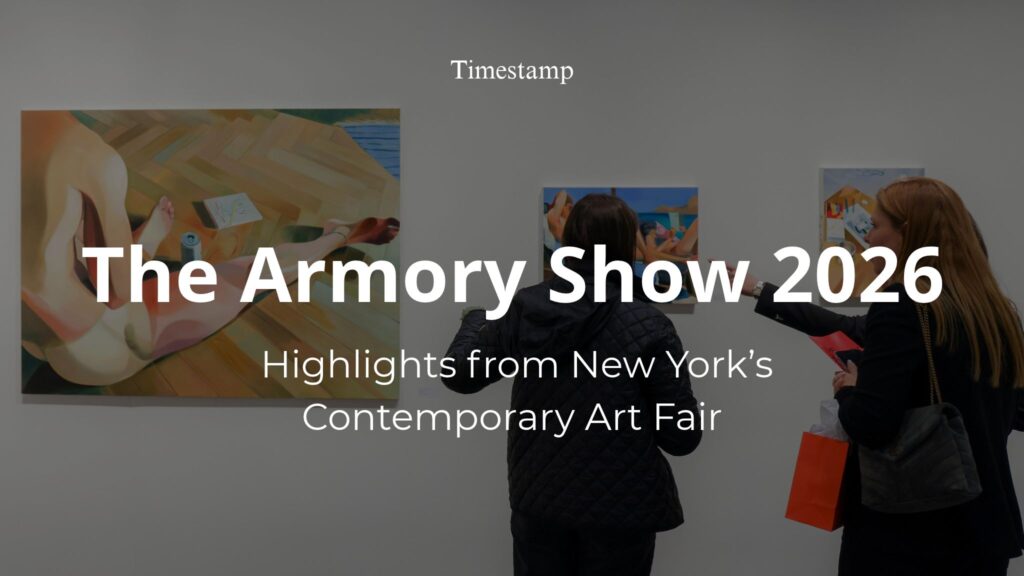
The Armory Show 2026: Highlights from New York’s Contemporary Art Fair
From experimental painting to immersive installations, a look at the artists, booths, and ideas that…
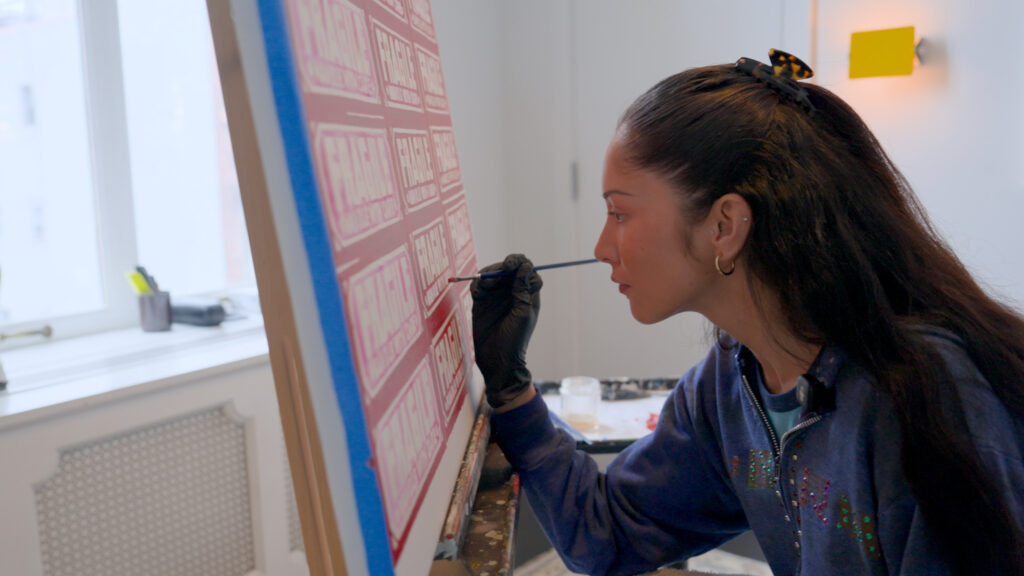
Mia Goldstien
Born in Los Angeles and now working in New York City, Mia Goldstein has built…
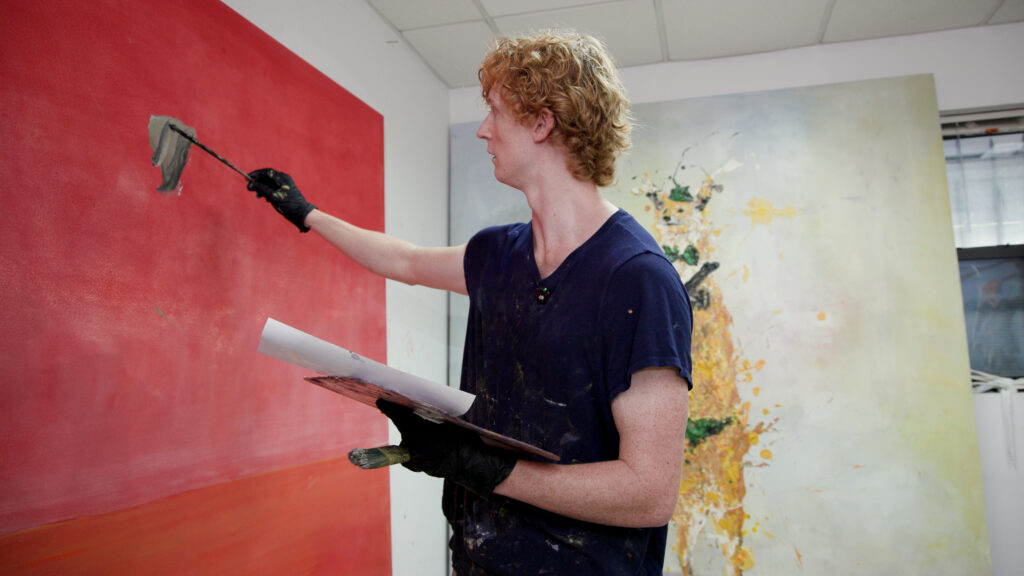
Michael Alexander Campbell
Michael Campbell once tried to give up making art. The idea, as he explains it,…
Andrew LaFarge Hamill
Andrew LaFarge Hamill describes himself as an artist and garden designer, but he is interested…
Felix Benton
Felix Benton grew up surrounded by people who made things. His grandmother was a glass…