
For Portuguese painter Mafalda d’Oliveira Martins, painting is a way of understanding people.
Working primarily in oil, Mafalda creates figurative paintings that explore memory, vulnerability, relationships, and the quiet moments that often pass unnoticed. While her paintings frequently begin with ordinary scenes or familiar faces, they become much more than records of reality. They are observations of human experience, attempts to understand how people connect with one another, how memories shape identity, and how small interactions can reveal something much larger.
Throughout her career, one idea has remained constant. “It’s about people. It’s for people.”
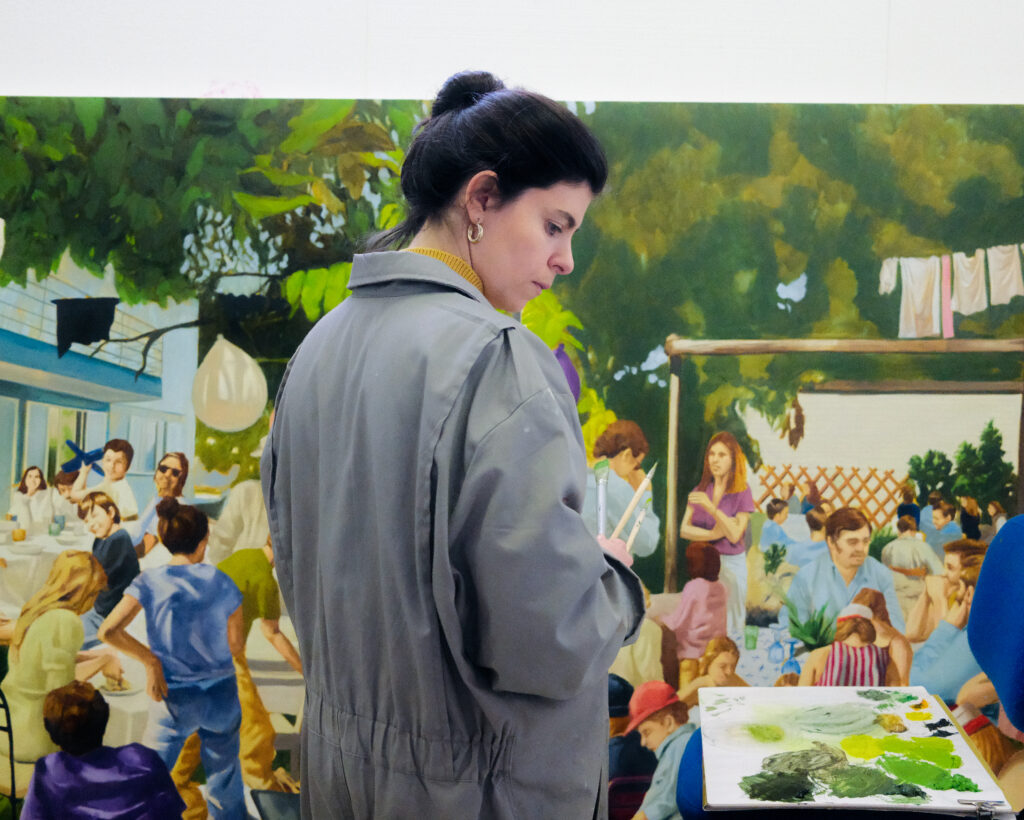
Whether she is creating paintings, sculptures, installations, or long-term research projects, every body of work begins with curiosity. Rather than using art purely as a vehicle for personal expression, Mafalda approaches it as a conversation with other people. By learning about their experiences, she gradually learns more about herself. That philosophy has become the foundation of her entire practice.
Unlike many artists, Mafalda did not develop her practice through years of rigid technical training. Art materials were always around her while growing up, so drawing and painting became part of everyday life. Long before attending Fine Arts school, she had already spent countless hours experimenting on her own, teaching herself through repetition and curiosity.
When she eventually entered university, formal education gave her stronger technical foundations, but it didn’t fundamentally change the way she approached making art. Learning how to paint better simply gave her more freedom to communicate what she was already interested in exploring. That balance between technical skill and genuine curiosity continues to define her work today.
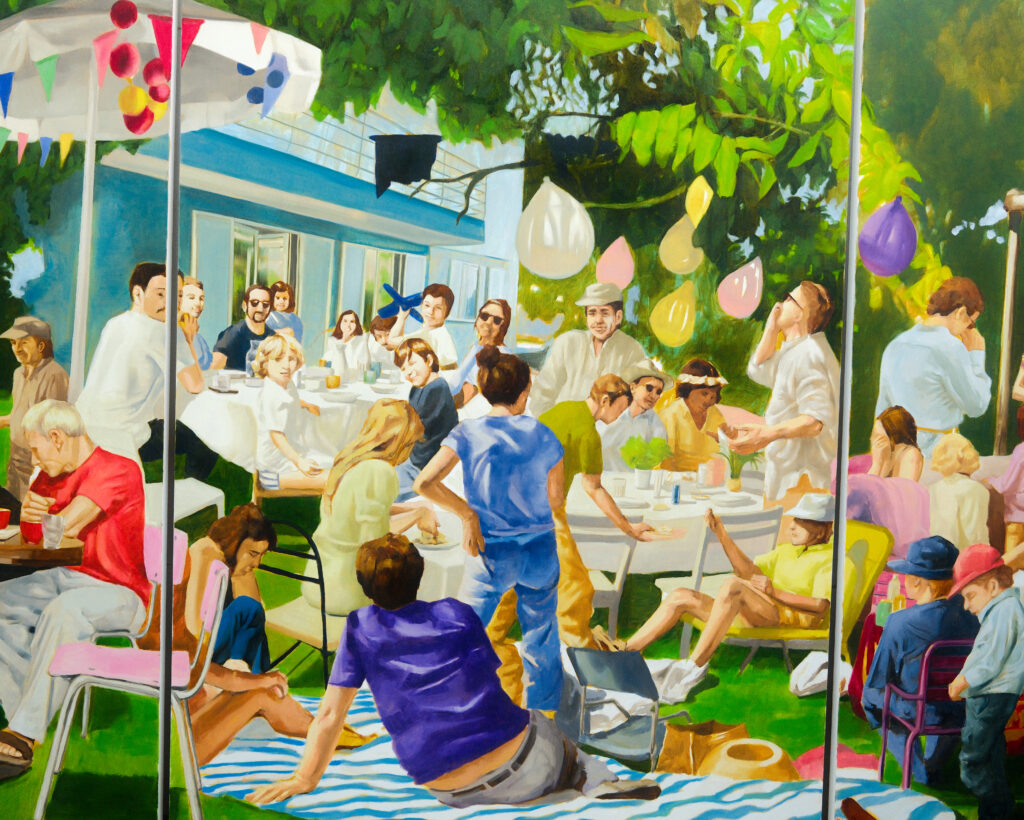
Throughout the interview, Mafalda repeatedly returns to the importance of paying attention to other people. She believes some of the richest artistic subjects aren’t dramatic historical events or extraordinary moments, but the quiet realities of everyday life.
Many of her projects begin with conversations. She spends time observing people, listening to their stories, and allowing those experiences to slowly shape the direction of the work. Rather than arriving with predetermined ideas, she prefers letting projects develop naturally through the people she encounters.
She describes becoming interested in what she calls “invisible places”, communities, relationships, and individuals who rarely receive attention but whose experiences reveal something important about society. Instead of treating people as symbols or subjects to document, she tries to understand them first. Only then does the artwork begin to take shape.
This philosophy became especially important during two major projects she discusses throughout the interview. Both focused on communities that exist outside public attention, and in both cases, the work grew from observation rather than assumption. Instead of arriving with answers, Mafalda allowed conversations and relationships to determine where each project would go.
Over the years she has built an enormous archive of photographs, sketches, books, notes, and visual references that she has collected herself. Rather than relying on images from social media or endlessly searching online, she documents the world around her and creates a personal visual library she can return to years later.
When someone tells her a story she wants to paint, she rarely searches the internet for inspiration. Instead, she searches through her own archive. This process allows her paintings to develop from experiences she has personally witnessed rather than imagery that has already been repeated countless times online. It also helps her build a visual language that feels uniquely her own.
Her sketchbooks play an equally important role. Filled with portraits, observations, compositions, and written ideas, they function as an ongoing record of both her thinking and her artistic development. One series of drawings began during an artist residency in southern Portugal, where she spent time living in a remote mountain community.
Initially, she simply started drawing the people she met. Over time, however, the project became something much larger. The portraits gradually evolved into sculptural paper heads that reflected not only the individuals themselves but also the isolation of the community they lived in. Rather than becoming straightforward portraits, they became meditations on belonging, memory, and the quiet resilience of people living outside the centers of attention.
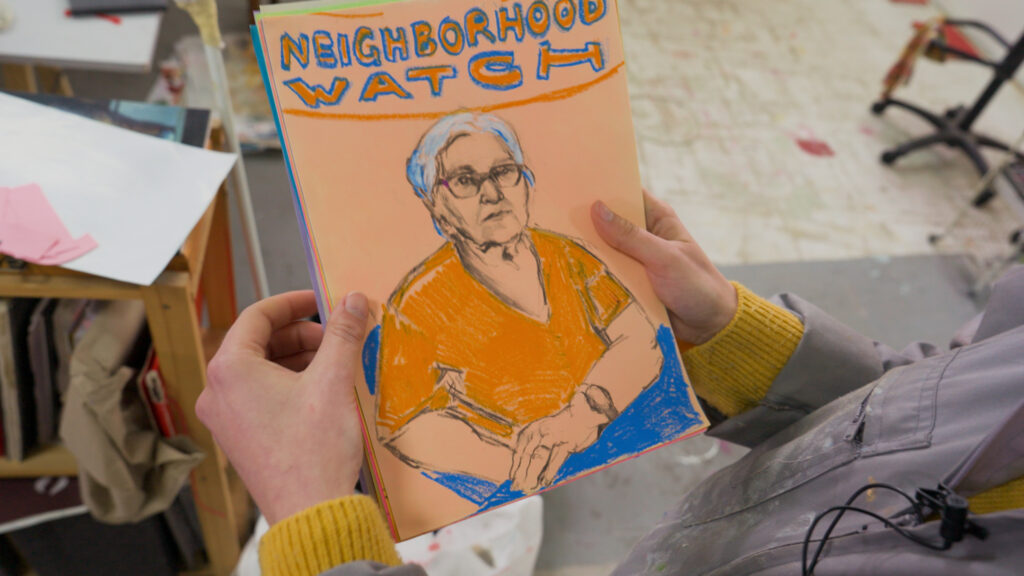
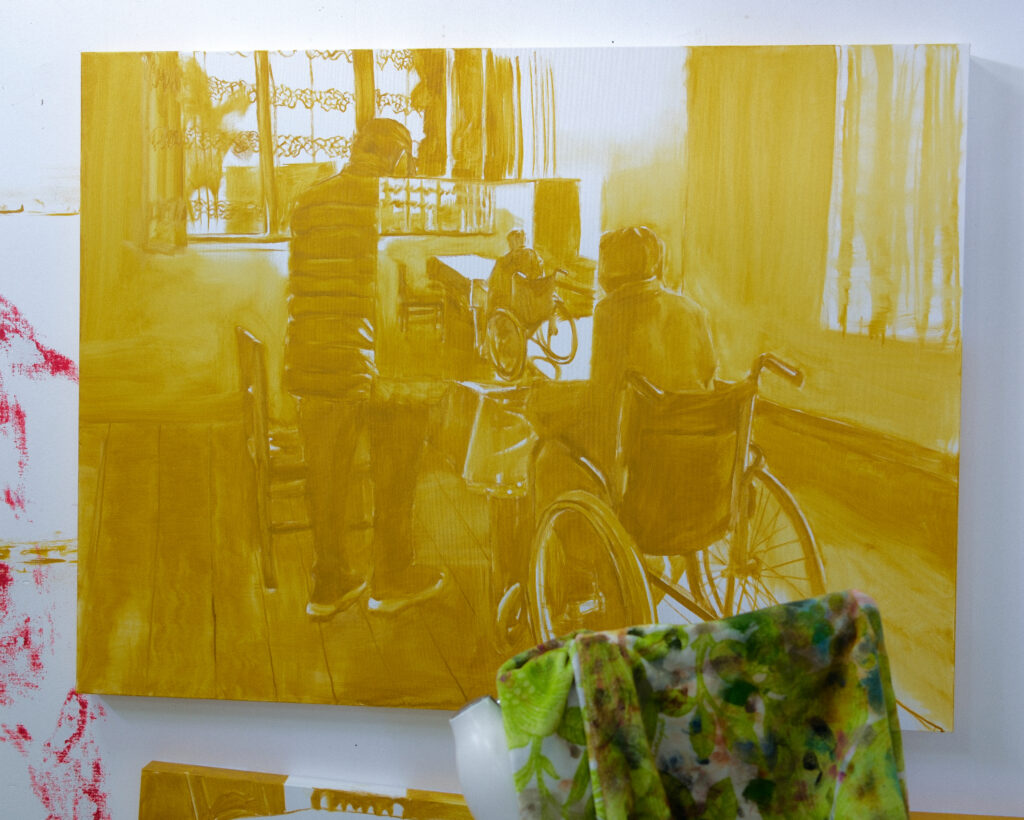
Years later, many of those sculptures remain in her studio as reminders that projects rarely end where they begin. Her paintings evolve in much the same way. Rather than carefully planning every detail before picking up a brush, Mafalda begins with a simple yellow ochre underpainting.
She describes yellow ochre as an ideal starting point because it establishes structure without dictating the painting’s final direction. Darker underpainting colors already contain so much visual information that they can make a work feel fixed too early. Yellow keeps possibilities open, allowing each painting to develop gradually as new ideas emerge. That openness extends to the materials she uses.
During the interview, Mafalda recalls a memorable moment from art school when one of her professors watched her paint before bluntly telling her that her brushes were terrible. At first she laughed. Then the professor handed her a selection of professional brushes and encouraged her to experiment.
The lesson wasn’t that expensive materials automatically produce better work. Instead, it taught her that understanding your tools allows your ideas to come through more clearly. Since then, she has continued exploring different brushes, pigments, and materials, not because she is searching for perfect equipment, but because every material offers different possibilities for expression.
Sometimes a new color enters her palette unexpectedly and gradually becomes essential to an entire body of work. That willingness to experiment reflects a larger philosophy that runs throughout her practice. Nothing begins fully formed. Ideas are tested through sketches, conversations, research, painting, sculpture, and observation before eventually finding their final shape. Rather than forcing projects toward predetermined conclusions, Mafalda allows them to change as she learns more. This openness has also expanded the way she thinks about painting itself.
Although oil painting remains central to her practice, she often moves between two-dimensional and three-dimensional work. Sculptures, installations, archives, and drawing all influence one another, allowing a single idea to exist across multiple forms rather than being confined to one medium. For Mafalda, the medium is never the point. The idea comes first. Everything else exists to support it.
That same mindset shapes how she thinks about success as an artist. Rather than measuring achievement through exhibitions, recognition, or career milestones, she remains focused on creating work that feels honest to the experiences it represents. Every project becomes an opportunity to observe more carefully, ask better questions, and remain curious about the lives of other people.
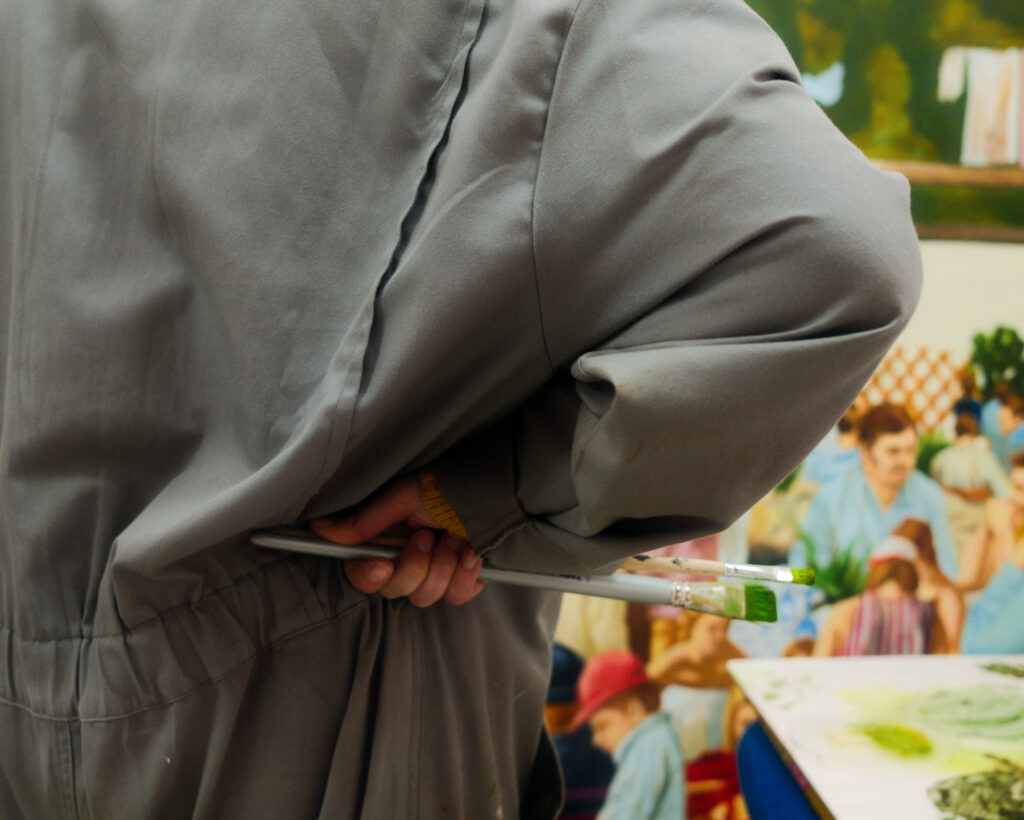
She also encourages emerging artists to slow down. Instead of constantly searching for originality through increasingly dramatic ideas, she believes artists should spend more time looking closely at the people around them. The everyday moments that often appear ordinary frequently contain the richest stories. Observation, she argues, is a skill that can be developed. The more attention we give to other people, the more we begin to notice gestures, relationships, emotions, and moments that would otherwise disappear unnoticed. Those observations eventually become paintings. But more importantly, they become understanding.
By listening before speaking, researching before assuming, and remaining curious rather than certain, Mafalda has built a practice that is grounded as much in empathy as it is in technical ability. Throughout the conversation, one idea quietly connects everything she creates. Painting is not simply about producing images. It is about paying attention.
For Mafalda d’Oliveira Martins, every portrait, installation, sketchbook, archive, and conversation begins with the same belief: art becomes meaningful when it helps us see other people more clearly. And in learning to understand others, we often discover something about ourselves as well.
About the Author
Sam Burke is an American artist and writer based in New York City. Working across film, performance, and writing exploring storytelling, identity, and place. As co-founder of Timestamp, Burke interviews artists, shares insights, and highlights conversations shaping art world today.
Stéphane Koyama-Meyer
French visual artist and designer based near Basel, Stéphane Koyama-Meyer grew up surrounded by art,…
Yuval Bezalel
For Yuval Bezalel, painting begins with the hands, before there is a narrative, before there…
Adèle Aproh
For Adèle Aproh, drawing began long before she knew it could become a career. Her…
Félix Deschamps Mak
Félix Deschamps Mak is a French painter based in Paris, working in large scale figurative…
Katya Quel
Katya Quel is an artist and multidisciplinary creator, born and raised in Moscow, who now…
Why Dia Beacon Deserves a Full Day of Your Attention
There are museums you visit to check a box. And there are museums that quietly…