
Dominik Gegaj is a contemporary watercolor artist based in Paris whose work explores themes of identity, memory, love, isolation, belonging, and personal transformation. Born and raised in Austria to immigrant parents from Kosovo and Albania, Gegaj has developed a distinctive visual language built around indigo and ultramarine watercolor paintings that balance emotional vulnerability with technical precision.
During our recent studio visit, Gegaj discussed his upbringing, his relationship with watercolor, and the personal experiences that led him to pursue art professionally.
For Gegaj, art emerged out of a need to understand his place in the world. Growing up between cultures, he often felt disconnected from both his family background and the society around him. He describes this experience as a sense of dissonance that followed him throughout his childhood.
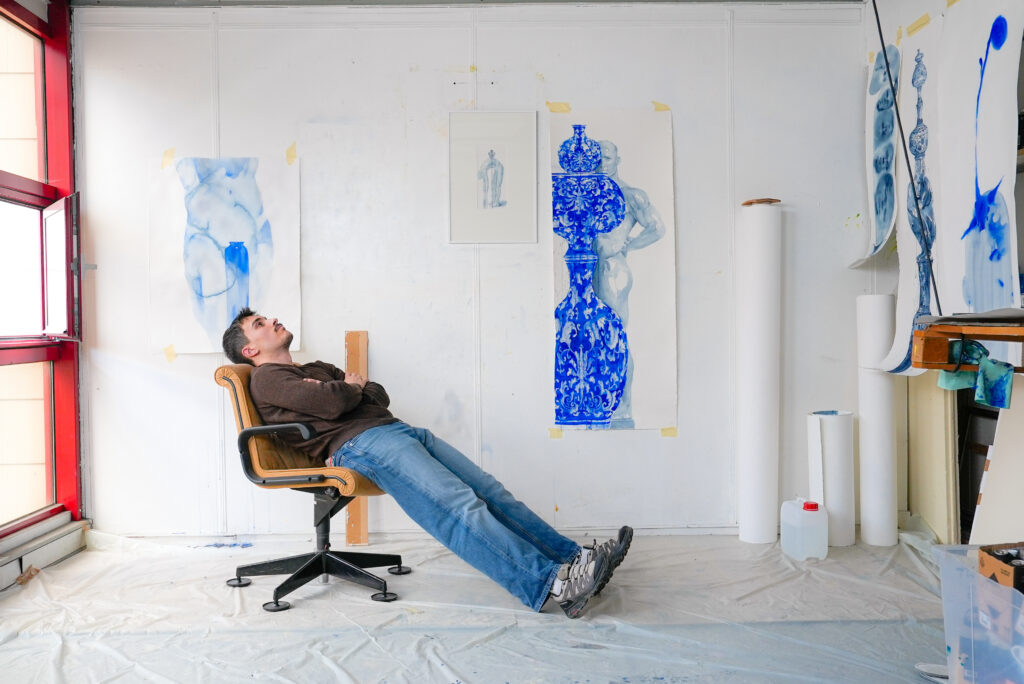
As a child, he became fascinated by water. Living in Austria, he spent time around rivers, lakes, and mountains, often watching the way water moved through landscapes. What interested him was not only its beauty but its unpredictable nature. Water could be calm and comforting, but it could also be powerful and destructive. This fascination eventually led him to watercolor.
When watercolor was introduced in school, many of his classmates disliked the medium because of how difficult it was to control. Gegaj had the opposite reaction. The fluid nature of watercolor felt natural to him and allowed him to continue exploring the movement and physics that had fascinated him since childhood.
Watercolor also happened to be one of the most accessible materials available to him. He had limited space to work and limited resources to purchase art supplies, making watercolor a practical choice. What began as a matter of circumstance gradually became a lifelong artistic focus.
Unlike many artists, Gegaj never attended art school and never formally trained as a painter. Instead, he spent years teaching himself through experimentation. Rather than exploring multiple mediums, he committed himself almost entirely to watercolor.
He believes this self-directed path helped shape his artistic voice. Instead of following established methods, he developed his own understanding of the medium through trial, observation, and repetition.
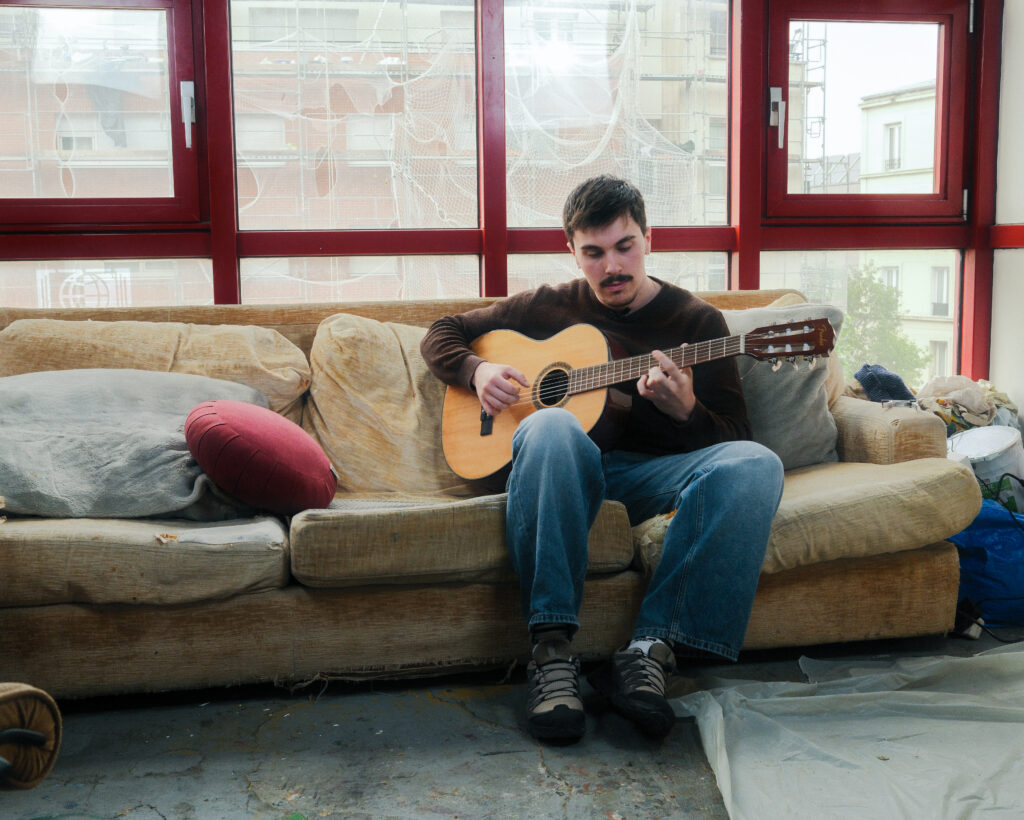
Today, he often describes watercolor as a collaborator rather than a tool.
“I feel like water was my third parent,” he says. “It’s less about controlling something and more about having a dialogue with it.”
This idea of collaboration with the medium is central to his work. Watercolor requires patience and adaptability because the artist cannot completely dictate the outcome. The paint moves, spreads, and reacts in ways that must be accepted rather than resisted. Gegaj sees this unpredictability as one of the medium’s greatest strengths and one of the reasons it continues to inspire him.
Painting also became an important emotional outlet during difficult periods of his life. Growing up in a household marked by financial stress and emotional challenges, he often struggled to express himself openly. Art provided a private space where he could process thoughts and feelings that were difficult to communicate.
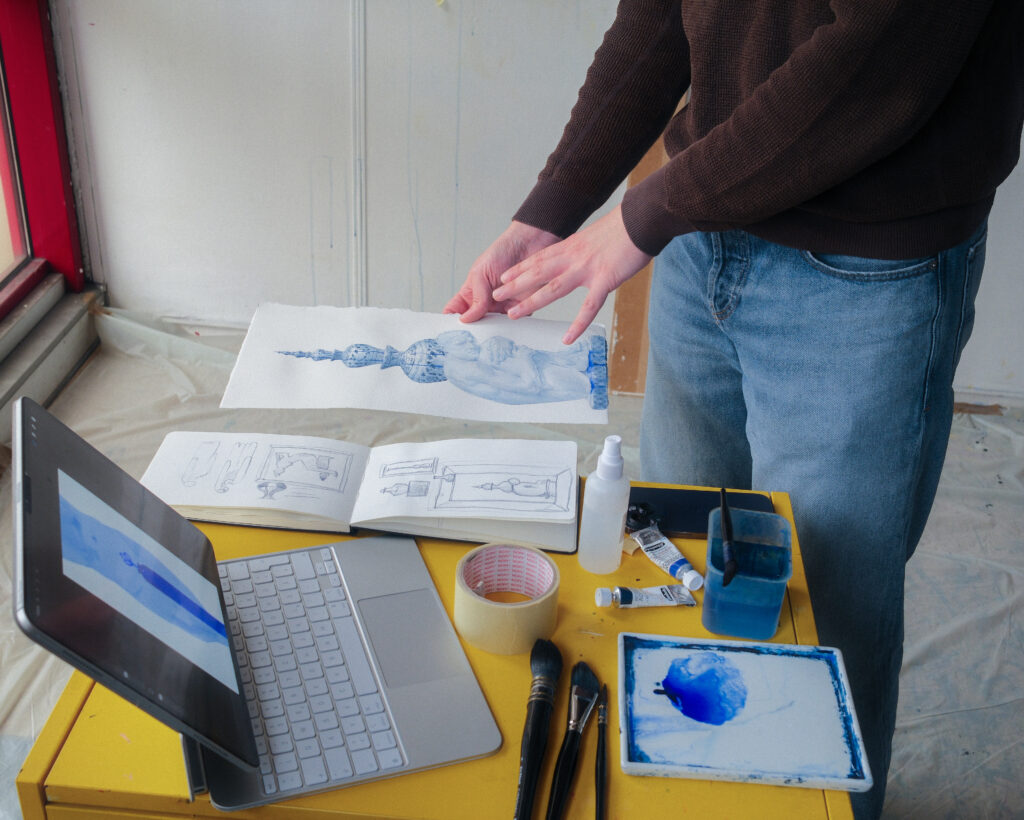
“There was a lack of love in the household which made it very hard for me to open up to people,” he says.
At the same time, he became interested in documenting his creative process. While still a teenager, he began filming himself painting and posting videos online. The combination of painting and filmmaking became an important part of his creative identity and eventually evolved into the multidisciplinary practice he maintains today.
Although painting had always been a significant part of his life, Gegaj did not initially plan on becoming a professional artist. That changed during a particularly difficult period around 2022.
His parents had gone through a difficult divorce, the pandemic had intensified feelings of isolation, and he found himself struggling with depression and uncertainty about the future. At the time, painting was less about artistic ambition and more about coping with daily life.
During this period, he visited an art supply store looking for inspiration. While browsing materials, he found himself drawn to a single indigo blue pigment. He purchased it, returned home, and created a deeply personal artwork that reflected emotions he had rarely shared publicly.
He filmed the process, posted it online, and went to sleep.
When he woke up the next morning, the response was unlike anything he had experienced before. The artwork had reached thousands of people, generating comments, messages, and purchase inquiries. His social media following grew dramatically within days.
“I thought it was a glitch,” he recalls.
The experience became a turning point in his career. More importantly, it showed him that the emotions he had been hesitant to share were resonating with others. From that moment forward, he began taking his work more seriously and pursuing art professionally.
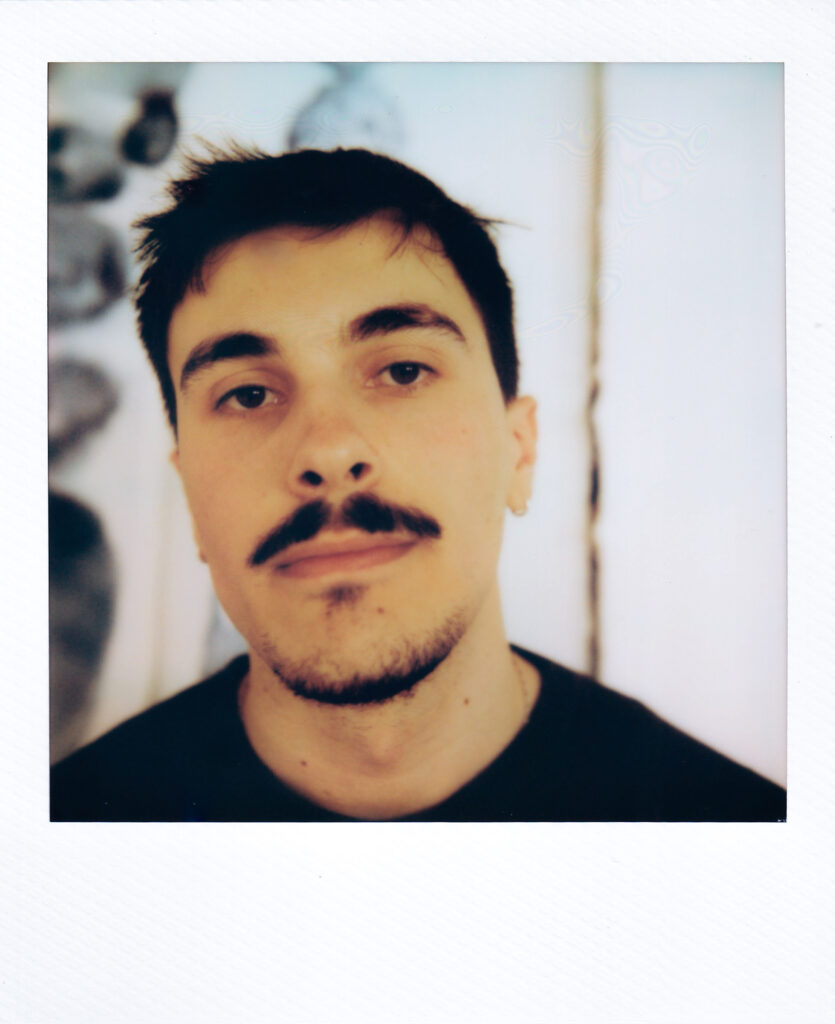
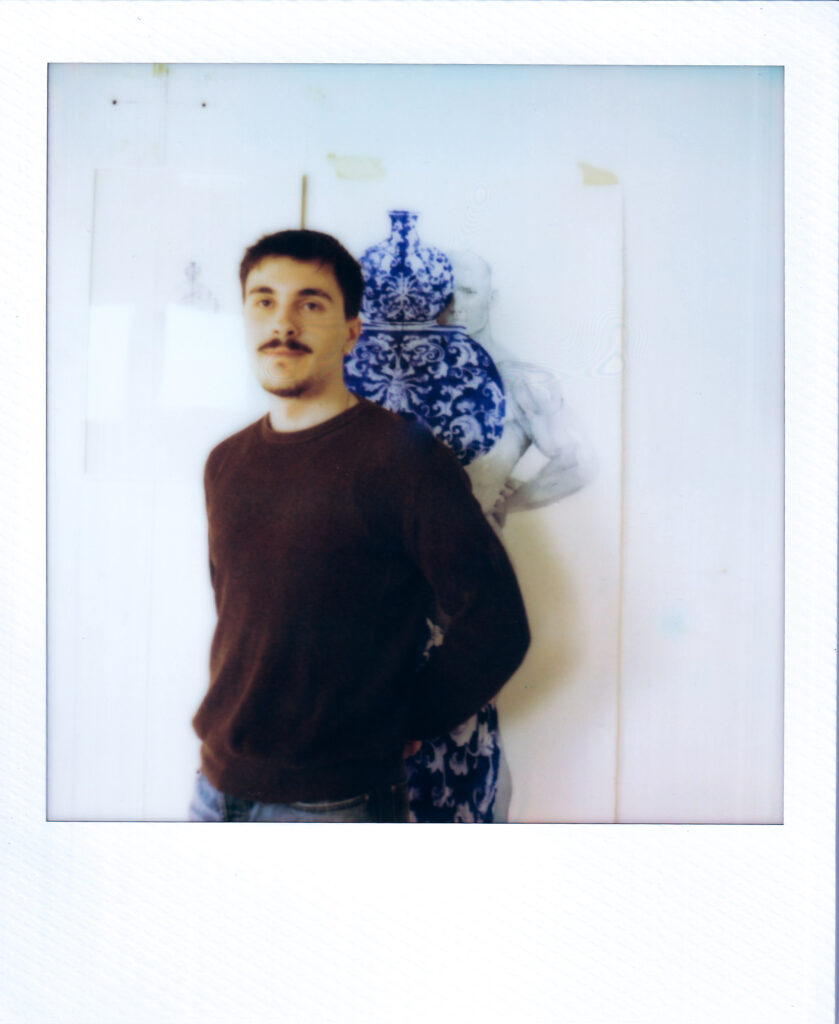
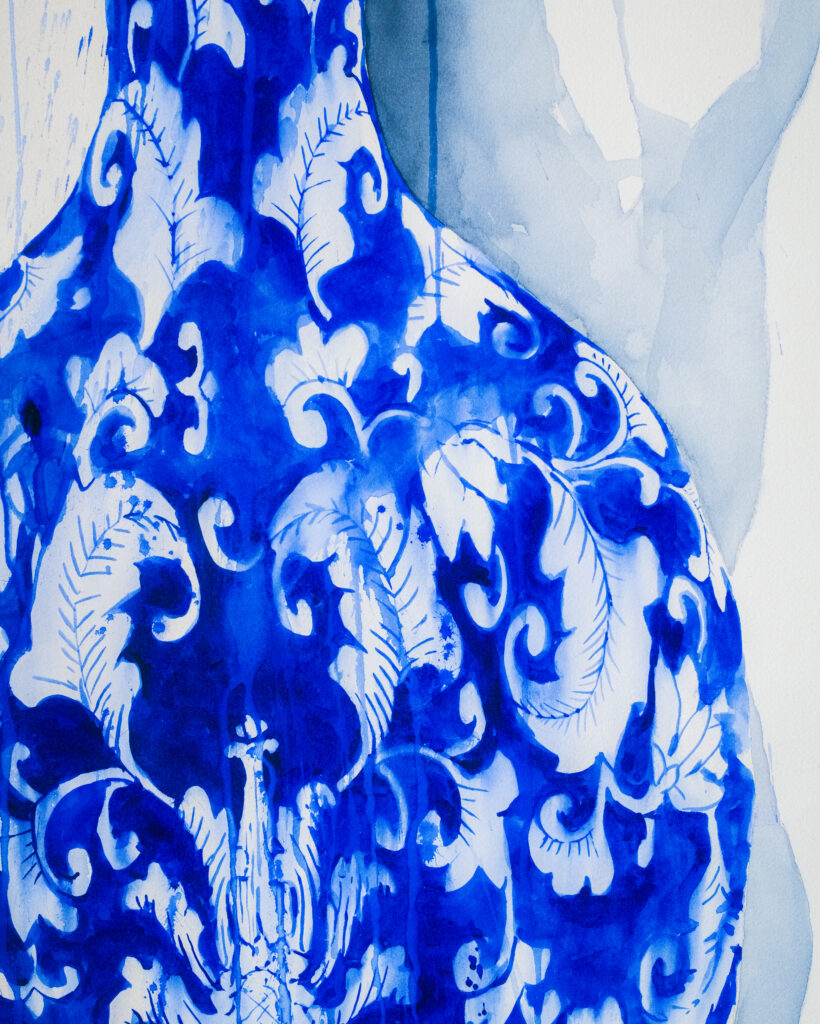
One of the most recognizable aspects of Gegaj’s practice is his limited use of color. Much of his work revolves around indigo and ultramarine blue, with subtle variations in opacity, layering, and texture creating a wide emotional range.
Rather than seeing limitations as restrictive, he embraces them as creative opportunities. By working within a narrow palette, he challenges himself to communicate complex emotions through small shifts in tone and composition.
His use of color is also deeply personal. As different experiences shaped his life, they began to influence the colors appearing in his work. He notes that introducing ultramarine into his paintings coincided with becoming more open about his identity and personal experiences.
“When I outed myself to my parents two years ago, I started introducing a new hue of blue.”
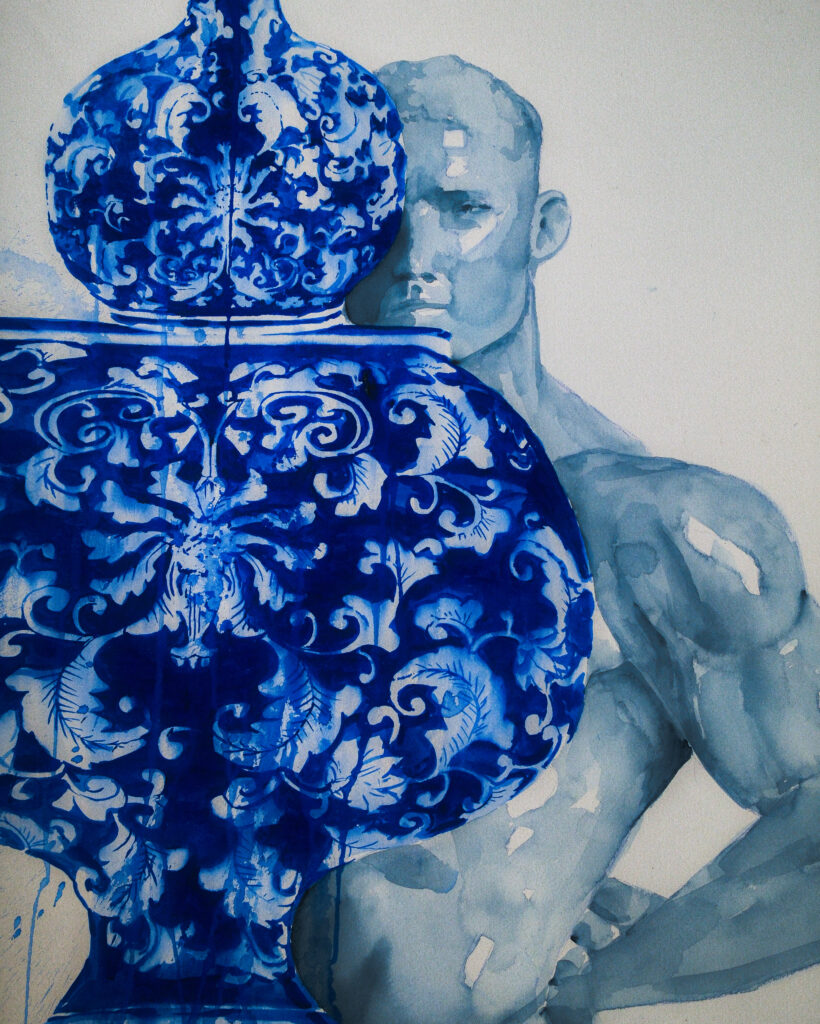
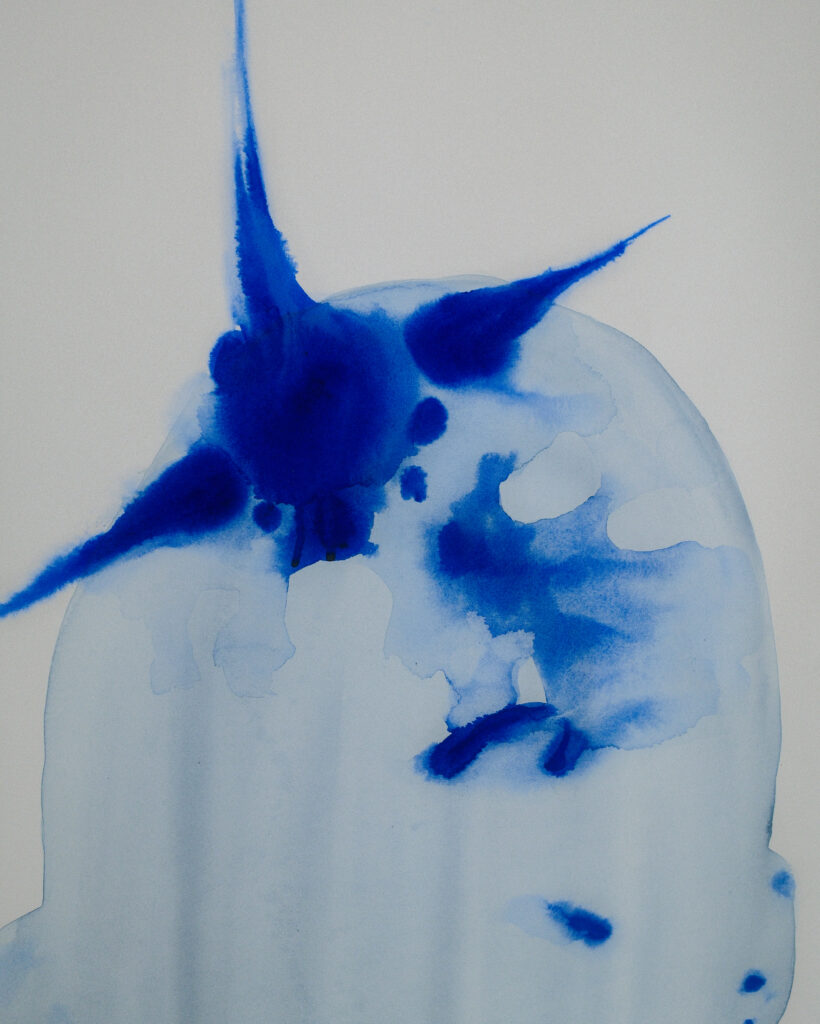
For Gegaj, colors function almost like emotional records, documenting moments of growth, vulnerability, and self-discovery.
His paintings also feature recurring symbols, particularly vases, flowers, and fragmented figures. These motifs developed gradually through years of studio practice and personal reflection.
The vase, in particular, has become one of the central symbols in his work. He began exploring the form extensively during a residency in Virginia, where distance from home prompted reflections on family, heritage, and belonging.
“It stands for the core of our home where we feel safe.”
The object serves as both a physical and symbolic structure. It represents stability, protection, memory, and the idea of carrying one’s history through life. In many paintings, the vase partially obscures or interacts with human figures, creating visual conversations about identity and the ways people are shaped by their environments.
Throughout his work, Gegaj frequently explores contrasts that exist simultaneously rather than in opposition. Love and pain, vulnerability and strength, isolation and connection all appear together. He is interested in the ways seemingly contradictory experiences coexist within a person’s life.
This perspective also informs his technical process. Rather than correcting every drip or unexpected mark, he often incorporates them into the finished piece. Water is allowed to leave evidence of its movement across the paper, creating textures and forms that could never be fully planned.
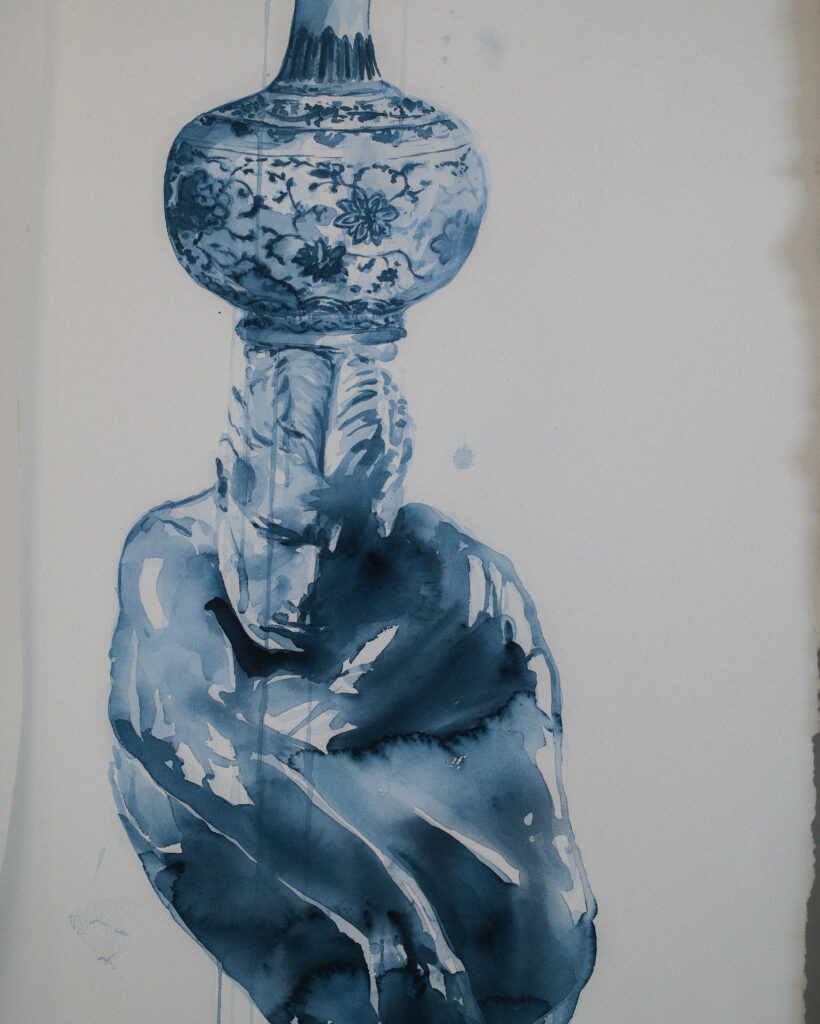
His recent work has expanded beyond painting alone. He has begun researching watercolor pigments, learning how historical watercolor materials were produced, and even creating his own paint from natural indigo pigments. This research reflects his growing interest in understanding the medium not only as an artist but also as a material with its own history and physical properties.
Despite his growing success, Gegaj remains focused on artistic development rather than external milestones. He encourages emerging artists to concentrate on building strong creative foundations rather than chasing opportunities too early.
He believes that studying art, reading criticism, engaging with other artists, and regularly evaluating one’s own work are all essential parts of growth.
“It’s so important to really focus on your work and produce valuable work.”
For Dominik Gegaj, painting continues to serve the same purpose it always has. It is a way of understanding experience, navigating uncertainty, and communicating ideas that are difficult to express through words alone. Through watercolor, he has built a practice that transforms personal history into images that speak to broader questions of identity, belonging, and human connection.
About the Author
Sam Burke is an American artist and writer based in New York City. Working across film, performance, and writing exploring storytelling, identity, and place. As co-founder of Timestamp, Burke interviews artists, shares insights, and highlights conversations shaping art world today.
Stéphane Koyama-Meyer
French visual artist and designer based near Basel, Stéphane Koyama-Meyer grew up surrounded by art,…
Yuval Bezalel
For Yuval Bezalel, painting begins with the hands, before there is a narrative, before there…
Adèle Aproh
For Adèle Aproh, drawing began long before she knew it could become a career. Her…
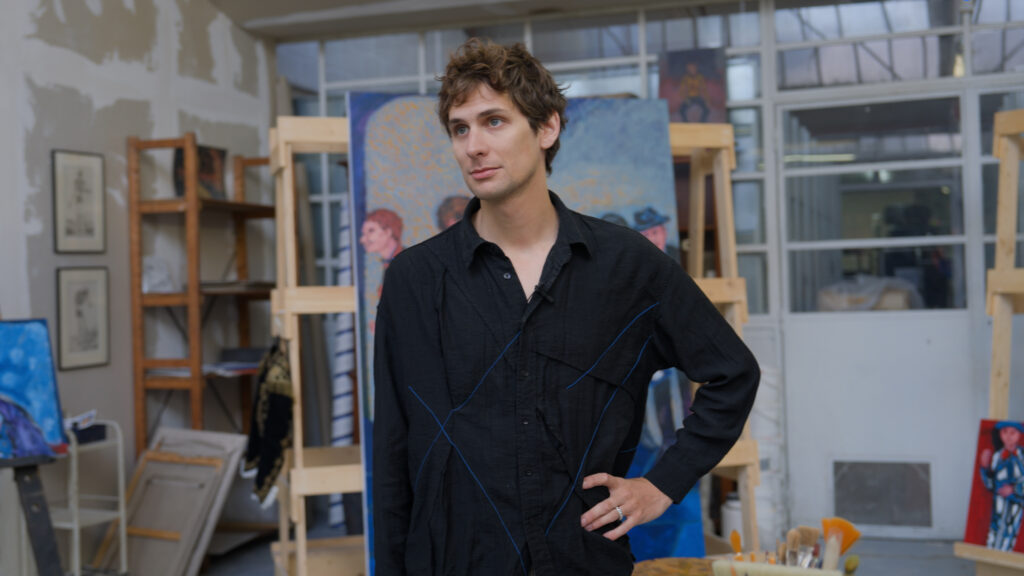
Félix Deschamps Mak
Félix Deschamps Mak is a French painter based in Paris, working in large scale figurative…
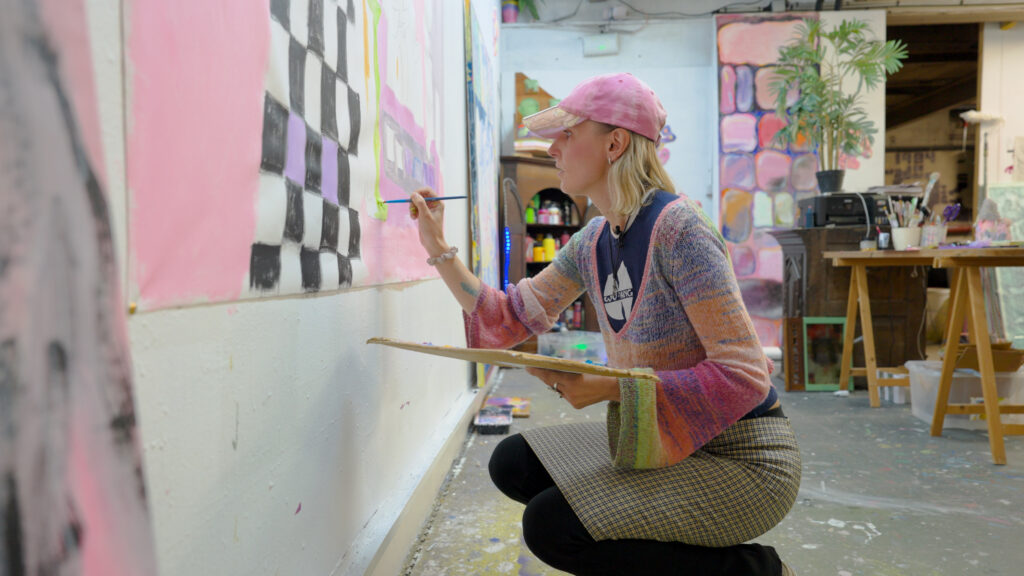
Katya Quel
Katya Quel is an artist and multidisciplinary creator, born and raised in Moscow, who now…
Why Dia Beacon Deserves a Full Day of Your Attention
There are museums you visit to check a box. And there are museums that quietly…