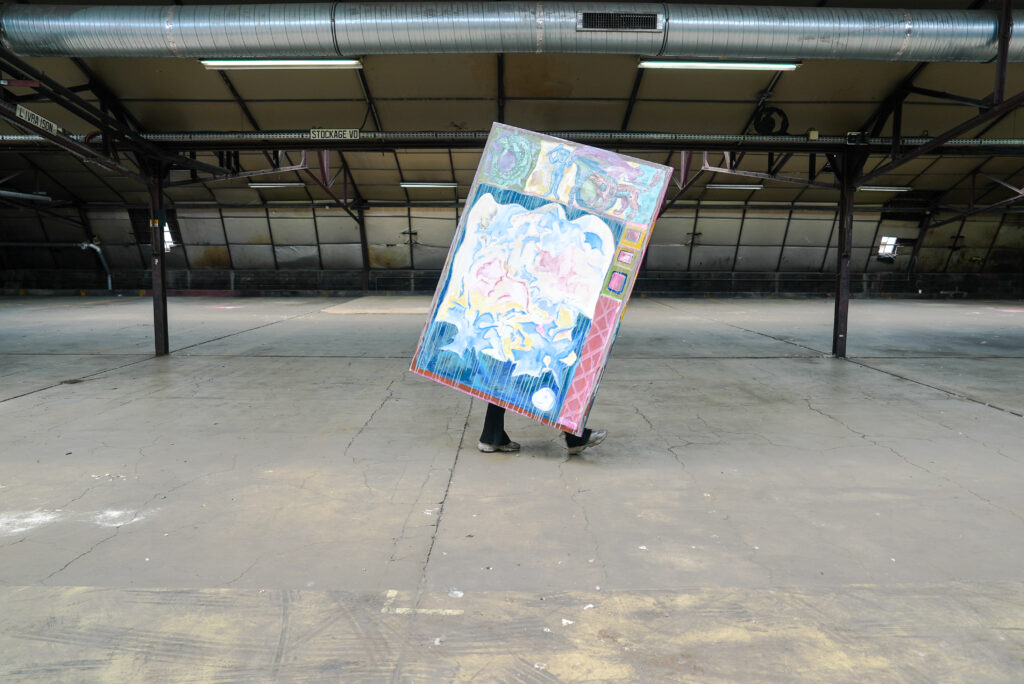
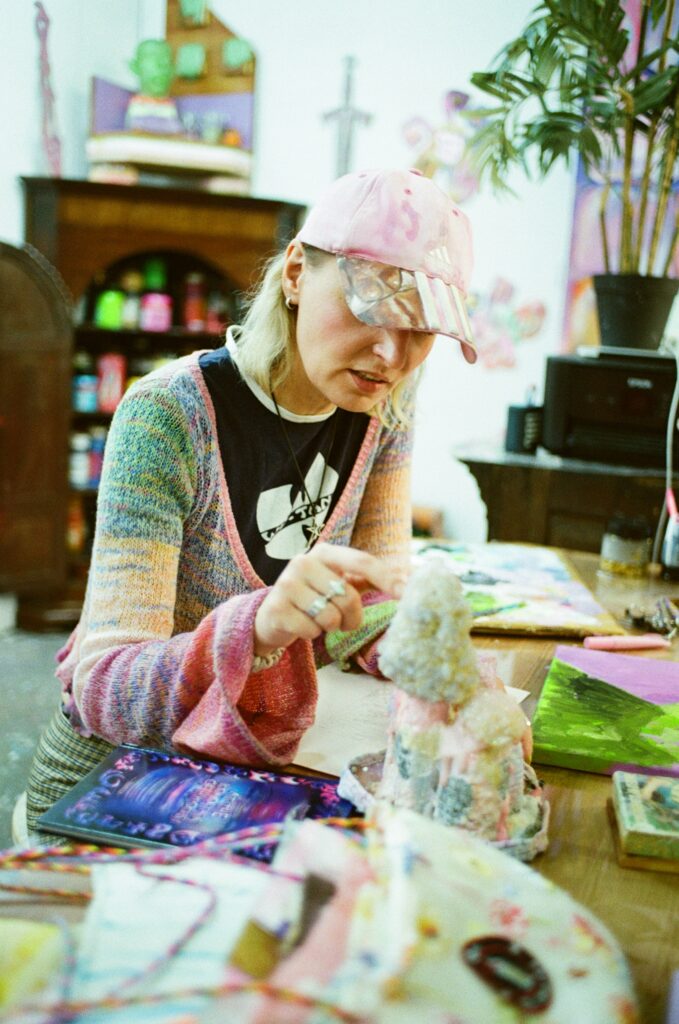
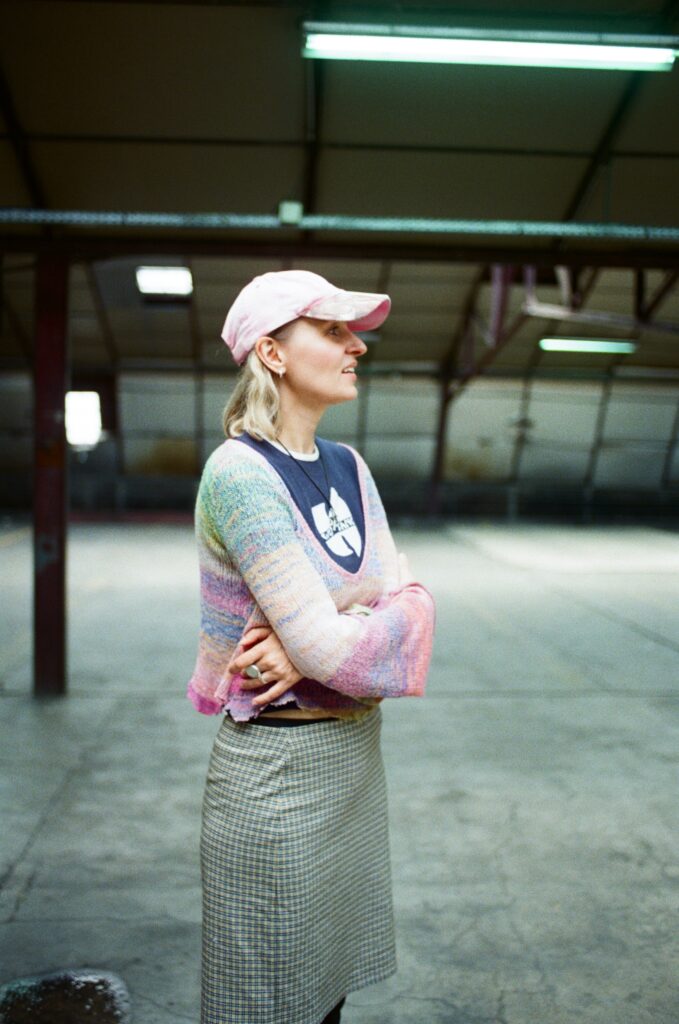
Katya Quel is an artist and multidisciplinary creator, born and raised in Moscow, who now lives and works in Paris after roughly a decade based in Germany. Working across painting, sculpture, and installation, she builds elaborate fictional worlds populated by trolls, elves, witches, castles, and imagined creatures, a body of work she describes, without much hesitation, as an attempt to become a little bit like a god.
Quel grew up in a creative household; both of her parents studied illustration and worked as young artists before eventually shifting careers into restoration and antiques. She’s clear that watching them make contemporary work while she was a child left a lasting imprint on her, even after their own practices changed direction. As a teenager, while her peers were gravitating toward extreme sports or other identity-forming hobbies, she found graffiti, which she remembers as the most genuinely creative outlet available among the kids around her. She started by simply spending time with older graffiti writers, eventually buying her own spray cans and making pieces of her own. That entry point led her into graphic design, which she studied and then worked in professionally for around ten years. It wasn’t, by her own account, a natural fit. Being an artist wasn’t really treated as a viable profession in Russia at the time, so graphic design became the practical path, steady work, but not real creative expression. She describes the period plainly. She never felt happy doing it, and it never opened up the kind of creativity she actually wanted.
What she wanted, instead, was to build worlds and stage exhibitions. She spent years visiting museums and following the work of artists abroad who were making expressive, materially adventurous work, pieces built from readymades, bright colors, and unconventional combinations of material that she simply wasn’t encountering in Russia at the time. That gap between what she was seeing abroad and what felt possible at home pushed her to start looking at art schools across Europe, this time with the explicit goal of studying as an artist rather than a designer. She eventually found a school in Berlin whose studios impressed her enough, that she committed to the move. She spent a year learning German before applying, was accepted, and relocated to Germany to remake her career from the ground up. She frames the decision in almost fated terms, like following an inner voice or a guiding star that told her clearly this was the right switch to make, and everything about the transition, she says, fell into place with unusual smoothness.
In Berlin, her sense of what it meant to be an artist expanded beyond her own individual practice. She found herself organizing exhibitions and running a hybrid studio-and-exhibition space, inviting other artists whose imaginative worlds felt aligned with her own. That instinct toward collective world-building has stayed central to how she understands her career, not simply producing her own images, but contributing to and helping assemble a broader shared aesthetic with the people around her. She sees this as consistent with a much older pattern in art history, where groups of artists working in loose community eventually coalesce into something later recognized and named as a movement. She’s candid that whatever she and her contemporaries are building together doesn’t yet have a name, but she’s confident there is something coherent forming, and she’s genuinely curious to see how it will eventually be defined and what the next generation will bring to it.
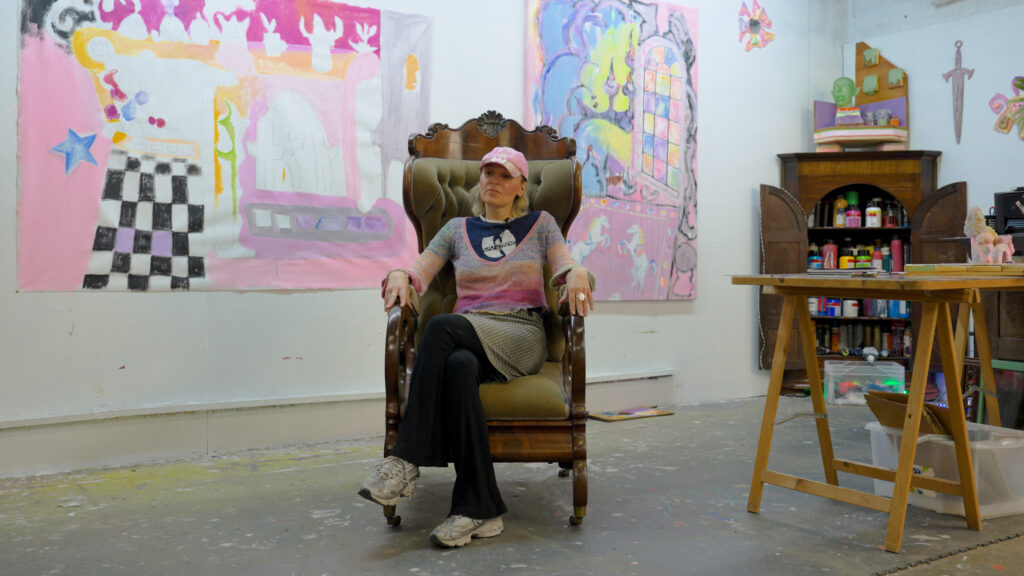
That refusal to settle into one fixed style is a deliberate part of her method. She describes her practice as continuously layered: new materials, new artists, new details folded in, with each addition thickening an ongoing, evolving body of work rather than replacing what came before. Her stated motivation on Instagram, which she treats as a genuine personal creed, is the phrase “switching realities, imagining tales,” and she considers it the clearest possible summary of her approach: everything she makes carries a story, a narrative, sometimes conceived for a single object and sometimes for an entire exhibition. She traces this instinct back to childhood, comparing it to the way children narrate elaborate backstories while drawing a single character, and she admits she’s never really outgrown that impulse. A small vitrine might hold a miniature castle; a larger gallery might expand that same imagined universe into a full-scale castle complete with inhabitants and creatures, scaled up or down depending entirely on the space available to her.
Fable and folklore sit underneath this world-building directly. She grew up reading Russian fairy tales and mythology, absorbing a tradition in which animal or fantastical characters undergo some transformation that resolves into a clear moral, “a butterfly that flies too close to the fire and burns its wings,” to use her own example. Her exhibitions are built the same way, every fictional world she constructs carries an embedded critique of something in contemporary society that troubles her, whether that’s overconsumption, fast fashion, or political manipulation. One project she describes involves a kingdom of flowers holding an election, with two oversized, more powerful flowers competing for votes, one of them literally toxic, releasing an intoxicating scent that draws in and eventually controls the smaller flower-citizens around it. She’s direct about the intent: it’s a stand-in for how propaganda spreads through media, drawing people toward figures or ideas that end up controlling them, dressed in the language of a children’s fable rather than direct political commentary.
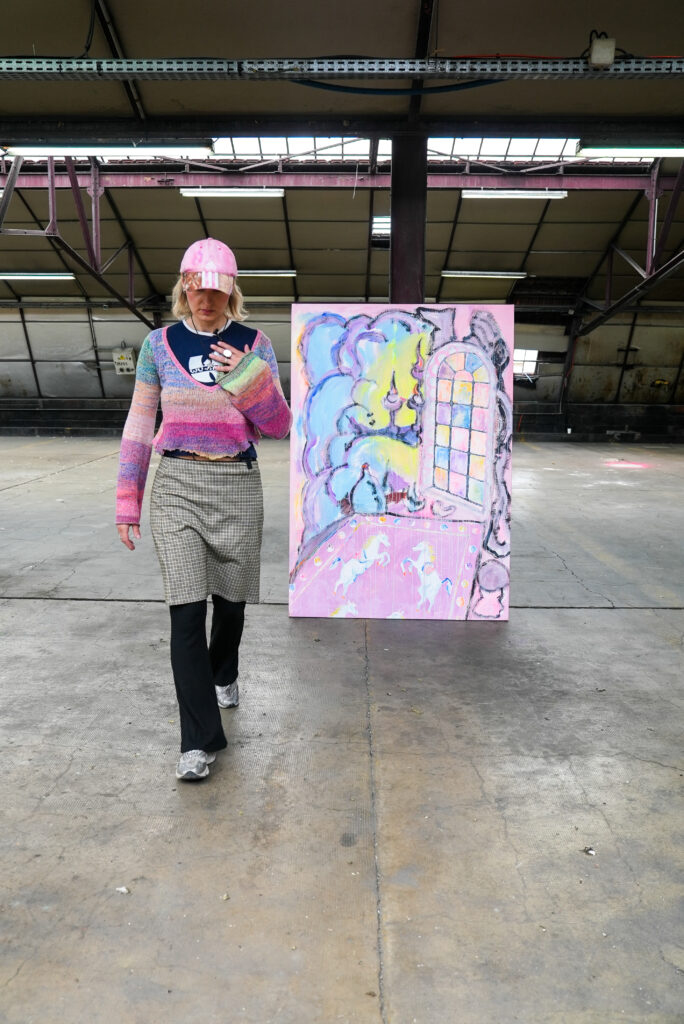
Fantasy fiction feeds this same tendency. As a child, she preferred books to films specifically because reading let her construct the visual world herself rather than having it handed to her already finished, and she sees that early habit as one of the real roots of her decision to become an artist, an ongoing attempt to pull the imagery she built privately as a child and teenager reading fantasy novels out into physical, tangible reality. That’s the source, she explains, of the recurring vocabulary in her work: swords, castles, trolls, elves, witches, and various invented creatures. She avoids depicting recognizable human figures almost entirely, because her work is never meant to represent this world directly, it belongs to a parallel or alternate reality, populated accordingly.
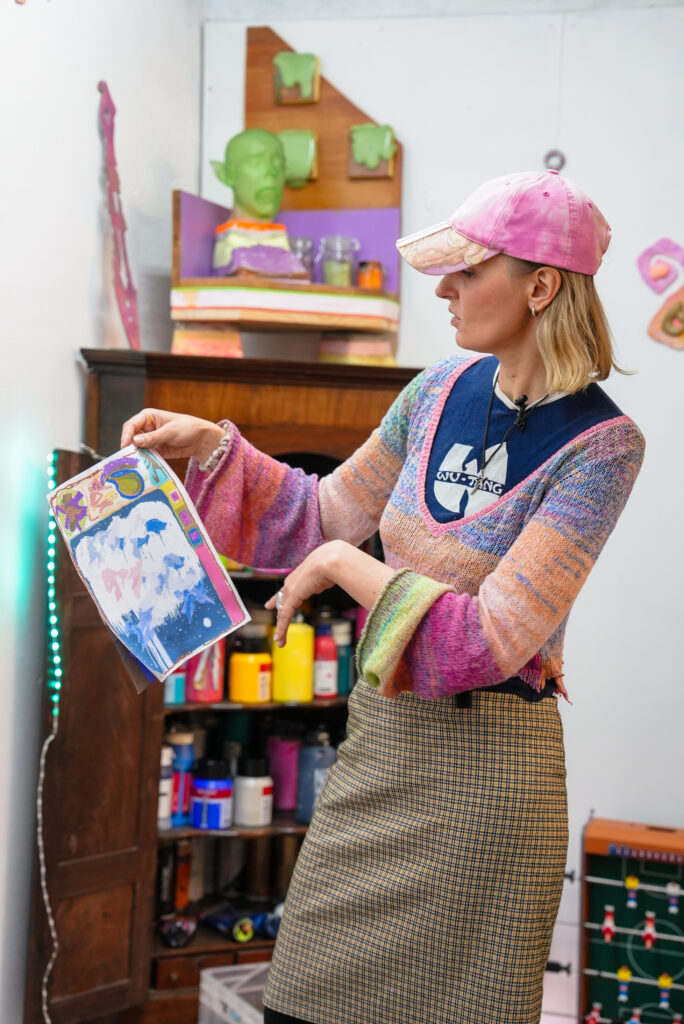
Material choice follows the same logic of otherworldliness. She’s drawn specifically to substances that evoke slime: foams, silicone, epoxy resin – treating them almost as a physical stand-in for the strange, liquid, shape-shifting textures she associates with a fantastical universe. She’s used actual slime as a medium in its own right, including in workshops with both children and adults, sometimes letting it dry into a finished form and sometimes using it more performatively during a session. The choice isn’t incidental texture, it’s continuous with the same “other worldly” quality she’s chasing everywhere else in her practice.
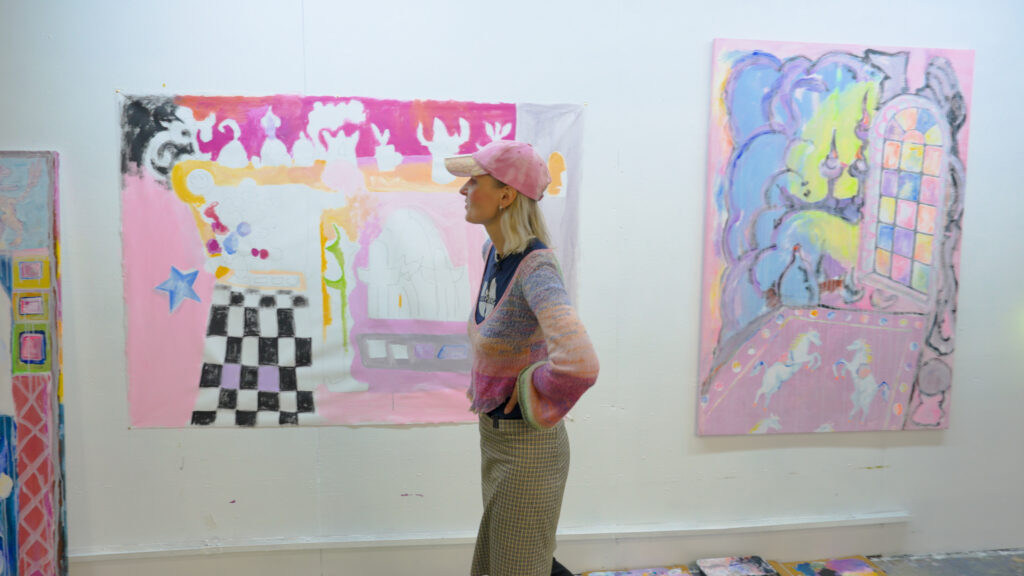
Quel is forthright about the financial precarity that runs alongside this kind of practice. She describes losing a previous studio and having to scramble for a replacement, eventually finding a small room, secured through family connections, where she still makes her sculptural work today. But she’s equally clear that stepping away entirely was never really on the table. She had already made one difficult professional pivot once already, walking away from a decade of graphic design work at nearly thirty to commit to art full time and she has no intention of reversing that decision. Because paintings, unlike sculpture or installation, generate more dependable income, she’s leaned into producing more of them deliberately and strategically. Her rough calculation is that making around six paintings a month means at least one is likely to sell, enough to cover a given stretch of expenses. Sculpture and installation, by contrast, tend to survive project to project, funded through grants and applications rather than steady sales. So far, she says, she hasn’t had to go back to a conventional job, though she’s honest that the broader art market has been softening and that she keeps her prices accessible in order to keep finding buyers.
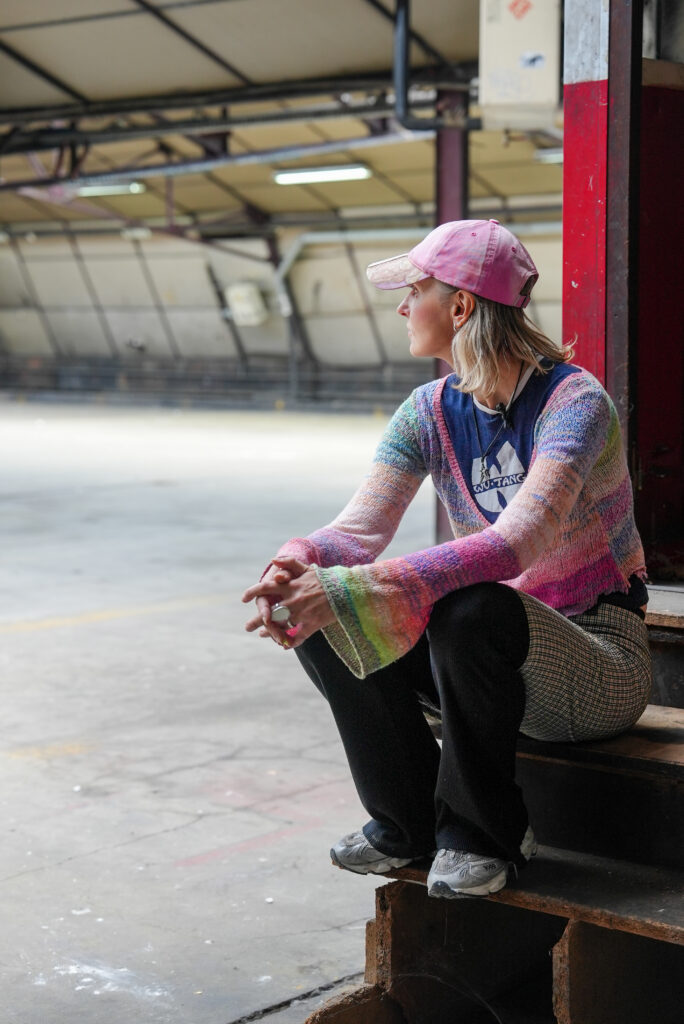
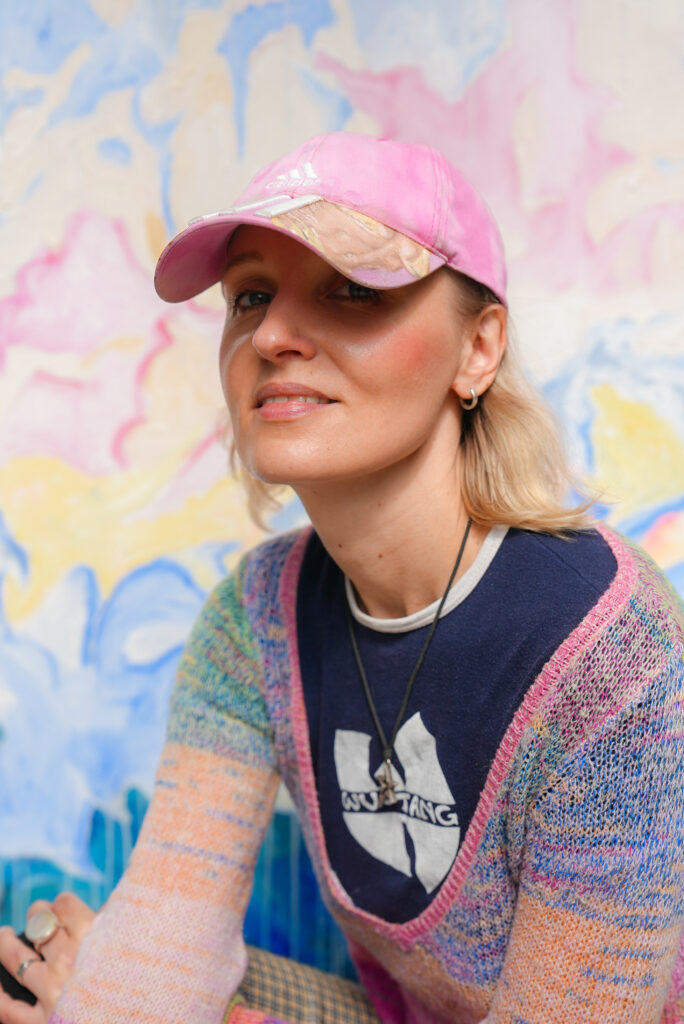
Her philosophy toward setbacks mirrors the same instinct that got her here in the first place; a kind of steady, self-directed faith rather than external validation. She describes failure as an inevitable, even necessary part of the process, arguing that difficulties tend to reveal their purpose only in hindsight, sometimes years later, once you can see how an apparent setback actually redirected you toward something better. Her advice to anyone starting out is blunt: don’t be afraid of failing, and be wary of taking too much advice from people, parents included, who might discourage a path simply because it doesn’t match their own expectations. If the work comes from genuine passion rather than a calculation about money or success, she believes it eventually finds its way regardless. “I believe in my star,” she says, framing that belief less as naive optimism than as the operating principle that has carried her through two full career changes and without ever considering turning back.
What comes through across Quel’s account isn’t a single fixed vision so much as an ongoing, expanding mythology, one she keeps deliberately unfinished, adding new materials, new collaborators, and new fables as it grows, still uncertain what it will eventually be called, but confident that it’s building toward something recognizable in time.
About the Author:
Sam Burke is an American artist, filmmaker and writer based in New York City. Working across film, performance, and writing exploring storytelling, identity, and place. As founder of Timestamp, Burke interviews artists, shares insights, and highlights conversations shaping art world today.
Stéphane Koyama-Meyer
French visual artist and designer based near Basel, Stéphane Koyama-Meyer grew up surrounded by art,…
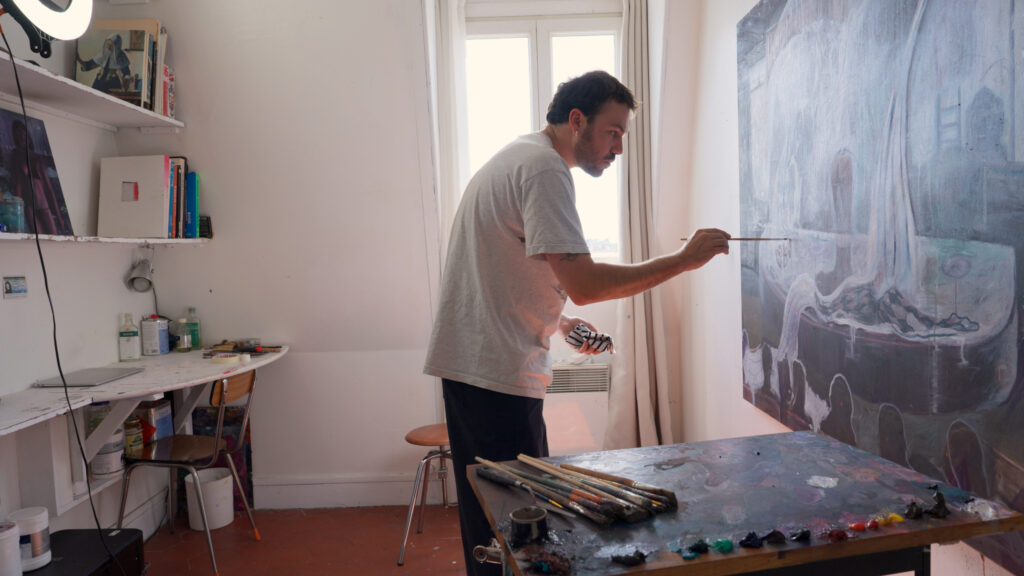
Yuval Bezalel
For Yuval Bezalel, painting begins with the hands, before there is a narrative, before there…
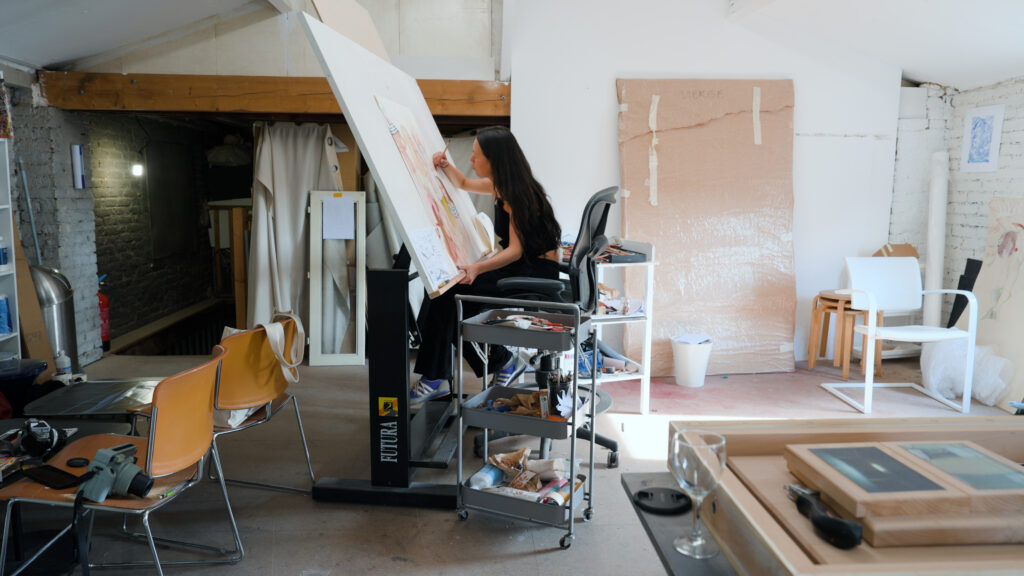
Adèle Aproh
For Adèle Aproh, drawing began long before she knew it could become a career. Her…
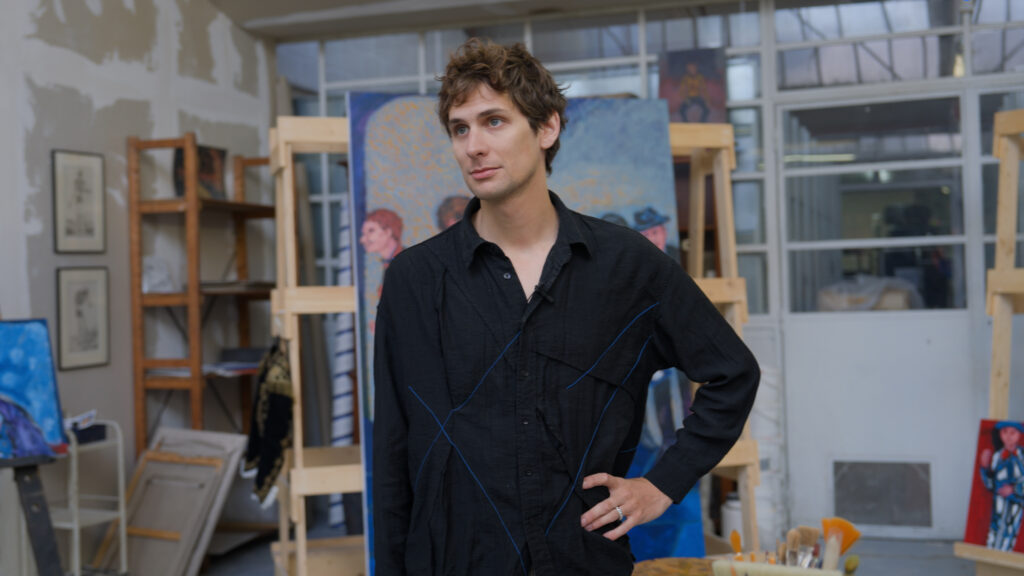
Félix Deschamps Mak
Félix Deschamps Mak is a French painter based in Paris, working in large scale figurative…
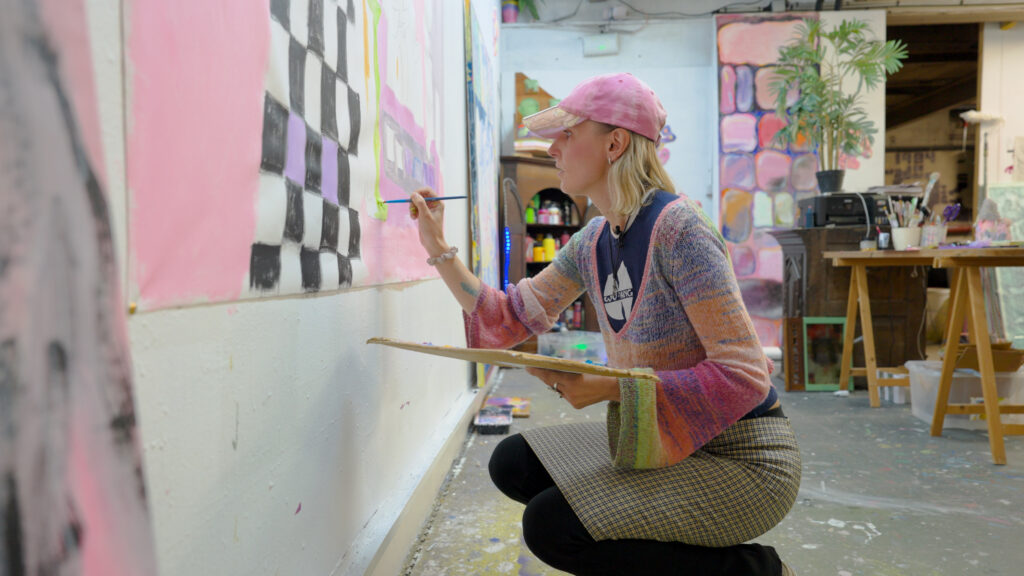
Katya Quel
Katya Quel is an artist and multidisciplinary creator, born and raised in Moscow, who now…
Why Dia Beacon Deserves a Full Day of Your Attention
There are museums you visit to check a box. And there are museums that quietly…