
Félix Deschamps Mak is a French painter based in Paris, working in large scale figurative compositions that draw from an unusually wide net of sources: photographic archives, opera, cinema, literature, street observation, found objects. His paintings tend to gather soldiers, boxers, matadors, children, animals, and unnamed figures into the same ambiguous space, staged with the psychological charge of a scene from a play whose script has gone missing. A soldier might be dressed in pink, a matador stands beside a stranger who has no business being in the same room, a black cat crosses a composition carrying both luck and misfortune depending on which tradition you believe in.
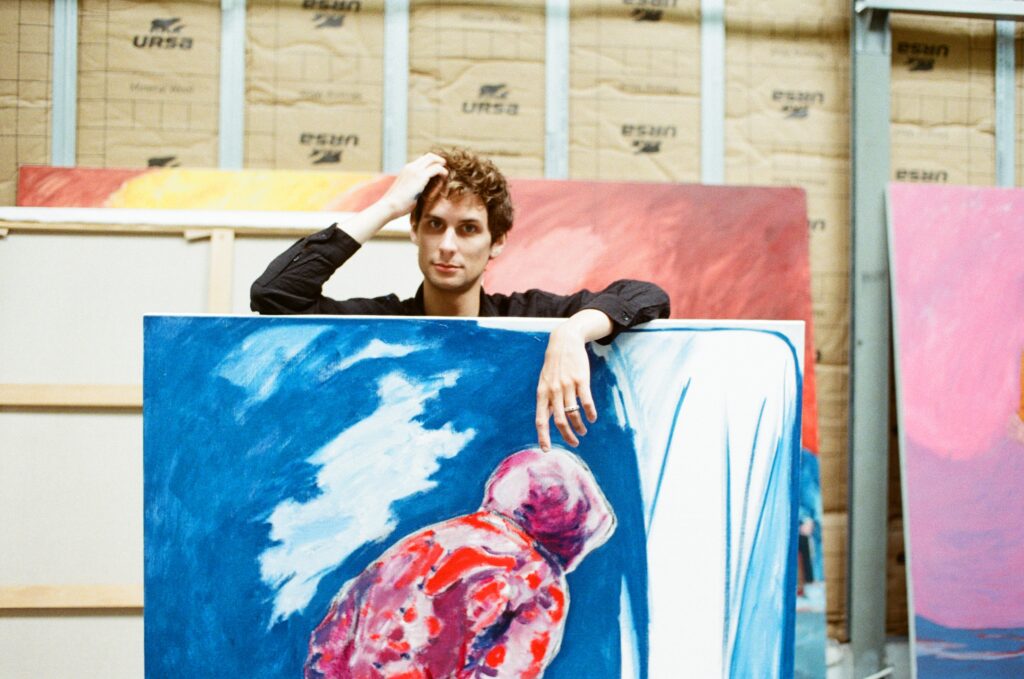
The comparison to theater isn’t incidental. He grew up around it directly, immersed in his family’s work in opera and stage design, absorbing costume, performance, and constructed narrative as ordinary features of daily life long before he had any conscious ambition to make images himself. Nothing in a Deschamps Mak painting explains itself, and that, as he sees it, is the entire point. “You don’t know if the action is real or unreal,” he says. “Is it a dream or is it true?”
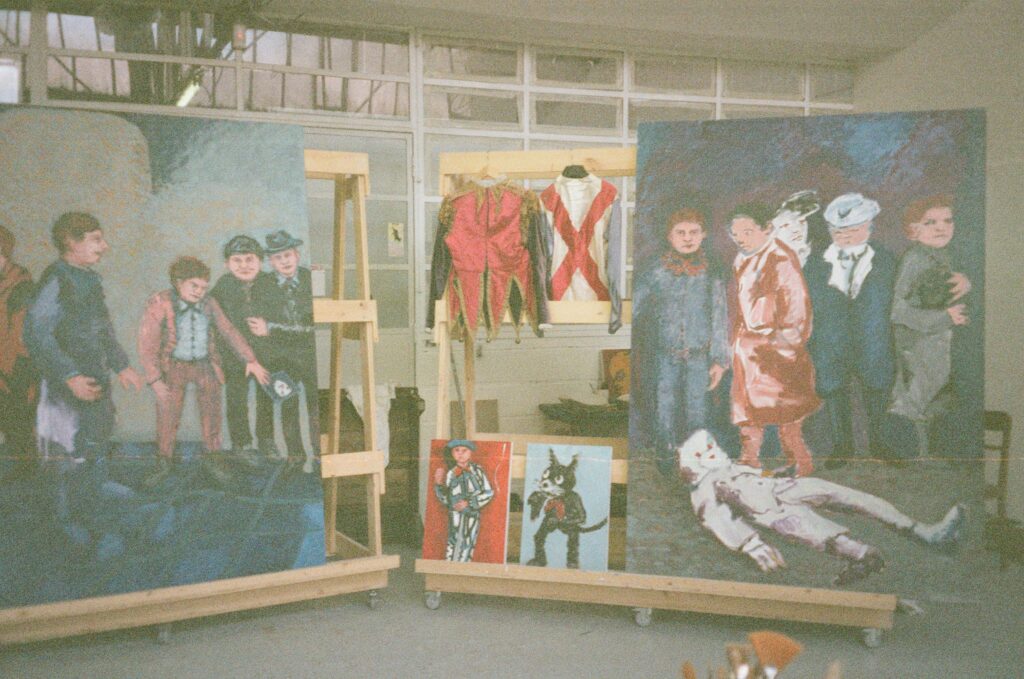
His actual entry into image making came from somewhere else entirely, graffiti, which gave him his first real practice of putting marks into the world. But painting is what eventually became indispensable. He’s careful with his language, “It’s not a hobby. It’s necessary for me. It’s very important.” What makes painting fit him in particular, he explains, is almost the inverse of everything theater represents. Theater is collaborative, built from other people’s bodies and voices and timing. Painting is solitary. “Painting is kind of perfect for me,” he says, “it’s a work with your solitude… it’s kind of the opposite of the theater.” Having grown up surrounded by a family art form built on performance and collective construction, he found his own footing in the opposite condition: a room, alone, working something out without an audience watching it happen in real time.
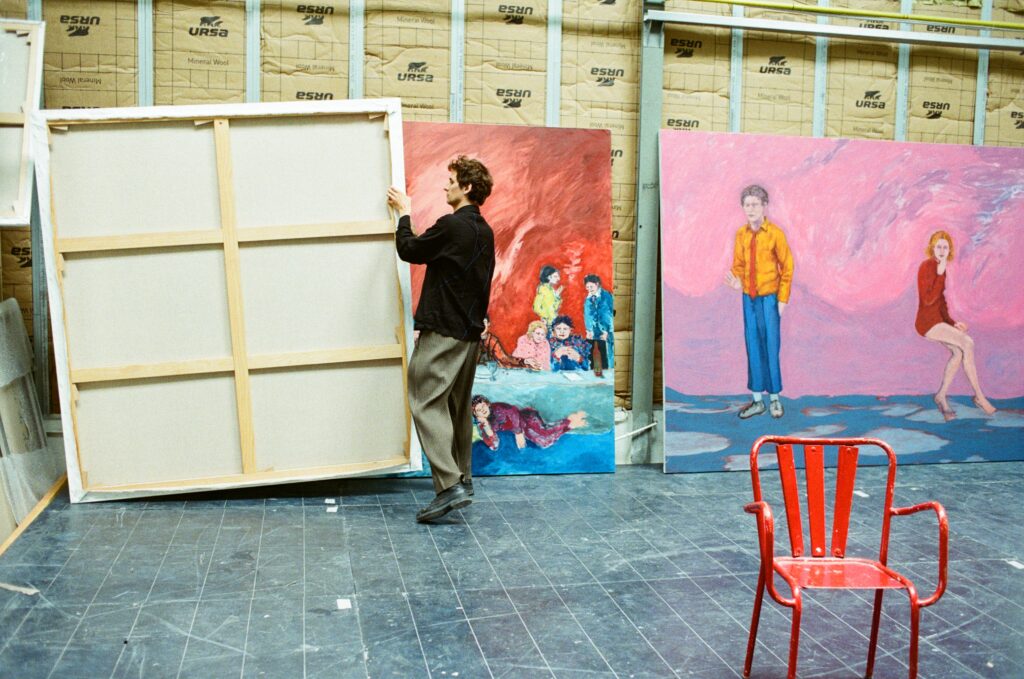
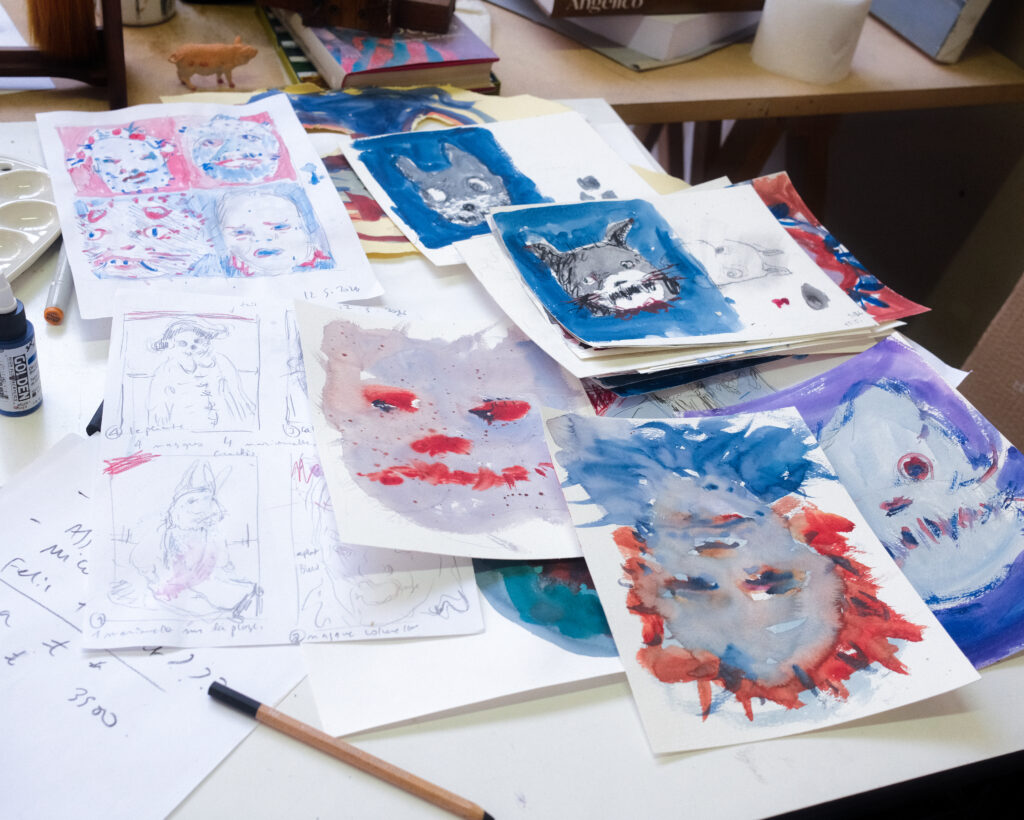
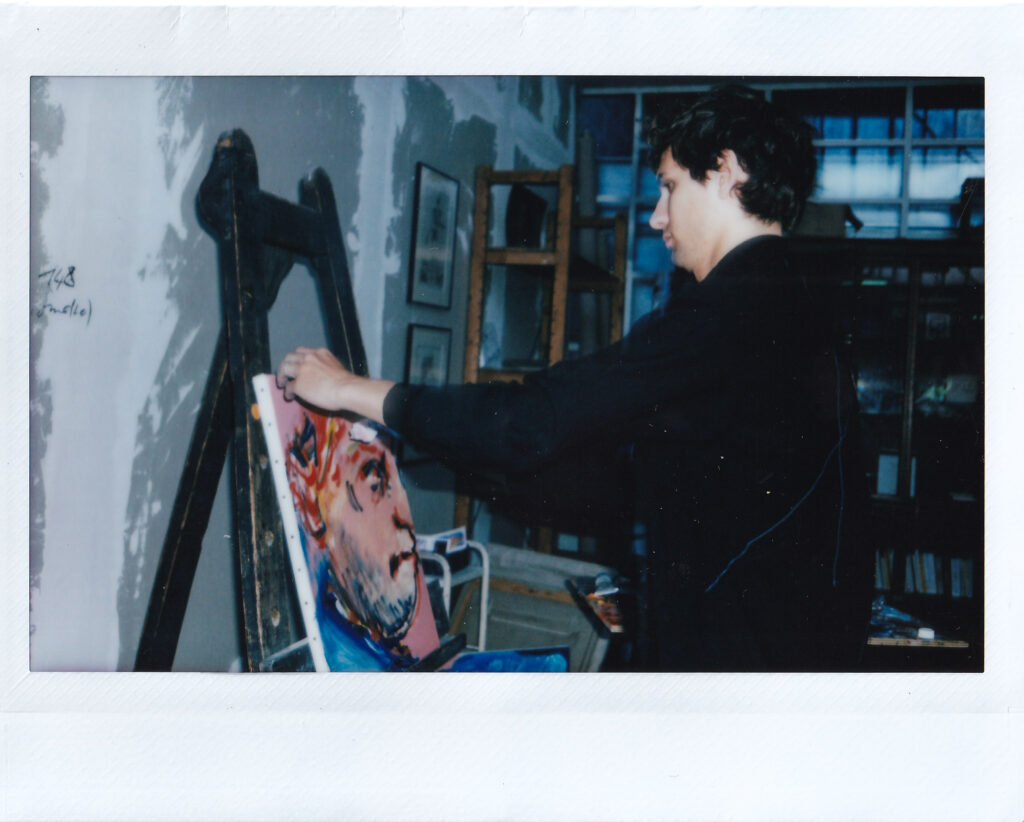
That solitude doesn’t translate into control, though. If anything, Deschamps Mak treats control as beside the point. “Painting is not so conceptual,” he says. “It’s very about doing things, failing, making mistakes… experimentation all the time. It’s chemical, painting for me.” The phrase is worth sitting with, chemical, not conceptual, it says something specific about how he thinks a painting actually comes into being. Not through a fixed plan executed faithfully, but through reactions, accidents, and unstable combinations that produce results no one could have fully predicted going in. His process reflects that instability. He works through charcoal, moves into watercolor studies, and pulls from photographic fragments, but never from a single photograph he’s trying to reproduce. “I never focus on one image,” he says. “I catch some details of many photos at the same time.” A finished composition is less a transcription of any one source than a collision of many, revised and rebuilt across countless passes until something emerges that none of the individual references could have predicted on their own.
Watercolor holds a specific, almost disciplinary place in that process. Unlike oil, which allows endless correction, watercolor punishes hesitation and rewards honesty of gesture. As Deschamps Mak puts it plainly, “you cannot lie with watercolor.” It functions as a kind of truth telling exercise inside a larger practice otherwise defined by revision, a place where a mistake can’t simply be painted over and pretended away.
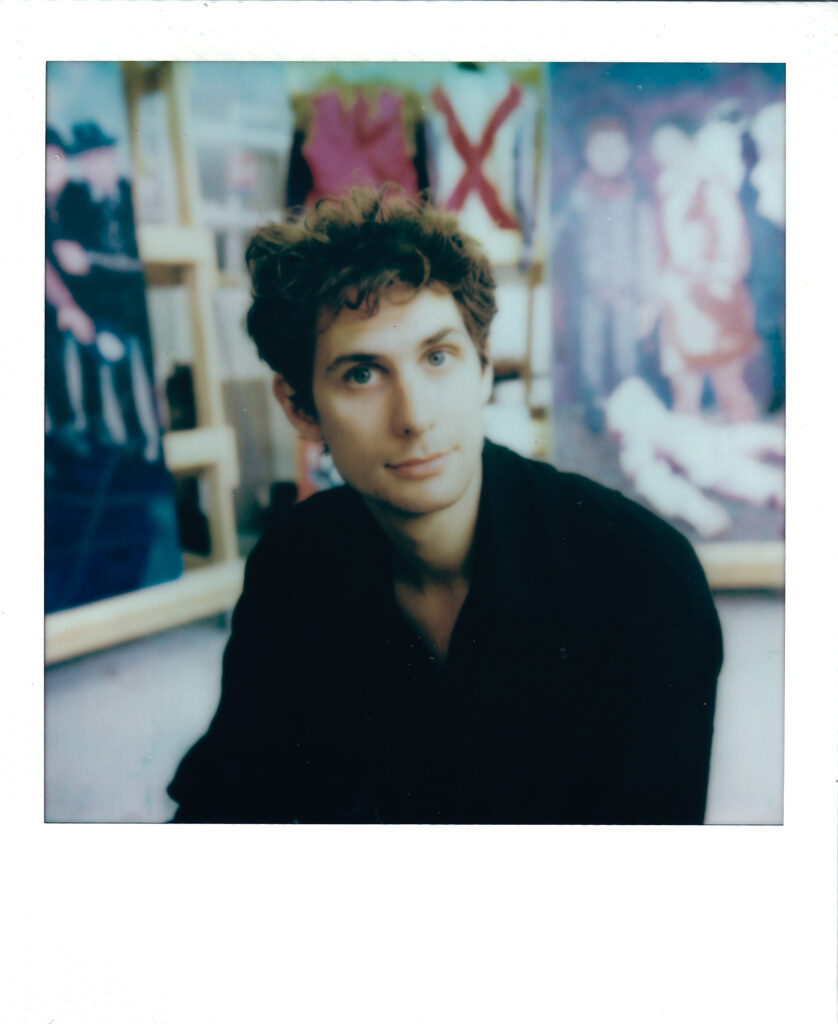
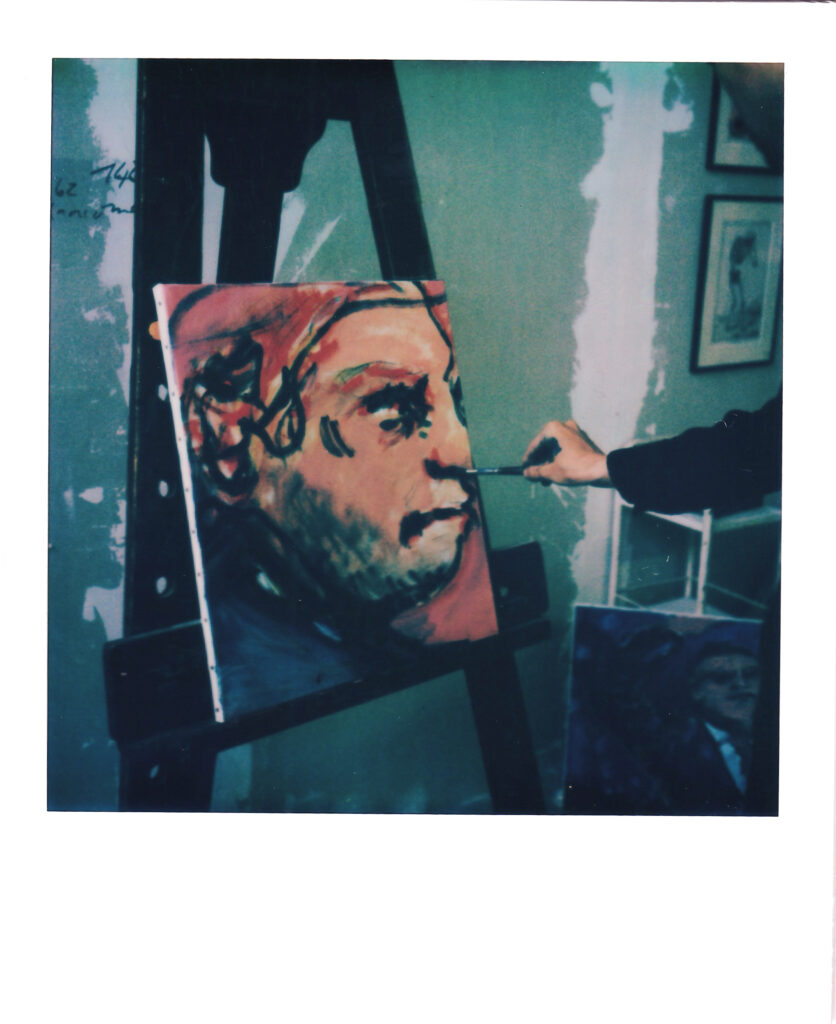
What holds all of this together conceptually is tension, not as a subject he paints, but as a method he paints with. He deliberately withholds the connective tissue that would let a viewer resolve a scene into a single coherent narrative. “Conflict is a good word,” he says. “I like this tension.” A soldier in an impossible color, a matador standing next to someone who clearly belongs to an entirely different world, figures who share a canvas without any evident reason to be together. “You don’t really know why they are together,” he says, and he means that as a description of the finished painting’s success, not a flaw in it. The ambiguity is structural. He’s not interested in illustrating a story that already exists in his head; he’s interested in staging a moment tense enough that a viewer has to supply their own explanation, and then live with the discomfort of not being sure it’s the right one.
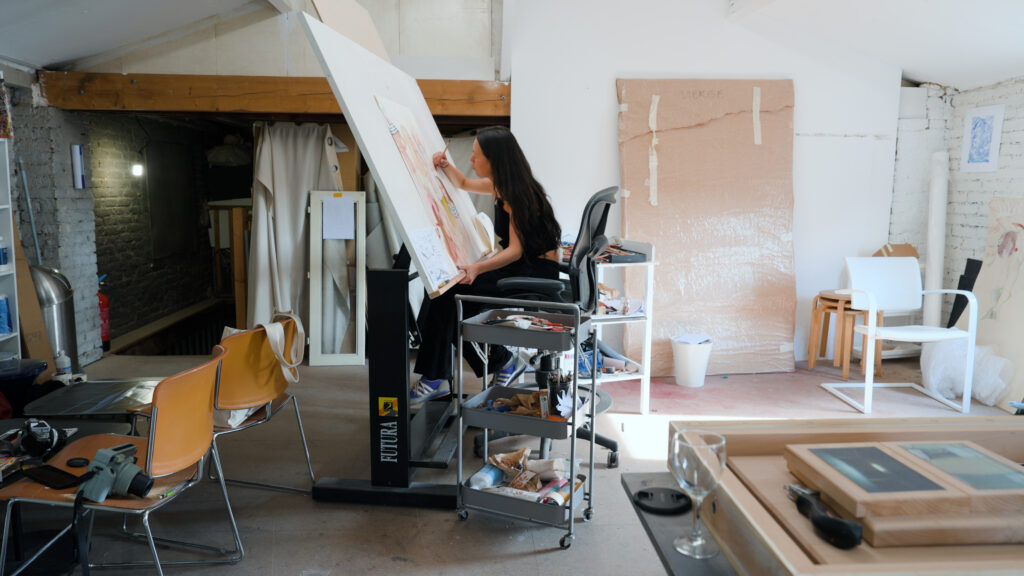
That approach depends heavily on observation, not staged reference, but the accumulated texture of ordinary life. He watches people in the street the way a painter of an earlier era might have kept a sketchbook, collecting gesture, posture, and expression as raw material long before any specific painting calls for it. His studio itself functions as a kind of physical extension of this same instinct: shelves of antique toys, masks, puppets, opera costumes, books, photographic archives, found objects, all of it kept close and cycled back into the work. “Books and objects are very important,” he says. “You’re very inspired by what is around you.” None of it operates as direct reference material in the sense of a single object appearing intact in a single painting. Instead, the accumulation itself becomes a kind of vocabulary, years of collected observation, film, photography, and everyday encounter distilled slowly into the emotional and visual language his paintings draw from.
Despite the volume of accumulated material and years of technical development behind the work, Deschamps Mak is notably unsentimental about external validation. Recognition, in his account, isn’t what any of this is actually for. “The goal is to go deeper in your paintings,” he says. “Recognition… is not the target.” It’s a distinction that matters more than it might initially sound like, not a rejection of ambition, but a redirection of it, away from audience response and toward the slower, less visible work of getting better at seeing and rendering what he’s actually after. His advice to younger artists follows the same logic, stripped of any mystique about talent or inspiration: “Feel legit to do your things.” Painting, in his framing, isn’t a matter of waiting for permission or certainty before starting. It’s repetition, plainly stated. “Painting is all about doing and doing again. Try things. Fail some.” Failure is treated not as a setback to the process but as one of its basic, expected mechanisms.
What emerges from Deschamps Mak’s account of his own practice is a painter who has deliberately built ambiguity into every stage of his method, from the way he gathers reference material to the way he assembles a final composition to the way he thinks about what a painting is even supposed to resolve. He isn’t illustrating scenes so much as staging unresolved moments inside larger, invisible narratives, asking a viewer to imagine what happened just before the frame, and what might happen just after it, without ever supplying the answer himself. It’s a quiet kind of confidence, choosing to leave a painting less finished, in the narrative sense, than it could be, trusting that the tension left standing is worth more than the certainty that would replace it.
About the Author
Sam Burke is an American artist, filmmaker and writer based in New York City. Working across film, performance, and writing exploring storytelling, identity, and place. As founder of Timestamp, Burke interviews artists, shares insights, and highlights conversations shaping art world today.
Andrew LaFarge Hamill
Andrew LaFarge Hamill describes himself as an artist and garden designer, but he is interested…
Felix Benton
Felix Benton grew up surrounded by people who made things. His grandmother was a glass…
Jackie Reeves
Jackie Reeves grew up in Montreal in a family where making things was part of…
Stéphane Koyama-Meyer
French visual artist and designer based near Basel, Stéphane Koyama-Meyer grew up surrounded by art,…
Yuval Bezalel
For Yuval Bezalel, painting begins with the hands, before there is a narrative, before there…
Adèle Aproh
For Adèle Aproh, drawing began long before she knew it could become a career. Her…