
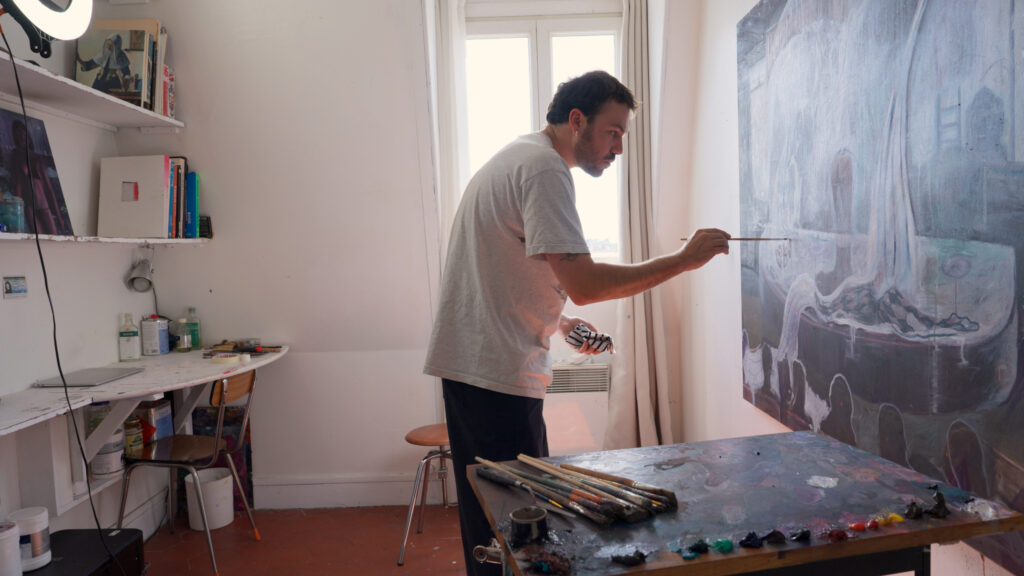
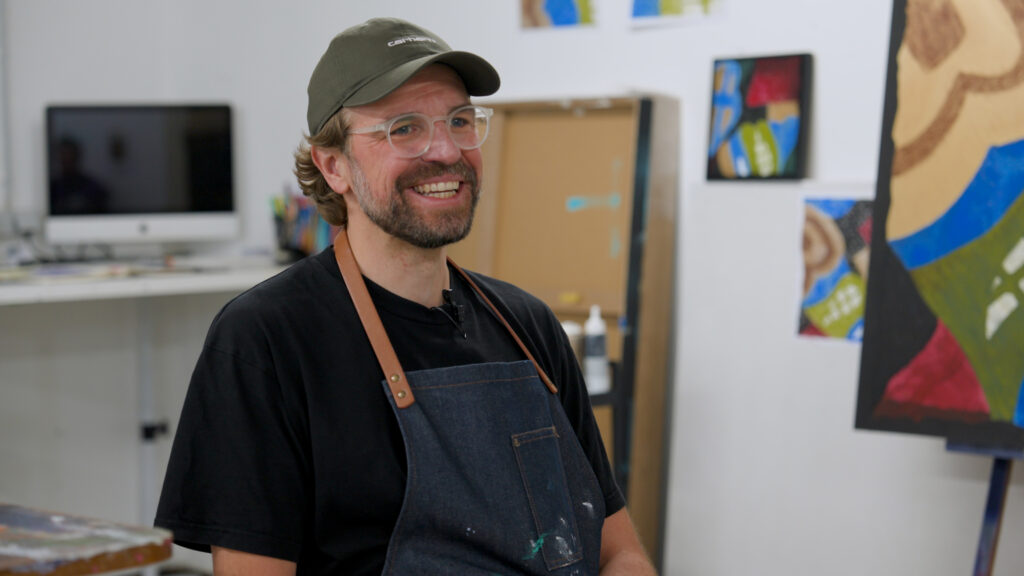
For Yuval Bezalel, painting begins with the hands, before there is a narrative, before there is a finished composition and sometimes before he even understands what he wants to say, there is simply the physical need to make something. He describes always having felt drawn to working with his hands, whether cooking, drawing or painting, and over time that instinct has become the foundation of his practice. Based in Paris, Yuval has spent the last decade building a life around painting, working almost every day in his studio and allowing his ideas to develop through a process that moves naturally between intuition, memory, materials and imagination.
“I just have these things that I’m always have to do something with my hands,” he says, and for Yuval the craft begins physically before it moves into the mind, an action comes first and then the questions begin, where did this figure come from, why am I painting this particular scene, what does it connect to in my memories, dreams or experiences, and what is it that I am actually trying to understand. The painting gradually becomes a way of thinking through something that he could not necessarily have articulated before he began, which is why he does not approach the canvas with a completely fixed idea of what it should become.
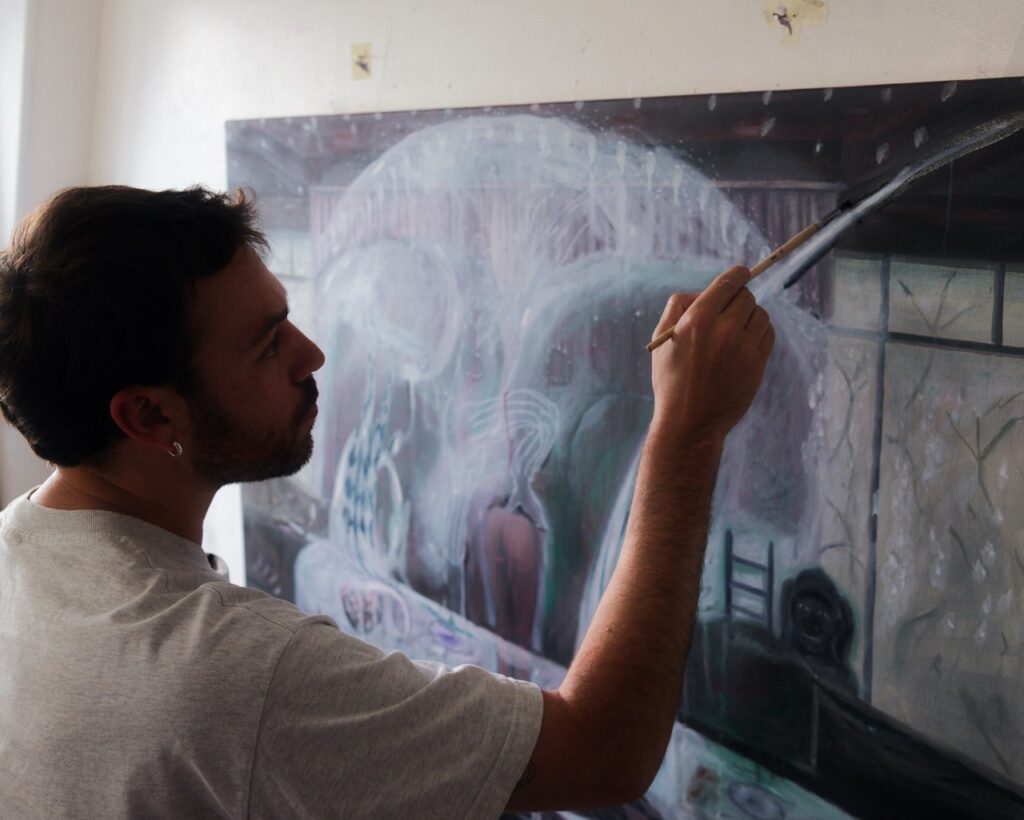
When he starts a new painting, Yuval often allows the first action to happen intuitively and only afterwards begins to understand the narrative emerging from it, watching the figures, the space and the relationships between them develop while trying to work out what the image might mean. He connects these discoveries to his own life, memories and dreams, and sometimes finds himself returning to the same motifs or palettes without fully understanding why, before deliberately trying to move away from them and change the way he works. The process is constantly shifting between instinct and reflection, with the painting leading him somewhere before he has decided where he wants to go, and at some point everything begins to connect and he knows that the work has become his painting.
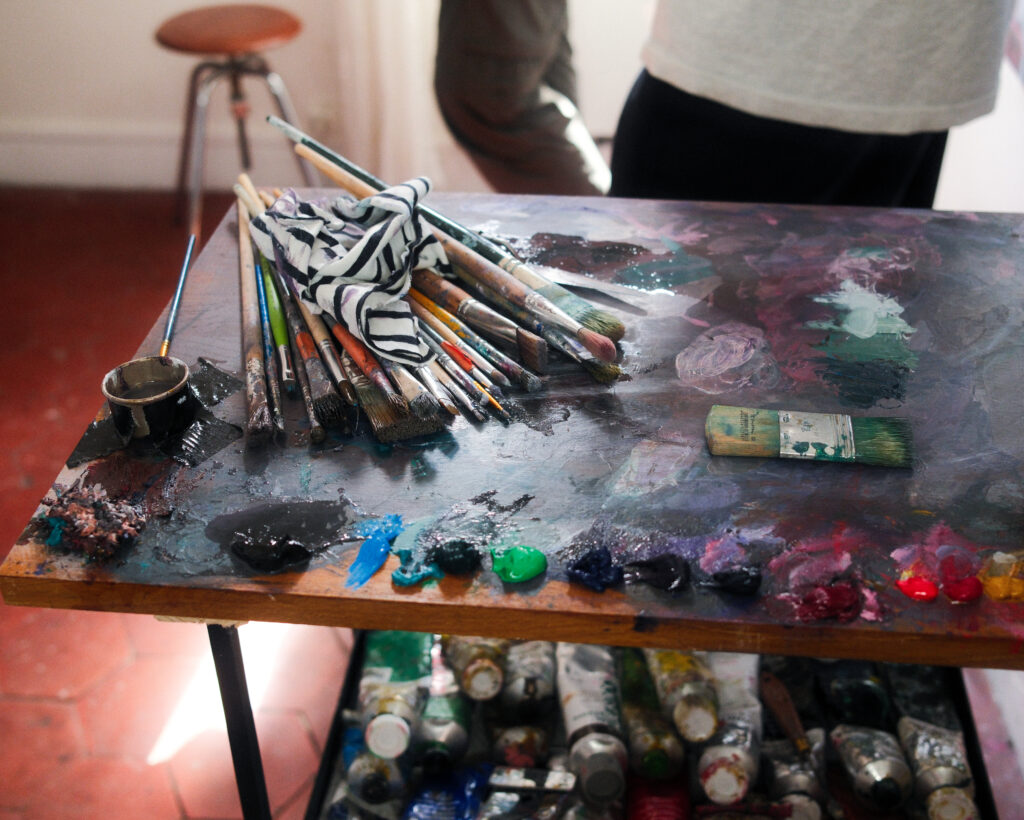
That uncertainty is an essential part of what keeps him engaged, particularly because he does not want to become trapped by one way of working. Yuval studied art and figurative painting, but he sees formal education as only the beginning of the process, eventually an artist has to find their own materials, their own language and their own way of touching the canvas. His materials are relatively traditional, oil paint and canvas, but his relationship with them is deliberately experimental, sometimes using too much medium so that it runs across the surface, sometimes using too little gesso so that the canvas absorbs the pigment, and often working with different brands of oil paint to create different textures and sensations. Mistakes are not something he tries to eliminate because they can create effects that would be impossible to achieve through a completely controlled process, and this has led him to think of painting less as a method and more as a laboratory.
“For me when I’m painting I don’t think about some conservative or about some way how to create the right painting,” he explains, describing the work instead as “a lab or like a long research”, a process in which some experiments succeed, others lead somewhere strange and both outcomes remain valuable because they change his understanding of what he can do next. He is constantly testing how he touches the canvas, how much control he wants to have and how much space he can leave for chance, which also means that even when certain motifs return, the paintings do not necessarily repeat themselves.
The narrative side of his work develops in much the same way, beginning with fragments rather than a complete story. Sometimes Yuval makes a short drawing simply to understand the composition, sometimes he prints references and follows them for a while, and sometimes he begins with a space without knowing who will eventually occupy it. The original idea can remain visible or it can almost completely disappear as the painting develops, leaving behind only a few elements that survive the changes. He describes one work in which the initial concept gradually transformed into a different story, with almost everything changing except a few key elements, and this movement away from the first idea is part of what makes painting interesting to him because the work is allowed to become something he could not have planned in advance.
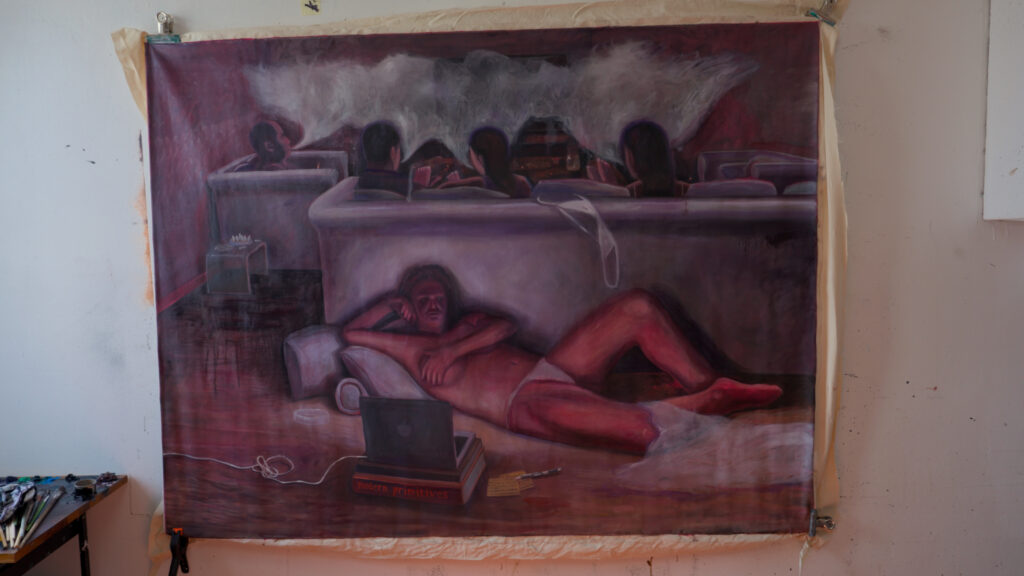
His references often come from the world around him, particularly from the moments he notices while walking through the city. He takes photographs of situations that catch his attention, interactions between people, gestures, spaces and small moments that he feels he wants to remember, and these images become a kind of visual memory that can later be transformed into paintings. “I walk in the street and just take photos of situations that I like,” he says, and the photographs are less about documenting reality than collecting fragments that might eventually become something else, a way of paying attention to the world and storing away moments that could return later in a completely different form.
That distance between reality and painting is something Yuval deliberately explores, using recognizable references as a starting point but allowing them to become increasingly uncertain as the work develops. One painting began with a photograph shared by a friend who had been in hospital, a room that immediately caught his attention because of its colors and atmosphere, which he found both inspiring and deeply depressing. He began by painting the room itself and only afterwards started thinking about what might happen inside it, eventually introducing figures and an unsettling narrative that transformed the original photograph into something much stranger. The reference is still present somewhere inside the painting, but it is no longer simply a record of a real place, it has become the setting for an invented story.
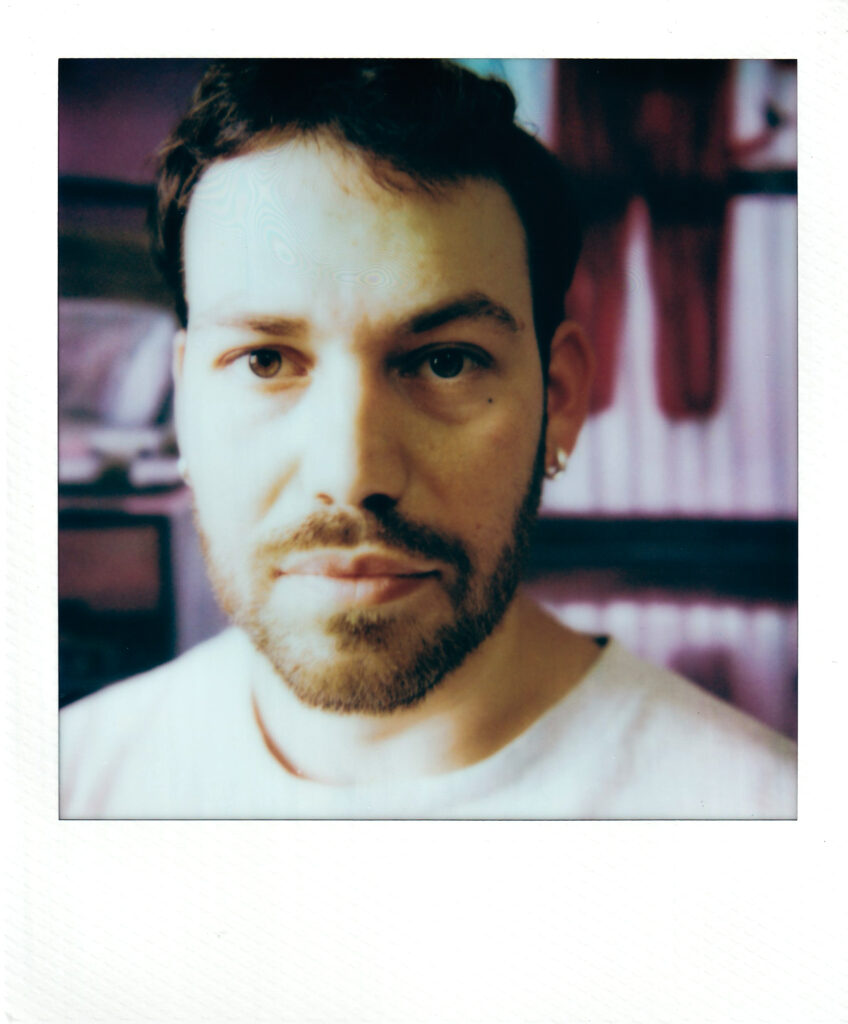
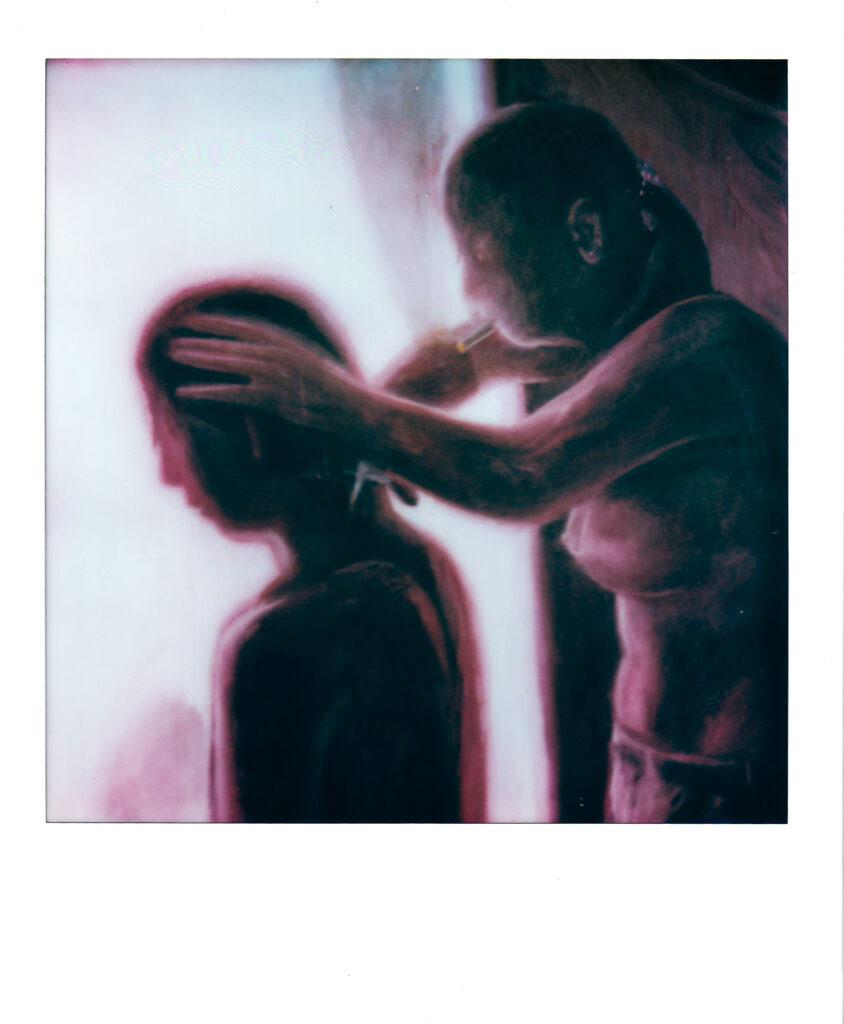
This relationship between what we recognize and what we cannot quite explain is central to Yuval’s paintings, and he likes giving the viewer enough clues to sense that there is a story without necessarily providing the information needed to understand it completely. A figure, a room, a gesture or an object might suggest a reference, but the clues can just as easily take the viewer one step further away from a clear interpretation, leaving the narrative deliberately unresolved. He wants the viewer to look for connections while also understanding that there may never be a single answer, because the uncertainty creates a space in which the viewer can begin to construct their own relationship with the image.
This is also connected to his interest in attention, particularly at a time when images are constantly competing for it. Yuval thinks about how quickly people move through visual information now, scrolling from one image to another without necessarily spending enough time with any of them, and he wants his paintings to create the opposite experience. “I feel today our attention are under attack,” he says, and for him painting can be a way of resisting that constant movement by asking someone to remain in front of an image for longer, to notice the small details and begin wondering what they mean.
He experiences this himself while working, spending long periods in front of his paintings and asking what should happen next, what is missing from the story and what might exist within the empty parts of the composition. The viewer becomes part of that process because the painting is designed to reveal itself slowly, offering enough information to encourage attention without giving everything away immediately. If someone can stand in front of the work and continue thinking about it rather than simply registering the image and moving on, then something important has happened.
For all of the uncertainty and experimentation within his paintings, Yuval is remarkably certain about where he wants to be, and that place is his studio. He does not spend much time participating in the social side of the art world, he does not regularly go to openings and he does not see himself as a gallerist or collector, although he admits that he sometimes feels guilty about this and wonders whether he should be doing more. There is a pressure for artists to be visible, to network, to attend events and to actively build their position within the art world, but whenever he finds himself questioning whether he should be participating more, he returns to the simplest description of his role.
“I’m not a gallerist. I’m not a collector. I’m just a painter.”
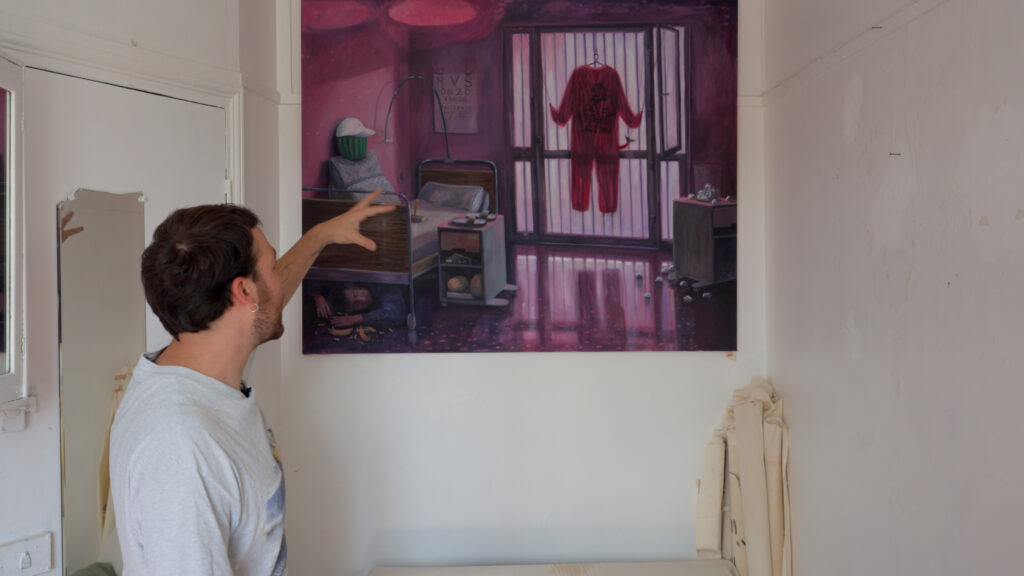
For Yuval, being a painter means being in the studio, and that has become his position in the world. While openings are happening across Paris, he might simply find himself painting until late at night, and rather than seeing that as missing something, he sees it as being exactly where he belongs. “The right place for me is to paint in my studio,” he says, and there is a quiet confidence in that statement because it comes after acknowledging the doubts he sometimes has about not participating more fully in the wider art world. He understands that there are different ways to build an artistic career, but his priority remains the work itself and the time required to make it.
That commitment is partly why he does not think of painting simply as a job or even as a professional practice, it has become his way of understanding the world. When he walks through the city he notices moments that he wants to remember, when he sees a photograph he begins imagining what might exist beyond it, and when he starts a painting he allows his hands to move before his mind has completely decided what the image should become. The process moves constantly between physical action and psychological reflection, with the painting becoming a place where memories, observations, dreams and imagined narratives can exist together.
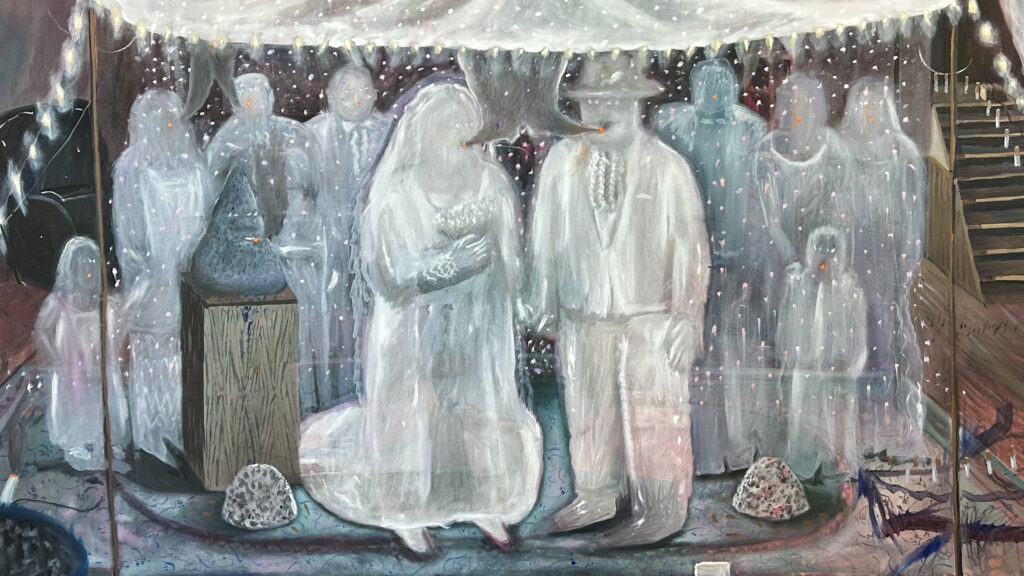
He describes missing his studio when he is away, even when he is travelling, because painting has become the way he processes what he sees and experiences. It is not something he switches on when he begins working and switches off when he leaves, but a way of moving through the world, collecting moments, remembering interactions and imagining how they might become images. “I don’t really see myself stop to do it,” he says, and the statement feels less like a declaration of ambition than an acknowledgment of how deeply painting has become part of his life.
There is also a vulnerability behind that commitment, particularly in the way Yuval talks about finishing one painting and facing the next. He admits that he is often obsessed with the last painting he has completed and immediately begins wondering whether he will be able to make something as good again, a feeling that can leave him frustrated or discouraged. The finished work becomes a kind of challenge to himself because every new canvas requires him to begin again without any guarantee that the process will produce the same result.
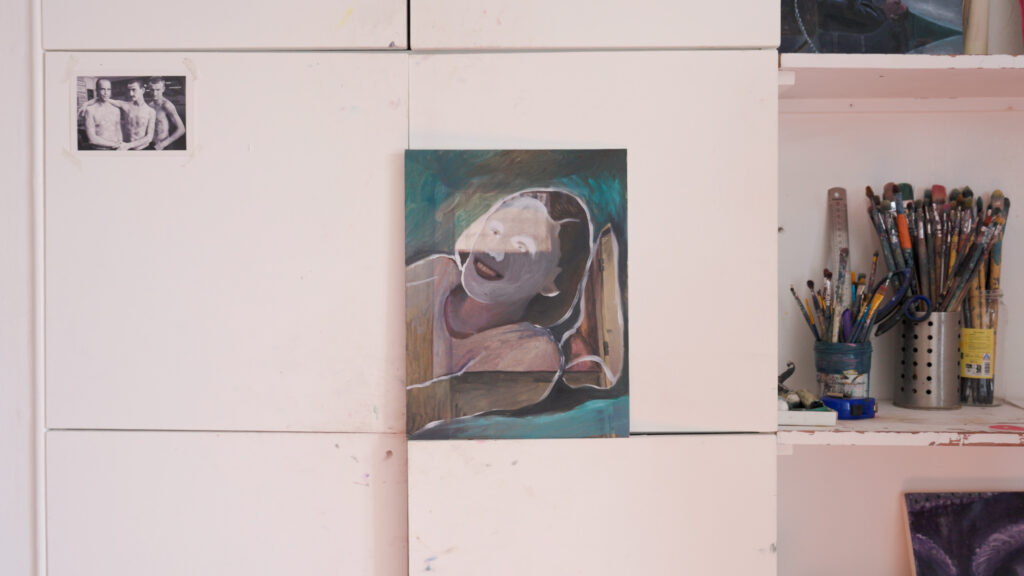
But that uncertainty is also what keeps him working, because the next painting is never simply a repetition of the last one. He continues to experiment with materials, references, narratives and composition, allowing the work to change as he changes. There is no fixed formula and no final point at which he feels he has completely figured out how to paint, instead there is the studio, the canvas and the ongoing process of finding out what might happen next.
Yuval’s paintings are therefore built around a constant negotiation between control and chance, reference and invention, memory and imagination, with traditional materials being pushed into unfamiliar territory and recognizable scenes gradually becoming something more ambiguous. His process begins with the hands and moves toward the mind, but it never stays entirely in one place, because the physical act of painting continues to generate new thoughts and those thoughts continue to change the physical painting.
Perhaps that is why his idea of being “just a painter” feels so important. In a world where an artist’s career can sometimes seem to depend as much on visibility as on the work itself, Yuval has chosen to keep returning to the thing that initially brought him there, the act of making. He wants to create paintings that hold his own attention first, paintings that contain something personal enough to make him feel connected to them, and then to offer that same possibility to someone standing on the other side of the canvas.
He does not need every story to be explained and he does not need every reference to remain visible. He needs the painting to remain alive long enough for him to keep looking at it, questioning it and changing it, and perhaps for the viewer to do the same. For Yuval Bezalel, the studio is not simply where the paintings are made, it is where he thinks, remembers, experiments and makes sense of the world, and as long as he can continue doing that, he seems to have found exactly the place where he is supposed to be.
About the Author
Sam Burke is an American artist, filmmaker and writer based in New York City. Working across film, performance, and writing exploring storytelling, identity, and place. As founder of Timestamp, Burke interviews artists, shares insights, and highlights conversations shaping art world today.
Andrew LaFarge Hamill
Andrew LaFarge Hamill describes himself as an artist and garden designer, but he is interested…
Felix Benton
Felix Benton grew up surrounded by people who made things. His grandmother was a glass…
Jackie Reeves
Jackie Reeves grew up in Montreal in a family where making things was part of…
Stéphane Koyama-Meyer
French visual artist and designer based near Basel, Stéphane Koyama-Meyer grew up surrounded by art,…
Yuval Bezalel
For Yuval Bezalel, painting begins with the hands, before there is a narrative, before there…
Adèle Aproh
For Adèle Aproh, drawing began long before she knew it could become a career. Her…