For Adèle Aproh, drawing began long before she knew it could become a career. Her first real memory of making art goes back to primary school, when a classmate showed her how to draw a parrot by connecting dots in a particular order. She remembers being amazed that something as simple as following a sequence of lines could suddenly produce an image. “I was like, oh my god, it’s magical,” she recalls. From that moment, she began drawing compulsively and never really stopped. What started as a childhood fascination gradually became something much more important, a way for her to concentrate, escape, and eventually understand herself as an artist.
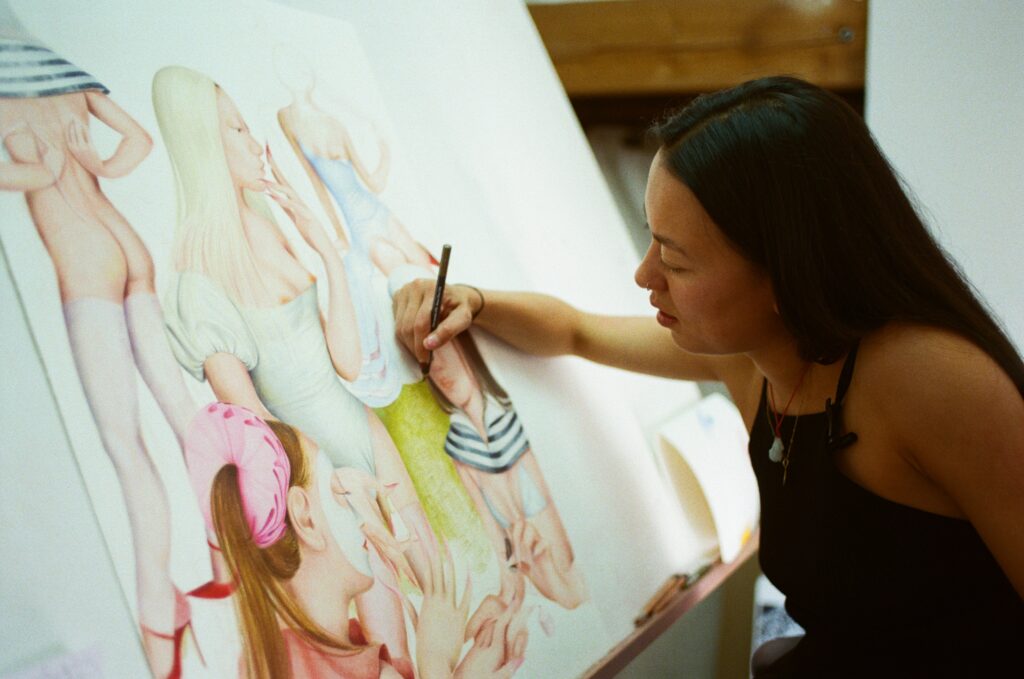
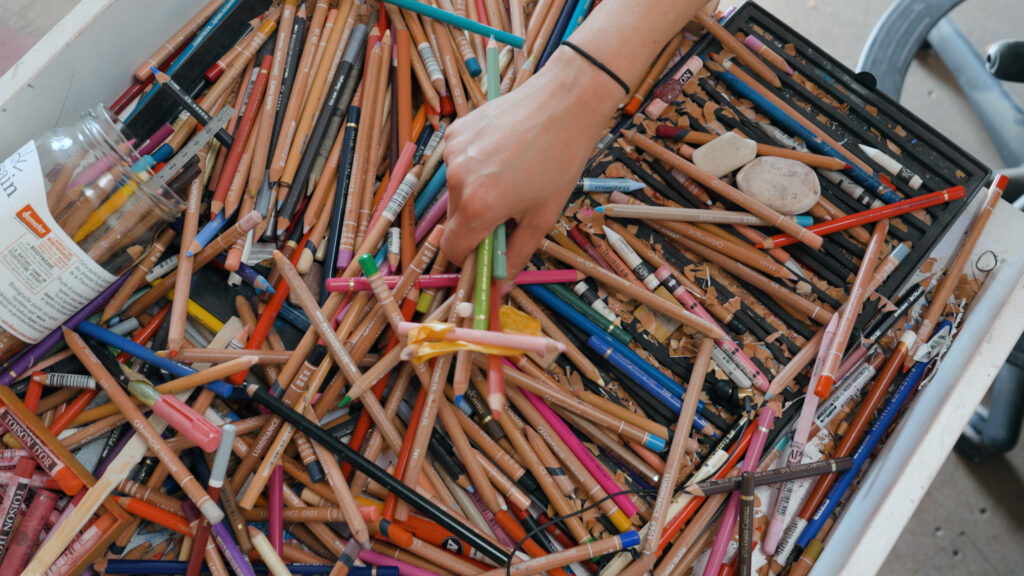
Today, Adèle is a French artist living and working in Paris, known for her detailed drawings and large scale works populated by women, figures, gestures, and small scenes that seem to exist alongside one another. Her relationship with drawing has always been deeply personal, but it was not originally something she imagined turning into a profession. At school, she found it difficult to concentrate, while drawing was the one activity that could hold her attention for hours. She describes it as a meditative practice, a way of forgetting everything around her and becoming completely absorbed in the act of making. For years, drawing was something she did privately, usually at her desk, often late at night, and she saw it more as a hobby than a possible way of making a living.
Growing up, her parents encouraged her creativity but also encouraged her to pursue a more conventional education, so after high school she chose what felt like the safer path and studied business for five years. She continued drawing alongside her studies and later worked in communications for fashion brands, but the more time she spent in the corporate world, the more clearly she understood that it was not where she wanted to stay. Working in communication also made her aware of how different it feels to talk about something external compared with talking about something that comes directly from yourself. When the work is your own, the distance disappears. “It’s actually pretty intimidating being an artist showing your work because it’s so personal,” she says, describing the feeling of putting something deeply connected to your inner self in front of strangers.
That vulnerability became especially clear when she began sharing her drawings online. At first, posting on Instagram felt almost frightening because she had no idea how people would respond or what they would think of her work. Even now, showing the drawings publicly can feel exposing, although she has become more comfortable with it over time. There is also something rewarding in that process because people sometimes notice things in her drawings that she herself had not consciously seen. The act of showing the work has therefore become part of the practice itself, forcing her to confront the difference between making something privately and allowing it to exist in the world.
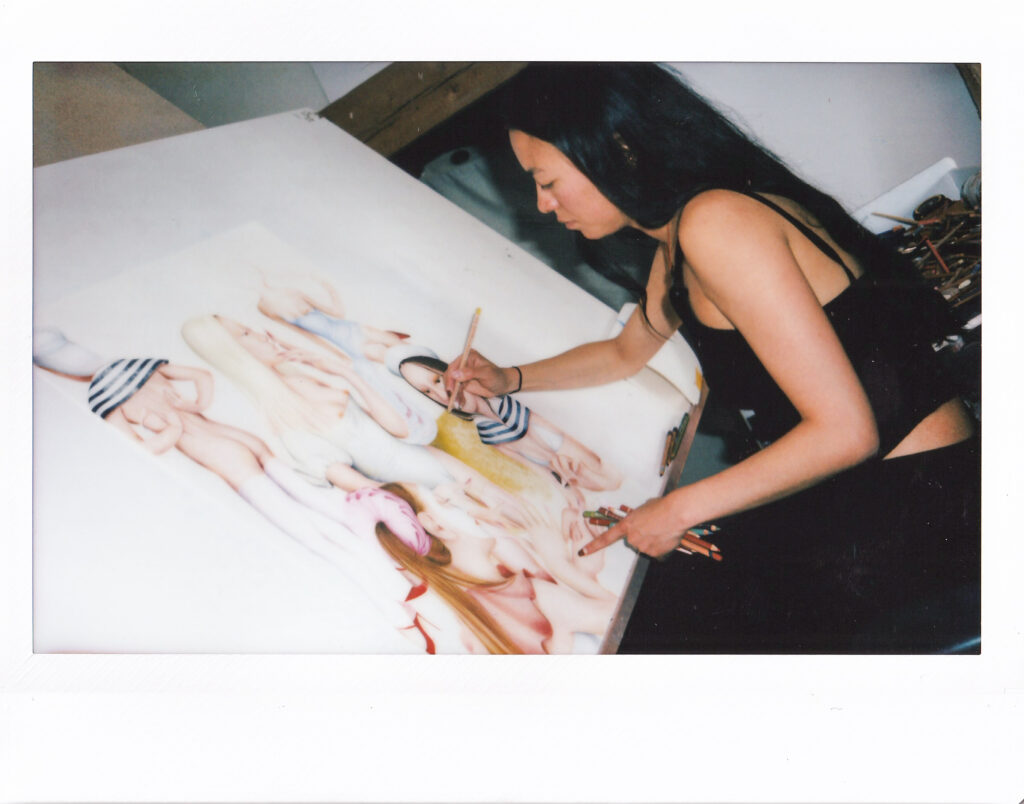
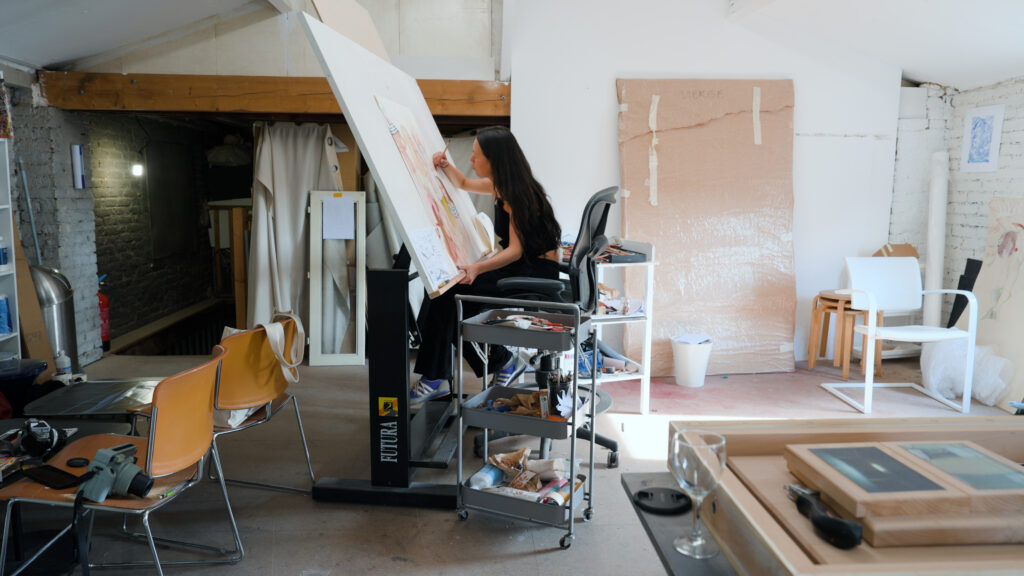
Eventually, the frustration of trying to develop her drawing while working a full time job became too strong. She wanted to give the work more time and attention, so she made the decision to leave her corporate career and become a full time artist. At that point, she did not have a clear plan for what being an artist would actually mean. She initially imagined making comic books because she had grown up reading them and was fascinated by the artists behind them, but over time the panels began to disappear from her work and her drawings became more expansive. Working in her bedroom had naturally limited the size of what she could make, but once she had access to a larger space she began experimenting with scale, discovering that working on a much larger surface gave her a new sense of freedom and allowed her to express herself in ways that smaller drawings could not.
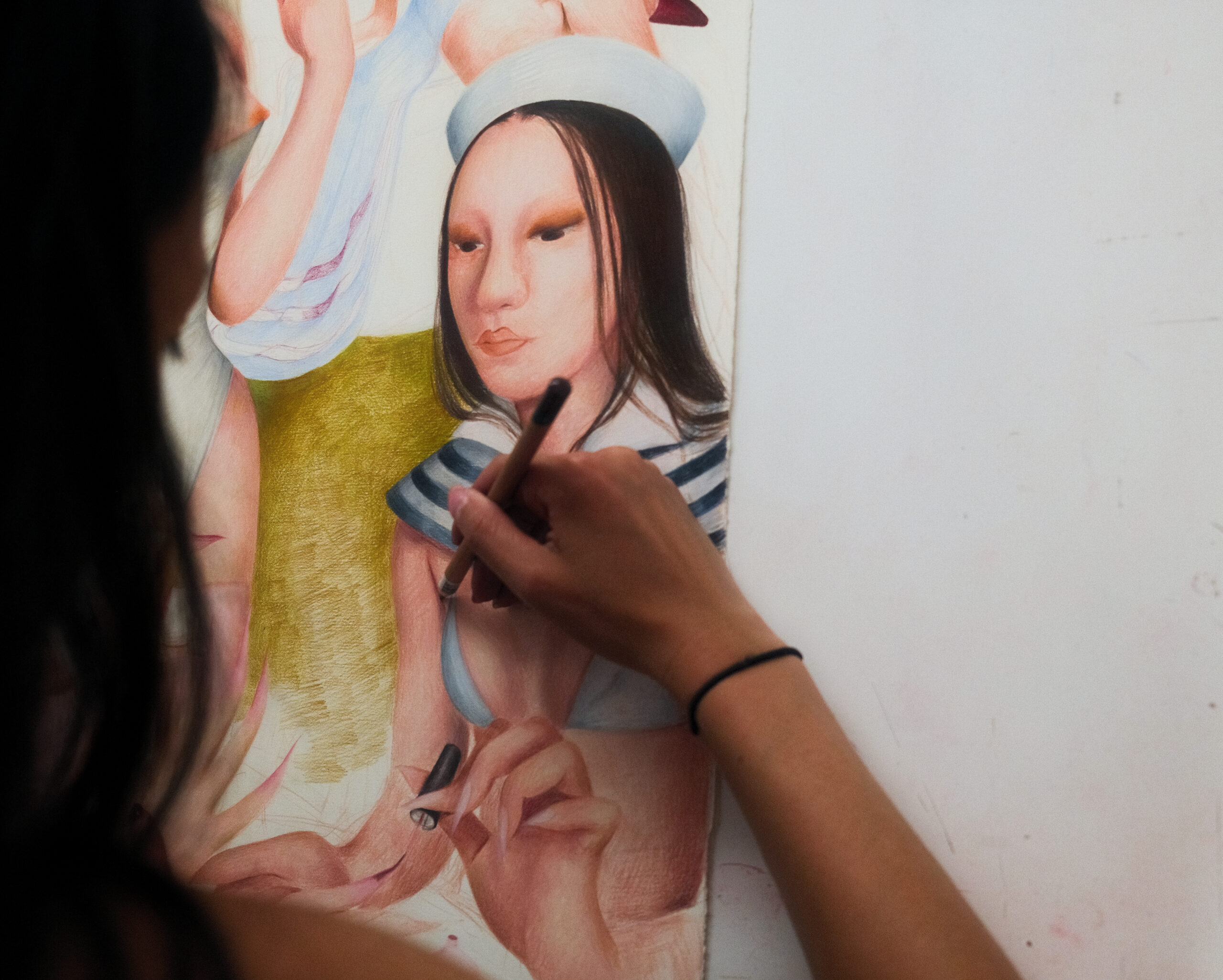
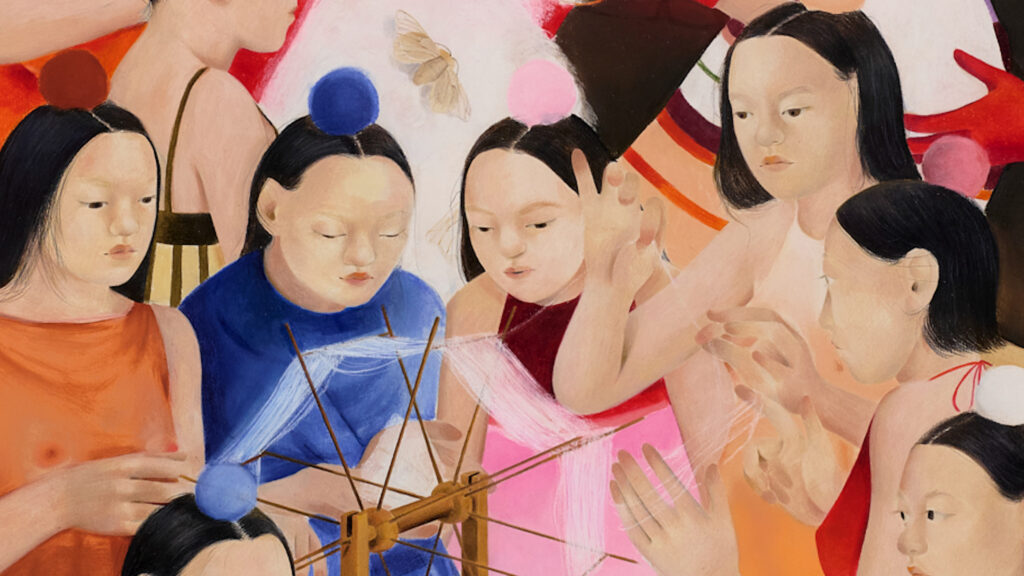
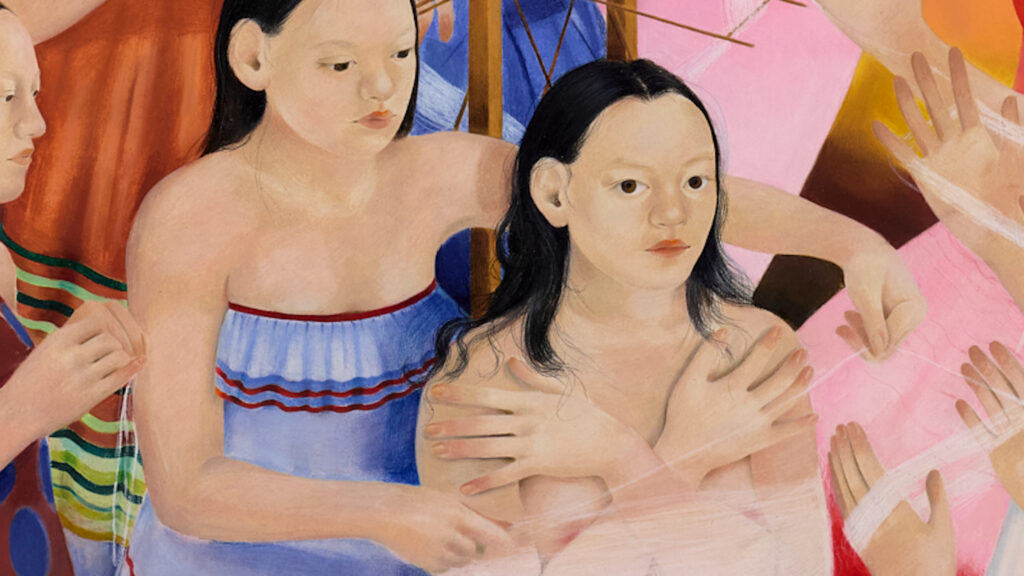
Her large scale drawings are built slowly and intuitively, often containing what she describes as “plenty of micro stories that coexist in one large paper.” Rather than completing an entire composition before adding color or detail, she tends to work inch by inch, allowing the image to develop as she goes. She rarely knows exactly what the finished drawing will look like when she begins, and that uncertainty has become an important part of her process. The works can be read almost like comics, with different scenes and characters appearing across the paper, but without a fixed beginning or end. Instead of directing the viewer through a single narrative, Adèle creates a world that can be explored from one detail to the next, with each small scene suggesting another story.
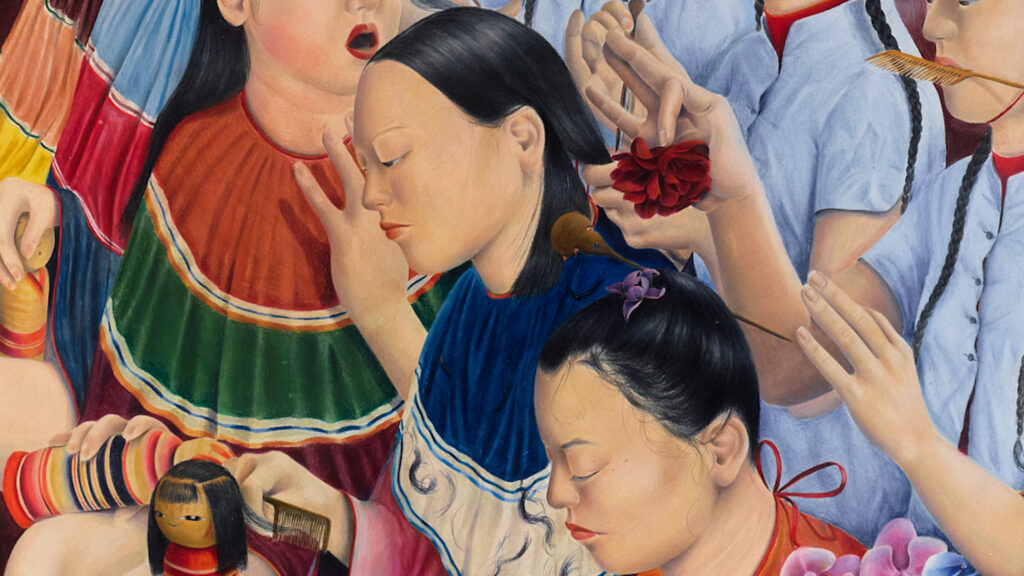
Her use of herself as a model has also changed as her confidence has grown. The figures in her drawings are not necessarily autobiographical, but their faces often resemble her own, something she initially tried to hide. When she first began working this way, the characters were distorted and closed off because she did not want people to recognize her or understand that she was using herself as a reference. As she became more comfortable showing her work, the figures began to look more like her, and she became increasingly willing to show their bodies and explore femininity. The change reflects something broader in her practice, as the process of becoming an artist has also meant becoming more comfortable with being seen.
There is a contradiction at the heart of Adèle’s decision to become an artist. Drawing originally offered an escape from work, yet it eventually became her work, bringing with it all the responsibilities that come with making a living independently. She now has to find the discipline to go to the studio, make the work, communicate about it, maintain her presence online, show the drawings and find ways to support herself financially. The freedom she wanted is real, but it comes with uncertainty, and she is very open about the anxiety that can come from not knowing whether an artistic career will continue to sustain itself.
Her ambition is surprisingly straightforward. “My main goal,” she says, “is just to make a proper living out of it.” Of course, she would like to show in galleries, museums and institutions, but underneath those ambitions is a simpler desire to keep drawing and to be able to pay her rent and support her life through the work she cares about. For Adèle, financial independence is not separate from artistic freedom. It is what allows the freedom to continue.
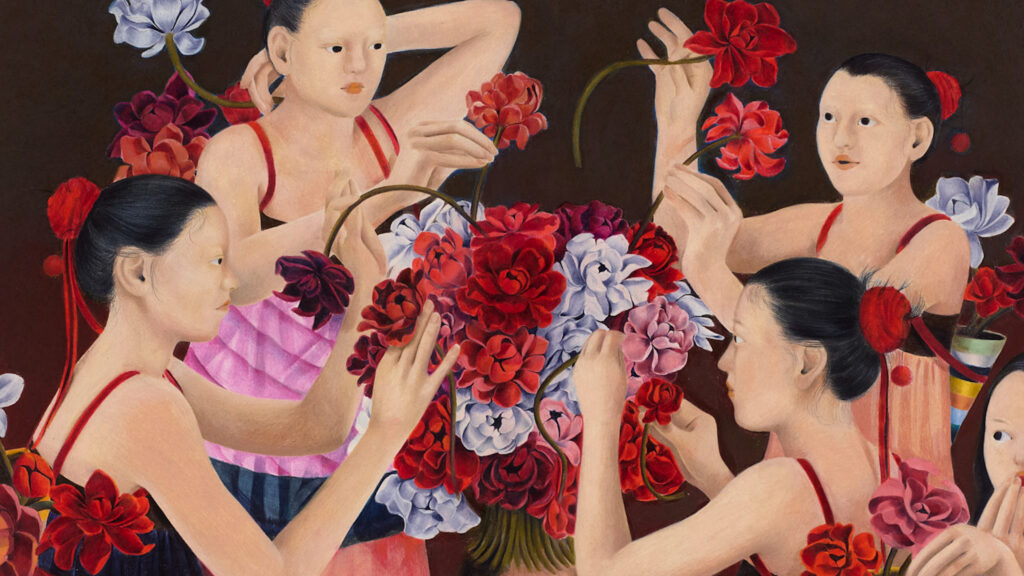
When she talks about that freedom, she returns to a childhood story about a wolf and a dog. The wolf lives in the forest and has to struggle every day to find food, while the dog is well fed and comfortable because he belongs to a master. The dog tells the wolf that he could have the same life if he agreed to work for his master, but the wolf notices the leash around the dog’s neck and decides that he would rather remain hungry than give up his freedom. Adèle sees something of herself in that story, particularly in the difficult balance between independence and security. Being a freelancer means fighting for every opportunity and never having the same certainty as someone with a regular salary, but it also means having control over the direction of your life.
That choice has become even more meaningful because Adèle knows what the alternative feels like. Her time in the corporate world taught her practical skills and gave her a pragmatic approach to working, but it also showed her exactly what she did not want. She admits that she sometimes wonders whether artists who have followed a more traditional path might wonder what it would be like to have the security of an office job, just as she occasionally wonders what might have happened if she had gone to art school. She did not receive formal artistic training beyond a short life drawing class during high school, and for a long time that made her feel somewhat illegitimate as an artist. At the same time, she believes that not going to art school allowed her to develop her practice independently and that her business education taught her things she might not otherwise have learned.
The more her work has developed, the more comfortable she has become with that unconventional background. She no longer sees her years of business school and corporate work simply as time spent away from art. They are part of the experience that brought her here, and perhaps knowing exactly what she does not want has become one of her strongest motivations. She describes the corporate world as boring and admits that she could not imagine going back to it, even though the uncertainty of being an artist can sometimes bring anxiety, sleepless nights and doubts about where her life is going.
That uncertainty is also what keeps her moving. “The future is uncertain and so it’s scary, but it’s also what keeps me going to work every day and work hard,” she says. There is no guarantee that the decision to become an artist will work out exactly as she hopes, but the possibility of building a life on her own terms is enough to make the risk worthwhile. When she left her job, she did not fully understand how difficult the art world could be. In some ways, she thinks that was an advantage because knowing everything she knows now might have made her more cautious.
For that reason, she is hesitant to offer too much advice to her younger self. She does not know whether she would have made the same decision if she had understood all of the difficulties in advance, and she does not want to replace the optimism that gave her the courage to try. What she does believe is that being young gives you room to experiment, because if something does not work, there is usually still time to change direction. “Everything is not irreversible,” she says, and that idea feels central to her story.
Adèle’s journey into art was never carefully planned. It began with a drawing of a parrot, continued through years of private drawings, business school and corporate work, and eventually led her to a decision that required her to trade security for the possibility of freedom. Her drawings have grown in scale as her confidence has grown, and the figures that once concealed their connection to her now reveal more of themselves. The work remains open ended and constantly developing, much like the life she has chosen to build around it.
For Adèle, drawing is still fundamentally about making something with her own hands and allowing herself to disappear into the process. The difference is that what was once a private escape has become a public life. It is uncertain, sometimes frightening and often difficult, but it is also hers. And for an artist who has spent years learning exactly what she does not want, that freedom may be the most important thing she has found.
About the Author
Sam Burke is an American artist, filmmaker and writer based in New York City. Working across film, performance, and writing exploring storytelling, identity, and place. As founder of Timestamp, Burke interviews artists, shares insights, and highlights conversations shaping art world today.
Andrew LaFarge Hamill
Andrew LaFarge Hamill describes himself as an artist and garden designer, but he is interested…
Felix Benton
Felix Benton grew up surrounded by people who made things. His grandmother was a glass…
Jackie Reeves
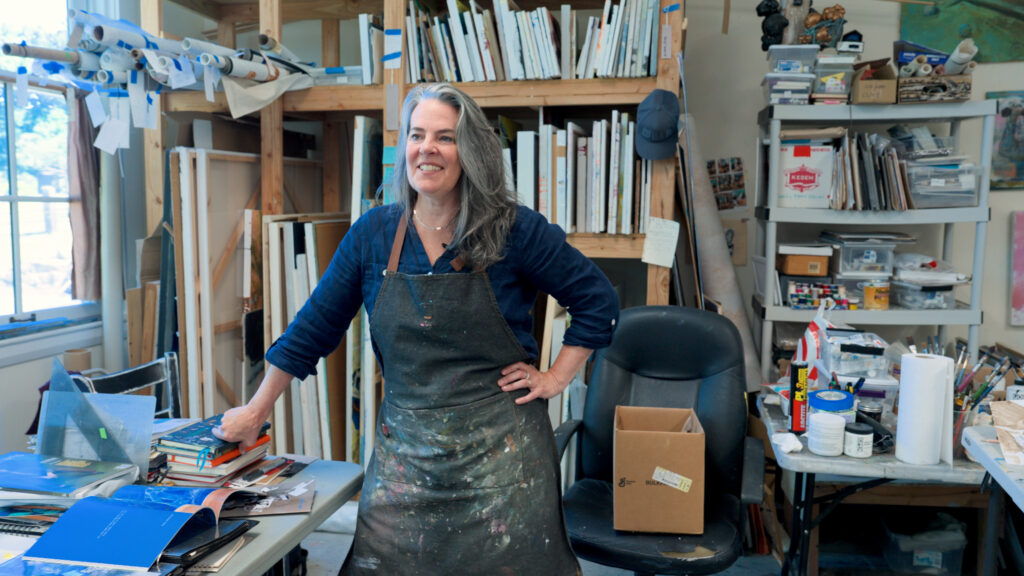
Jackie Reeves grew up in Montreal in a family where making things was part of…
Stéphane Koyama-Meyer
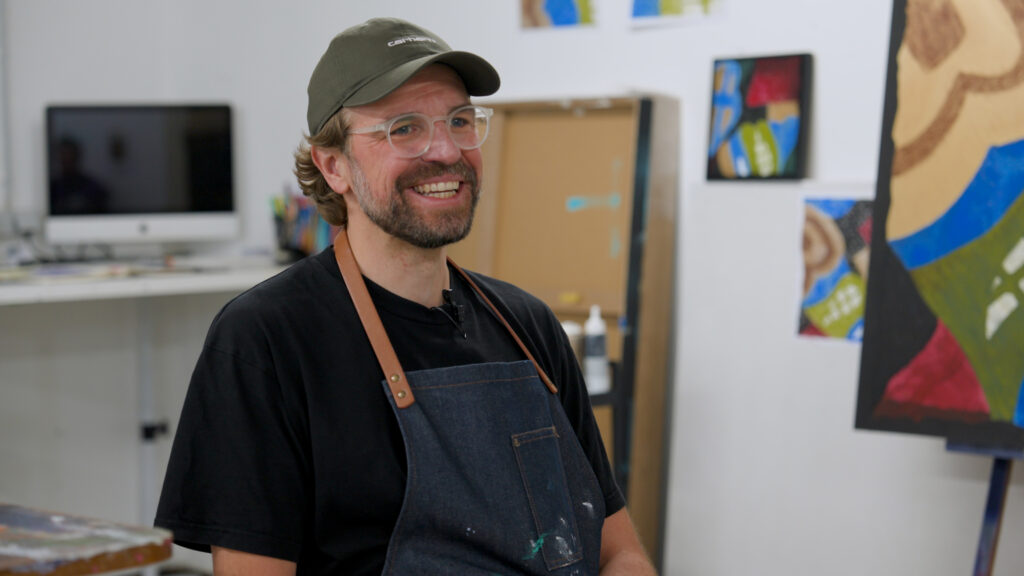
French visual artist and designer based near Basel, Stéphane Koyama-Meyer grew up surrounded by art,…
Yuval Bezalel
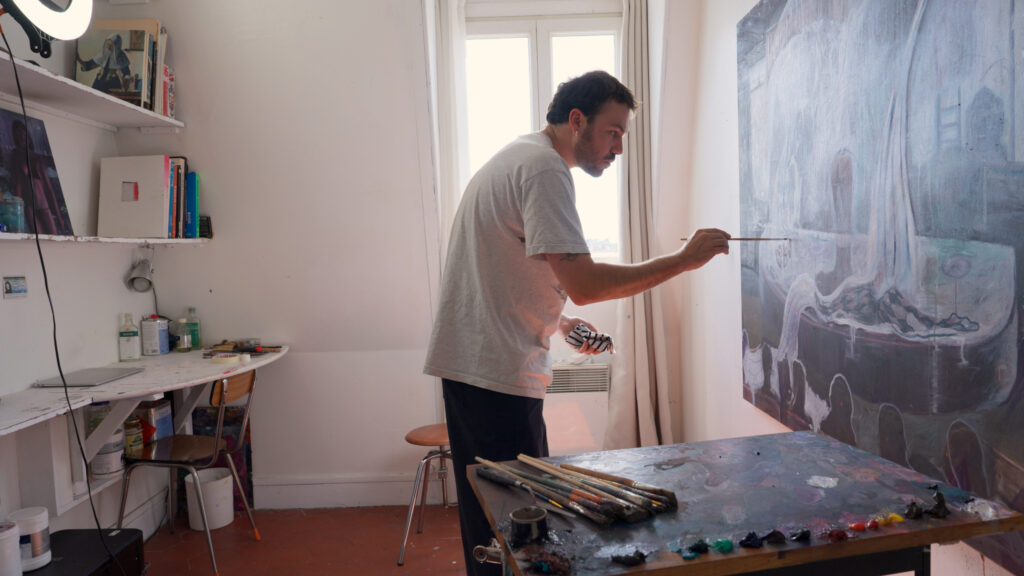
For Yuval Bezalel, painting begins with the hands, before there is a narrative, before there…
Adèle Aproh
For Adèle Aproh, drawing began long before she knew it could become a career. Her…