In the studio, drawing and painting are the moments when Henry Ward feels most fully himself, even as he admits that the act of making art can feel heavy and unavoidable. He describes it as a compulsion that remains inseparable from how he understands himself and the world. If he could choose not to make paintings, he says, there are moments when he would. But the reality is simpler and harder to escape. “I just think I have to do it,” he explains. “I don’t think it’s really a choice.” When he is painting or drawing, he feels most complete. When he is not, something essential is missing.
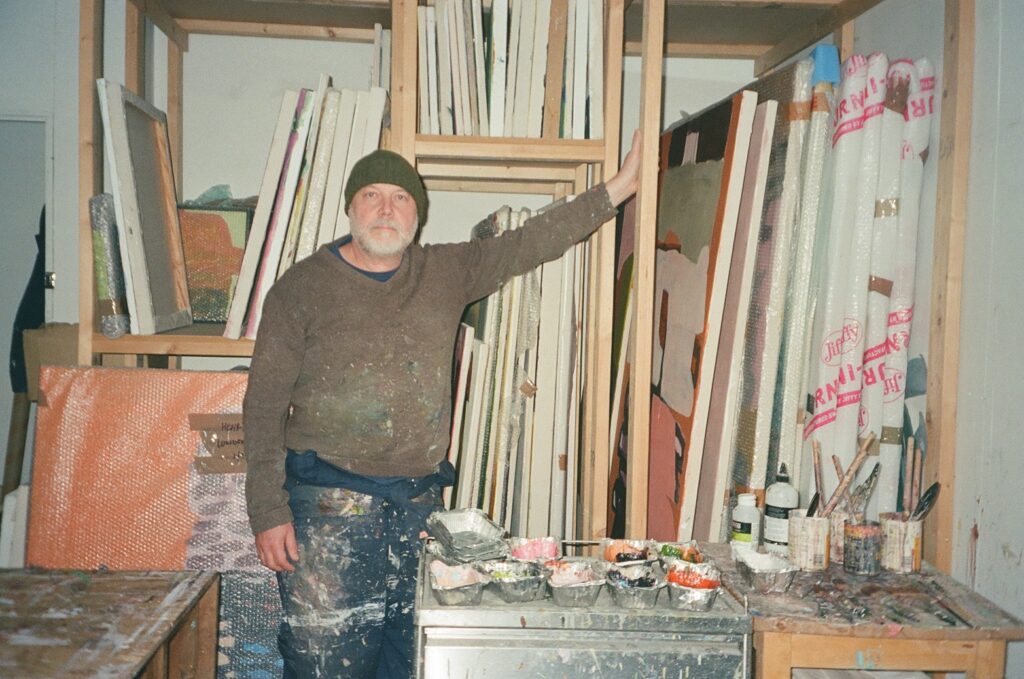
Ward was born in London and continues to live and work there. From childhood, drawing was a constant presence. Like many children, he drew from an early age.
Some of his earliest memories involve working alongside his brother on long rolls of wallpaper lining paper their father brought home. Spread across the floor of a bedroom, the paper became a shared surface where they lay on their stomachs and drew their way from one end to the other. Drawing became a way of thinking, communicating, and spending time, embedded in everyday life rather than set apart from it.
Throughout school, Ward continued to make art both at home and in class. As a child, he imagined becoming a cartoonist or working on comic books. When it came time to choose further education, art school seemed like the natural next step. At that point, Ward had assumed that artists existed mainly in the past. Art school introduced him to the idea that people were actively making art in the present, which he describes as a revelation.
He attended art school in the United Kingdom, where the system emphasized conceptual thinking over technical instruction. Teaching focused more on ideas and critical development than on painting techniques. Ward ultimately completed a painting degree, though he describes stumbling into painting rather than arriving there through a deliberate technical path. He notes that he learned as much from his peers as he did from tutors and formal teaching. In retrospect, he recognizes that the institution was an interesting place to be at that particular time.
After graduating, Ward continued painting and has now been painting seriously for more than three decades. He describes his technical development as something learned primarily through doing rather than instruction. He acknowledges having acquired habits over time, some of which might be considered bad, but which work for him. While he does not consider himself highly knowledgeable in a technical sense, he feels confident in how materials behave due to long familiarity. Over the last ten to fifteen years, Ward’s paintings have increasingly focused on the act of painting itself. He emphasizes that he is more interested in painting than in finished paintings. The process engages him more than the outcome. Finishing a painting often marks the point at which his interest ends. When there is nothing left for him to interrogate, the painting is over, and he rarely spends much time with finished works afterward.
Ward does not believe his work carries a specific message. He describes his practice as painting for the sake of painting. He references a book titled How to Paint by the Polish writer Jerzy Zunk, which argues that it is how something is painted that makes it interesting, not what is depicted. Ward aligns with this view, noting that Paul Cézanne’s paintings of apples and pears remain compelling not because of their subject matter but because of the way they were painted. For Ward, painting is about what paint can do and what can be discovered through the act itself.
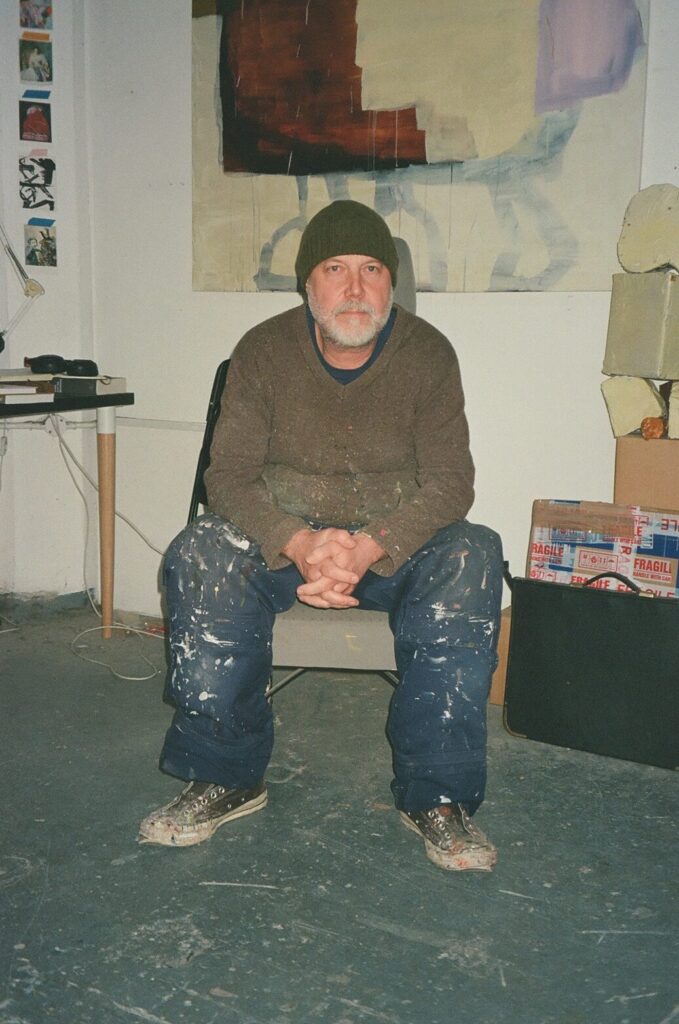
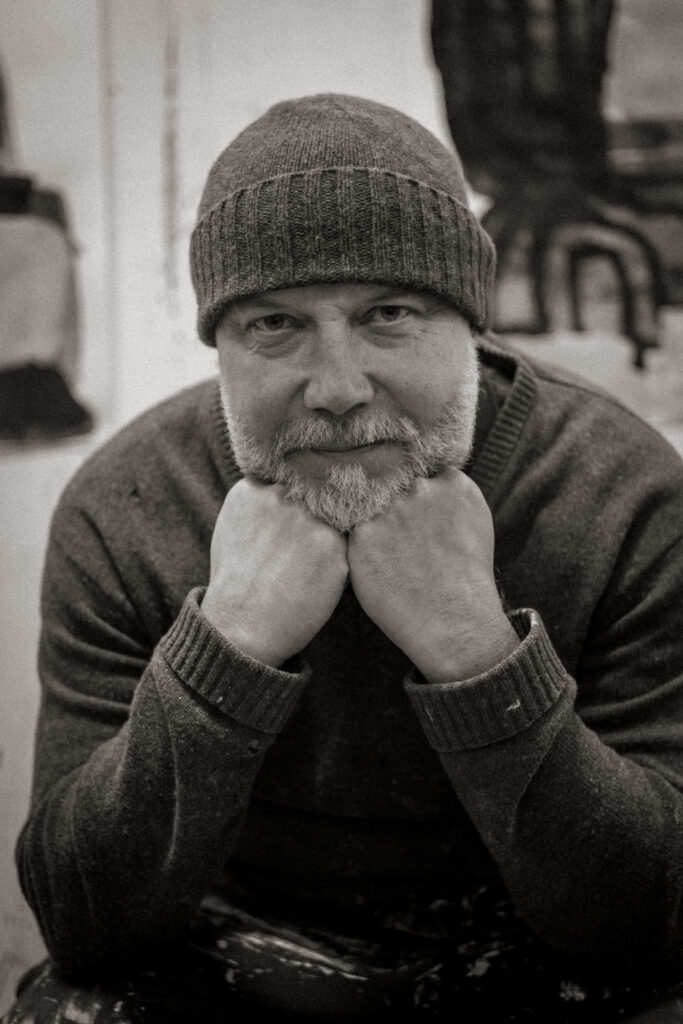
He does not describe himself as ambitious in terms of career or fame. However, he recognizes the importance of showing work publicly and engaging with an audience. Exhibiting and having people respond to the work feeds back into the practice and forms part of the process.
Ward left art school in the early 1990s, a period marked by heightened visibility and rapid success for a small number of British artists. Many graduates expected similar outcomes, but for most, including Ward, that did not happen. Feeling disillusioned, he made a conscious decision to stop painting and focus on writing. For several months, he told people he was no longer making art. After about nine months, he realized he wanted to paint again but felt constrained by the identity he had constructed. He began painting in secret for a period before fully returning to the practice. This remains the only time he consciously stepped away from painting.
At other points, painting slowed due to practical pressures, including full time teaching and raising a family. During these periods, Ward continued drawing and maintaining sketchbooks, sometimes going a year or more without painting but never abandoning drawing entirely.
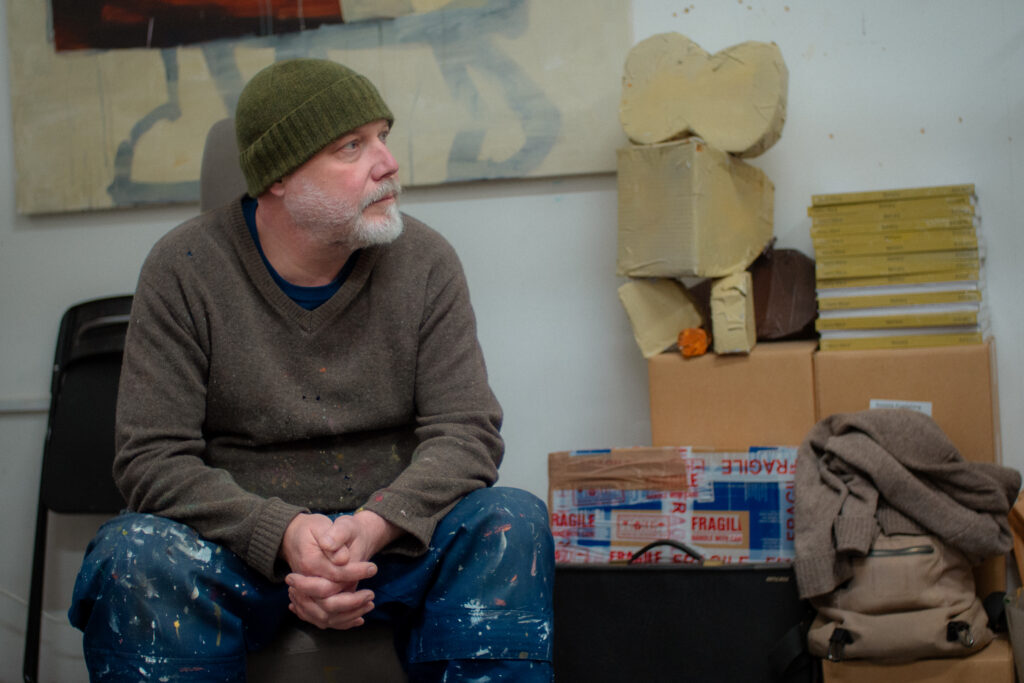
Teaching became a significant parallel strand in Ward’s life. Both of his parents trained as teachers, and his mother worked as a school teacher. He initially resisted the idea of teaching but fell into it accidentally after art school. A friend invited him to run a workshop for six year olds in a primary school. Despite initial anxiety, Ward found the experience engaging and energizing. Teaching felt closer to studio practice than other jobs he held at the time.
He went on to teach secondary school art to students aged eleven to eighteen, later working with teachers on art education and curriculum development. Eventually, he moved into art school teaching as a visiting lecturer. More recently, Ward has been involved with alternative art education programs, including a correspondence based art school where artists exchange letters. He values the slowness of this method and the depth of reflection it allows.
Ward believes strongly in the reciprocal relationship between teaching and making. Teaching sharpens his thinking about practice, while making work informs how he teaches. He cannot imagine doing one without the other.
A significant shift in his materials occurred during an artist residency at the Albers Foundation in Connecticut nearly three years ago. Living and working in a cabin for ten weeks, Ward decided to work with acrylics instead of oil paint due to time constraints. He immersed himself in acrylics and has not returned to oil since. He works with acrylics in a way similar to oils, slowing them down with mediums and building layered surfaces.
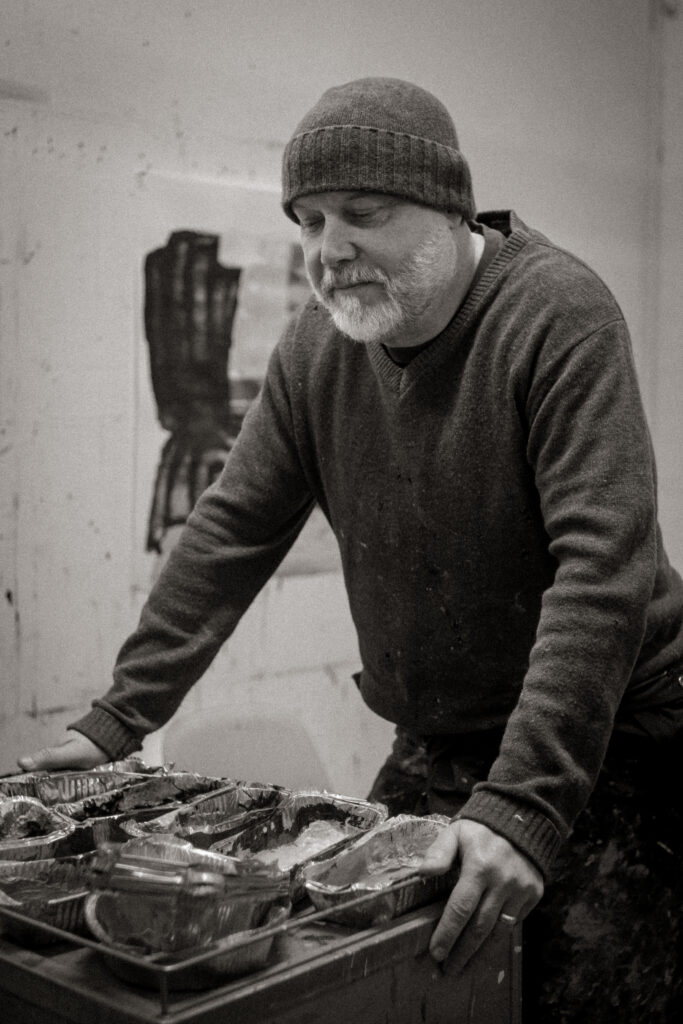
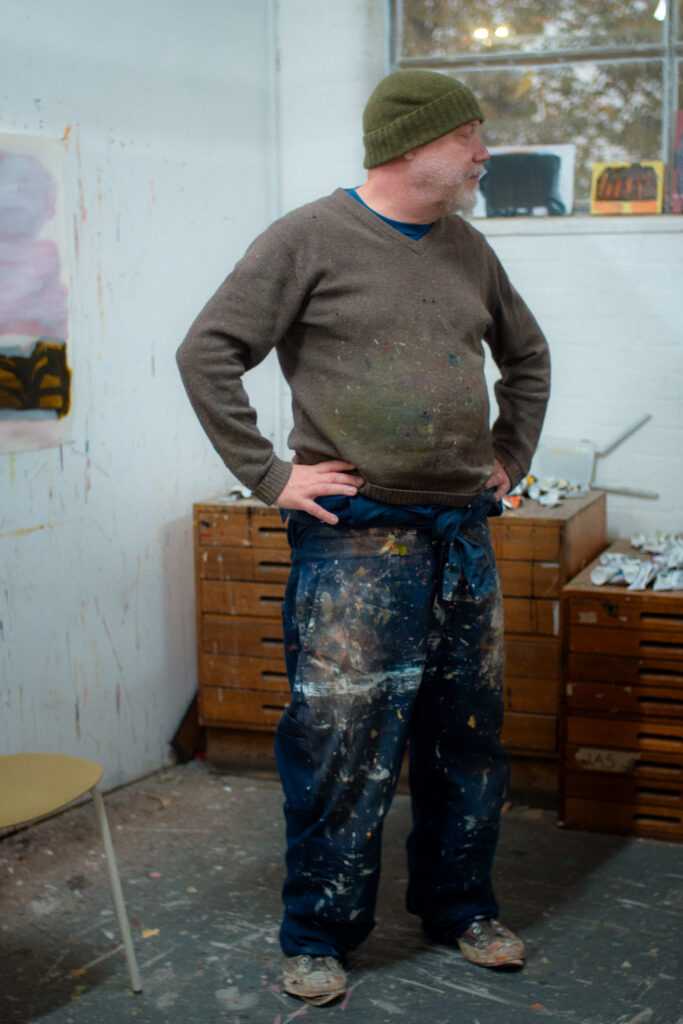
Ward works quickly on individual surfaces but allows paintings to develop over long periods. He keeps many works in progress at once, cycling them in and out of storage over months or years. Acrylics allow him to layer translucent and opaque passages efficiently. He primarily works on canvas and wooden panels and increasingly on paper.
Alongside his studio, Ward maintains a shed in his garden where he works on small pieces on paper. This space supports a near daily practice, especially when he cannot access the studio. During the pandemic, when studios were closed, the shed became his sole workspace and the works produced there functioned almost like a visual diary.
Ward emphasizes the importance of regular engagement, comparing painting to physical exercise. While he does not paint intensively every day, maintaining consistent contact with the work is essential to his practice.
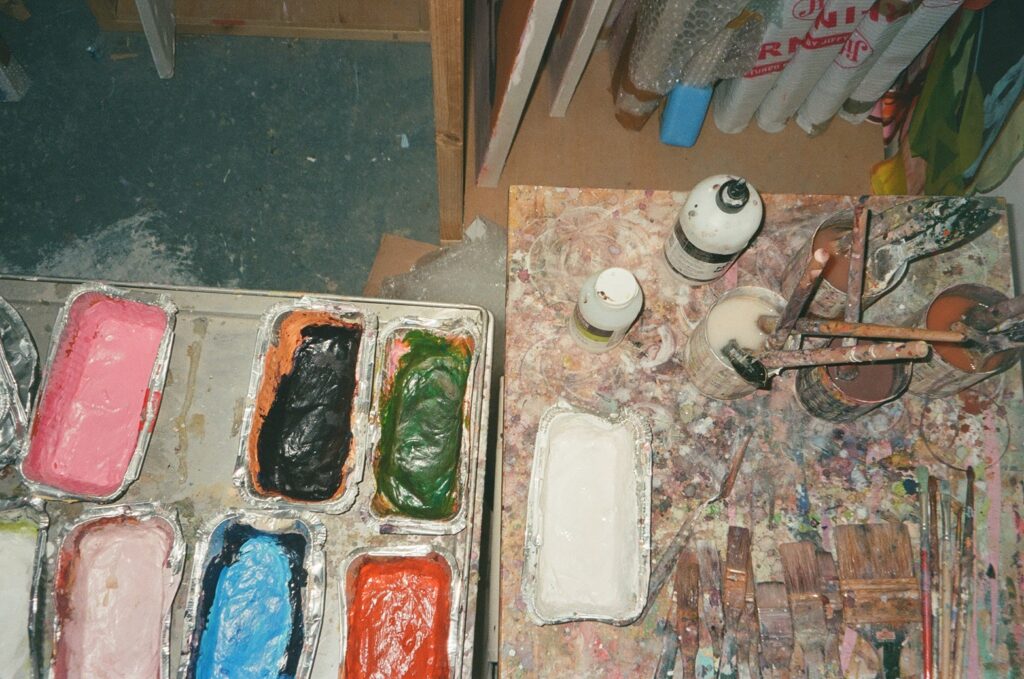
He works with heavyweight papers and typically paints directly onto the surface without preparation. He uses large brushes, even on small works, and prefers loading the brush heavily to let the paint behave freely. His palette system involves separating mixed colors into individual containers, keeping them clean and distinct, a method he has used for decades.
Ward keeps extensive sketchbooks and regularly writes alongside drawing. He often draws from existing paintings as a way of slowing down his looking and understanding the work differently. Sketchbooks function as repositories rather than finished objects, and he admits he rarely revisits them despite their importance.
Over time, forms in his work have become increasingly character like. While earlier paintings referenced cartoons and film imagery more directly, current work allows forms to emerge through the process. He does not plan characters but recognizes limbs, bodies, and personalities appearing as paintings develop. He considers the works abstract but insists they function as entities within space, with foregrounds, backgrounds, and implied physical presence.
Ward enjoys the humor and oddness that emerges in his paintings and is comfortable with them making viewers smile. Titles are chosen carefully, often using words that can function as both nouns and verbs. He is cautious about titles narrowing interpretation but values their ability to open associative space.
After more than thirty years of painting, Ward remains driven not by resolution but by continuation. He compares the practice to running forward without looking down, believing that momentum itself sustains the work. Painting continues because it must, not because it resolves into answers.
About the Author
Sam Burke is an American artist and writer based in New York City. Working across film, performance, and writing exploring storytelling, identity, and place. As co-founder of Timestamp, Burke interviews artists, shares insights, and highlights conversations shaping art world today.
Cathleen Clarke
Cathleen Clarke has always been drawn to the spaces where memory begins to thin out….
Kara Su
Born and raised in Berlin with Kurdish roots, Kara Su grew up far from the…
Logan Sylve
For Logan Sylve, painting is a steadfast companion. “I feel like painting is my first…
Mario Picardo
Mario Picardo approaches painting as a space of personal freedom. The studio is not a…
Hill Spriggins
Originally from New Orleans, Louisiana, Hill Spriggins has been living and working in Brooklyn, New…
Brenda Zlamany
Brenda Zlamany has been painting for most of her life, and she speaks about it…