
Mario Picardo approaches painting as a space of personal freedom. The studio is not a site of pressure or anxiety for him, but a place of pleasure and ease. Each day he arrives to work, he describes the act of painting as happiness itself. It is not something he worries about or negotiates with. It is simply where he feels good. Making work is not separate from living. It is a way of being present, engaged, and connected.
Born and raised in the southern suburbs of France, Picardo’s relationship with art began early, long before he understood it as a profession. As a child, drawing was already a constant, but the idea that painting could be a job came into focus during a moment he still remembers clearly. When he was around six or seven years old, his mother would sometimes keep him home from school. Instead of attending class, they would spend the day visiting museums or engaging with cultural spaces. During one of those visits, they went to the Louvre in Paris. Standing in front of large-scale paintings, Picardo asked his mother whether this was what those artists did for work. Her answer was simple. Yes, it was possible to paint images on canvas as a job. That moment stayed with him. It was the first time painting registered not only as something he loved to do, but as something that could shape his future.
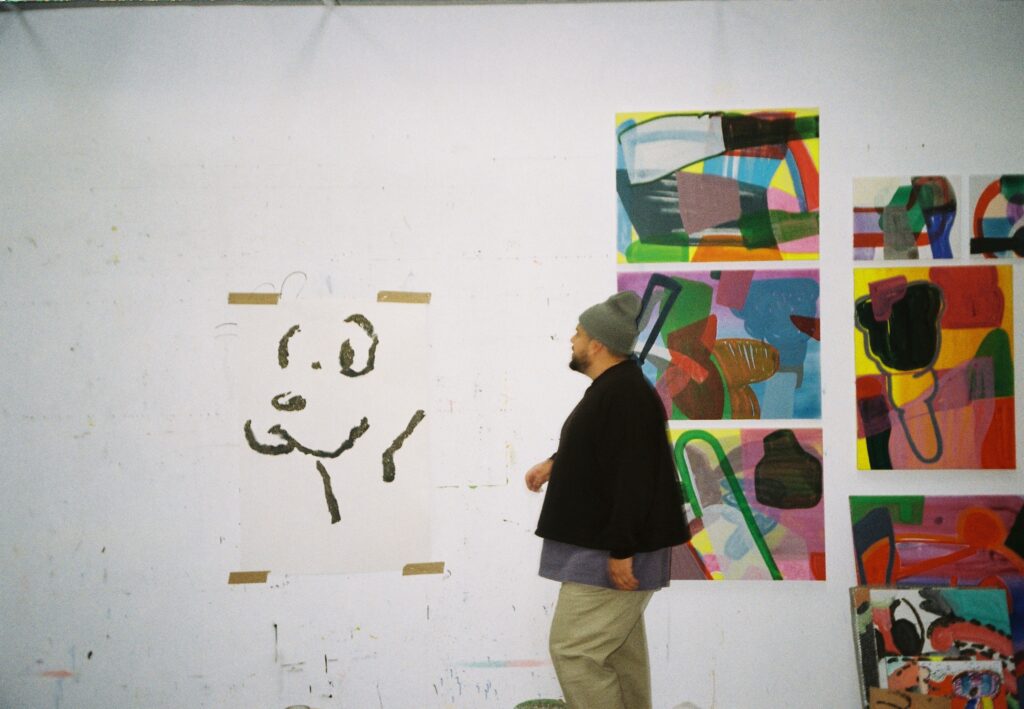
From that point on, drawing became more frequent and more intentional. While he did not immediately tell himself he would become an artist, the idea was there, quietly taking shape. What sustained it was not ambition but enjoyment. Picardo speaks often about his need to communicate with people, and for him, painting is a language that makes that possible. Through images, he can propose a personal vision of the world and invite others into conversation. The work becomes a point of exchange, a way to speak across distance, culture, and background without relying on words.
This desire for dialogue continues to motivate his practice. He sees his paintings as open windows, invitations to look, think, and respond. The subject matter is often familiar, drawing from shared visual references such as comics, popular characters, or everyday imagery. These references are not used ironically or nostalgically, but as tools for connection. By working with images that already live in the collective imagination, Picardo opens the door for viewers to bring their own interpretations, memories, and reactions into the work.
At present, one of his ongoing series centers around Snoopy and the Peanuts universe. These characters function as a common visual language, creating a starting point for discussion. Rather than presenting a fixed message, the paintings encourage exchange. Viewers are invited to consider what they see, what they recognize, and how those images resonate with their own experiences. For Picardo, this exchange is as important as the finished work itself.
His goals as an artist remain open and flexible. While he acknowledges aspirations such as showing in major institutions or museums, he resists defining success too narrowly. More than anything, he wants to continue painting, meeting people, and sharing energy through his work. He imagines a future that includes a larger studio environment filled with other painters whose work he admires, emphasizing community and collaboration over isolation.
Curiosity plays a significant role in how Picardo thinks about growth. He believes strongly in traveling, observing how people live and think in different parts of the world, and remaining open to new perspectives. This openness extends to his own development as an artist. Rather than following a rigid plan, he allows his interests to shift naturally, trusting that curiosity will lead him where he needs to go.
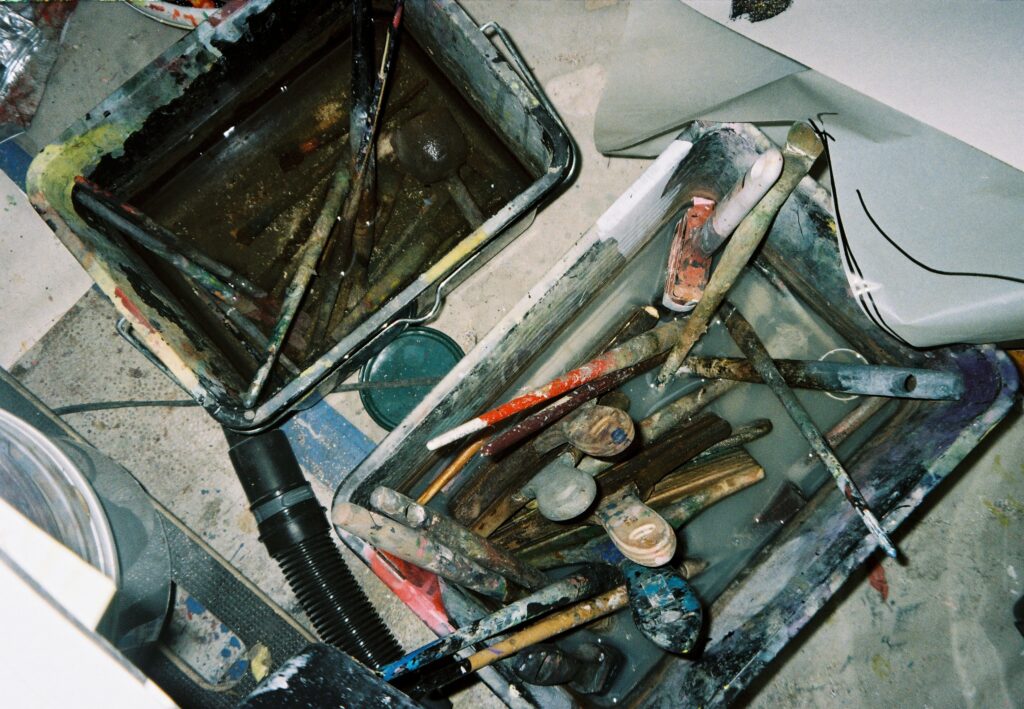
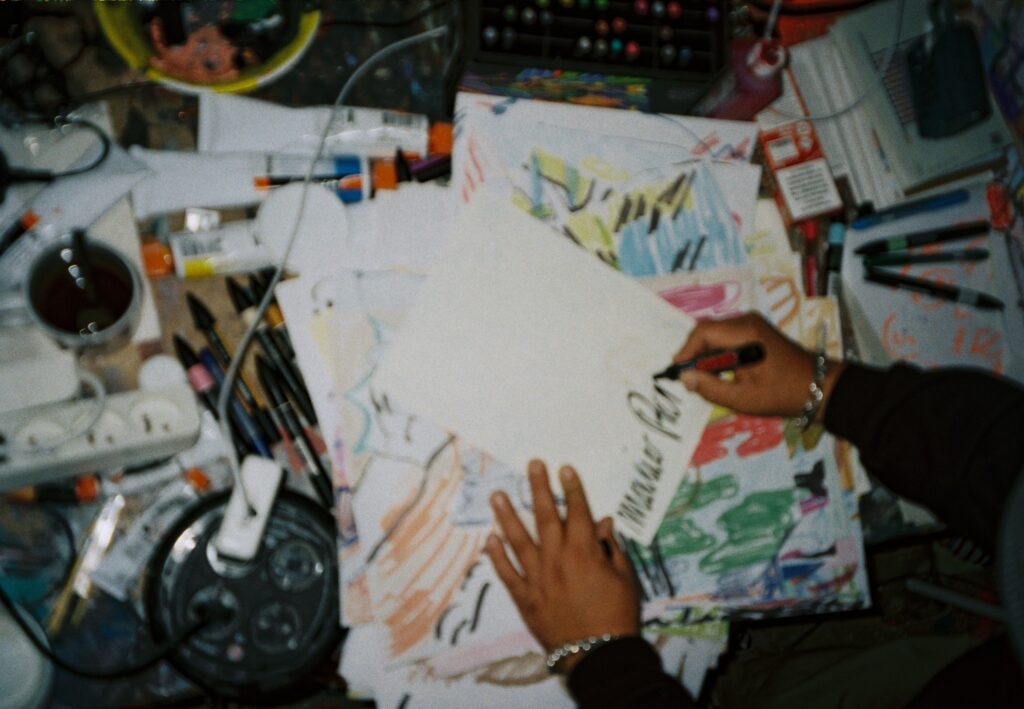
The physical process of making work is fast, direct, and highly intuitive. Picardo always begins with drawing. These drawings act as both experiments and foundations, allowing him to test ideas quickly before translating them into larger-scale paintings. He often works on glossy or semi-glossy paper, drawn to the fluidity it allows. The way markers move across this surface mirrors the gestures he wants to make later on canvas. For him, drawing is not a preliminary step that disappears behind the painting, but an essential part of the process that informs scale, movement, and rhythm.
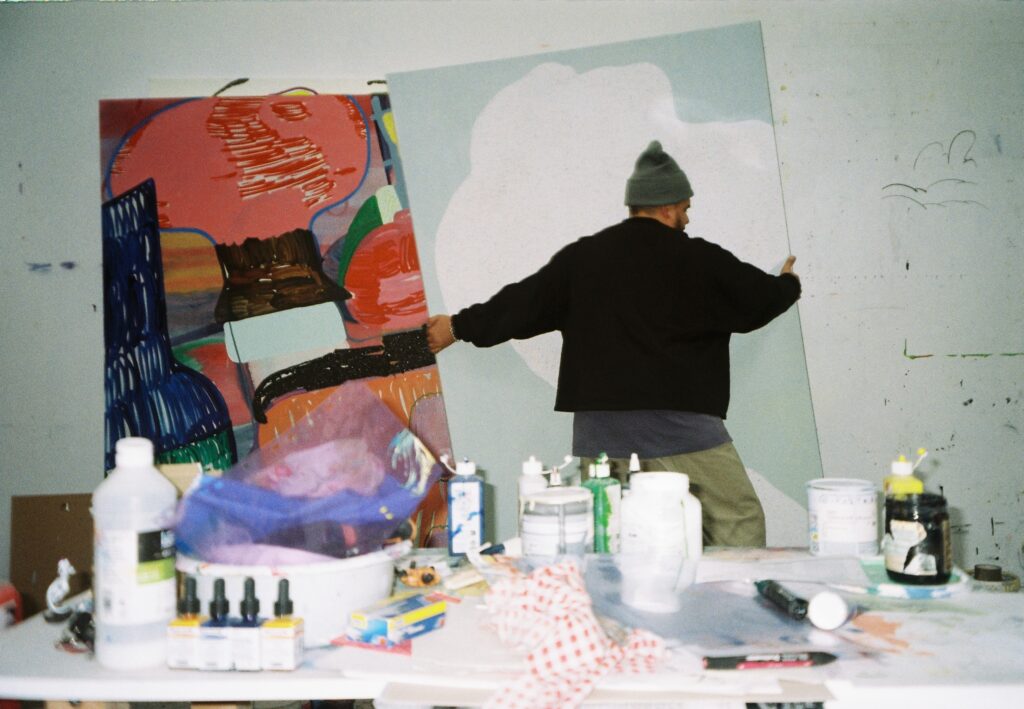
Material choice is central to how he works. He favors fast-drying paints and tools that allow for immediate action. Acrylic inks, alcohol markers, foam brushes, and dry paint particles all play a role in his process. These materials support his need for speed and responsiveness. The quicker the paint dries, the more easily he can move from one gesture to the next without losing momentum. This efficiency is not about productivity for its own sake, but about maintaining a connection between thought, movement, and image.
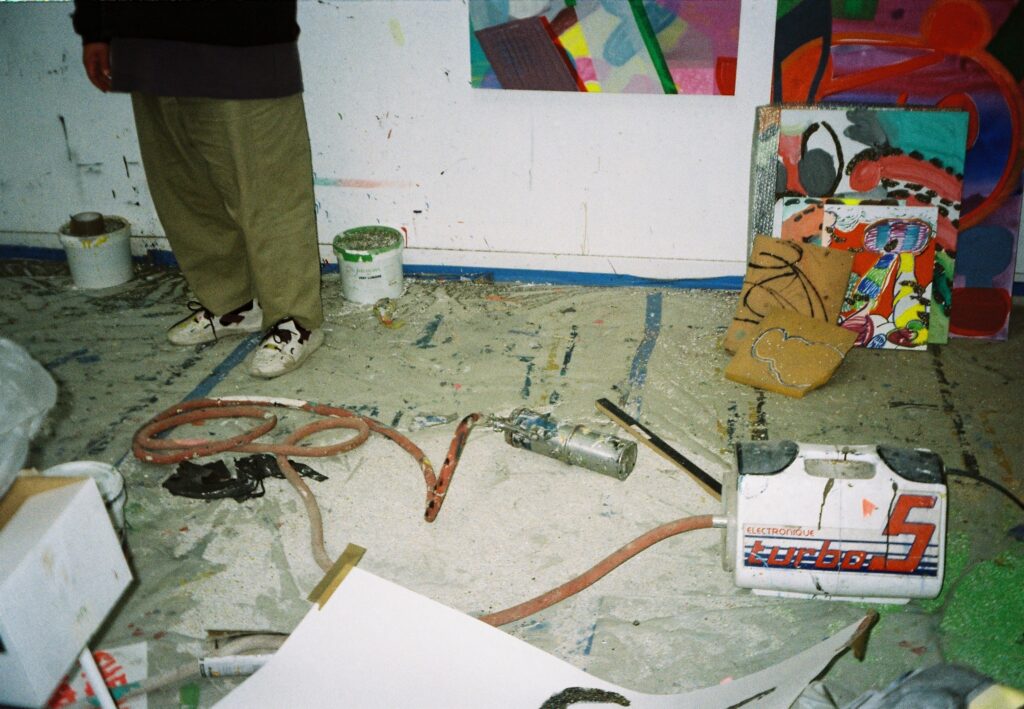
One of the most distinctive elements of Picardo’s practice is his use of a spray machine originally belonging to his father. His father worked in construction as a house painter, and Picardo learned to use this equipment while helping him on job sites as a way to earn money for his studies. The machine, purchased in the mid-1990s, was once considered advanced equipment. When his father stopped working, he passed it on to Picardo, who gave it a new life in the studio. Today, Picardo uses it to spray dry paint particles into wet paint, creating textured surfaces that feel energetic and unpredictable.
This technique reflects a deeper connection between his personal history and his artistic language. Skills learned through manual labor and trade work become tools for creative expression. Rather than separating fine art from practical experience, Picardo integrates them, allowing materials and methods to carry personal meaning alongside visual impact.
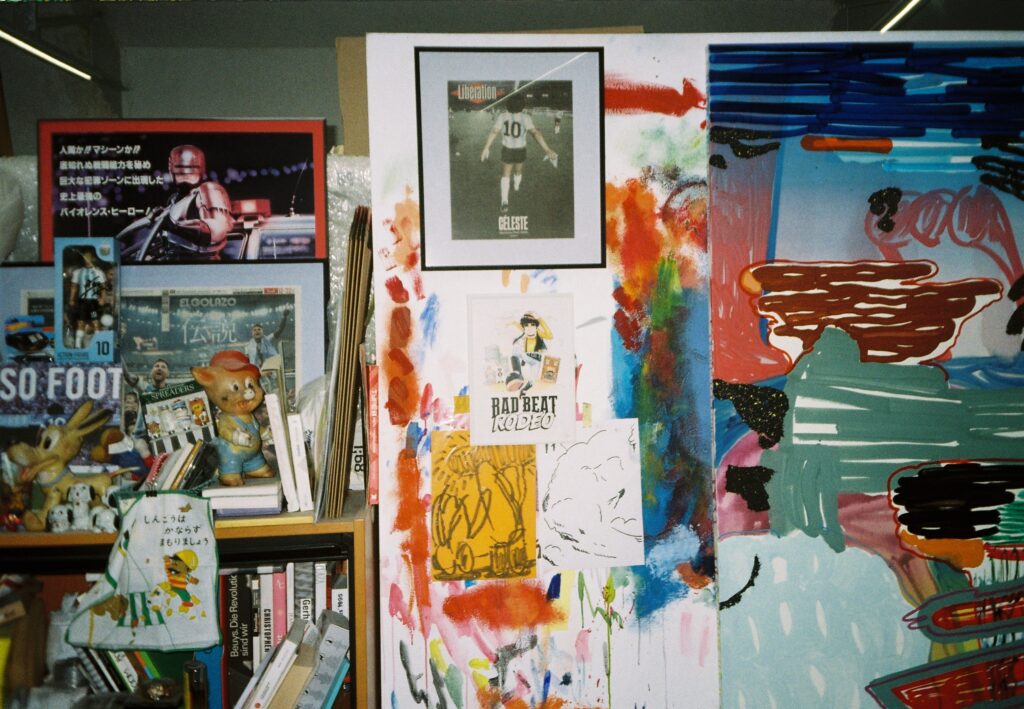
Speed is essential to his process. He works on multiple paintings at once, moving between them as ideas shift. If something works, he leaves it. If it does not, he does not erase or start over. Instead, he adds to it, allowing the work to evolve organically. The first gesture matters, but it is not treated as sacred. What matters more is staying engaged and responsive.
This approach mirrors how Picardo consumes images in everyday life. Visual impressions from the street, from packaging, from toys, comic books, or even discarded objects like bubble gum on the sidewalk leave marks on him. These impressions are collected mentally or photographed and later translated into drawings and paintings. The speed at which images enter his awareness is matched by the speed at which he tries to respond to them on the surface.
Sound also plays a role in the studio. Picardo often paints while listening to movie soundtracks or animated films, particularly those connected to his childhood. The sound creates an atmosphere that keeps him moving and focused, allowing the painting to unfold without interruption. Sometimes a movie plays in the background while he works, watched in fragments between layers drying.
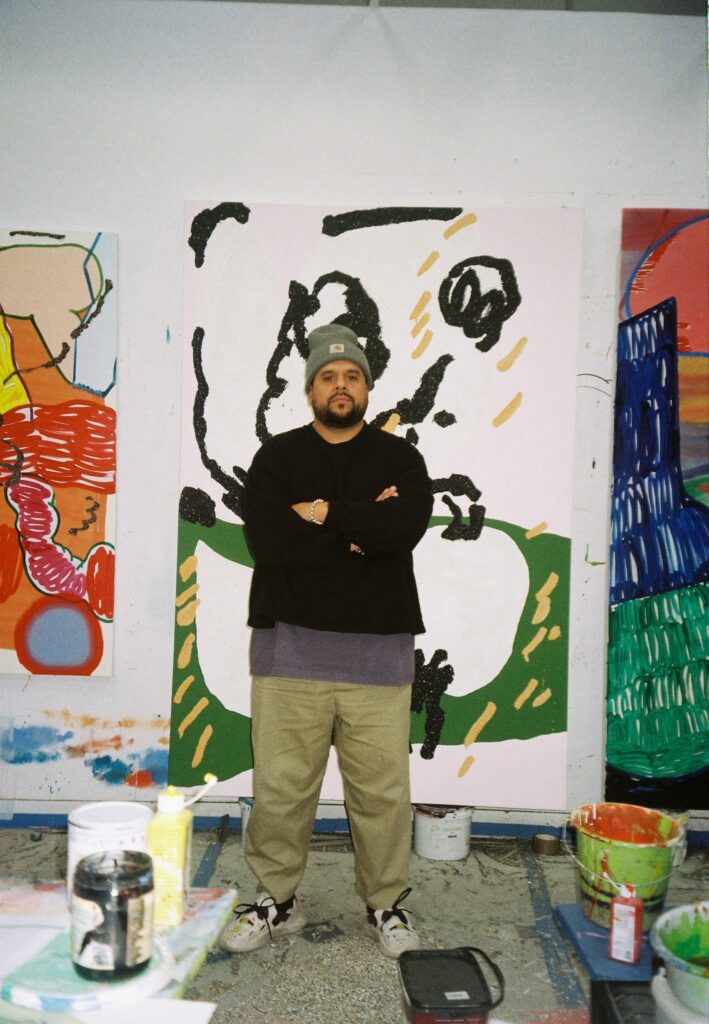
Ultimately, Picardo’s work is driven by a desire to stay present and engaged. He is not interested in refining an image endlessly or forcing it into a predetermined outcome. Painting, for him, is an action. It is a way of thinking through movement, color, and gesture. Each piece becomes a record of that moment of attention, shaped by instinct rather than correction.
Mario Picardo’s practice reflects a commitment to openness, curiosity, and exchange. His paintings invite viewers into a shared space where images are not fixed statements but starting points. By working quickly, embracing imperfection, and remaining deeply connected to his materials and experiences, he creates work that feels alive, conversational, and rooted in the simple pleasure of making.
About the Author
Sam Burke is an American artist and writer based in New York City. Working across film, performance, and writing exploring storytelling, identity, and place. As co-founder of Timestamp, Burke interviews artists, shares insights, and highlights conversations shaping art world today.
Stéphane Koyama-Meyer
French visual artist and designer based near Basel, Stéphane Koyama-Meyer grew up surrounded by art,…
Yuval Bezalel
For Yuval Bezalel, painting begins with the hands, before there is a narrative, before there…
Adèle Aproh
For Adèle Aproh, drawing began long before she knew it could become a career. Her…
Félix Deschamps Mak
Félix Deschamps Mak is a French painter based in Paris, working in large scale figurative…
Katya Quel
Katya Quel is an artist and multidisciplinary creator, born and raised in Moscow, who now…
Why Dia Beacon Deserves a Full Day of Your Attention
There are museums you visit to check a box. And there are museums that quietly…