Kevin Umaña did not plan on becoming the artist he is today. His path moved through architecture school, printmaking, photography, graffiti, ceramics, construction jobs, and years of uncertainty before arriving at the hybrid ceramic paintings he is now known for. For Umaña, the work developed less from a single vision and more from persistence, experimentation, and learning how to adapt when things fell apart.
Born in Los Angeles and now based in Brooklyn, Kevin Umaña describes himself as someone who has always been drawn to making things. As a child he spent his time drawing Pokémon characters, anime, and video game figures without imagining art could become a career. It was only later, after discovering architecture and design, that he began to understand creative work as something larger.
“I was always an artistic kid growing up,” he says. “But I just did it for fun and didn’t even know what an artist was.”
Architecture first introduced him to visual language, structure, and composition, but surviving in San Francisco while attending school proved difficult. Working multiple jobs while studying eventually pushed him away from architecture and toward an art degree. Even then, much of his education happened outside the classroom. Umaña taught himself photography, painting, ceramics, and technical processes through books, YouTube videos, conversations with friends, and years of hands-on labor.
“I’ve worked so many jobs in my lifetime,” he says. “As a painter, as a handyman, as an art handler, as a baker. All these jobs gave me skills that I implement into what I do now.”
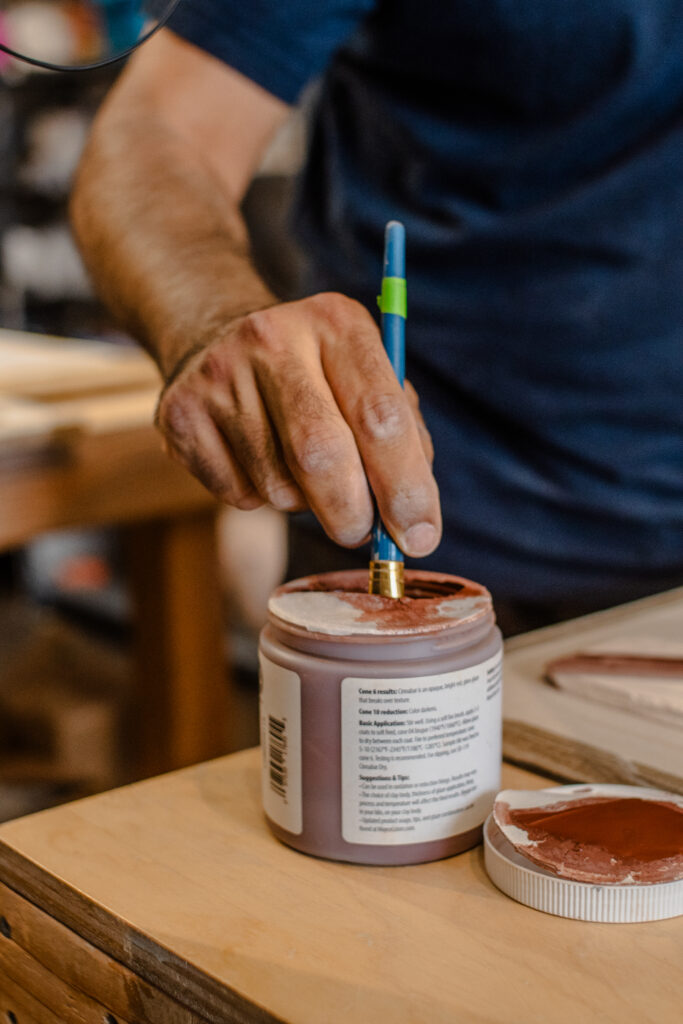
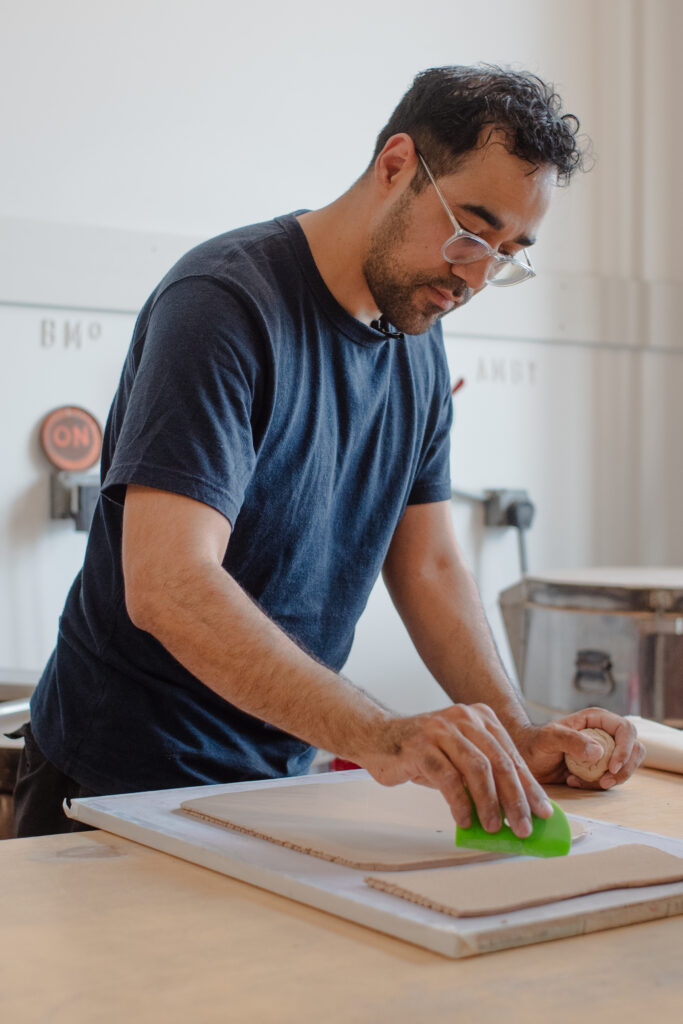
That accumulation of experiences became central to his practice. Photography taught him symmetry and composition. Graffiti introduced him to gradients and spray techniques. Art handling taught him durability and construction. Every skill eventually found its way into the work.
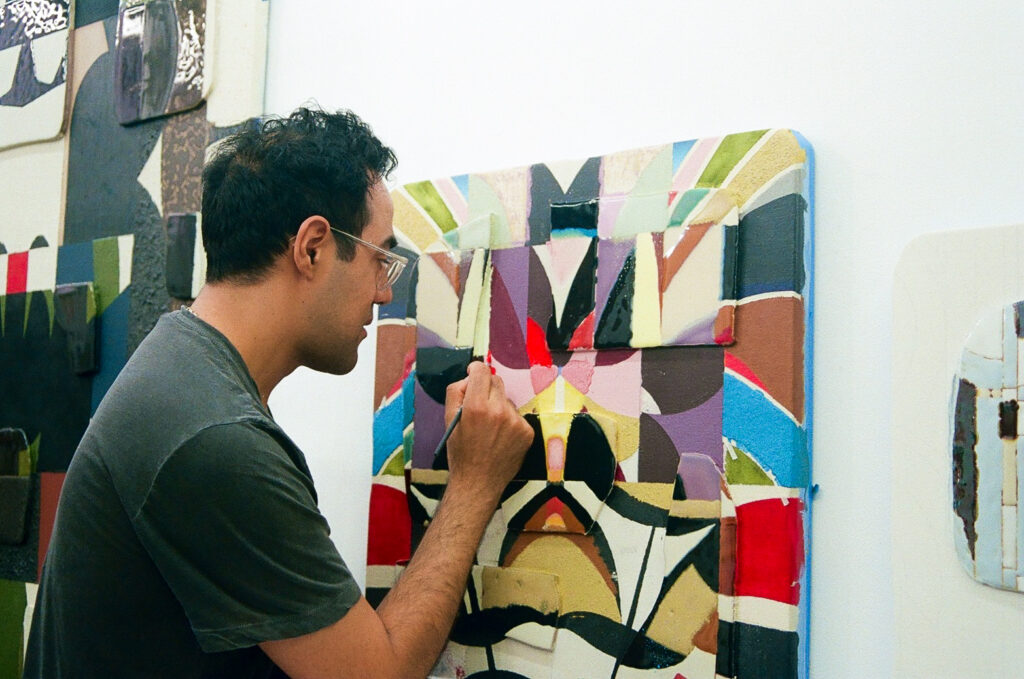
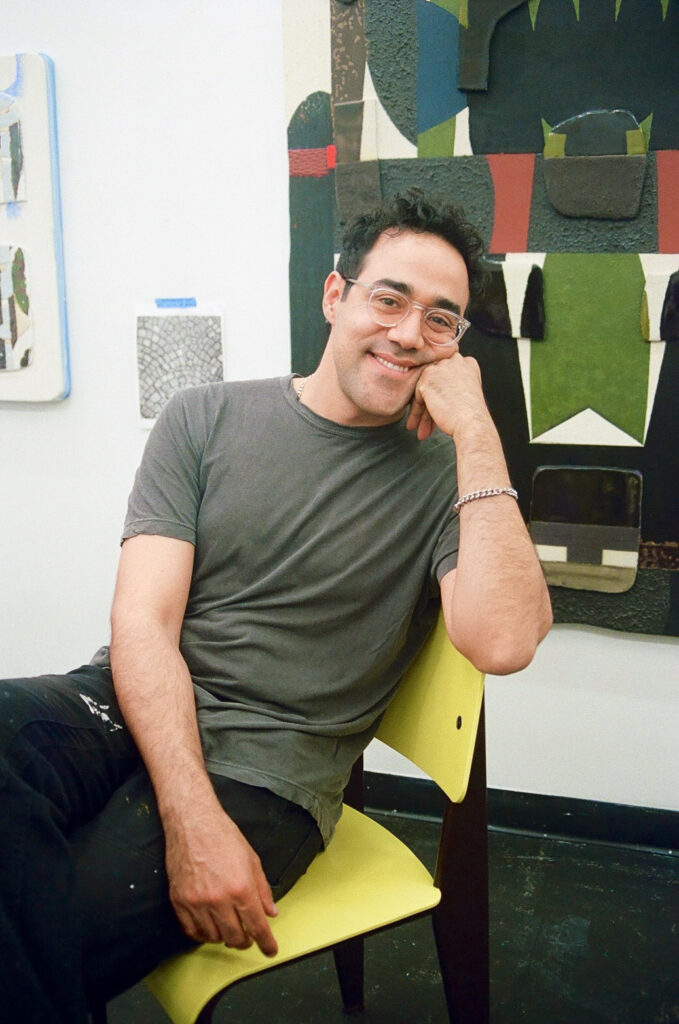
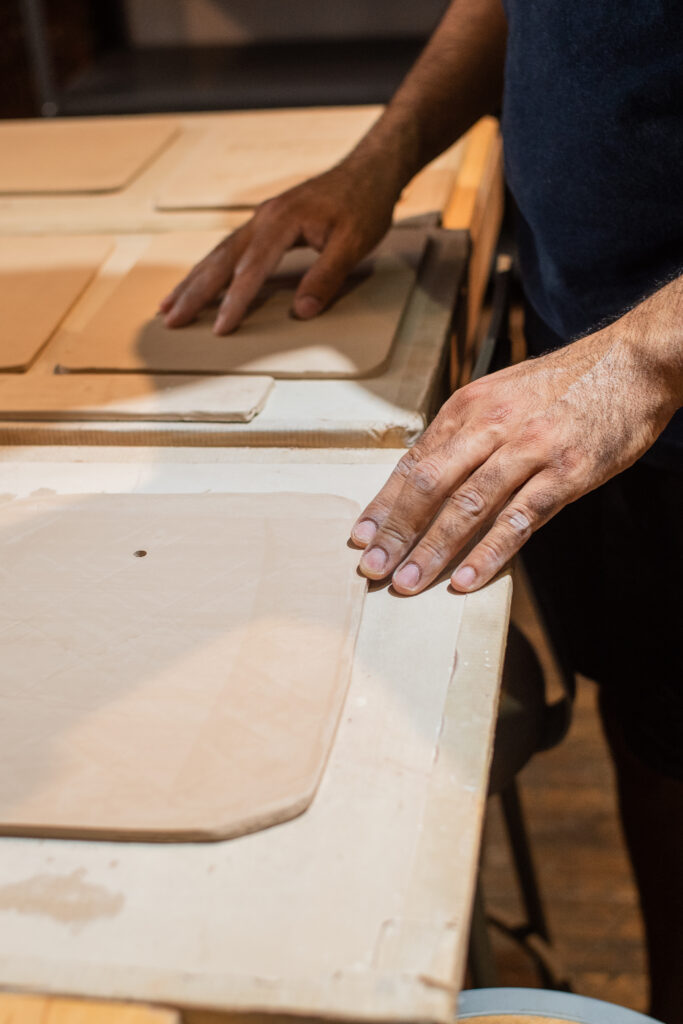
Today Umaña creates ceramic paintings that combine fragmented clay forms with painted surfaces, textiles, stained glass references, and sculptural elements. The works blur distinctions between painting and object, often appearing like assembled mosaics or architectural fragments. Yet the process itself began accidentally.
While experimenting with ceramic glaze tests, Umaña glued broken test tiles onto a panel. The piece sat unnoticed in his studio for nearly a year until a curator visited and became interested in the hybrid form. That encounter eventually led to exhibitions, gallery attention, and a sold out solo exhibition at Sperone Westwater.
“It just happened by accident,” he says. “I wasn’t really trying to do what I do now.”
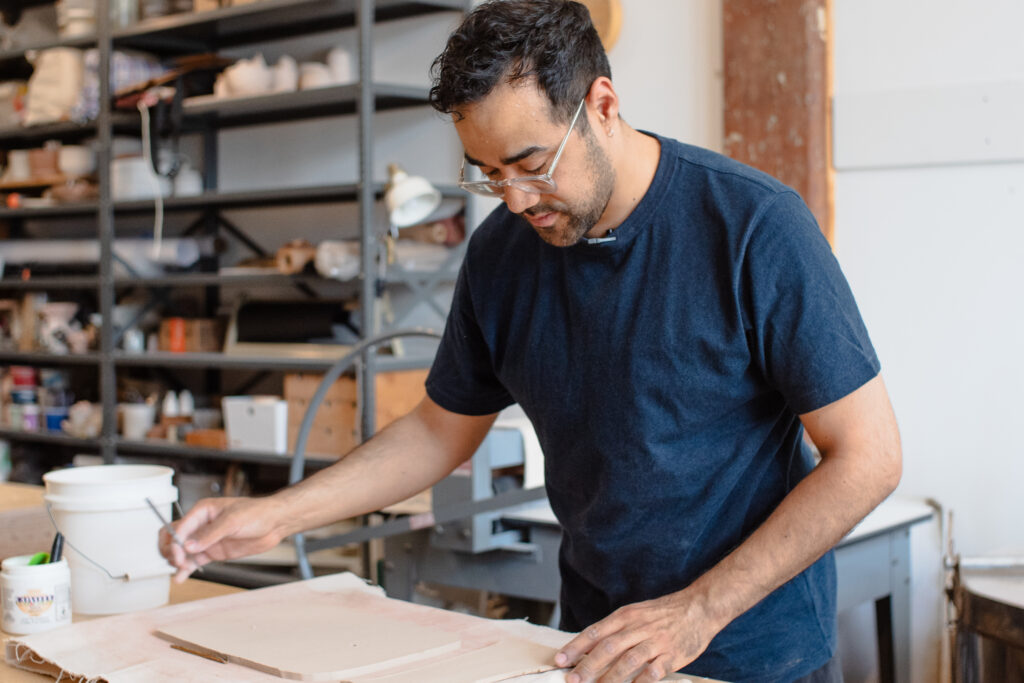
Breakage remains part of the process. Ceramic fragments crack, shift, and force new decisions during construction. Instead of discarding damaged pieces, Umaña incorporates them into the compositions, treating each work almost like a puzzle assembled from instability.
“Sometimes ceramics break and it’s something I can’t predict,” he explains. “So I have to work with that.”
The tension between control and accident runs throughout his practice. While the surfaces appear vibrant and spontaneous, Umaña approaches each work with careful planning and conceptual direction. Color relationships, structural balance, material durability, and symbolism are all considered before a piece is finished. His experience as an art handler also shaped how he constructs the works physically, leading him to use archival varnishes, industrial adhesives, and carefully tested materials designed to last over time.
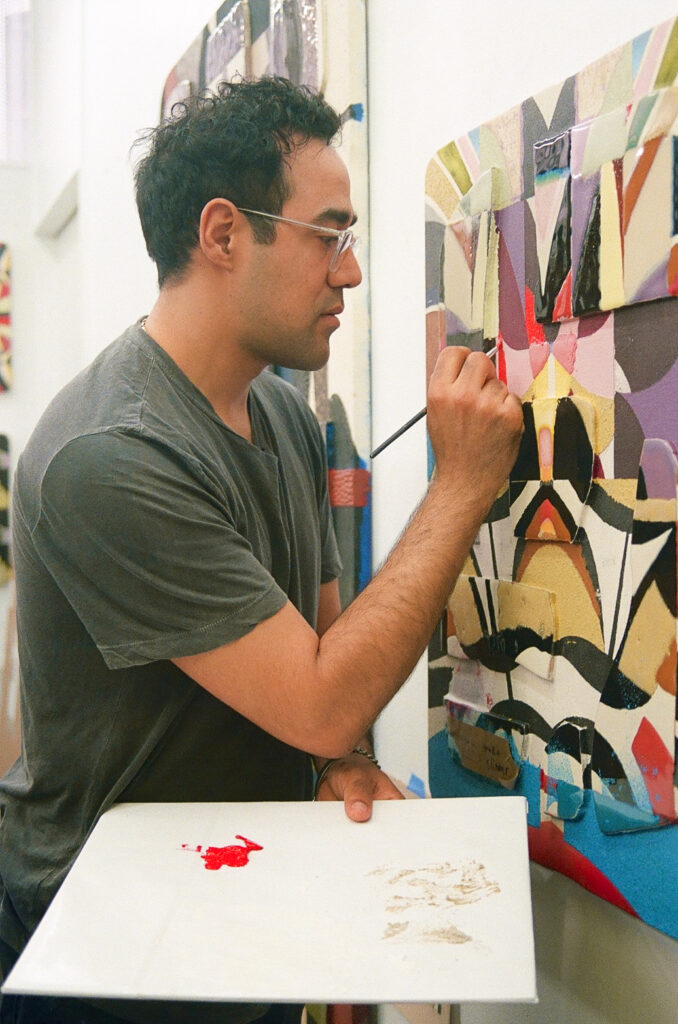
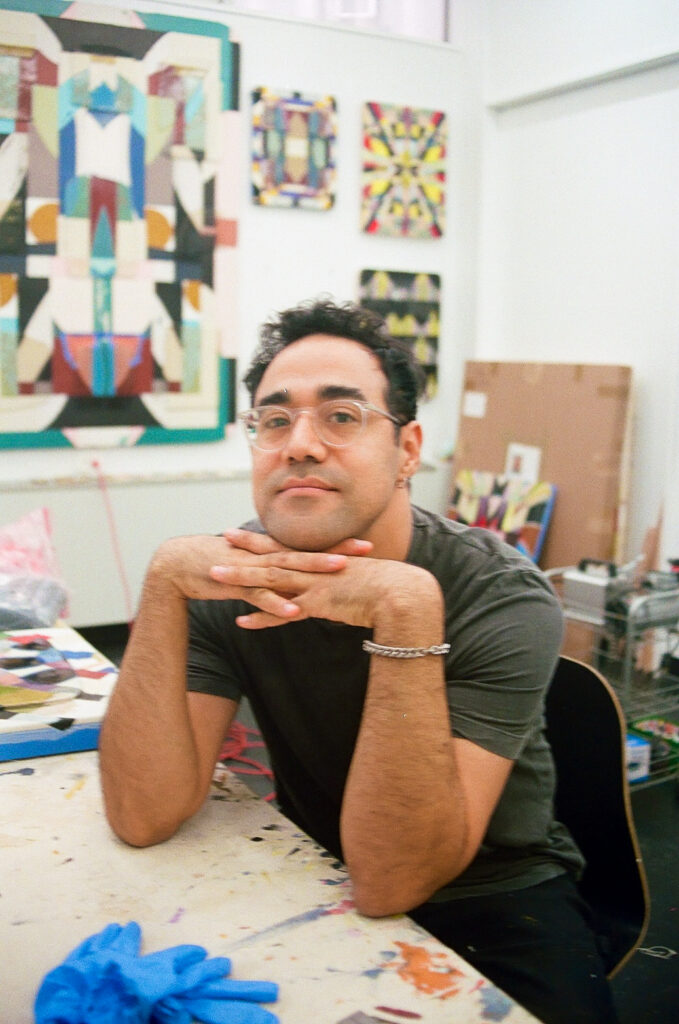
“I don’t want my work to get destroyed in ten years,” he says.
Subject matter also plays a major role in his process. Many works are tied to specific memories, environments, or themes. One recent body of work explored the air quality and sunsets of Los Angeles. Another drew influence from opera costume design and stage production. Umaña sees titles and themes as ways of guiding viewers into emotional and narrative territory without fully defining the meaning for them.
“I love telling a narrative,” he says. “Everything’s made with intention.”
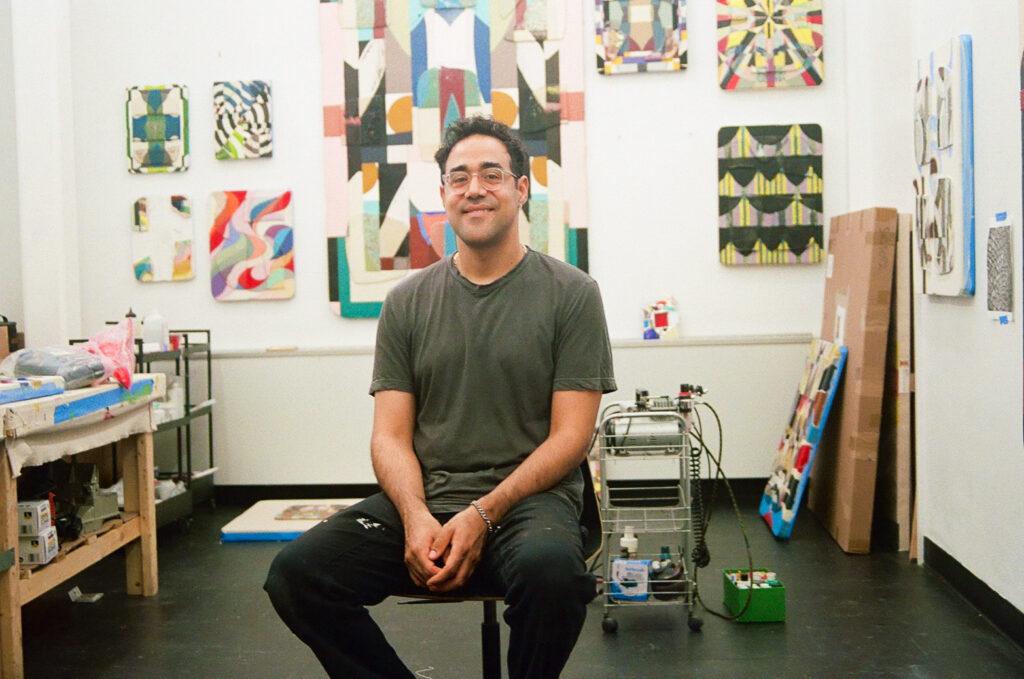
At the same time, the studio itself functions as something deeply personal. Umaña describes art making less as a career pursuit and more as a necessary form of survival and self reflection. Even through financial instability and periods where he nearly quit entirely, the studio remained constant.
“There’s been so many moments I almost quit,” he says. “But you just have to fight through it.”
During the pandemic he relocated from New York to Kansas City, uncertain if his art career had effectively ended. Instead, the move gave him access to a larger studio where he was able to fully develop the ceramic painting work that would eventually define his practice. Around the same time, a small commission from a friend helped him survive financially long enough to continue making work.
“That commission allowed me to live another six months,” he says.
For Umaña, longevity matters more than immediate success. He encourages younger artists to keep evolving, keep learning, and stay open to unexpected opportunities. Every exhibition, every conversation, and every experiment has the potential to shift a career in ways that cannot be predicted ahead of time.
“Every group show matters,” he says. “You don’t know who’s going to look at the work.”
That philosophy mirrors the way his own career unfolded through accidents, persistence, and a willingness to continue despite uncertainty. What began as broken ceramic test pieces eventually became an entirely new visual language. And for Umaña, the process of discovering that language remains ongoing.
About the Author
Sam Burke is an American artist and writer based in New York City. Working across film, performance, and writing exploring storytelling, identity, and place. As co-founder of Timestamp, Burke interviews artists, shares insights, and highlights conversations shaping art world today.
Stéphane Koyama-Meyer
French visual artist and designer based near Basel, Stéphane Koyama-Meyer grew up surrounded by art,…
Yuval Bezalel
For Yuval Bezalel, painting begins with the hands, before there is a narrative, before there…
Adèle Aproh
For Adèle Aproh, drawing began long before she knew it could become a career. Her…
Félix Deschamps Mak
Félix Deschamps Mak is a French painter based in Paris, working in large scale figurative…
Katya Quel
Katya Quel is an artist and multidisciplinary creator, born and raised in Moscow, who now…
Why Dia Beacon Deserves a Full Day of Your Attention
There are museums you visit to check a box. And there are museums that quietly…