
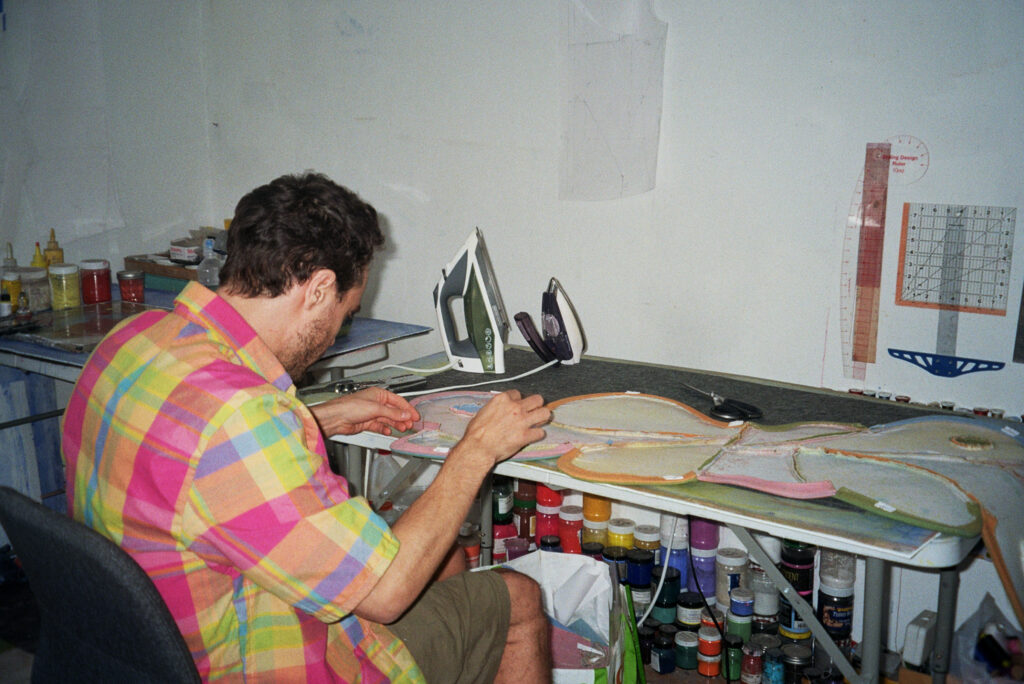
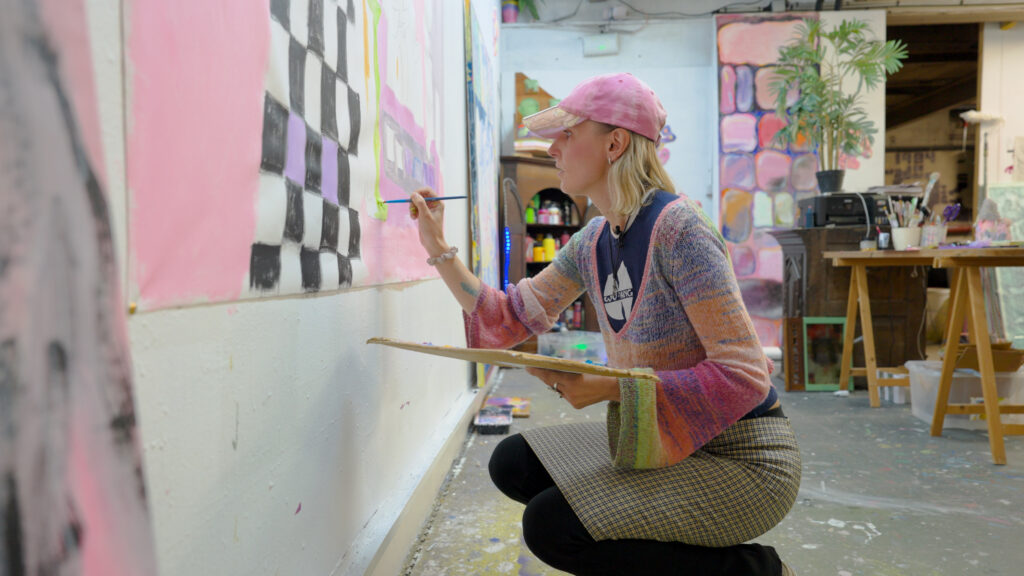
Photo by Timestamp of Zuriel Water’s studio
One of the rights of passage of being an artist is walking into an art supply store for the first time with excitement and complete overwhelm at the same time. The shelves are full of products that look identical until you try them, and the price range makes no sense until you understand why.
At Timestamp, we spend a lot of time in artists’ studios, watching what they actually reach for. This guide breaks down the supplies that come up again and again, from painters just starting out to artists who have been working for years.
Watercolor Painting
Watercolor rewards patience more than money spent. A limited palette of quality paints will take you further than a 48-pan student set where half the colors are made from the same pigment. For paper, weight matters more than brand, as anything under 140 lb (300 gsm) will buckle and fight you.
- Winsor & Newton Cotman Watercolors — A reliable student-grade set that uses single pigments where it counts. The colors mix cleanly and the tube paint rewets well on the palette.
- Arches 140 lb Cold Press Watercolor Paper — The standard for a reason. Cold press gives you texture without being too rough, and the sizing holds up to repeated wet passes without disintegrating.
- Princeton Neptune Synthetic Squirrel Brushes — Holds a good amount of water, snaps back to a point, and costs a fraction of natural hair brushes. A round no. 8 and a no. 4 will cover most of what you need starting out.
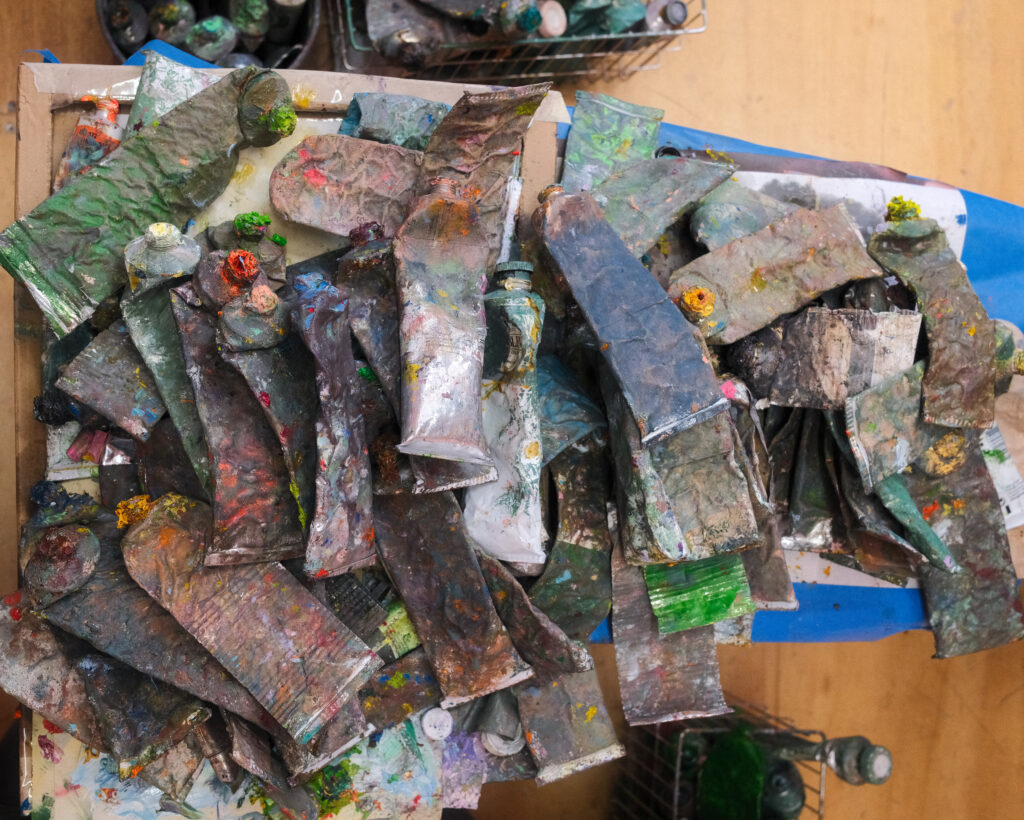
Photo by Timestamp of Su Su’s oil paints
Oil Painting
Oil painting has a longer learning curve than acrylics, but the blending time is forgiving in ways that other mediums are not. Starting with a limited palette, such as titanium white, yellow ochre, cadmium red hue, ultramarine blue, and burnt umber, is the most productive way to learn. Mixing is fun, and color theory will be your new best friend!
- Winsor & Newton Winton Oil Colour Set — Student-grade but consistent. Winton uses reliable pigments and the paint handles predictably, which matters when you are learning how oils move.
- Gamblin Galkyd Lite Medium — Speeds up drying time considerably and improves flow without weakening the paint film. A small bottle lasts a long time.
- Fredrix Primed Canvas Panels — Canvas panels are easier to store than stretched canvas and take paint well. Good for studies and practice work without the cost of stretched canvas every time.
- Winsor & Newton Sansodor Low Odor Solvent — Low-odor solvent for cleaning brushes and thinning paint in early layers. Essential if you are working indoors.
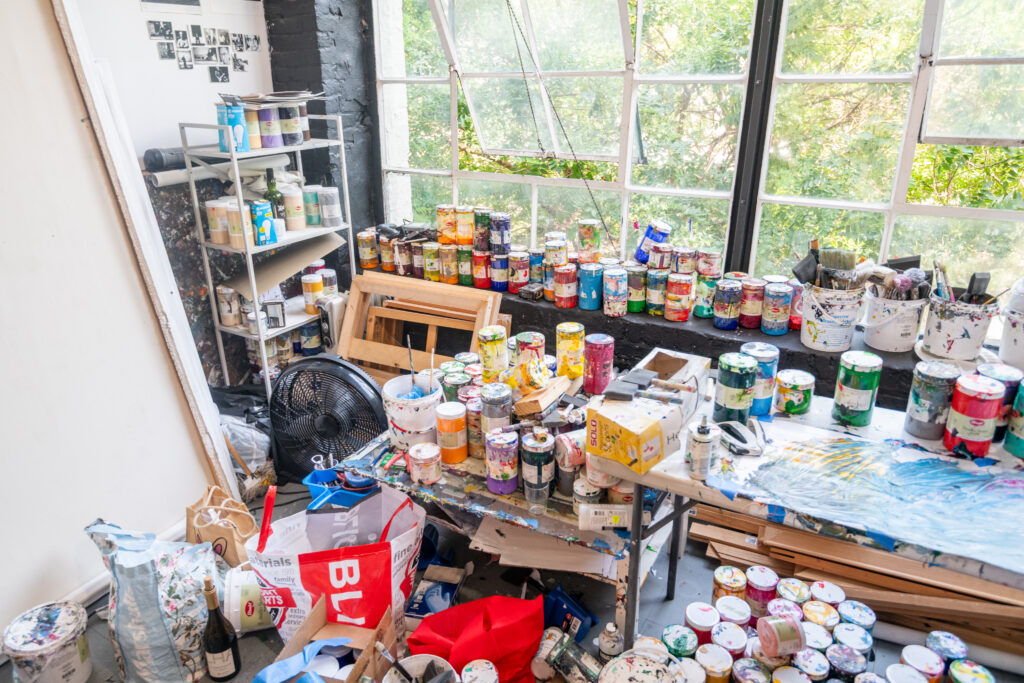
Photo by Timestamp of Md Tokon’s studio
Acrylic Painting
Acrylics are fast-drying, water-cleanup, and forgiving, which is why they are the first medium a lot of painters stick with. The main thing beginners get wrong is letting paint dry on brushes. Keep a water cup nearby and rinse constantly.
- Golden Heavy Body Acrylics (Basic Set)— Heavy body paint holds brushstrokes and palette knife texture. Golden’s pigment load is noticeably better than most student brands, and a tube goes a long way.
- Liquitex BASICS Acrylic Set — A solid budget option when you want a wider color range without spending much. Good for early experimentation and color mixing practice.
- Strathmore 400 Series Acrylic Paper Pad — One of the most important things for beginners is to draw, draw, and draw! A pad lets you work through compositions quickly without committing to a canvas each time.
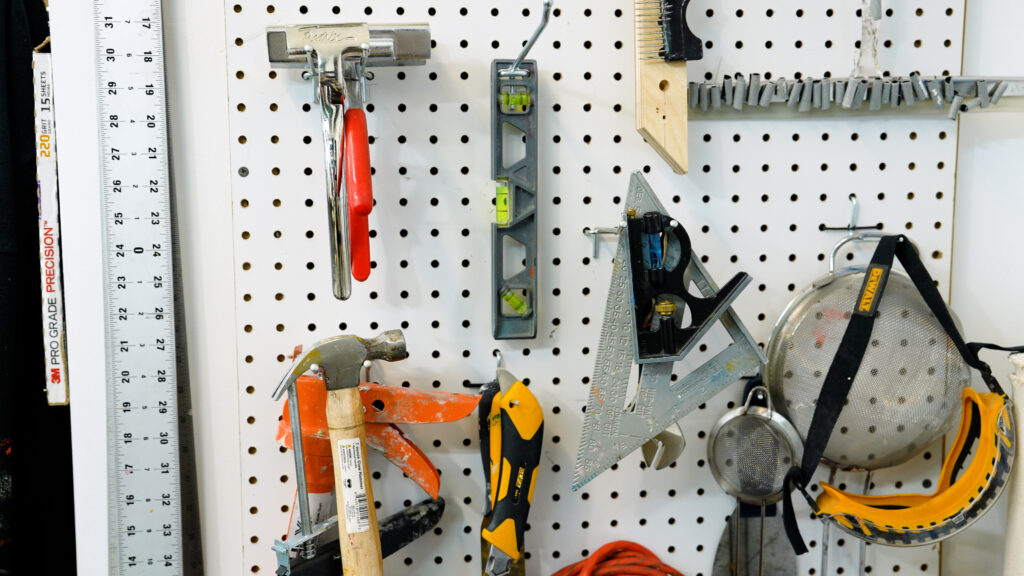
Photo by Timestamp of Kevin Umaña’s tool shelf
Printmaking
Printmaking has one of the highest material costs upfront — a press, if you go that route — but relief printing and screen printing are very accessible without one. Most beginners start with linocut or monoprinting, both of which require minimal equipment.
- Speedball Deluxe Block Printing Kit — Includes soft-cut blocks, a brayer, and ink. The soft-cut material is more forgiving than traditional linoleum and works well with standard carving tools.
- Speedball Water-Soluble Block Printing Ink — Cleans up with water, dries without cracking, and adheres to paper, fabric, and wood. Comes in a range of colors that mix reliably.
- Pfeil Linocut Carving Tools Set — Better than the beginner sets that come dull and bend under pressure. Sharp tools make a significant difference in control and safety.
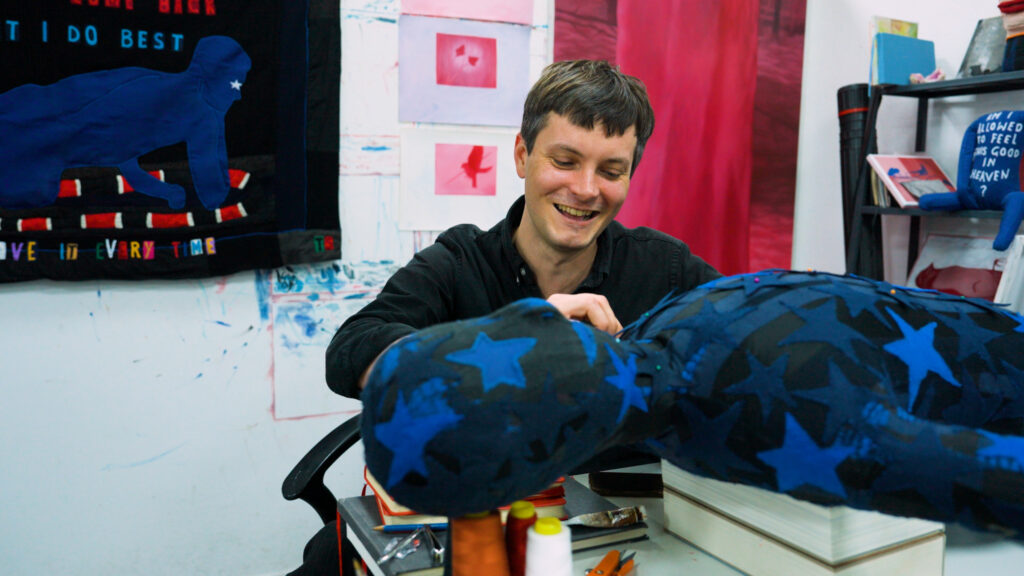
Photos by Timestamp of Thomas Szott working
Textiles
Surface design for fabric uses some of the same materials as other printmaking, but requires fabric-specific mediums that bond to fiber rather than sitting on top of it
- Jacquard Textile Color Set — Water-based, heat-set fabric paint that stays soft after washing and does not stiffen the fabric the way cheaper craft paints do. Works on cotton, linen, and silk.
- Speedball Fabric Screen Printing Ink — Thicker consistency for screen printing, goes on evenly, and holds up through washing when heat-set properly.
- Dharma Trading Co. Procion MX Dye — For anyone moving into fiber dyeing. Cold-process fiber reactive dye that produces deep, permanent color on natural fibers. Widely used and well documented for beginners.
- Speedball Fabric Block Printing Ink — Specifically formulated for fabric block printing. More fluid than screen printing ink, which helps with even coverage on textile surfaces.
These are the supplies worth starting with regardless of which direction you go. Buy less, use it thoroughly, and upgrade specific tools once you understand what your work actually needs. If you found this useful, keep an eye out for our other guides on building a studio practice from the ground up!
This post contains affiliate links. We may earn a commission at no extra cost to you.
About the Author
Aneliya Lahunchyk is a student writer covering modern art and the evolving technological world. Based in Washington, D.C., her work explores the intersection of art, policy, and technology.
Stéphane Koyama-Meyer
French visual artist and designer based near Basel, Stéphane Koyama-Meyer grew up surrounded by art,…
Yuval Bezalel
For Yuval Bezalel, painting begins with the hands, before there is a narrative, before there…
Adèle Aproh
For Adèle Aproh, drawing began long before she knew it could become a career. Her…

Félix Deschamps Mak
Félix Deschamps Mak is a French painter based in Paris, working in large scale figurative…
Katya Quel
Katya Quel is an artist and multidisciplinary creator, born and raised in Moscow, who now…

Why Dia Beacon Deserves a Full Day of Your Attention
There are museums you visit to check a box. And there are museums that quietly…